
Marine generator maintenance follows a structured schedule of daily checks, hourly service intervals, and system-specific inspections that prevent up to 80% of at-sea failures. A well-maintained marine diesel generator can operate 6,000 to 14,000+ hours before major overhaul, while a neglected unit may fail in half that time.
In 2023, the passenger vessel Ocean Navigator suffered a generator mechanical failure that caused a fire and $2.4 million in damage. The root cause was a maintenance item that had been deferred. Incidents like this are why classification societies and the ISM Code require documented preventive maintenance programs for all commercial vessels.
At Shandong Huali Electromechanical Co., Ltd., we have manufactured and supported Cummins, Perkins, and Weichai marine generator sets for over 25 years. Our engineers have seen preventable failures cost shipowners tens of thousands in emergency repairs, off-hire, and lost charter contracts. This guide gives you a complete, classification-society-aligned maintenance framework with specific intervals, checklists, and troubleshooting steps you can implement immediately.
Key Takeaways
- Daily checks take 5-10 minutes and prevent 80% of at-sea failures; focus on oil, coolant, leaks, and the seawater strainer.
- Change oil every 250-500 hours depending on manufacturer; replace the raw water impeller annually; test under load monthly.
- Wet stacking causes carbon buildup in the exhaust; run the generator at 50% or more load for 2 hours monthly.
- SOLAS requires weekly auto-start tests and monthly on-load tests for emergency generators; record all results, and carry essential spares including oil filters, fuel filters, impellers, belts, zinc anodes, and engine oil.
Need maintenance support or spare parts for your marine generator? Contact our marine service team for technical consultation and OEM parts.
Why Marine Generator Maintenance Is Different from Shore-Based Systems
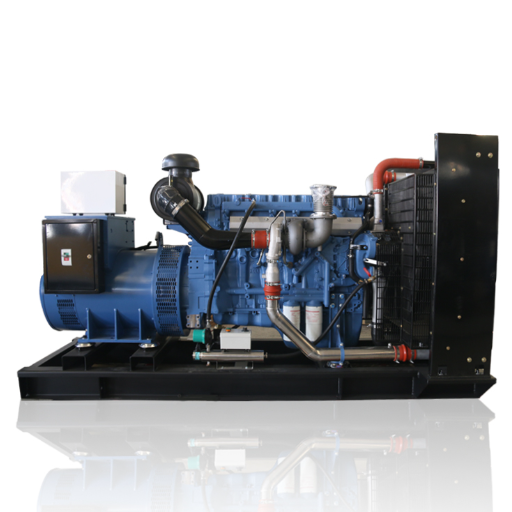
Marine diesel generator maintenance differs from land-based systems because the operating environment is one of the most demanding possible. Salt air accelerates corrosion. Constant humidity promotes electrical failures.
Vibration from propulsion and wave action loosens fittings over time. Poor ventilation in engine rooms raises operating temperatures.
The cooling system is the single most critical difference. Marine generators use raw seawater or a closed freshwater system with a heat exchanger. A clogged strainer, failed impeller, or fouled heat exchanger can cause overheating within minutes. These failures are preventable with routine inspection.
Corrosion management is equally important. Zinc anodes sacrifice themselves to protect the heat exchanger, raw water pump, and exhaust elbow from galvanic corrosion. When zincs deplete beyond 50%, the metal components they protect begin to deteriorate.
Classification societies including CCS, ABS, and DNV require vessels to maintain a planned maintenance system under the International Safety Management (ISM) Code. Surveyors inspect maintenance logs during annual and special surveys. Missing records can trigger deficiencies and delay certification.
The chief engineer of a 3,000 TEU container ship operating between Shanghai and Los Angeles told our service team that his generator cooling system had not been flushed in 18 months. During a Pacific crossing in August, the main generator overheated and shut down.
The standby generator started, but the same fouled heat exchanger caused it to overheat 20 minutes later. The vessel lost all electrical power for 90 minutes. Cargo refrigeration failed. The repair in Los Angeles cost $14,000 and the vessel was off-hire for two days.
For a complete overview of marine generator types, sizing, and selection criteria, see our marine diesel generator buying guide.
Daily and Pre-Operation Checks: The 5-Minute Routine
Daily marine generator maintenance takes five to ten minutes and prevents the majority of emergency failures. Perform these checks before starting the generator or during the first hour of operation.
Fluid levels: Check engine oil in the sump and coolant in the expansion tank. Oil should be amber or dark brown. Milky oil indicates water contamination from a leaking heat exchanger or head gasket. Top off fluids to manufacturer-specified levels.
Seawater strainer: Inspect and clear the raw water intake strainer. Marine growth, plastic debris, and seaweed are the most common blockages. A clogged strainer is the leading preventable cause of generator overheating.
Leak inspection: Check the drip pan and all connections for oil, coolant, fuel, or raw water leaks. Any new drip requires immediate investigation. Fuel leaks are a fire hazard. Coolant leaks lead to overheating.
Battery and belts: Inspect battery terminals for corrosion and ensure connections are tight. Visually check drive belts for cracks, glazing, or fraying. Belt deflection should not exceed 10-15mm midway between pulleys.
Listen during start: Abnormal knocking, grinding, or whistling during startup indicates mechanical problems that need immediate attention.
Marine Generator Maintenance Schedule by Operating Hours
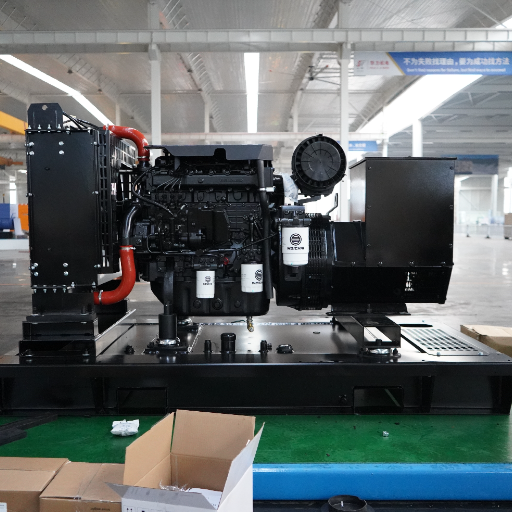
A generator maintenance schedule organizes tasks by operating hours and calendar time, whichever comes first. The intervals below represent standard practice for medium-speed marine diesel generators. Always consult your engine manufacturer manual for model-specific requirements.
Every 100 to 150 Hours or Annually
| Maintenance Task | Why It Matters |
|---|---|
| Change engine oil and filter | Marine gensets hold small oil volumes; contamination concentrates quickly |
| Replace raw water pump impeller | Rubber impellers degrade from heat and salt; proactive replacement prevents failure |
| Inspect or replace zinc anodes | Replace pencil zincs when 50% depleted to protect heat exchanger and pump |
| Check belt tension and condition | Deflection should not exceed 10-15mm; replace cracked or glazed belts |
| Inspect fuel filters for water | Drain water separators; contamination causes injector damage |
Every 250 Hours or Quarterly
| Maintenance Task | Why It Matters |
|---|---|
| Replace fuel filters and air filters | Dirty filters reduce power output and increase fuel consumption |
| Inspect turbocharger and hoses | Check for leaks, cracks, or loose clamps in intake and charge-air piping |
| Test control panel alarms and indicators | Verify all sensors, gauges, and emergency stop functions work correctly |
| Conduct vibration analysis | Detect misalignment, mount deterioration, or bearing issues early |
| Perform load test at 30-50% for 30+ minutes | Prevents wet stacking and verifies emergency readiness |
Every 500 Hours or Biennially
| Maintenance Task | Why It Matters |
|---|---|
| Flush and replace coolant | Use marine-grade antifreeze at the manufacturer-specified ratio |
| Inspect heat exchanger tubes | Remove salt deposits, scale, and sediment that reduce cooling efficiency |
| Check valve clearance | Perform with the engine cold per manufacturer specifications |
| Inspect exhaust elbow and riser | Look for rust, scale, or water stains; replace proactively to prevent hydro-lock |
| Overhaul or test fuel injectors | Worn injectors cause poor combustion, black smoke, and reduced efficiency |
| Perform oil analysis | Use S-O-S or equivalent programs to detect wear metals and coolant leaks |
Manufacturer-Specific Oil Change Intervals
| Engine Brand | Standard Oil Change Interval | Severe Duty Interval |
|---|---|---|
| Cummins | 250 hours | 150 hours |
| Perkins | 500 hours | 250 hours |
| Weichai | 250 hours | 150 hours |
| Yanmar | 200 hours | 100 hours |
Severe duty includes continuous operation, high-load applications, dusty environments, or engines operating in emission control areas with SCR systems. For a detailed comparison of marine generator brands and specifications, see our guide to CCS certified marine generators.
System-by-System Ship Generator Maintenance Checklist
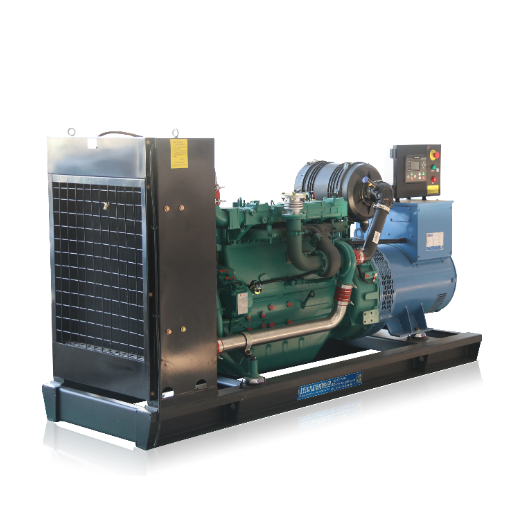
Cooling System: The Number One Failure Point
The cooling system deserves the most attention in any marine diesel generator maintenance program. Check coolant level in the expansion tank daily when operational. Never mix different types of coolant. Ensure seawater flow is unrestricted through the strainer, pump, and heat exchanger.
Replace the raw water pump impeller proactively every 12 months. Carry at least two spare impellers onboard. Flush the seawater side of the heat exchanger annually to remove salt buildup and scale. Inspect the thermostat annually to verify it opens at the correct temperature.
Fuel System: Contamination Prevention
Use clean, high-quality diesel fuel that meets ASTM D975 or equivalent standards. Regularly drain water and sediment from the fuel tank and water-separator filter. Water in fuel promotes microbial growth, commonly called diesel bug, which clogs filters and injectors.
Keep fuel tanks as full as possible to reduce condensation from humid air. In tropical waters, add a biocide to prevent microbial growth. Replace fuel filters every 250 hours or when the differential pressure indicator shows restriction. Always use OEM filters and bleed the system after replacement.
Lubrication System: Oil Quality Defines Engine Life
Check oil level daily using the dipstick. Use only manufacturer-specified marine-grade, high-detergent oil with the correct viscosity grade for your operating temperature range. Change oil and filter at the recommended interval without exception.
Oil analysis programs detect wear metals, coolant contamination, and fuel dilution before they cause visible damage. A quarterly oil analysis costs approximately 30to30to50 and can predict failures weeks or months in advance. If oil smells strongly of diesel or the level is rising, change it immediately and inspect the injection system.
Electrical System: Battery, Alternator, and Wiring
Keep batteries fully charged and terminals clean. Apply neutral grease to prevent corrosion. Replace lead-acid batteries every 2 to 3 years, AGM batteries every 4 to 6 years. Test battery voltage and specific gravity monthly.
Inspect alternator belt tension quarterly. Deflection should be 10 to 12mm under thumb pressure. Check all cabling for looseness caused by vibration. Inspect generator brushes and collector rings on older units; replace worn brushes and ensure ring surfaces are smooth.
Air Intake and Exhaust: Breathing and Breathing Out
Inspect and clean the air filter every 100 to 250 hours depending on operating environment. Salt and dust clog filters faster at sea than on land.
Inspect the exhaust wet elbow visually every year. Look for rust spots, leaks, or cracks. A failed exhaust elbow can leak seawater onto electrical components and cause catastrophic damage.
Load Testing and Wet Stacking Prevention
Wet stacking prevention is a critical part of any marine generator maintenance program. Wet stacking develops when a diesel generator runs at light load or sits idle for extended periods. Unburned fuel and carbon deposits build up in the exhaust system, valves, and cylinders. The generator produces black smoke, loses power, and develops rough running.
Prevent wet stacking by running the generator under at least 30% of rated load for a minimum of 30 minutes monthly. For optimal results, run at 50% or more load for 2 hours. If wet stacking has already occurred, run the generator at 80% or more load for 30 minutes to burn off deposits.
SOLAS Chapter II-1 requires specific testing for emergency generators. Test the automatic start function weekly. Perform an on-load test monthly for 3 to 4 hours, recording frequency, voltage, current, and kW output every 30 minutes. Maintain these records for classification society surveyors.
Need help sizing the right generator capacity for your vessel load profile? Our marine generator sizing guide walks through kW, kVA, and power factor calculations.
Marine Genset Troubleshooting: Common Problems and Solutions
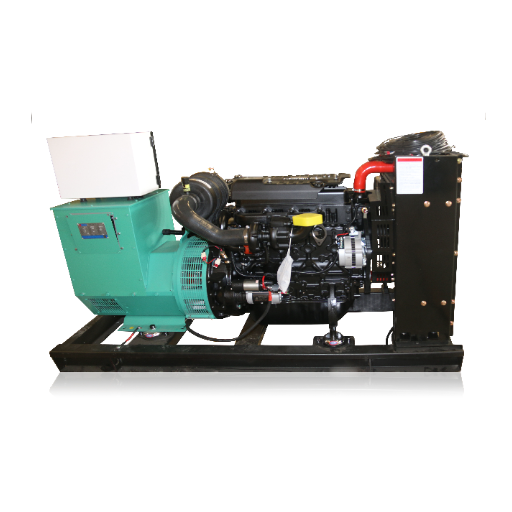
Generator Overheating
Effective marine genset troubleshooting starts with systematic diagnosis. Overheating is the most common emergency call we receive. Check the raw water strainer first.
A blocked strainer takes 30 seconds to clear and solves 60% of overheating cases. Next, verify the seawater pump impeller is intact.
Check coolant level only when the engine is cool. Inspect the heat exchanger for fouling if overheating persists.
Generator Fails to Start
The most common causes are battery failure, fuel system issues, and air in the fuel lines. Test battery voltage under load. A fully charged battery reads 12.6V or higher at rest. Check fuel level and drain water from separators.
If you changed a fuel filter, bleed the system thoroughly. Do not crank the starter for more than 60 combined seconds or you may flood the muffler with seawater.
Black, Blue, or White Exhaust Smoke
Black smoke indicates poor combustion or overload. Check air filter restriction and verify the generator is not running above rated capacity. Blue smoke signals oil burning, which may indicate worn piston rings or valve seals. White smoke means coolant is entering the combustion chamber, usually from a failed head gasket or cracked heat exchanger.
Unusual Vibrations or Noises
Excessive vibration indicates engine mount deterioration, misalignment, or bearing wear. Check mount condition and verify generator-to-driveshaft alignment. Knocking sounds may indicate bearing failure or piston damage. Shut down immediately and inspect.
Voltage or Frequency Instability
Check engine speed first. Frequency is directly proportional to RPM.
A speed droop of more than 5% causes visible flicker in lighting. Inspect the automatic voltage regulator and excitation system. Loose connections in the alternator output can also cause voltage swings.
Essential Spare Parts to Carry Onboard
A well-stocked spare parts kit is essential for reliable marine generator maintenance and prevents minor issues from becoming emergencies. Every vessel should carry the following items.
Minimum spare parts kit: Two oil filters, two fuel filters, two raw water impellers with gaskets, one drive belt, heat exchanger zinc anodes, engine oil for one change, coolant for one top-up, and assorted hose clamps.
Extended cruising kit for remote operations: Add a complete spare raw water pump, fuel lift pump, injectors, glow plugs, starter solenoid, thermostat, and spare hoses. Store spare parts in a dry, ventilated compartment to prevent corrosion.
Always use OEM or manufacturer-approved parts. Aftermarket filters may not seal correctly or provide adequate filtration. Inferior parts can void your warranty and cause premature failures.
Record Keeping and Classification Society Compliance
Accurate marine generator maintenance records are required under the ISM Code and are inspected by classification society surveyors during annual, intermediate, and special surveys. Records must include operating hours, maintenance actions, fluid changes, filter replacements, load test results, and oil analysis reports.
Classification societies including CCS, ABS, and DNV verify that the vessel’s planned maintenance system covers all critical equipment. Missing generator maintenance records can result in deficiencies, corrective action requests, and delayed certification.
Digital maintenance management systems simplify record keeping. CMMS platforms create equipment-specific checklists, track overdue items, and generate reports for surveyors. Many fleet operators now synchronize shipboard data with shore offices via satellite connectivity.
A Southeast Asian ferry operator with 12 vessels implemented a digital maintenance tracking system in 2024. Before the change, maintenance intervals were tracked on paper and often missed. The fleet experienced an average of three generator-related delays per year.
After switching to digital tracking with automated reminders, the fleet reduced generator failures to zero in 12 months. The operator estimated annual savings of $48,000 in emergency repairs and off-hire costs.
Marine Generator Maintenance FAQs
How often should a marine generator be serviced?
Daily visual checks should take 5 to 10 minutes. Change oil every 250 to 500 hours depending on manufacturer and duty cycle. Replace the raw water impeller annually.
What is the most common cause of marine generator failure?
Cooling system neglect is the leading cause. Clogged seawater strainers, failed impellers, and fouled heat exchangers cause the majority of at-sea overheating failures. These are all preventable with routine inspection.
Can I use automotive oil in a marine diesel generator?
No. Marine diesel engines require high-detergent, marine-grade oil formulated for high-load, continuous-duty operation. Automotive oils lack the additives needed for marine conditions. Always use the viscosity grade specified by the engine manufacturer.
What is wet stacking and how do I prevent it?
Wet stacking is the buildup of unburned fuel and carbon deposits in the exhaust and cylinders caused by running at light load. Prevent it by running the generator at 30% or more rated load for at least 30 minutes monthly. For heavily used generators, aim for 50% load for 2 hours.
How long does a marine generator last?
With proper preventive maintenance, a marine diesel generator can operate 15 years or more. Published MTBF data for medium-speed marine diesels ranges from 6,000 to 14,000+ hours before major overhaul. Neglected generators may require major repairs in half that time.
What spare parts should every vessel carry?
Minimum kit: oil filters, fuel filters, impellers, drive belt, zinc anodes, engine oil, coolant, and hose clamps. Remote cruising kit: spare raw water pump, fuel lift pump, injectors, glow plugs, and hoses.
Conclusion
Marine generator maintenance is not a task you complete and forget. It is a continuous program of daily checks, scheduled service intervals, and system-specific inspections that together prevent up to 80% of at-sea failures. The difference between a generator that lasts 6,000 hours and one that lasts 14,000 hours is the quality and consistency of the maintenance program behind it.
Therefore, start with daily checks that take five minutes. Follow the manufacturer-recommended service schedule for oil changes, filter replacements, and impeller swaps.
Additionally, test under load monthly to prevent wet stacking. Keep accurate records for classification society compliance, and stock essential spare parts onboard.
At Shandong Huali Electromechanical Co., Ltd., we manufacture marine diesel generator sets from 8 kVA to 4,000 kVA with Cummins, Perkins, and Weichai engines. Our marine engineering team provides technical consultation, maintenance guidance, and OEM spare parts for vessels worldwide. We integrate classification society requirements into every unit we deliver.
Need maintenance support, spare parts, or a replacement generator? Send us your vessel type, engine model, operating hours, and current maintenance schedule. We will recommend the right parts, intervals, and procedures for your specific application. Our marine service team is ready to support your fleet.
Contact our marine generator specialists to discuss maintenance programs, spare parts, or new equipment.