
Nowadays, we can’t imagine ourselves without zest and dynamics therefore the requirements for dependable, transportable and flexible electrical power sources have expanded and increased tremendously. Everything from making it possible to obtain electricity during back-up situations with ease, helping to work on huge buildings, to providing electricity to areas where permanent structures are not present, the need for smart and novel application is most evident. Container Generator Solutions is the answer to all these types of concern and how people have understood portable generators has changed forever. Every Product design tries and meets aspects such as various levels of convenience, accomplishment, and fitness thus confinement of energy production has been outdated by these innovations. This discussion will tackle the enhanced features and benefits of containerized generator systems/ solutions along with their suitability across many sectors/industries. Join us to learn why such a small electrical energy storage unit had to stand up to today’s energy explosive demand – with ease.
Understanding Containerized Generators
What is a Containerized Generator?
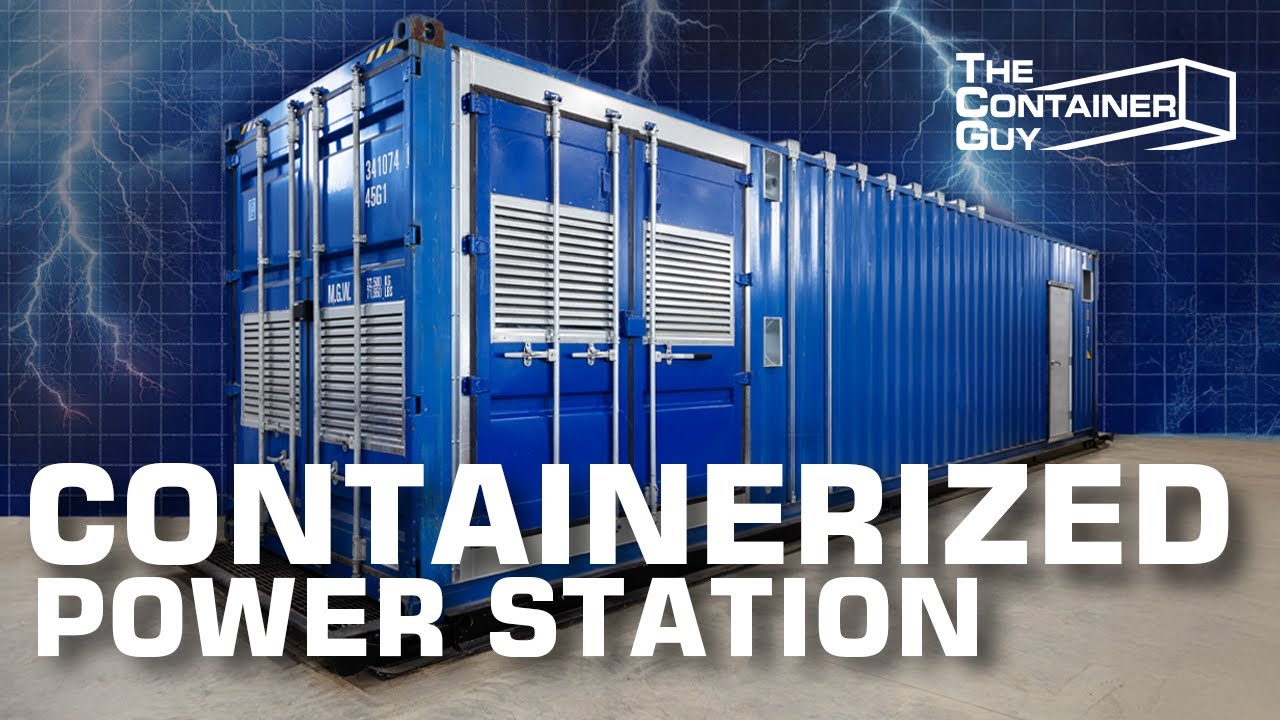
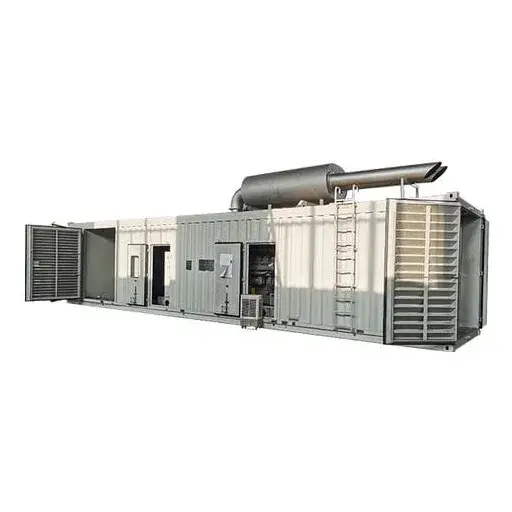
A containerized generator is a transportable and closed off electric power supply that is encased in a shipping container. These systems can produce electric power without any hassle, which makes them a worthwhile source of energy for a number of purposes. The container design effectively allows the generation machine and any other components like the control system, fuel storage and exhaust systems, etc to be enclosed for transport and use without much hassle.
One of the characteristics of the containerized generators is the ability to be versatile. They are available in a variety of sizes with varying levels of power capacity designed to fit the needs in industries such as construction, events, mining, oil and gas, and relief project in case of a disaster. Being mobile means that they can be transferred conveniently to inaccessible areas or to provisional sites due to the lack of traditional powered structures. As such, it effectively becomes quite an essential piece of equipment in both foresighted and rudimentary power applications.
Moreover, most importantly, one feature that is incorporated into containerized generator is resilience to rough terrains. This structural form is able to withstand severe weather, dust, and damage from the conditions outside being the reason of its long life span. Nowadays, many constructions of this kind are equipped with soundproofing devices, monitoring systems, and environmental solutions, all of them allowing flexibility in energy provision which is a contemporary issue.
Components of a Containerized Diesel Generator Set
Every containerized diesel generator set consists of several core parts working together to create reliable power output. These parts are the diesel engine and the alternate, the latter converts the mechanical energy generated by the engine to electrical energy. Both parts play a crucial role in running the generator and are built with the utmost efficiency and durability in mind.
Another extremely important element is this control panel which gives you access to the generator functional and efficiency monitoring and its control. There is information on the voltage, the current, the frequency etc. and the system provides this to ensure that it is running within the set of stipulated safety and performance limits. There is also the combustive system that is concerned with the storage and supply of the diesel fuel needed by the engine which comprises among others – a fuel tank, pipes or fuel lines and a proper filtration system to ensure smooth operation.
The container in itself is also an important object in a containerized generator providing a housing to the generator set. The container protects the internal components from environmental elements such as precipitation, winds or high temperatures. It usually has several sections with ventilation, noise dampening material, and maintenance access so as to improve the generator set’s performance and longevity as well as its use.
Benefits of Containerized Generator Technology
Boxed-up generator is an ideal innovation that meets most if not all power supply requirements due to the several advantages associated with its use. A few benefits of these machines and the reasons why these benefits are important are discussed below:
- Easy Facilitation: This type of generator that is containerized generator is easy to move from one place to another. This is made possible by the fact that all the containerized generators are made with international dimensions fit for at least a truck, a storage container on a ship, or a cargo on a train intoning move will reach its final destination in no time. This is very useful in case of say activities, for example, construction activities or other possible activities like disaster management where containers need to be moved from place to place.
- Free from Overly Harsh Effects of Weather: Reinforced design of the container prevents important elements of the generator from most weather effects like rain, snow, or heat. Therefore, the performance remains unchanged in any environment it is used. It has been found that containerized systems help in increasing the life of generators by as much as 30% as they offer extra protection against environmental concerns in such cases.
- Noise Control: Often, containers are clad with noise-cancellation materials used to reduce operational sound. This aspect is of outmost importance in cities or residential streets where noises are too loud. Containerized units are, on average, less noisy by 15 to 25 dB than those not in a container.
- Safety and Security are Further Enhanced: These generators are fully enclosed in structures, reducing unauthorized access and safety risks. What’s more, in many instances, the containers come with fire suppression systems and ventilation aids which protect the generator from temperatures and fire.
- Simplicity In Servicing: Containerized generators come with simple servicing thanks to built-in access points. Maintenance personnel can gain easy and safe access to the components for repair or examination. This is achieved through a configuration that eliminates almost 20% in time loss hence enhancing effective operation.
That is one of the reasons containerized generator technology is extensively used particularly in industries that require dependable, portable and long-lasting power sources.
Key Features of Containerized Diesel Generators
Portability and Mobility Advantages
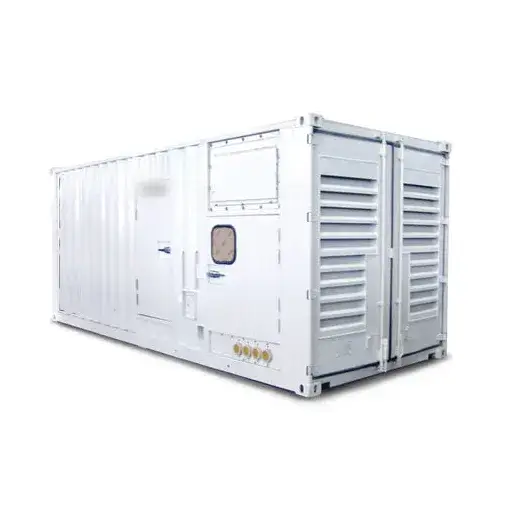
- Transport Convenience: The size of containerized generators within the standard shipping dimensions make it easy to transport the generators through trucks, trains, or ships. With this feature, deployment in remote or less accessible areas is made simple.
- Fast Installation and Relocation: These generators come with incorporated lifting points and skid bases that facilitate quick movement to and installation at the desired site, decreasing the installation time by as much as 30% as opposed to older models.
- Various Applicability Use Cases: The generator’s mobile design supports different settings such as building sites, relief operations, and occasions, thereby providing an unbroken power source.
- Minimized Permanent Fixation: In contrast to the permanent generator, containerized ones do not involve complex groundworks or hard infrastructures, making them appropriate for alternative usages in multiple places without incurring high expenses.
- Resistance While Being Transported: The durable and rugged containerized generator allows not only the transport but also the generation of electricity without any risk of damage to the equipment, making it possible to reduce expenditure associated with maintenance and repairs in any operations even under extreme conditions.
Scalability and Modular Design
Containerized generators have several significant advantages, one of those is that they are easily scalable. With this type of system, it is possible to add many units together in order to satisfy the ever-increasing energy needs. These devices are designed to allow for volume expansions without replacing any of the already existing equipment. It comes in handy when there is a need for power generation in a small-scale factory project or in the case of very large factory production processes. A containerized generator will be an appropriate solution as it can be easily changed and easily adapted to the required specifications and purposes without a problem. For example, at the beginning of an event, it may be effectively working a single unit only, but when the energy demands increase, the further units are readily available.
The design of containerized generator makes maintenance simple while there is reducement of downtime. As every single module is independent in operation, it is possible to inspect or repair one unit while the rest remain operational. This safeguards against the possibility of complete blackouts which is a great benefit especially for companies which require constant power supply. Additionally, new energy management technologies allow these devices to be connected to smart grids increasing their efficiency and energy saving functionality.
As a result of marrying modular framework to scalability, containerized generator manufacturing enterprises presents a unique solution to the power generation companies. Such technology is well-suited for industries like construction, mining and relief operations among other situations where the power needs might not be constant. On top of that, they are capable of incorporating renewable energy which could be either solar or wind for instance and so this increases their versatility in support of clean energy development efforts. This presents an opportunity for firms to minimize the cost and operational difficulties while meeting the objective of sustainability while ensuring that even the remotest areas of operation are not left out.
Technical Specifications to Considera
Fuel Type: Diesel vs. Alternative Options
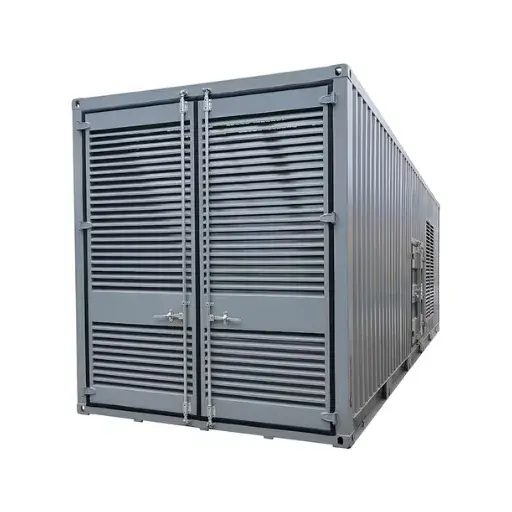
Fuel types for containerized generators include diesel, natural gas, bi-fuel, and hybrid systems.
|
Aspect |
Diesel |
Nat. Gas |
Bi-Fuel |
Hybrid |
|---|---|---|---|---|
|
Expense |
Medium |
Low |
Medium |
High |
|
Pollution |
High |
Low |
Medium |
Very Low |
|
Output |
High |
Moderate |
High |
High |
|
Availability |
Easy |
Moderate |
Easy |
Variable |
|
Upkeep |
Medium |
Low |
Medium |
High |
|
Stability |
High |
Moderate |
High |
High |
|
Adaptability |
Low |
Low |
High |
Very High |
|
Eco-Level |
Low |
High |
Medium |
Very High |
|
Application |
Industrial |
Urban |
Mixed |
Remote |
Switchgear and Control Systems
While the liberalization of energy markets has added flexibility and choice amongst generator options for customers, it has also contributed to creating a wide array of complex electrical infrastructures that are expensive to maintain. In a typical case, a grid-connected system is constucted of several assemblies with switchgears and control gear based on the type of epidermal applications, that is, the underground or overhead. As a result, guideways with a turnout and overhead lines have to be present in all service routes except for electric traction ones. Only in this case can one exclude the presence of the isolated rail and overhead lines on some or all the services provided in such facilities.
Control systems, contrarily, these are the systems are also a means of controlling precise management of mechanical and electrical controlled systems and the essential key aspects of their operations. Such systems may be very basic manual activities, or they may be complex automated menus that contain Programmable Logic Controls (PLCs), HMIs and even SCADA systems. Bringing in control systems in today’s switchgear can further improve flexibility and will also maximize efficiency in these panels as there will be ability to manage operations at the very instance, there will be quick detection of faults and the application of predictive maintenance thus ensuring no downtime and also no costs in all operations.
Technology has greatly improved the management and structures of switchgear and control systems. Implementation of smart devices, including IoT sensors and cloud computing, is forming an upward trend as the products based on that capability are able to consume energy more efficiently and accomplish better system troubleshooting. The safe for the environment design is also on the rise, using materials and designs to reduce environmental impact while maintaining effectiveness. Overall, today’s switchgear and control systems are posed to meet the increasing need for stable, flexible, and energy-efficient power infrastructure in homes, industries, and containerized generator energy systems.
Common Applications of Containerized Generators
Emergency Power Supply for Businesses
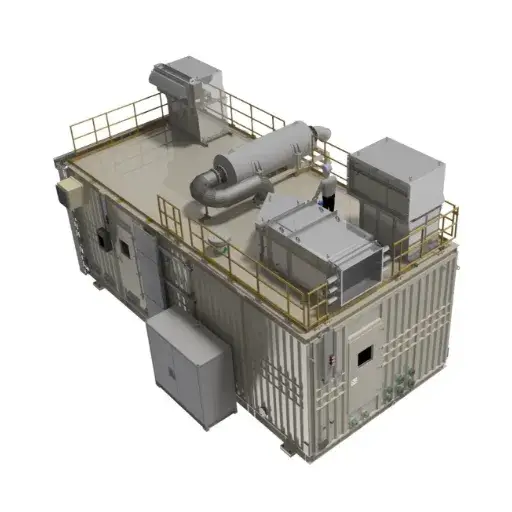
There are various reasons why businesses need some form of backup power, and containerized generators help to achieve these objectives. In most industries, however, businesses that require a steady flow of electricity such as hospitals, data centers, manufacturing plants, or retail stores, the loss of power in that facility should not come as a surprise. It would be disruptive, financially unrealistic and damaging, plus even dangerous in some instances. Containerized generators is an ideal concept for providing a permanent and portable backup power supply because it enables companies to continue trading while waiting for the emergency to ease. They are well-constructed, have a good protection against adverse conditions and can be utilized in most environments so as to protect against threats to systems and information.
Among the essential benefits offered by containerized generators is that they allow customers to scale up and down their operations as needed or desired. Such a model allows an organization to acquire a generator relevant to their energy needs at any given point—whether for a single location or instance, or for supporting multiple and even heavy manufacturing processes. Advanced containerized generators for the market today can contain elements that facilitate remote accessing and management capabilities, as well as imbalance in load changes. Moreover, the units are quickly deployed allowing businesses to recover their momentum of high essential operations without significantly losing time.
Moreover, the containerized generator is designed for solutions to areas where the grid is unstable or blackouts are experienced frequently, in a bid to enhance operation resilience. Already, there are quite a number of units in the market that are more focused on consumption of fuel and emission levels causing a paradigm shift amongst many companies who are green conscious, without denying them any electricity supply. These factors take the containerized generator as an important tool for the provision of emergency power and also an expenditure that is more rational due to growing reliance on power supply globally.
Construction and Industrial Sites
Factories and Construction sites are the ever-changing places that frequently demand a strong and reliable electric power. That is why, more often than not, containerized generator has become an all-time solution since it provides continuous power for heavy equipment, lighting and tools that are considered essential for any site work. Because of distant locations where majority of the works are being carried out especially during the initial stage of the projects, reaching out for the main central sources of electricity is usually impossible. In this case, containerized generators bridge the gap, as they are the source of energy on site when required ensuring a better delivery of different operations without unnecessary breakages.
One of the benefits of using a containerized generator, especially for construction and industries, is that the generator is portable and long lasting. These are usually built inside or fitted into a metal body. The body is diligently constructed for myriad weather conditions from very cold to hot, to water, and to dust. Moreover, since they can be swapped out with ease, it also helps when they split across different sections of a single project or between projects which are located in different places. The importance of this is very high in Temporary Sites. This is where the power unit is carried and setup very quickly thereby accelerating the construction as in with lesser downtime.
One cannot overrule safety and sustainable development, especially, when referring to these sectors, and therefore, containerized generators of the newest generations are manufactured with the main focus set on these aspects. Among these models are those which, in addition to or instead of the cores in a casing, include safety features; examples comprise automatic shutdown in the event of overload and noise level reduction facilities to aid in compliance with local noise ordinances. In this regard, companies which aim to be environmentally friendly are encouraged to select generators that use alternative and lesser polluting gases, such as natural gas or the use of an innovative technology brought about by the combination of fuels and renewable energies. These trends have been an illustration of how the increasing sophistication concerning containerized generator and construction and industrial requirements obeys the pro-business ethos of customer focus as well as embracing environmental consciousness.
Remote and Off-Grid Power Solutions
One of the problems with remote areas is that there is no reliable source of power and thus spoiling of perishable goods remains a common challenge. Well, for these people containerized generator sets have come as quite the companion and are quite efficient with the way they help power these areas. These generators are adaptable for use and hence allowing quick deployment to such areas to tackle different energies required by remote services such as assisting relief services, mining works, construction of employment houses, and communication and signal masts. They are built to work in harsh environments through solid constructions while new management technologies allow for easy management of usage of power which can also be controlled from far.
The adaptability of containerized generators is perhaps one of their most enticing attributes. They can be adapted to work with renewable energy sources including solar energy and wind energy, for instance. The innovative hybrid solutions, which combine these generators with such renewable energy sources, to provide a reliable power supply for off-grid locations, are now gaining popularity. For instance, a solar power system with battery storage and a containerized generator can offer a fluctuating energy supply because of the variable nature of solar energy production, thus providing relief during seasons with less sunlight or wind. By this arrangement, it minimizes the use of fossil-based energy and thus reduces the cost of energy consumption as well as the carbon emissions, but at the same time satisfies the energy needs of remote areas.
Moreover, progress on technology on smart monitoring is allowing users to maximize their generators’ performance when in remote areas where there is no power. The devices and architecture of Internet of Things which are integrated with the cloud are able to offer timely analysis of energy usage, fuel consumption and maintenance needs even at long distances. With predictive analysis it is possible to predict problems that may arise before they become a problem that interrupts power supply. Such technologies boost reliability, increase the efficient use of resources and addresses the increasing need for affordable and eco-friendly energy storage technologies especially in rural setups.
Practical Buyer’s Guide for Containerized Generator Sets
Assessing Your Power Needs
Getting to know what level of power you need comes first before you settle for a containerized generator set for your needs. First, you need to determine the total electrical demand of the equipment, machinery or devices that are to be supplied by the generator. Most of these loads have bidirectional components, which means they have a start-up load and a running load, perhaps equipment such as an electric motor demands more power for starting purposes compared to the power required at any other given time. It is very important to make sure that the capacity of the generator in kW or kVA is developed higher than the most stringent load to avert operational breakdown and expansion push if the need arises.
Consider why and how you use the generator. You may not need a large stationary set if only temporary or emergency usage is intended – a smaller containerized generator – portable – will do. However, where there are other critical activities such as healthcare facilities, construction activities, and industrial facilities in remote places, a more robust and more durable generator fit for extreme weather conditions and long periods of usage is needed. More so other environmental conditions say high or very low temperatures, altitude, and humidity may affect the power of generators and therefore special care has to be taken when purchasing for any particular area.
Finally, look into the generator’s initial cost and fuel efficiency factor. The injection mode of containerized generator where these are stated varies in computing fields. Diesel engines are known to save much on fuel and to withstand for long period of time without breakdown hence their preffered uses among many other heavy duty types. Natural gas, however, most of the timeis cheaper in the long run because it does not pollute the environment as much. Defining what your priorities are first, including the respective fuel costs as well as others for well defined preference will take care of that.
Choosing the Right Diesel Generator Set
The minute I have to select a diesel generator set, there are fundamental aspects that I take into consideration lest I want to get one that isn’t up to snuff. The first thing is assessing my energy needs. Knowing the maximum load that will be required for work or other purposes allows me to select a containerized generator of the right magnitude that prevents coming up short or going way over the top, which can be a colossal waste or even worse play the performance of the equipment itself. There is also the question of whether to use the containerized generator for base load, feature, or range, where all these roles have differentiated levels of performance.
Next, I also give notice to the issue of fuel consumption and operating expenses. The general rule of thumb is that diesel generators are effective but I always have to take into account consumption rates as well as maintenance intervals. These two elements have a direct increment in cost of ownership in time. I on top of anything else pay attention to models that have both costs and fuel consuming effectiveness. In addition, I look into emissions and make sure the generator which is being acquired is emissions compliant in order to meet the sustainability objectives sought.
Lastly, I factor in the generator’s supported lifespan and statutory services. Being a costly item to be considered a durable good, I would look at a known manufacturer with extensive terms of warranties and also is one that can provide one good after sales service. This is also because there is the need to consider serviceability and spare parts pack for the generator on the ground that any complication in its functionality due to wear and tear will translate into putting the operation on hold. With a balance of the above aspects I am able select a containerized generator with careful consideration to reliability, performance and in the end cost effectiveness for my requirement.
Maintenance and Support Considerations
Proper upkeep and dependable assistance contribute to the long and sustainable performance of diesel generator set. It is important to ensure regular checks and schedules which may include inspection, changing oils, servicing the fuel system, and checking the battery for prolonging the aspect of effectiveness and avoiding any unprompted breakdowns of the generator. One should also avoid overusing the equipment as indicated in the manufacturer’s maintenance code. Furthermore, this maintenance being carried out by competent technicians or through service centers which are authorized means that the containerized generator is within the vicinity of the people who understand its niche, capabilities, technologies complexities and enhancements.
The ability to get replacement spares is one more important issue for competent repairs. Generator users should confirm that essential maintenance items such as filters, belts, gaskets and the rest are obtained on time from a reputable source. This is because using locally available supplies tends to reduce the time taken in managing one’s containerized generator as logistical constraints will not arise when they are needed most. The cost of the purchase can sometimes be inclusive of maintenance schedules and spares, thus making it easier to maintain the generator and if I increased the performance in the long run.
Last but not the least, support services which may include 24/7 client support hotlines, remote monitoring options and technical assistance available on site are very important in ensuring that irritations are quite few. New technological capabilities have made available functions such as predictive maintenances that uses sensors and other analytical processes to alert when tension is mounting. Together with such proactive services the number of support interventions required during downtimes is minimized or avoided altogether. Considerations of this nature help users achieve optimum performance form their containerized generator while ensuring that there is sustainability in risks concerning power outages.
References
-
Princeton University – BoxPower and Containerized Microgrids: This article discusses the development and deployment of containerized microgrids, which include containerized generators, for reliable power solutions.
- Click here to read more.
Frequently Asked Questions (FAQ)
Q: What is a containerized power plant? What makes it different from a generator set?
A: This type of generator utilized in its construction comprises a convenient mechanism that is easy to transport as opposed to this standard variation. In other words, a containerized generator is a genset that has been incorprorate into an ISO container or another housing for ease of transportation. In contrast to a standard open genset, a containerized genset is more effective due to improved sound dampening and insulation as well as its weatherproofing. Moreover, it is packaged with systems of coolant systems and heat recovery and it even has space for fuel and other control units which becomes very convenient in terms erection of plants in areas where there is need of temporary power, rescue operations in case of natural calamities, industries and areas far away from power centers.
Q: What sizes and power band is there for powers in containers?
A: Power Modules in containers serve diverse purposes: from smaller portable devices to larger units (power module) generators starting from about five hundred kilowatts all the way to over twelve fifty kilowatts. The standard international size for containers usually comprises twenty-foot and forty-foot containers or enclosures. However, firms_constructors may produce massive heavy_ duty forty-foot versions to address significant power requirements or alternatively produce compact units that meet the International Standards Organization 8528 for the sake of minimal installation period and transportation.
Q: What are the noise control and heat management features of containerized generator enclosures?
A: To mitigate outdoor noise pollution, enclosure manufacturers employ sound proofing materials, sound attenuating designs as well as the use insulation. Thermal management of these units involves fluids that focuses on heat removal through circulation and also includes ventilation for pots that may overheat with operation, and heat recovery systems as an option becasue it makes use of the heat waste for other purposes. Insulation combined with the correct design of the enclosure helps provide the means for successful work in severe geological conditions.
Q: Do we have the ability of using containerised generators at such remote and critical conditions?
A: Indeed, this is possible. Containerized solutions for disaster relief and remote areas are the best, since they – literally – simplify transportation, are easy to set up and maintain power in such areas. As they are in the ISO container format, air transporting of the components is not a problem and coupled with additions like internal fuel, soundproof control box and robust enclosing, they provide a means of supplying power for these emergencies in practice.
Q: Are there any advantages of using containerized generator housings instead of building a generator plant at a location of need?
A: Generators in containers can be deployed more rapidly. They come in standard OEM manufactured containers which integrates all the components in one single unit. There is no need to build the generators on site and projects with these containers take less time to complete. Security, attenuation of noise and vibration, and thermal resistance get all integrated into one shell. If the generator engines are energy efficient or recover heat, they are more environment friendly. Movable and portable as opposed to those constructed permanently on site.
Q: What is the effect of relevant certification like ISO 8528 and ISO 9001 on the performance of generator containers?
A: ISO 8528 relates to engine power assessment and evaluation of generator rating performance (settings like specifying the maximum allowable prime power) on the other hand, ISO 9001 refers to the quality control, control processes and quality processes that are used by the manufacturer. Selecting containerized systems manufactured according to these standards ensures that operations can be optimized, best practices can be followed, and heavy duty-stationary, large power or critical applications can be held up safely.