
The Diesel generator total cost of ownership (TCO) is the entire L-COST of purchasing, installing, running, preserving, and gradually replacing a generator set. The typical lifespan of a Diesel generator generator is 10 years. The price of purchase, therefore, only forms 30-50% of what will actually be spent on generators over a 10-year life. Conversely, fuel, maintenance, opportunity expenses, and compliance costs gobble up the rest.
A 40,000dieselgeneratorcancostyou40,000dieselgeneratorcancostyou200,000 over its lifetime. Most buyers never see the full number until the invoices start piling up. Calculating diesel generator TCO upfront prevents budget surprises.
Procurement officers focus on the sticker price. CFOs ask about depreciation.
But the real financial story unfolds in fuel bills, maintenance schedules, and the surprise costs that never appeared in the original quote.
The global diesel generator market is valued at $21.479 billion in 2026. Buyers across mining, data centers, healthcare, and construction make multi-year commitments when they choose a unit. Understanding the diesel generator TCO before you sign the purchase order is not optional — it is the difference between a sound investment and a budget disaster.
This guide breaks down every cost category, shows you real numbers by duty cycle and brand, and gives you a step-by-step framework to calculate diesel generator total cost of ownership for your specific project. Whether you need standby backup for a hospital or prime power for a remote mine, you will know exactly what that generator will cost you.
For help selecting the right supplier channel before you model costs, see our diesel generator supplier selection guide.
Key Takeaways
- Fuel accounts for 60-75% of diesel generator TCO over 10 years — not the purchase price
- Operating costs per kWh range from 0.15forfuelaloneto0.15forfuelaloneto0.30-0.50 fully loaded with maintenance and depreciation
- TCO varies dramatically by duty cycle: standby generators are CapEx-heavy; continuous units are fuel-dominant
- Running below 30% load increases fuel consumption per kWh and causes wet stacking — a hidden cost most models ignore
- Brand efficiency differences can swing diesel generator total cost of ownership by 15-25% over 10,000 hours
- Used equipment can reduce 5-year TCO by 30-50% — but only with verified hours and documented maintenance history
What Is Diesel Generator Total Cost of Ownership?
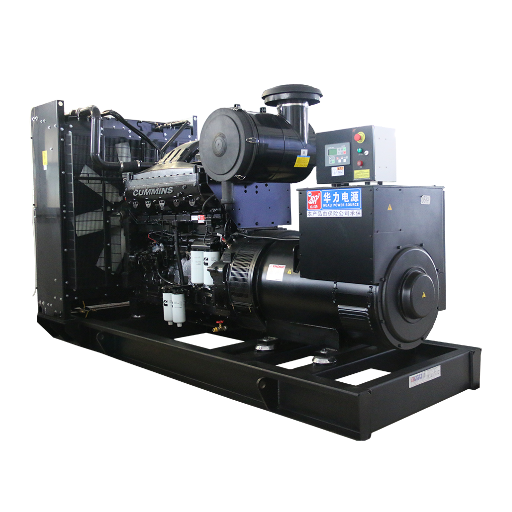
Diesel generator total cost of ownership is a financial model that captures every dollar spent from the day you order the unit to the day you decommission it. It includes capital expenses, operating expenses, hidden costs, and end-of-life value. The standard formula is straightforward:
TCO = CAPEX + Total OPEX over Lifespan + End-of-Life Costs — Residual Value
Capital expenditure (CAPEX) covers the generator itself, installation, electrical integration, and initial commissioning. Operating expenditure (OPEX) covers fuel, scheduled maintenance, repairs, compliance testing, and consumables.
The surprise? CAPEX is usually the smallest slice of the pie.
Industry data furnished by EPRI and various lifecycle studies suggest that OPEX forms 60-75% of the cost over 10 years. This means that the capital purchase price is only a fraction of the real life-cycle cost. Any procurement officer who only budgets for the purchase price will wind up with a 2-3X shock in expenditure in the next five years.
The diesel generator TCO is not a single number. It is a model that changes based on your duty cycle, fuel prices, load profile, maintenance discipline, and the efficiency of the engine you choose. Two identical kVA ratings can have radically different lifetime costs depending on these variables.
At a glance, TCO includes:
- Capital costs: Unit, installation, electrical integration, commissioning
- Operating costs: Fuel, routine maintenance, repairs, consumables
- Hidden costs: Wet stacking remediation, fuel polishing, load bank testing, battery replacement
- Compliance costs: Emissions fees, DEF/SCR consumables, regulatory testing
- End-of-life: Decommissioning, disposal, residual value recovery
Want to see how supplier channel choice affects your upfront cost? Our diesel generator manufacturer buyer’s guide shows how OEM direct, distributor, and trading channels impact your initial CAPEX.
Diesel Generator Cost Components Breakdown
Understanding the diesel generator total cost of ownership requires breaking it into its constituent parts. Each category carries a different weight depending on your application.
Capital Expenditure (CapEx)
CapEx is what most buyers focus on — and it is usually the smallest slice of the pie. But diesel generator total cost of ownership tells a different story. For industrial units, the purchase price runs approximately 500−1,000perkWdependingonrating,emissionstier,andenclosuretype.A500kVAunitmightcost500−1,000perkWdependingonrating,emissionstier,andenclosuretype.A500kVAunitmightcost40,000-60,000.
Installation adds another layer. Electrical controls, automatic transfer switches, cabling, fuel storage tanks, exhaust treatment, and site preparation can add 20-50% to the purchase price. A common industry benchmark is roughly $150 per kW for installation and balance of plant. Commissioning, initial fuel fill, and taxes complete the CapEx picture.
Operating Expenditure (OpEx)
OpEx is where the real money lives. Diesel generator operating cost is overwhelmingly driven by fuel. For a 500 kVA unit running at a 40% load factor, annual fuel costs alone can exceed the initial purchase price within three years. Actual consumption depends on the engine’s brake-specific fuel consumption (BSFC) and your real-world load profile.
Maintenance splits into routine and major categories. Diesel generator maintenance cost scales with runtime and duty cycle.
Scheduled work is the normal maintenance consisting of engine oil and filter changes every 250-500 operating hours, air filter replacements, coolant flush, belt, and hose inspection. Starting batteries must be replaced in every second or third year or so. A basic estimate for the general service of standby units, which are put to use for less than 250 hours annually, is a $500fixedcost plus $500fixedcost plus $1.00 per kW a year.
Major maintenance hits at 10,000-15,000 hours. Turbocharger rebuilds, alternator bearing replacements, valve train work, and full engine overhauls can run $2,000-6,000 depending on the engine. If you are not budgeting for these events, your diesel generator TCO model is incomplete.
Hidden Costs Most Buyers Miss
Carlos, a mining contractor in Peru, learned this the hard way. He bought three 500 kVA standby units for a remote camp, choosing the lowest purchase price he could find. Two years later, wet stacking remediation, fuel polishing, and premature battery replacements added $14,000 in unplanned costs — 22% of his original CapEx.
He had operated the units below 30% load during monthly testing. Unburned fuel accumulated in the exhaust system. That is a real cost that never appeared in his original quote.
Other hidden costs include fuel polishing (approximately $1.00 per gallon treated, needed every two years for standby units),loadbanktesting(1.00pergallontreated, needed every two years for standby units),loadbanktesting(1,000 fixed plus $1.50 per kW, every 2-3 years), emissions compliance fees, DEF and SCR consumables for Tier 4 Final engines, and the cost of unscheduled downtime in critical facilities.
Diesel Generator Cost per kWh: The Numbers That Matter
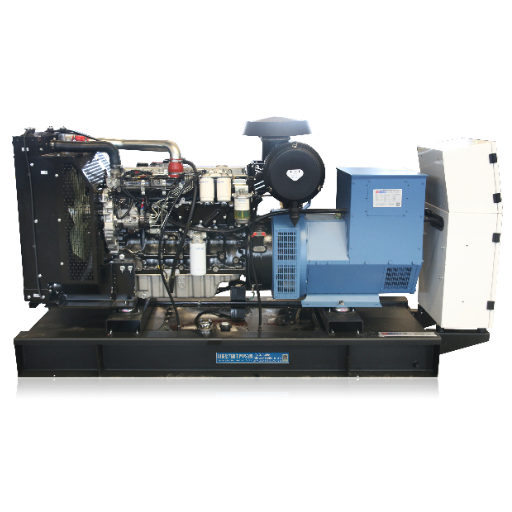
The cost per kWh is the most useful metric for comparing generator economics. It distills every cost category into a single number you can compare against grid power, natural gas, or hybrid alternatives.
Diesel Generator Fuel Consumption by Load Factor
Industrial diesel generators typically consume 0.22-0.30 liters per kWh depending on brand and load. The optimal range is 70-80% of rated capacity, where consumption drops to roughly 0.23-0.26 liters per kWh. Running at 25% load pushes consumption to 0.30+ liters per kWh — a 25% efficiency penalty.
Viktor runs a 250 kW unit at a manufacturing plant in Poland. He operates 8,000 hours per year on prime power. His annual fuel cost reached approximately 2.53 million PLN. His annual O&M cost was roughly 42,500 PLN.
Diesel generator cost per kWh is the metric he watches most closely.
Fuel is 98% of his operating budget. A 5% efficiency improvement would save him approximately 127,000 PLN annually. At that runtime, engine efficiency is not a specification. It is a profit lever.
Diesel Generator Operating Cost per kWh
The total cost to generate electricity includes fuel (70-90% of the cost), maintenance, depreciation, and labor. Typical ranges are:
- Fuel only: $0.15-0.26 per kWh
- With maintenance and upkeep: $0.20-0.30 per kWh
- Fully loaded with depreciation and overhauls: $0.30-0.50+ per kWh
Brand Efficiency Comparison
| Brand | Fuel Consumption (L/kWh) | Relative Operating Cost |
|---|---|---|
| Volvo Penta | 0.22 — 0.24 | Lowest |
| Cummins | 0.235 — 0.255 | Low / Best reliability balance |
| Perkins | 0.24 — 0.26 | Moderate |
| Weichai | 0.26 — 0.28 | Moderate / Lower capital cost |
| Generic Chinese | 0.27 — 0.30 | Higher fuel use, lowest capital cost |
These differences compound over thousands of hours. When calculating diesel generator total cost of ownership, brand efficiency is a major variable. A 0.05 liter per kWh gap between brands translates to thousands of dollars in additional fuel cost annually for prime power applications.
For more guidance on vetting Chinese suppliers specifically, see our article on Chinese diesel generator manufacturers.
Before you compare operating costs, make sure you are evaluating units at the same power rating. Use our kVA to kW calculator to normalize your comparisons.
TCO by Duty Cycle: Three Different Financial Models
The diesel generator total cost of ownership changes shape depending on how many hours per year the unit runs. A standby generator and a continuous generator are entirely different financial animals.
Standby / Emergency Power (<100 hours per year)
Standby units sit idle most of the time. Their cost structure is CapEx-heavy and fuel-light. The 5-year TCO for a 150 kW standby unit might be $60,000-75,000, with 40-50% coming from purchase and installation.
The hidden risk is deterioration during idle periods. Fuel degrades. Batteries fail from disuse. Engines develop wet stacking from monthly light-load testing.
A standby generator that is not properly maintained can fail exactly when it is needed most. The cost of that failure — downtime, spoiled inventory, regulatory penalties — often dwarfs the generator’s own TCO.
Prime Power (2,000-4,000 hours per year)
Prime power units run regularly but not continuously. Their cost structure is fuel-dominant. The 5-year TCO for a 500 kVA prime power unit can reach $300,000-400,000, with fuel representing 60-70% of the total.
Optimization focus shifts to fuel efficiency, maintenance scheduling, and parts availability. At 2,000+ hours per year, a 5% fuel efficiency improvement can save $10,000-20,000 annually. Maintenance discipline becomes critical — missed oil changes at this runtime accelerate engine wear exponentially.
Continuous Power (8,000+ hours per year)
Continuous units run near 24/7. Fuel utterly dominates the economics. The 5-year TCO can exceed $600,000 for a 1,000 kVA unit, with fuel representing 70-80% of total cost. At this scale, every fraction of a liter per kWh matters.
For continuous applications, the diesel generator TCO should be compared directly against natural gas and hybrid alternatives. Natural gas typically costs $0.08-0.12 per kWh if pipeline access exists. Solar-diesel hybrids can reduce generator run hours by up to 50%, often breaking even within 3-4 years.
Not sure which duty cycle applies to your project? Our guide on how to choose diesel generator size helps you match capacity to load profile.
How to Calculate Diesel Generator Total Cost of Ownership: A Step-by-Step Framework
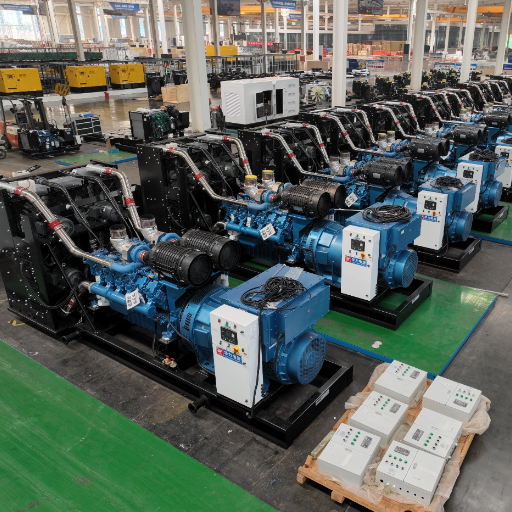
Use this framework to build a TCO model for any diesel generator project. A rigorous diesel generator total cost of ownership analysis protects your budget. Demand real numbers from your supplier. Verbal estimates are not evidence. Numbers are.
Step 1: Define Your Load Profile and Duty Cycle
Document your actual power demand in kW, your expected annual operating hours, and your load factor (average load divided by rated capacity). This single step determines which cost categories matter most.
Step 2: Gather CapEx Inputs
Collect quotes for the generator unit, installation, electrical integration, fuel storage, and commissioning. Specify the Incoterm — EXW, FOB, CIF, and DDP define who pays for shipping and customs. These can shift your initial investment by 10-25%.
Step 3: Model Annual Fuel Consumption
Calculate fuel consumption using the engine’s BSFC at your expected load factor. Multiply by annual operating hours and local diesel price. For international projects, use your local fuel price — not US or European benchmarks.
Step 4: Build a Maintenance Reserve Budget
Budget for routine maintenance annually. Then create a sinking fund for major overhauls at 10,000-15,000 hours. Divide the expected overhaul cost by the hours until it occurs, and set that amount aside per operating hour.
Step 5: Account for Hidden and Compliance Costs
Add fuel polishing, load bank testing, battery replacement, emissions compliance fees, DEF/SCR consumables, and insurance. For standby units, these can add 15-25% to the apparent operating budget.
Step 6: Apply NPV Discounting for Multi-Year Analysis
For projects spanning 10+ years, apply a discount rate of 3-8% to future costs. A dollar spent in year 10 is worth less than a dollar spent today. This is standard practice in capital expenditure proposals.
Step 7: Compare Alternatives
Run the same model for new vs. used equipment, different brands, and alternative technologies. The option with the lowest upfront price rarely has the lowest diesel generator total cost of ownership.
For a deeper understanding of what goes into the generator itself, see our diesel generator set buyer’s guide.
Used vs. New Diesel Generator: A TCO Decision Matrix
Used industrial generators can reduce acquisition costs by 30-50%. But diesel generator total cost of ownership depends on condition, not just price. For some buyers, this is a path to lower diesel generator TCO. For others, it is a path to unexpected expenses.
Used equipment makes sense when:
- You have a qualified technician who can inspect the unit before purchase
- The generator has verified operating hours and documented maintenance history
- A recent load bank test report is available
- The engine and alternator are from reputable manufacturers with available parts
- Your application allows for some downtime risk
Used equipment increases risk when:
- Operating hours are unknown or unverifiable
- The unit has been stored outdoors without protection
- No maintenance records exist
- The engine is from a brand with limited parts availability in your region
- Your application is critical (hospitals, data centers, emergency services)
A used 800 kW unit with 5,000 verified hours and a strong preventive maintenance plan can deliver excellent value. The same unit with unknown history and visible corrosion can become a money pit within months.
Understanding what GOEM authorization means helps you verify whether a used unit’s engine branding is genuine and whether parts support exists.
TCO Optimization Strategies for 2026
These strategies apply across all duty cycles. Implementing even two or three can significantly improve your diesel generator total cost of ownership and reduce diesel generator operating cost over time.
1. Right-Size Your Generator
An oversized generator running at 20-30% load is less efficient per kWh and more prone to wet stacking than a properly sized unit running at 70-80%. Right-sizing starts with an accurate load calculation. Overestimating by 30% can increase lifetime fuel costs by 15-20%.
2. Optimize Load Factor
Target 70-80% of rated capacity for peak efficiency. If your load is chronically low, consider a smaller unit or load bank testing to keep the engine healthy. If your load is growing, model the upgrade timeline before the unit runs inefficiently.
3. Invest in Fuel-Efficient Engines
A 0.03 liter per kWh improvement in fuel consumption saves 3,000−5,000peryearfora500kWunitrunning2,000hoursannually.Over10years,thatis3,000−5,000peryearfora500kWunitrunning2,000hoursannually.Over10years,thatis30,000-50,000 — often more than the initial price premium for the more efficient engine.
4. Build a Preventive Maintenance Schedule
James, a telecom contractor in Kenya, bought a low-cost 100 kW unit through a trading company. He ignored diesel generator fuel consumption data.
The engine consumed 0.30 liters per kWh instead of the quoted 0.24. Over 2,000 hours of prime power operation, the extra fuel cost him $8,400 in year one alone.
That is far more than the $3,000 he “saved” on the purchase price. He had no maintenance support. No warranty. No recourse. His “cheap” generator was the most expensive choice he could have made.
A disciplined maintenance schedule prevents this kind of compound cost. Oil changes, filter replacements, and belt inspections on schedule extend engine life and maintain fuel efficiency.
5. Consider Hybrid Configurations for High-Runtime Applications
For continuous or prime power applications, solar-diesel hybrid systems can reduce generator run hours by 40-60%. The break-even period is typically 3-4 years depending on solar irradiance and fuel prices. The diesel generator total cost of ownership advantage increases with every year of operation after break-even.
Red Flags: TCO Mistakes That Cost You Thousands
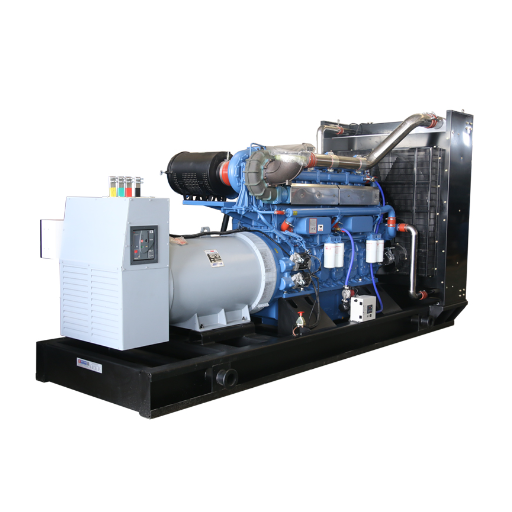
These mistakes appear in diesel generator total cost of ownership models across every industry. Avoid them.
1. Comparing only purchase prices
A 5,000pricedifferencebetweentwounitsismeaninglessifthecheaperunitcosts5,000pricedifferencebetweentwounitsismeaninglessifthecheaperunitcosts15,000 more in fuel over five years. Always compare diesel generator total cost of ownership, not just sticker price.
2. Ignoring fuel consumption differences between brands
Every 0.01 liter per kWh difference matters at scale. Over 10,000 hours, it is thousands of dollars.
3. Undersizing maintenance reserves
Surprise overhaul bills destroy capital budgets. Model them into your TCO from day one.
4. Operating chronically below 30% load
This causes wet stacking, poor efficiency, and premature engine damage. It is a silent diesel generator total cost of ownership killer. Low-load operation is one of the fastest ways to inflate diesel generator maintenance cost.
5. Buying non-compliant Tier engines for regulated applications
EPA Tier 4 Final and EU Stage V compliance adds 40-50% to upfront cost but avoids regulatory penalties and operational restrictions. Buying non-compliant to save money creates liability.
6. Neglecting fuel storage and polishing costs for standby units
Diesel fuel degrades over 6-12 months in storage. Algae, water contamination, and oxidation can clog injectors and damage pumps. Fuel polishing is not optional for standby units.
Conclusion
Diesel generator total cost of ownership is not a single number you look up in a catalog. It is a financial model. It depends on your duty cycle, your load profile, your local fuel price, your maintenance discipline, and the specific engine you choose.
The purchase price is just the entry fee.
For standby applications, focus on reliability and maintenance discipline. Fuel is a minor factor. For prime and continuous power, fuel efficiency dominates everything else. The brand you choose, the size you specify, and the load you run all compound into a lifetime cost that can vary by 50% or more between seemingly similar units.
Use the diesel generator TCO framework in this guide for your next capital expenditure proposal. Model the full 10-year diesel generator total cost of ownership, not just the sticker price. Account for hidden expenses. Compare brands on diesel generator fuel consumption, not just purchase price.
Right-size your generator to your actual load.
Ready to model your next power project? Contact our engineering team for a project-specific diesel generator TCO analysis, or request our full sizing and selection checklist to optimize your load profile from day one.
Frequently Asked Questions
What is diesel generator total cost of ownership?
Diesel generator TCO (total cost of ownership) is the all-inclusive lifecycle cost of acquisition, operation, maintenance, decommissioning and disposal of a diesel generator set. It includes the cost of purchase, installation, fuel, maintenance, compliance expense, hidden cost, and disposal at the end of service life, while any remnant value is deducted. For the next 10 years, the generation of fuel accounts for 60-75% of the total.
How much does a diesel generator cost to run per hour?
The range of operation costs is between $0.15 and $0.40 per kWh just depending upon fuel. Including other costs of maintenance and depreciation, the whole value can reach into the arena of $0.30-0.50+/kWh. For example, for a 100 kW unit at a 75% load, the hourly fuel cost can be somewhere around $12 and $20 per hour based on local diesel prices.
What percentage of generator TCO is fuel?
Fuel typically accounts for 60-75% of diesel generator total cost of ownership over a 10-year lifespan. For continuous power applications, this can reach 80%. For standby applications with minimal runtime, fuel represents a smaller share and capital costs dominate.
How long does a diesel generator last?
A well-maintained full-load diesel generator can operate for 20,000-30,000 hours before major overhaul, typically equating 10-15 years for standby applications, 5-8 years for prime power, and 3-5 years for continuous usage. The anticipated productive duration usually depends largely on maintenance and load profiles.
Is a diesel generator cheaper than natural gas?
For standby and low-runtime applications, diesel usually wins on TCO due to lower upfront cost. For high-runtime applications (2,000+ hours annually), natural gas often delivers better long-term value despite higher initial investment, because fuel costs are lower. Regional fuel price differences matter significantly.
How do I calculate diesel generator fuel consumption?
Multiply the engine’s specific fuel consumption (typically 0.22-0.30 liters per kWh) by your load in kW and your operating hours. For example, a 200 kW unit at 75% load with a BSFC of 0.25 liters per kWh consumes 37.5 liters per hour. Multiply by diesel price per liter for hourly fuel cost.
What is the cost per kWh for diesel generator power?
The diesel generator cost varies from 0.20−0.50 per kWh depending on the fluctuating fuel prices, maintenance interval, and the percentage on load. Standby power during lesser runtime would usually cost around 0.20−0.50per kWh depending on fuel price, maintenance interval and duty cycle. The cost of prime power and continuous power would be around 0.35−0.50perkWh and may exceed 0.50perkWh in the case of continuous power in the fuel-costly regions.
Should I buy a new or used diesel generator?
Buy new if your application is critical, requires warranty protection, or operates continuously. Buy used if you have qualified inspection capability, the unit has verified hours and maintenance records, and a recent load bank test is available. Used equipment can reduce 5-year TCO by 30-50% but carries higher risk.For an in-depth analysis of 2026 diesel generator warranty terms and coverage details, see our Diesel Generator Warranty Complete Buyer’s Guide.
What hidden costs are included in diesel generator TCO?
Hidden costs include wet stacking remediation, fuel polishing, load bank testing, battery replacement every 2-3 years, DEF and SCR consumables for Tier 4 Final engines, emissions compliance fees, insurance, and the quantified cost of unscheduled downtime. These can add 15-25% to apparent operating budgets.
How does load factor affect diesel generator operating cost?
Generators achieve peak fuel efficiency at 70-80% of rated capacity. Running below 30% load increases diesel generator fuel consumption per kWh by 20-30% and causes wet stacking — unburned fuel accumulation that damages the engine. Running at 100% load also reduces efficiency slightly. Proper sizing to match your load profile is essential for minimizing diesel generator total cost of ownership and controlling diesel generator operating cost.
