
Rudi thought he knew how to choose diesel generator size. He added up the running watts from his production system, picked a matching unit, and waited for the next outage. When the grid failed, the generator started without issue. Then the cooling pumps began their startup sequence. The inrush current crashed the voltage, the breakers tripped, and the plant shut down completely within eight seconds.
His facility lost six hours of production and missed a critical delivery deadline.
This story is more common than most engineers admit. Learning how to choose diesel generator size correctly is one of the most important decisions in industrial power system design. Undersizing leads to overload trips, voltage collapse, and damaged equipment. Oversizing wastes capital, increases maintenance, and causes wet stacking that destroys engine components over time.
This guide shows you how to choose diesel generator size using the same process our engineering team at Shandong Huali Electromechanical Co., Ltd. applies on installations from 10 kVA to 4,000 kVA across 70 countries. You will learn how to inventory loads, calculate kW and kVA, apply safety margins, account for environmental derating, and avoid the five mistakes that cost facilities the most money.
For a broader foundation on generator types and selection principles, read our complete guide to diesel generators.
How to Choose Diesel Generator Size in 5 Steps
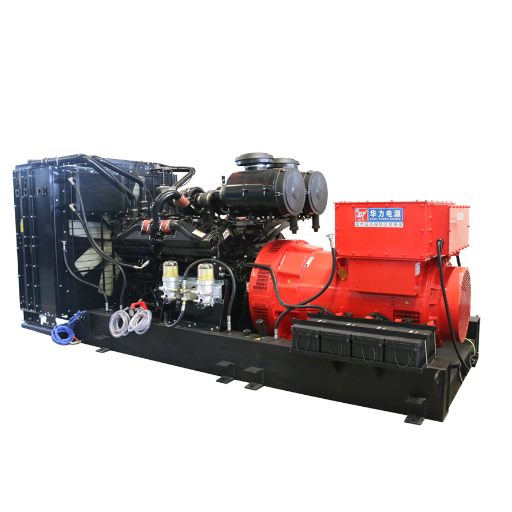
The process of how to choose diesel generator size follows five clear steps. First, list every load the generator must power. Second, add all running watts plus the largest single starting surge. Third, convert kilowatts (kW) to kilovolt-amperes (kVA) using your power factor. Fourth, add a safety margin for growth and transients. Fifth, derate for altitude, temperature, and fuel quality. These five steps form the core of any diesel generator sizing method.
When the calculation is complete, always select the next standard generator size up, never down. If your analysis shows 312 kVA, choose a 350 kVA or 400 kVA unit depending on the manufacturer catalog.
Step 1: Inventory All Connected Loads
Start with a complete load list. Every motor, pump, compressor, HVAC unit, lighting bank, server rack, and safety system that runs simultaneously must appear on your sheet. This inventory is the foundation of how to choose diesel generator size correctly.
For each item, record two numbers from the nameplate or datasheet:
- Running watts (kW): power consumed during normal operation
- Starting watts (surge kW): brief spike needed to start motors or compressors
Running Watts vs. Starting Watts
Most generator failures trace back to electric motors. A 30 kW cooling pump can draw 150 kW or more during its two-to-five-second startup. That spike is called inrush current. If your generator cannot supply it, the voltage drops, breakers trip, and motors stall. Sensitive electronics may reset or fail entirely.
Your starting method determines the surge size:
| Starting Method | Starting Current | Impact on Generator Sizing |
|---|---|---|
| Direct-On-Line (DOL) | 6x to 7x running current | Largest generator required |
| Star-Delta | 3x to 4x running current | Moderate reduction |
| Soft Starter | 2.5x to 4x running current | Significant reduction |
| Variable Frequency Drive (VFD) | 1x to 1.5x running current | Minimal surge impact |
How to Read Equipment Nameplates
Nameplates list power in watts (W), kilowatts (kW), or horsepower (HP). Convert horsepower to kilowatts using 1 HP = 0.746 kW. Accurate nameplate data is the only way to choose diesel generator size correctly.
Some nameplates list current and voltage instead. Calculate watts with:
- Single-phase: Watts = Volts x Amps x Power Factor
- Three-phase: Watts = Volts x Amps x Power Factor x 1.732
If the power factor is not listed, assume 0.8 for general industrial loads.
Loads That Are Easy to Forget
Buyers often focus on large machinery and overlook smaller loads. Check your list against these commonly forgotten items:
- Emergency lighting and exit signs
- Fire suppression pumps and alarms
- HVAC systems, especially compressor startup surge
- Battery chargers and UPS systems
- Security systems and access control
- Exhaust fans and ventilation
- Office equipment and computer servers
- Elevators and conveyor systems
For a broader view of how backup power systems are designed, see our complete backup power generator guide.
Step 2: Calculate Total Power Requirement
The core of any generator size calculation is converting real power into apparent power. Once your inventory is complete, perform the calculation in three parts.
Adding Running Loads
Add the running kilowatts of every device that operates at the same time. Exclude items that run exclusively on backup power or follow schedules that do not overlap with outage periods.
Use your actual operating schedule, not the theoretical maximum. Your facility power requirement should reflect real demand, not the sum of every nameplate rating.
Separate load types by power factor:
- Resistive loads (heaters, incandescent lighting): power factor near 1.0
- Inductive loads (motors): power factor between 0.7 and 0.95 depending on loading
Using one average power factor for the entire facility introduces error. Calculate each load group separately when possible.
Adding the Largest Starting Surge
Identify the single largest motor starting surge on your list. Add only that one surge to your running total. Do not add every starting surge together, because motors rarely start at exactly the same instant.
Total Peak kW = Sum of Running kW + Largest Starting Surge kW
Understanding kW vs. kVA
Generator manufacturers rate units in kilovolt-amperes (kVA), not kilowatts. The relationship is the power factor (PF). The kW to kVA conversion is essential for accurate generator sizing.
kVA = kW / Power Factor
For most industrial loads, use a power factor of 0.8:
kVA = kW / 0.8
This means a 100 kVA generator delivers roughly 80 kW of real power. If your facility has a poor power factor below 0.8, you need a larger generator for the same kilowatt load. In those cases, power factor correction may be worth considering as part of your generator size calculation.
Use our kVA to kW calculator for precise conversions at your actual power factor.
Here is a quick-reference conversion table:
| Total Load (kW) | kVA at 0.8 PF | Recommended Size with 25% Margin |
|---|---|---|
| 20 kW | 25 kVA | 31 kVA → 35 kVA |
| 50 kW | 63 kVA | 78 kVA → 80 kVA |
| 100 kW | 125 kVA | 156 kVA → 160 kVA |
| 200 kW | 250 kVA | 313 kVA → 350 kVA |
| 500 kW | 625 kVA | 781 kVA → 800 kVA |
| 1,000 kW | 1,250 kVA | 1,563 kVA → 1,600 kVA |
Step 3: Apply a Safety Margin
After you calculate base kVA, add a safety margin. This reserve is an essential part of how to choose diesel generator size for real-world operation. It is not an excuse to oversize. It is a calculated reserve for actual operating conditions.
Add 20% to 25% to your base kVA for most industrial applications. This covers:
- Measurement inaccuracies on nameplate data
- Future load growth over three to five years
- Transient spikes from switching events
- Minor load additions between sizing and installation
For critical infrastructure like hospitals and data centers, use a 30% margin. These facilities cannot tolerate any capacity shortfall. For non-critical commercial loads, 20% is usually sufficient.
Example calculation:
- Total running load: 160 kW
- Largest starting surge: 80 kW
- Peak kW: 240 kW
- Base kVA at 0.8 PF: 240 / 0.8 = 300 kVA
- With 25% margin: 300 x 1.25 = 375 kVA minimum
- Select next standard size: 400 kVA generator set
This example shows how to choose diesel generator size in practice. The margin protects against measurement error and modest future growth.
Step 4: Account for Environmental Derating
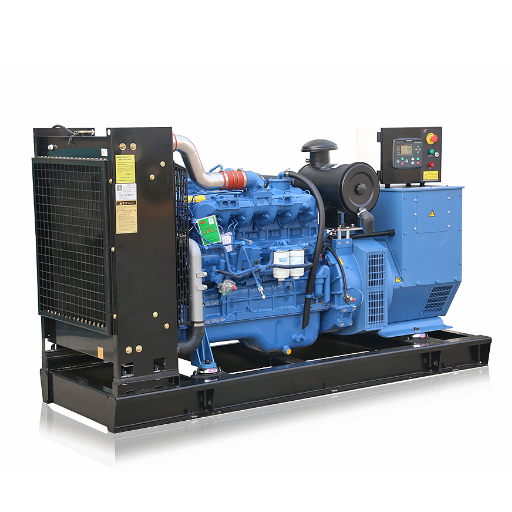
Manufacturers rate generators at sea level and 25°C. Most industrial sites differ from these conditions. Site conditions are a frequently overlooked part of how to choose diesel generator size. You must derate your calculated size to match reality.
Altitude Derating
Diesel engines need oxygen for combustion. At higher altitudes, thinner air reduces both engine power and alternator cooling capacity. Expect approximately 3.5% power loss per 300 meters (1,000 feet) above sea level.
A generator rated at 500 kVA at sea level produces roughly 440 kVA at 1,500 meters elevation.
| Altitude | Approximate Derating |
|---|---|
| Sea level | 0% |
| 500 m (1,640 ft) | ~6% |
| 1,000 m (3,280 ft) | ~12% |
| 1,500 m (4,920 ft) | ~18% |
| 2,000 m (6,560 ft) | ~23% |
Always check the manufacturer-specific derating curve. Different engine designs respond differently to altitude. Including altitude in your generator size calculation prevents hidden shortfalls at site.
High Temperature Effects
Ambient temperatures above 40°C reduce radiator efficiency and alternator output. In hot climates, derate by approximately 10% to 20% depending on the cooling system design. Temperature is another reason why real-world conditions must drive how to choose diesel generator size.
Fuel Quality Impact
Low-cetane or contaminated diesel reduces combustion efficiency by 8% to 12%. In regions with inconsistent fuel quality, size with additional margin or specify engines designed for lower-grade fuel.
Step 5: Factor in Motor Starting and Voltage Dip
This step often decides the final generator size. A facility with modest running loads but large motors may need a generator two or three times larger than the running load alone would suggest. Motor starting is one of the most technical parts of how to choose diesel generator size, and it is where many sizing errors begin.
Why Motors Decide Generator Size
When a motor starts, it behaves like a short circuit for a brief moment. The inrush current can reach two to seven times the motor running current. This surge demands both real power (kVA) and reactive support from the generator.
The generator must maintain voltage within acceptable limits during the surge. Voltage dip limits vary by application:
| Application | Maximum Voltage Dip |
|---|---|
| Hospitals and data centers | 10% |
| General industrial | 15% |
| Non-critical commercial | 20% |
Exceed these limits and equipment malfunctions or shuts down. Downtime follows immediately.
DOL vs. Soft Starter vs. VFD
Your starting method dramatically changes the surge requirement. The table below shows how each method affects how to choose diesel generator size for motor-heavy facilities.
| Starting Method | Starting Current Multiple | Impact on Sizing |
|---|---|---|
| Direct-On-Line (DOL) | 6x to 7x running current | Largest generator required |
| Star-Delta | 3x to 4x running current | Moderate reduction |
| Soft Starter | 2.5x to 4x running current | Significant reduction |
| Variable Frequency Drive (VFD) | 1x to 1.5x running current | Minimal surge impact |
An operations manager in Peru faced exactly this choice. Her mining facility had three 75 kW dewatering pumps. With DOL starting, she needed a 1,250 kVA generator. After installing soft starters on two pumps and staggering start times, her requirement dropped to 800 kVA. The savings in fuel consumption and smaller generator equipment paid for the soft starters within the first year.
Load Sequencing to Reduce Surge
If you cannot add soft starters, sequence your motor starts. Start the largest motor first while other loads are offline. Allow the generator to stabilize before starting the next motor. This spreads the surge over time instead of stacking it into a single peak.
Modern generator control systems can automate this sequencing. Our diesel generator set buyer’s guide covers load-shedding and staged startup options for complex facilities.
For additional technical guidance, manufacturer training videos from Cummins and Atlas Copco provide excellent overviews of load calculation and motor starting.
Common Mistakes When You Choose Diesel Generator Size
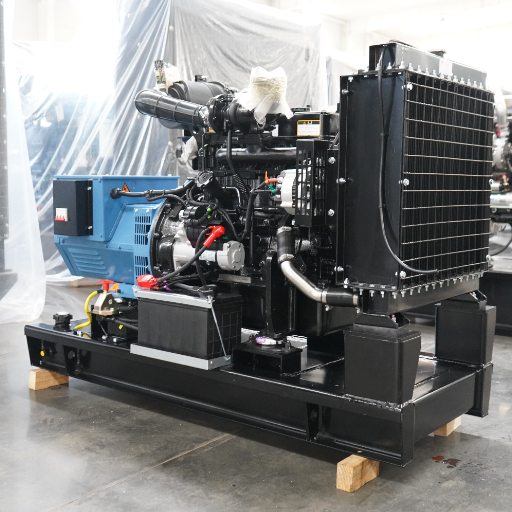
After 25 years of manufacturing generator sets, we see the same errors repeat across industries and continents. Here are the five mistakes that cause the most expensive problems when teams learn how to choose diesel generator size.
Undersizing and Ignoring Inrush
The most dangerous mistake when you choose diesel generator size is calculating only running load. Motors, compressors, and HVAC systems need surge capacity. Ignore it and your generator fails precisely when you need it most, during a power outage when everything tries to restart at once.
Oversizing “Just to Be Safe”
Bigger is not better when you choose diesel generator size. When a generator operates under 30% load for extended periods, it develops wet stacking. Unburned fuel and carbon particles accumulate in the exhaust system. Engine efficiency drops, maintenance costs rise, and the system eventually needs a complete overhaul.
David, a facilities director in Kenya, bought a 500 kVA generator for a 120 kW demand. He wanted “space for future development.” Wet stacking blocked his diesel particulate filter after 18 months. The repair bill exceeded the price difference between his oversized unit and the 200 kVA generator he should have used. Diesel generator sizing must balance today’s demand with realistic growth.
Equipment should operate at 70% to 80% load during normal work. That range delivers the best fuel efficiency, longest engine life, and healthiest emission controls.
Assuming 100 Percent Simultaneous Load
Not every device runs at full power at the same time. Industrial facilities use diversity factors to account for this. A typical mixed industrial load has a diversity factor of 0.8 to 0.9. That means actual peak demand is 80% to 90% of the sum of all individual nameplate ratings. Understanding this distinction is a key part of how to choose diesel generator size without overspending.
Analyze your operating patterns. Use measured data from power analyzers rather than theoretical maximums. This alone can reduce your generator requirement by 10% to 20% without any real risk.
Neglecting Site Conditions
Buyers who size at sea-level ratings for high-altitude sites, or who ignore ambient temperature, create hidden shortfalls. The generator that works perfectly in the factory test cell may fail at your site. Always apply derating curves for your actual conditions.
Confusing Standby, Prime, and Continuous Ratings
These three ratings describe how long and how hard a generator can run. Using the wrong rating voids warranties and shortens engine life.
| Rating | Use Case | Load Profile |
|---|---|---|
| Standby | Emergency power only | Limited annual hours, variable load |
| Prime | Primary power | Unlimited hours, variable load |
| Continuous | Constant load | Extended periods at steady load, unlimited hours |
Sizing by Application: Typical Industrial Scenarios
Industrial generator sizing differs by industry. Different sectors have different load profiles, duty cycles, and criticality requirements. The table below shows typical sizing ranges based on our field experience.
| Application | Typical Running Load | Key Sizing Factor | Common Generator Range |
|---|---|---|---|
| Manufacturing factory | 200-1,000 kW | Motor starting surge | 350-1,500 kVA |
| Hospital / healthcare | 150-800 kW | Life safety + fire pumps | 300-1,200 kVA |
| Data center | 500-5,000+ kW | N+1 redundancy requirement | 1,000-8,000+ kVA |
| Mining operation | 300-2,000 kW | Altitude derating + pumps | 600-3,000 kVA |
| Construction site | 50-300 kW | Mobile/portable requirement | 80-500 kVA |
Manufacturing Factory
Factories combine resistive heating, motor-driven machinery, and lighting. The largest motors usually dominate sizing. A food processing plant with multiple refrigeration compressors may need 40% more kVA than its running load suggests.
For more on how industrial diesel generators are specified for mining, manufacturing, and heavy construction, see our overview of industrial diesel generator applications. Industrial generator sizing for these sectors must account for motor starting, altitude derating, and continuous duty cycles.
Hospital / Healthcare
Hospitals must start life safety systems within 10 seconds per NFPA 110. Fire pumps with DOL starting create massive inrush. Size for the worst-case emergency scenario, not normal operating load. Healthcare is one of the most demanding applications when you choose diesel generator size.
Data Center
Data centers require N+1 or 2N redundancy. Size your generator array so that if one unit fails, the remaining units still carry the full load. Our parallel-capable generator sets support synchronized multi-unit installations up to 4,000 kVA per unit. Data center operators cannot afford mistakes when they choose diesel generator size.
For data center-specific design requirements, see our generator for data center guide.
Mining Operation
Mines operate at altitude with heavy pump and ventilation loads. Altitude derating plus dust filtration losses can reduce effective capacity by 25% to 30%. Size accordingly.
Construction Site
Construction loads are temporary and mobile. Trailer-mounted or containerized generators offer flexibility. Size for the peak tool load plus welding equipment surge.
Agricultural & Farm Operations
Farms combine irrigation pumps, grain dryers, cold storage, and livestock ventilation. Many of these loads are seasonal, so peak demand can be much higher than average demand. Farm operators should size for the worst seasonal load and consider agricultural diesel generator options built for dusty, remote conditions.
When to Consult a Manufacturer for Custom Sizing
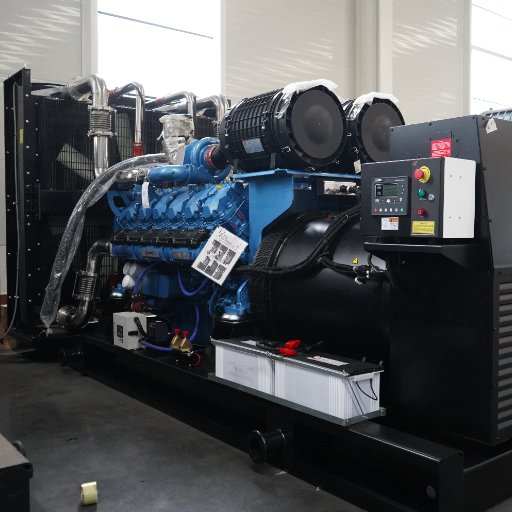
Simple facilities with stable, well-documented loads can use the process above. Complex facilities benefit from professional load analysis. Expert support is often the safest way to choose diesel generator size when conditions are demanding. Contact a manufacturer when:
- Your facility has 10 or more motors above 30 kW
- You operate at altitude above 1,000 meters or temperature above 40°C
- Your application is life-safety critical (hospitals, emergency services)
- You need parallel operation or future expansion capability
- Your load includes non-linear equipment like VFDs or UPS systems that create harmonic distortion
Prepare these documents before your consultation:
- Complete load inventory with nameplate data
- Single-line electrical diagram
- Site elevation and maximum ambient temperature
- Operating schedule showing which loads run simultaneously
- Future expansion plans for the next three to five years
- Starting method for each motor (DOL, soft starter, VFD)
Having these details ready is the fastest way to get expert help when you choose diesel generator size for a complex facility.
At Shandong Huali Electromechanical Co., Ltd., our 80-engineer team uses transient simulation software and data from our 20 MW national-standard testing center to verify every sizing recommendation. We do not guess. We calculate, test, and validate before you commit.
Our diesel generator sets range from 10 kVA to 4,000 kVA with Cummins, Perkins, Weichai, and Yuchai engines. All units complete pre-delivery testing at 100% load according to ISO 9001 and CE-certified procedures.
Frequently Asked Questions
What is the first step in how to choose diesel generator size?
The first step is to inventory every electrical load the generator must power. Record both running watts and starting watts for each item. Without a complete load list, every later calculation is unreliable.
How do I convert kW to kVA for generator sizing?
A clear kW-to-kVA conversion is central to how to choose diesel generator size accurately. Divide the total kilowatts by your power factor. For most industrial loads, use 0.8. The formula is kVA = kW / 0.8. A 100 kW load therefore requires 125 kVA at 0.8 power factor.
What safety margin should I add to my generator size?
Adequate margin is one of the most important rules in how to choose diesel generator size. Add 20% to 25% for most industrial applications. Use 30% for critical infrastructure like hospitals and data centers. For non-critical commercial loads, 20% is usually sufficient.
Why does motor starting current matter more than running load?
Motor starting current is a defining factor in how to choose diesel generator size for industrial facilities. Motors can draw six to seven times their running current during startup. If the generator cannot supply that brief surge while maintaining voltage, breakers trip and motors stall. That single surge often determines the final generator size.
How does altitude affect diesel generator sizing?
Altitude changes how to choose diesel generator size in any elevated location. Diesel engines lose approximately 3.5% power per 300 meters (1,000 feet) above sea level. A 500 kVA generator at sea level produces roughly 440 kVA at 1,500 meters. Always apply the manufacturer derating curve.
Is it better to oversize or undersize a generator?
Neither extreme is acceptable when you choose diesel generator size. Undersizing causes failures during outages. Oversizing leads to wet stacking, carbon buildup, and premature engine wear. Aim for 70% to 80% load during normal operation.
Conclusion
Learning how to choose diesel generator size is engineering, not estimation. Start with a complete load inventory. Calculate running watts plus the largest starting surge. Convert to kVA using your actual power factor. Apply a 20% to 25% safety margin. Then derate for altitude, temperature, and fuel quality. These diesel generator sizing steps protect your facility and your budget.
Avoid the two extremes. Undersizing causes failures during your most critical moments. Oversizing wastes capital and destroys engines through wet stacking. The right size operates at 70% to 80% load, delivers reliable power, and leaves room for controlled growth.
For complex industrial facilities, professional load analysis pays for itself many times over. A correctly sized generator runs longer, costs less to maintain, and protects your operations when the grid fails. The final step in how to choose diesel generator size is to validate your numbers with an experienced manufacturer.
Contact Shandong Huali today for expert generator sizing and a customized power solution built for your exact requirements.
