
A typical telecom diesel generator for a macro cell tower ranges from 20 kW to 50 kW, while microcells and small cells need 5 kW to 15 kW. The exact size depends on your tower type, radio equipment load, climate, and required fuel autonomy. If you are sizing a cell tower backup generator, you need more than a standard industrial unit, you need a system built for rapid start, remote monitoring, and extended runtime in some of the world’s most challenging environments.
In March 2024, a mobile network operator in Tanzania lost $47,000 in a single day when a rural tower went offline during a grid outage. Their cell tower backup generator had failed to start. The unit was undersized for the site’s new 5G equipment, poorly maintained, and lacked remote monitoring. By the time a technician reached the site, 18 hours had passed and subscriber churn had already begun.
This guide is built for telecom infrastructure engineers and MNO procurement managers who cannot afford that kind of failure. You will learn how to size a generator for a telecom tower of any type, choose between AC, DC, and hybrid architectures, prevent fuel theft, meet telecom-specific standards, and procure the right unit at the right cost, including what to look for when buying factory-direct from a manufacturer.
Key Takeaways
- Macro towers need 20-50 kW generators; microcells need 5-15 kW; always add a 20% buffer plus N+1 redundancy for critical sites.
- 5G base stations consume 2-3x more power than 4G, so retrofitting existing towers often requires upgrading the generator.
- A telecom diesel generator must start in under 10 seconds, support remote NOC integration via SNMP or Modbus, and run autonomously for 7-14 days.
- Fuel theft, wet stacking from light loads, and altitude derating are the three most overlooked problems in telecom generator fleets.
- Buying factory-direct from an OEM can reduce unit cost by 25-40% compared to buying through regional distributors.
What Is a Telecom Diesel Generator?
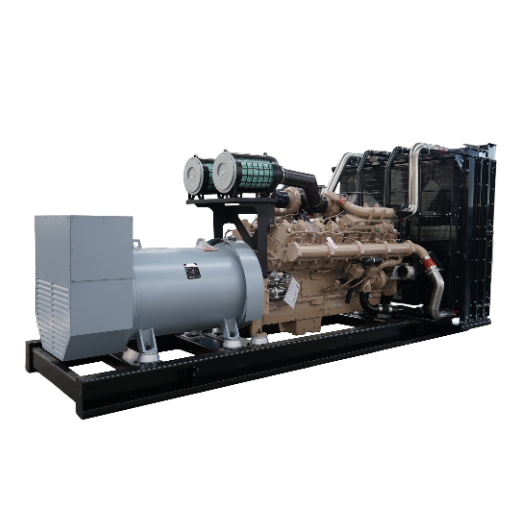
A telecom diesel generator is the core of any telecom standby power system, a diesel-powered engine-alternator set designed specifically for telecommunications infrastructure. Unlike a standard diesel generator set, a unit built for telecom must handle rapid automatic start, integration with rectifiers and battery banks, remote monitoring from a Network Operations Center, and extended unmanned runtime.
According to GSMA data, roughly 1.2 million telecom towers worldwide rely on diesel generators as either primary or backup power. Many of these towers sit in remote areas with unreliable grid supply, rural Africa, island communities in Southeast Asia, and mountainous regions in Latin America. At these sites, the generator is not a backup luxury. It is the lifeline that keeps the network alive.
Telecom Generator vs. Standard Industrial Generator
| Feature | Standard Industrial Generator | Telecom Diesel Generator |
|---|---|---|
| Start time | 10-15 seconds | Under 10 seconds |
| Remote monitoring | Optional add-on | Standard requirement |
| Fuel autonomy | 8-24 hours typical | 7-14 days typical |
| Noise requirement | Varies by site | Under 75 dB at 7 meters |
| Load profile | Often near rated capacity | Frequently light-loaded |
| Enclosure | Basic canopy or open frame | Weather-resistant, tamper-proof |
The difference matters. A standard unit might start too slowly for telecom battery bridging, lack the communication protocols your NOC requires, or suffer wet stacking damage because it rarely runs above 30% load.
Power Requirements by Tower Type: 5G, 4G, and Rural Sites
Not every tower draws the same power. Sizing a generator for a telecom tower starts with knowing exactly what you are powering.
Macro Cell Tower
A typical macro cell tower hosts multiple radio units, a baseband processing unit, rectifiers, battery banks, cooling systems, and microwave or fiber transmission equipment. Total load ranges from 20 kW to 50 kW depending on the number of carriers and technology generations deployed.
With the rollout of 5G, these numbers are climbing. According to the Ericsson Mobility Report, 5G base stations consume 2-3 times more power than equivalent 4G equipment. A tower that ran comfortably on a 30 kW generator in 2020 may now need 45 kW after 5G upgrade. Any 5G tower power generator must be sized for this increased draw from day one.
Microcell and Small Cell
Urban densification and in-building coverage drive microcell deployments. These sites draw 5 kW to 15 kW and often sit on building rooftops or utility poles. Space is tight and noise restrictions are strict. A silent diesel generator for telecom applications becomes essential here, often in a compact canopy enclosure rated under 65 dB.
Rural and Off-Grid Tower
Rural towers in developing markets frequently operate without grid connection at all. The generator runs as prime power, charging batteries during the day and cycling as needed. Loads range from 10 kW to 30 kW, but fuel autonomy becomes the critical factor. A remote cell tower generator in sub-Saharan Africa may need 14 days of onboard fuel because the nearest road becomes impassable during rainy season. Specifying the right remote cell tower generator for these conditions means prioritizing fuel autonomy above all other factors.
Rooftop and Urban Site
Rooftop installations face space constraints, weight limits, and strict municipal noise ordinances. These sites favor smaller units in highly attenuated enclosures, sometimes with hybrid battery augmentation to reduce generator runtime and noise exposure.
| Tower Type | Typical Load | Recommended Generator | Fuel Tank (7-Day Autonomy) |
|---|---|---|---|
| Macro cell | 20-50 kW | 30-65 kW | 500-1,200 liters |
| Microcell/small cell | 5-15 kW | 10-20 kW | 150-400 liters |
| Rural off-grid | 10-30 kW | 15-40 kW | 400-1,000 liters |
| Rooftop urban | 5-20 kW | 8-25 kW | 200-500 liters |
Ready to spec a generator for your tower portfolio? Contact our engineering team for a free load assessment and sizing recommendation.
AC vs. DC vs. Hybrid: Choosing Your Generator for Telecom Tower Power Architecture
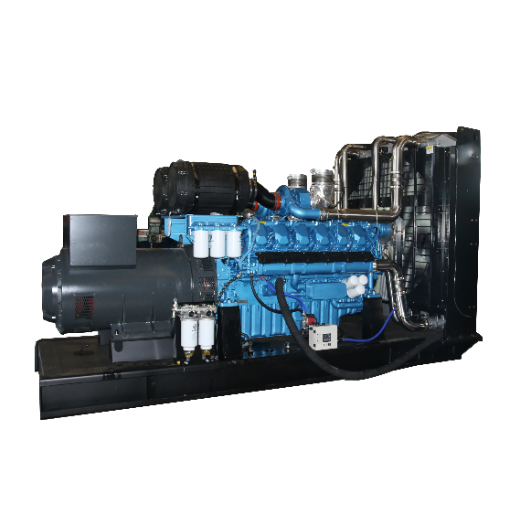
Telecom power architecture has evolved significantly. Three main configurations dominate the market in 2026.
AC Diesel Generators
The traditional approach uses an AC generator outputting 400/230 V or 480 V, feeding site rectifiers that convert to DC for the radio equipment and charge the battery bank. This is proven, flexible, and easy to service. However, it involves conversion losses at the rectifier stage and requires a larger generator to cover peak AC demand.
DC Generators
A DC generator outputs directly at 48 VDC or 24 VDC, eliminating rectifier conversion losses. This improves overall system efficiency by 10-15% and can extend battery life by maintaining more precise charge profiles. DC units are increasingly popular for rural and off-grid towers where every liter of fuel matters.
Solar-Diesel-Battery Hybrid
The hybrid telecom power system is becoming the default for new rural builds. A well-designed hybrid telecom power system can cut fuel consumption by 40-70% and reduce generator runtime from 24 hours to 4-8 hours per day. GSMA estimates that 60% of new rural telecom deployments in 2025 incorporated solar panels alongside diesel generators and battery banks. The solar array handles daytime load and charges batteries. The diesel generator runs only when solar is insufficient and battery state-of-charge drops below a threshold.
This cuts fuel consumption by 40-70% and reduces generator runtime from 24 hours to 4-8 hours per day, extending engine life and slashing maintenance costs.
| Architecture | Best For | Efficiency | Fuel Cost | Upfront Cost |
|---|---|---|---|---|
| AC diesel | Established grids, quick deployment | Standard | Higher | Lower |
| DC diesel | Off-grid, fuel-constrained sites | +10-15% | Medium | Medium |
| Hybrid solar-diesel | New rural builds, long-term TCO focus | Highest | Lowest | Higher |
Critical Telecom Generator Specifications
Sizing with N+1 Redundancy
Telecom networks cannot tolerate single points of failure. For Tier III and Tier IV sites, operators specify N+1 redundancy, one backup generator for every primary unit. Even without full redundancy, always apply a 20% capacity buffer above calculated peak load. Future expansion, equipment degradation, and extreme weather all push actual demand higher than nameplate ratings.
Startup Speed and ATS Requirements
A telecom diesel generator must reach full rated output within 10 seconds of a grid failure. Battery backup bridges the gap for 30 seconds to 2 minutes, but if the generator fails to start or synchronize quickly, the site drops. Specify an automatic transfer switch (ATS) with seamless make-before-break logic where budget allows.
Noise Control and Enclosure Standards
Urban and suburban towers face noise limits, commonly under 75 dB at 7 meters. Some European municipalities enforce 55 dB at the property line. A silent diesel generator in a properly engineered sound-attenuated canopy is non-negotiable for these sites. The enclosure should also include thermal management, rain protection, and rodent-proof cable entry.
Altitude and Temperature Derating
High-altitude towers lose power density. A generator rated at 30 kW at sea level produces roughly 25 kW at 3,000 meters. Hot ambient temperatures compound the loss. If you are sizing a generator for a mountain tower in Peru, Bolivia, or East Africa, demand derating curves from your supplier and oversize accordingly.
Fuel Autonomy Planning
Most telecom operators specify 7 days of fuel autonomy for grid-connected sites and 14 days for off-grid or hard-to-access locations. Calculate true consumption, not brochure figures. A 30 kW generator at 75% load consumes approximately 7-8 liters per hour. Seven days of autonomy at 18 hours daily runtime requires roughly 950 liters, plus a safety margin.
Remote Monitoring and NOC Integration
Modern telecom infrastructure is managed from centralized Network Operations Centers. Your generator controller must communicate via SNMP, Modbus TCP/IP, or 4G cellular modem. Parameters to monitor include running hours, oil pressure, coolant temperature, fuel level, battery voltage, and fault alarms. A smart control panel with remote monitoring capability is not optional for multi-site fleets.
Fuel Security and Logistics for Remote Towers
Fuel is often the largest operating cost for any remote cell tower generator fleet. It is also the most vulnerable to theft.
Fuel Theft Prevention
At remote towers in Nigeria, Kenya, and parts of South Asia, fuel theft can consume 20-30% of delivered diesel. Effective countermeasures include lockable fill caps, tamper-evident seals, ultrasonic fuel level sensors with real-time alerts, and dual-wall tanks that make siphoning far more difficult. Some operators have moved to below-ground tanks with locked access vaults.
Fuel Polishing and Storage in Tropical Climates
Diesel degrades in hot, humid climates. Water condensation breeds microbial contamination that clogs filters and corrodes injectors. For tropical telecom sites, specify fuel polishing systems or biocide treatment protocols. Tank breathers with desiccant filters prevent moisture ingress.
Calculating True Fuel Consumption
Do not trust brochure fuel curves. Measure actual consumption over a representative month. Factors that inflate consumption beyond rated specs include light loading, frequent starting and stopping, altitude derating, and aged injectors. Budget 10-15% above manufacturer figures for real-world operation.
In 2023, a Nigerian MNO discovered that fuel records at 23 rural towers did not match generator runtime logs. An audit revealed systematic siphoning during nighttime refueling runs. After switching to lockable dual-wall tanks with IoT fuel sensors, the operator reduced fuel losses from 28% to under 4% within six months. The investment in tank security paid for itself in 14 weeks.
Telecom Standards and Compliance
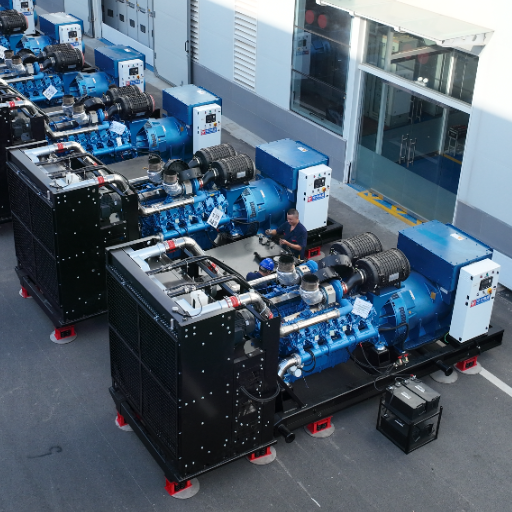
ITU-T L.1200 and Energy Efficiency Standards
The ITU-T L.1200 series defines energy efficiency metrics and measurement methods for telecommunication equipment. While primarily focused on radio and core network gear, the standards increasingly influence auxiliary power system specifications. MNOs reporting sustainability metrics need power systems that align with these frameworks.
ETSI EN 300 019 Environmental Classifications
European operators reference ETSI EN 300 019 for equipment environmental resilience. The standard defines temperature ranges, humidity, vibration, and dust exposure classes. A generator enclosure for an outdoor telecom site in the Middle East or North Africa should meet at least Class 3.2 or 4.1 requirements.
Emissions Compliance
Depending on your market, emissions standards may include EPA Tier 2 or Tier 4 Final (United States), Euro Stage IIIA/V (Europe), or local regulations in China, India, and Africa. For export markets, verify that your supplier can configure engines to meet the specific standard required. Not every engine sold in one region complies with another.
Network Reliability Grades
Telecom infrastructure follows a tiered reliability model. Tier I sites have basic power with single paths. Tier IV sites demand fully redundant power with concurrent maintainability. Your generator specification should match the tier grade of the site it supports. A Tier IV data center hub requires a very different power architecture than a Tier II rural coverage tower.
Telecom Generator Sizing: A Step-by-Step Diesel Sizing Manual
Step 1: Inventory all loads. List every powered device at the site, radio units, baseband, rectifiers, cooling, transmission, security systems, and lighting. Record both rated power and actual measured draw.
Step 2: Apply a diversity factor. Not every device runs at peak simultaneously. A diversity factor of 0.7 to 0.85 is typical for telecom sites, though conservative designers often use 1.0 for critical hubs.
Step 3: Add 20% buffer and N+1 if required. Multiply your diversified load by 1.2. For Tier III/IV sites, double the result for N+1 redundancy.
Step 4: Adjust for altitude and ambient temperature. Request derating curves from your engine manufacturer. At 3,000 meters and 40°C ambient, a 30 kW engine may deliver only 22-24 kW.
Step 5: Select fuel autonomy duration. Multiply hourly fuel consumption by expected daily runtime and required days of autonomy. Add 15% safety margin.
Worked example: A rural tower in Tanzania runs a 15 kW radio load with 5 kW of cooling and transmission. With 0.8 diversity, diversified load is 16 kW. With 20% buffer, target generator is 20 kW minimum. At 2,500 meters altitude, derating demands a 25 kW unit. For 14-day autonomy at 12 hours daily runtime and 6 L/hr consumption, the fuel tank must hold at least 1,150 liters.
To explore load calculations in more depth, see our complete diesel generator set sizing methodology.
Wet Stacking and Light-Load Problems in Your Telecom Standby Power System
Generators in any telecom standby power system are chronically underloaded. They test-run for 15 minutes monthly and exercise for an hour under light load. They rarely see 50% or more of rated capacity. This creates a specific failure mode called wet stacking.
Wet stacking occurs when a diesel engine runs below 30% load for extended periods. Combustion temperatures drop too low to fully burn fuel. Unburned fuel and carbon wash past piston rings and accumulate in the exhaust system, oil pan, and turbocharger. The result is oil dilution, carbon buildup, premature wear, and eventually catastrophic failure.
Prevention is straightforward but requires discipline. Load bank the generator quarterly to at least 75% rated load for 30 minutes. Ensure monthly exercise cycles include a load transfer that forces the generator to carry real site load, not just run unloaded. Set controller alarms for chronic underload conditions. Specify engines with optimized fuel mapping for light-load operation.
In 2022, an Indonesian tower operator on the island of Sulawesi experienced three generator failures in eight months across a fleet of 40 rural sites. Root cause analysis traced every failure to wet stacking. The generators were running their standard 30-minute monthly exercise cycles with no real load. Carbon had packed the turbochargers on all three failed units. The operator switched to quarterly load banking and modified exercise protocols to force actual site load during tests. No wet-stacking failures have occurred since.
Containerized vs. Canopy vs. Open-Frame for Telecom Sites
The physical form factor of your generator affects installation cost, security, noise, and weather protection.
| Form Factor | Noise Level | Weather Protection | Security | Best Use Case |
|---|---|---|---|---|
| Containerized | 65-75 dB | Excellent | Excellent | Extreme climates, marine sites, high theft risk |
| Sound-attenuated canopy | 68-78 dB | Good | Moderate | Standard outdoor telecom sites |
| Open-frame | 85-95 dB | None | Poor | Indoor shelters, temporary sites, lowest budget |
Containerized Generators
A 20-foot or 40-foot ISO container houses the generator, fuel tank, control panel, and sometimes switchgear in a single lockable unit. Containerized generators excel at remote sites with extreme weather, salt spray, or security concerns. They ship as complete systems, reducing on-site installation time. For a desert macro site in the Middle East, a containerized unit with integrated sand filtration and 14-day fuel autonomy is often the only viable solution.
Sound-Attenuated Canopy
The standard choice for most outdoor telecom sites. A steel canopy with acoustic lining, ventilation louvers, and exhaust silencer brings noise down to 68-75 dB at 7 meters. Canopy units cost less than containerized equivalents and offer easier access for maintenance. They fit most macro and rural tower applications.
Open-Frame Generators
Open-frame units offer the lowest upfront cost and smallest footprint. They require an existing shelter or building for weather and security protection. Use these only when an indoor space is already available and budget is severely constrained.
Procurement Guide: Buying a Diesel Generator for Communication Tower Infrastructure
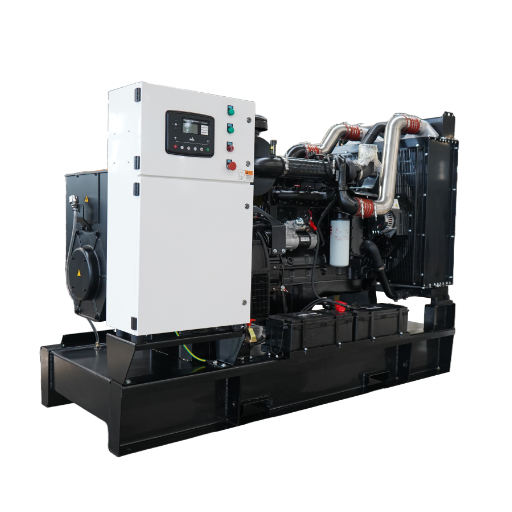
Buying a diesel generator for communication tower infrastructure directly from a Chinese OEM can reduce unit cost by 25-40% compared to buying through regional distributors. But it requires due diligence.
OEM vs. Trading Company Verification
Verify that you are dealing with the actual manufacturer, not a trading company. Ask for factory video tours, ISO 9001 certificates, and export license documentation. A genuine OEM will have CNC machining centers, engine test beds, and loading banks on site. A trading company will not.
Engine Authenticity
The engine is 60-70% of the generator’s value. Confirm that your Cummins, Perkins, Weichai, or Baudouin engine comes with a genuine factory warranty and serial-number traceability. Counterfeit engines circulate in some markets. Request original factory test reports and COO documentation.
Customization for Telecom
A factory-direct OEM can customize for telecom-specific requirements: pre-integrated remote monitoring controllers, dual-wall fuel tanks, extended base frames for larger day tanks, tropical radiators, and containerized enclosures. Distributors sell standard models. Manufacturers build what you actually need.
Shipping and Site Logistics
Containerized generators ship as complete units in standard ISO containers, simplifying logistics to remote sites. Canopy units ship on flat racks or in open-top containers. Plan for unloading equipment at site, a 2,000 kg generator in a canopy requires a crane or forklift.
Warranty and Parts Availability
For developing market deployments, confirm that spare parts are stocked regionally or can be shipped within 72 hours. A 2-year warranty is standard. Extended warranties and preventive maintenance contracts are negotiable for fleet orders.
In late 2024, a Tanzanian MNO needed 47 generators for a rural coverage expansion across six provinces. After evaluating distributor quotes from Dubai and Johannesburg, the procurement team visited Shandong Huali’s facility in China. They confirmed CNC manufacturing, loading bank testing, and Cummins engine authenticity on site. The factory-direct order included custom remote monitoring pre-integration, dual-wall tanks with lockable caps, and tropical cooling packages. Delivered cost per unit was 34% below the lowest distributor quote. Deployment was completed on schedule in March 2025.
Maintenance Schedule for Telecom Generator Fleets
A generator fleet spread across hundreds of sites demands a systematic maintenance approach. Here is a practical schedule for multi-site operators.
Weekly: Review remote monitoring dashboards for alarms, fuel levels, and runtime hours. Flag anomalies for field inspection.
Monthly: Run exercise cycles with actual site load transfer where possible. Visually inspect enclosures, coolant levels, and battery condition. Check for oil or fuel leaks.
Quarterly: Perform oil and filter changes based on runtime hours, not calendar time. Conduct load bank testing to at least 75% rated load for 30 minutes. Inspect fuel tank water contamination and polish fuel if needed.
Annually: Commission professional service including compression testing, injector calibration, coolant analysis, and full controller firmware update. Replace air filters, fuel filters, and belts regardless of apparent condition. Review and recalibrate remote monitoring sensors.
For a detailed breakdown, see our preventive maintenance schedule for standby generators.
Frequently Asked Questions
How much power does a cell tower use?
A macro cell tower typically draws 20-50 kW depending on the number of carriers, technology generation, and cooling requirements. A 5G macro site can consume 2-3 times more power than an equivalent 4G site. Microcells and small cells draw 5-15 kW. Rural off-grid towers range from 10-30 kW.
How long should a telecom generator run on a full tank?
Most telecom operators specify 7 days of fuel autonomy for grid-connected sites and 14 days for off-grid or remote locations. Actual runtime depends on load factor, generator efficiency, and climate conditions. Always size tanks with a 15% safety margin above calculated requirements.
Can I use a standard industrial generator for a cell tower?
You can, but it is not recommended. A standard industrial generator may lack the rapid start speed, remote monitoring protocols, and noise attenuation that telecom applications require. Telecom diesel generators are purpose-built for these demands. Using a standard unit risks slow starts, NOC integration failures, and municipal noise violations.
What is the best generator for a 5G tower?
The best generator for a 5G tower is one sized 2-3x larger than the original 4G specification, with N+1 redundancy for critical sites, remote monitoring integration, and a sound-attenuated enclosure. Many operators are also evaluating hybrid solar-diesel-battery systems to offset the higher power draw of 5G equipment.
How do I prevent fuel theft at remote towers?
Use lockable dual-wall fuel tanks with tamper-evident seals, ultrasonic fuel level sensors with real-time alerts to your NOC, and below-ground tanks where feasible. Route fuel delivery vehicles with GPS tracking and reconcile delivered volumes against tank level changes within 24 hours.
What is N+1 redundancy for telecom power?
N+1 redundancy means one backup generator for every primary generator. If a site has one 50 kW generator running the tower, an N+1 configuration adds a second 50 kW unit on standby. This is standard for Tier III and Tier IV telecom sites where downtime is unacceptable.
How does altitude affect generator output for mountain towers?
Generator output drops approximately 3-4% per 300 meters above 1,000 meters. At 3,000 meters, a 30 kW generator may deliver only 22-24 kW. Hot ambient temperatures compound the loss. Always request altitude derating curves from your engine manufacturer and size accordingly.
What remote monitoring protocol should my generator support?
SNMP v2c or v3 is the most common protocol for NOC integration. Modbus TCP/IP is also widely supported. Some controllers offer 4G cellular modem connectivity for sites without Ethernet backhaul. Ensure your generator controller can output standard alarm codes that your existing NOC software can interpret.
Conclusion
Choosing the right telecom diesel generator or cell tower backup generator is not a matter of picking a kilowatt rating from a catalog. Whether you are specifying a 5G tower power generator or a rural prime-power unit, the process requires understanding your tower type, calculating real load with 5G in mind, selecting the right power architecture, planning for fuel security, and ensuring your unit can talk to your NOC.
The operators who get this right, who size carefully, who buy factory-direct with proper customization, who maintain disciplined load banking and fuel monitoring, run towers that stay online when competitors go dark. The ones who treat generator procurement as an afterthought pay for it in subscriber churn, emergency repairs, and premature engine replacements.
If you are planning a tower rollout, a 5G retrofit, or a rural coverage expansion, start with a proper load assessment. Know your terrain, your grid reliability, your fuel logistics, and your redundancy requirements. Then specify a generator that fits the reality of your site, not just the brochure.
Need help sizing a generator for your telecom infrastructure? Our engineering team has supported MNO deployments across Africa, Asia, Latin America, and the Middle East. Request a customized specification and we will size the right unit for your tower type, climate, and budget.