
Grid unreliability is not only a developing-world problem. Even in regions with modern infrastructure, rural feeders are the first circuits shed during peak demand. For farms without a reliable agricultural diesel generator, the consequences are immediate and costly. A failed irrigation pump during a dry spell can stress crops beyond recovery. A ventilation outage in a poultry house can kill thousands of birds in under an hour during a heatwave. A dairy without cooling compressors faces milk spoilage and regulatory violations within two hours.
Analysts project continued growth in the global diesel generator market, partly because agricultural demand for off-grid and backup power keeps rising. Diesel still dominates the generator market because of its fuel efficiency, durability, and availability in remote locations where propane or natural gas infrastructure does not exist. A complete diesel generator set integrates the engine, alternator, and controller into a single package designed for continuous operation.
Standard generator guides often fail farmers in three ways. They size units for steady-state office loads rather than motor-heavy farm equipment with high inrush current. They recommend standby-rated units without explaining that irrigation duty requires a prime power generator for agriculture. And they ignore the procurement reality that many buyers source their agricultural diesel generator from a China manufacturer for cost and parts availability.
This guide addresses all three gaps. If you want a farm diesel generator sized and quoted for your operation, contact Huali’s engineering team today.
Why Farms Need an Agricultural Diesel Generator
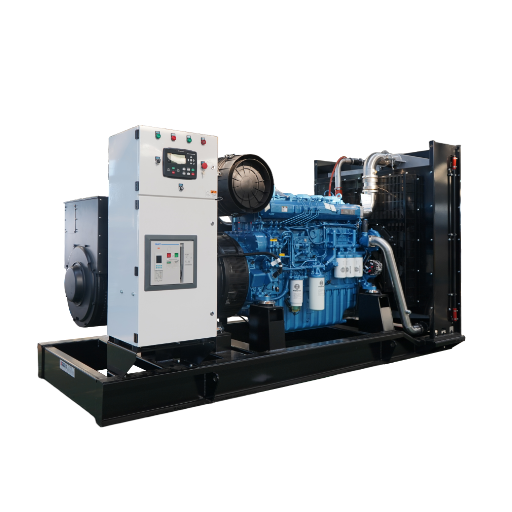
Farm power is not uniform. A poultry operation, a dairy, and an irrigation scheme have radically different demand profiles. Before you size any agricultural diesel generator, you need an honest inventory of your loads.
Irrigation Systems
Irrigation is typically the largest motor load on a farm. A diesel generator for irrigation must handle the motor starting surge that a 50 HP submersible pump creates — approximately 37 kW at full load but 150–200 kVA during startup. Center-pivot systems, drip pumps, and sprinkler booster pumps all share this characteristic: high starting surge, continuous run times of 8–18 hours per day during peak season, and three-phase power requirements above 10 HP.
A common mistake is sizing the generator engine for running kW while ignoring alternator kVA. The alternator must deliver enough reactive power to start the motor without voltage collapse. If your pump motor starts under voltage sag, it draws even more current, trips overloads, and can damage winding insulation over time.
Poultry and Livestock Operations
Power continuity in poultry houses is a life-or-death matter. Tunnel ventilation fans, evaporative cooling pads, heating systems, and automated feeding lines all require steady electricity. During hot weather, a ventilation failure can raise house temperature by 2–3 degrees Celsius per minute. Heat stress mortality begins at roughly 32 degrees Celsius ambient, and total mortality can occur within 30–45 minutes if airflow stops entirely.
Typical poultry house loads range from 60 kW for a small operation to 150–200 kW for an industrial-scale complex with 50,000+ birds. These loads are mixed: fans and lights are relatively stable, while cooling pad pumps add intermittent motor surge. Any agricultural diesel generator for poultry farm use must be sized for these continuous ventilation and cooling demands.
Dairy Operations
Dairy farms have a unique peaked demand tied to milking schedules. Milking machines, vacuum pumps, and milk cooling compressors all run simultaneously during morning and evening milking windows. The cooling compressor is the most critical load — milk must be cooled to 4 degrees Celsius within two hours of milking to prevent bacterial growth and meet sanitary standards.
A medium dairy with 50–100 cows typically needs 30–60 kW of running power during milking, but the cooling compressor startup can add a significant surge. A diesel generator for dairy farm backup in the 60–100 kVA range is common for full-operation coverage.
Greenhouses and Cold Storage
Greenhouses need power for ventilation fans, circulation pumps, heating or cooling systems, and sometimes supplemental LED lighting. Cold storage for harvested produce requires continuous refrigeration. Both applications demand a reliable farm diesel generator with prime or standby rating, depending on whether it is the sole source or a grid backup.
Grain Handling and Processing
Augers, dryers, and milling equipment are almost universally three-phase motor loads. Grain dryers are particularly power-hungry, with large fans and heating elements that can require 100 kW or more. These loads are seasonal, concentrated during harvest, and often the peak load that dictates overall generator sizing.
How to Size an Agricultural Diesel Generator
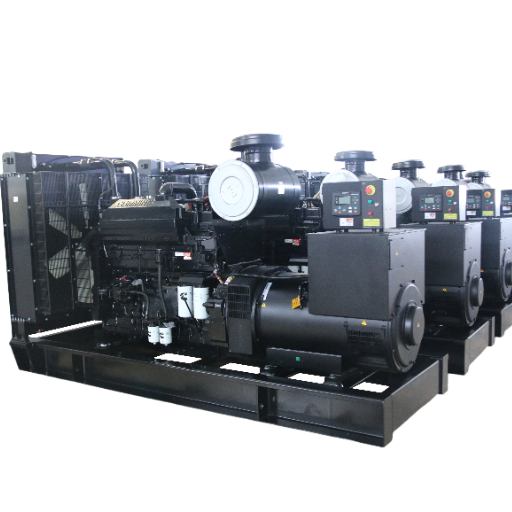
Sizing a farm diesel generator is not guesswork. Follow this five-step method to avoid the two most common errors: undersizing, which causes voltage sag and motor failure, and oversizing, which leads to wet stacking and fuel waste. For additional load-calculation frameworks, see our diesel generator sizing guide.
Step 1: Inventory All Loads
Before you select an agricultural diesel generator, list every piece of equipment you intend to power simultaneously. For each item, record the rated running power in kW or HP, the voltage, and whether it is a motor load with high starting surge.
Typical Farm Equipment Load Table
| Equipment | Typical Running Power | Voltage / Phase | Starting Surge Factor |
|---|---|---|---|
| 5 HP irrigation pump | 3.7 kW | 230/400V, 3-phase | 3–5x |
| 20 HP irrigation pump | 15 kW | 230/400V, 3-phase | 3–5x |
| 50 HP irrigation pump | 37 kW | 230/400V, 3-phase | 3–5x |
| Tunnel ventilation fan (per unit) | 1–3 kW | 230V, 1-phase or 3-phase | 2–3x |
| Poultry house cooling pad pump | 2–5 kW | 230V, 1-phase | 3–4x |
| Milking machine (per cluster) | 0.5–1 kW | 230V, 1-phase | 2x |
| Milk cooling compressor | 5–15 kW | 230/400V, 3-phase | 4–6x |
| Grain auger (10 m) | 3–7 kW | 230/400V, 3-phase | 3–5x |
| Grain dryer fan | 15–75 kW | 400V, 3-phase | 3–5x |
| Workshop tools | 1–5 kW | 230V, 1-phase | 2x |
Identify which loads are critical (must run simultaneously) and which are non-critical (can be shed during peak demand or generator overload).
Step 2: Calculate Running Load
Add the running kW of all equipment that will operate at the same time. For three-phase motors, convert horsepower to kilowatts using:
kW = HP × 0.746
Then account for power factor. Most induction motors have a power factor of 0.8 to 0.85. The apparent power in kVA is:
kVA = kW / Power Factor
Your generator alternator must be rated for the total kVA, not just the total kW.
Step 3: Account for Motor Starting Surge
This is where most farm generator sizing fails. Motor starting current — also called locked rotor amps — can be 3 to 7 times the normal running current. The generator alternator must have enough capacity to supply this inrush without voltage dropping below 80% of nominal.
If your largest motor is a 50 HP pump (37 kW running, ~44 kVA at 0.85 PF), and it draws 5x inrush, the starting kVA requirement is roughly 220 kVA. Your generator alternator must handle this, even if the total running load of all equipment is only 80 kW.
Mitigation options include:
- Soft starters: Reduce inrush to 2–3x running current.
- Variable frequency drives (VFDs): Ramp motor speed gradually, eliminating surge.
- Staggered starting: Start the largest motor first, then bring on smaller loads sequentially.
Step 4: Apply Safety Margin
Add 20–30% to your maximum calculated load. This buffer accommodates voltage drop under load, future equipment additions, and the reality that motors rarely operate at exactly nameplate efficiency.
Minimum Generator kVA = (Maximum Running kVA + Largest Motor Starting kVA Surplus) × 1.25
The “surplus” is the amount by which starting kVA exceeds running kVA for your largest motor.
Step 5: Choose Prime vs Standby Rating
This distinction matters more for an agricultural diesel generator than for most other industrial applications.
- Standby Rating: For emergency backup only. Typical limit: 200 hours per year, no overload capability. Suitable for grid-backed farms that only need power during occasional outages. Refer to EGSA on-site power application guidelines for detailed rating definitions and duty-cycle requirements.
- Prime Rating: For continuous operation with variable load. Unlimited hours per year, 10% overload allowed for 1 hour in any 12 hours. Required for irrigation duty, off-grid farms, and any application where the generator runs daily during a season.
- Continuous Rating: For constant load at 100% output. Rarely needed for agriculture unless powering a fixed base load like a grain dryer.
Critical warning: Using a standby-rated generator for prime irrigation duty will void the manufacturer’s warranty and almost guarantees premature failure during your most critical season.
Sizing Reference Table by Farm Type
| Farm Type / Application | Typical Load Range | Recommended Generator Rating | Type |
|---|---|---|---|
| Small farm / greenhouse | 5–15 kW | 20–30 kVA | Prime or standby |
| Irrigation (single 20–30 HP pump) | 15–30 kW | 40–80 kVA | Prime |
| Poultry house (10,000 birds) | 60–100 kW | 100–150 kVA | Prime or standby |
| Dairy (50–100 cows, full operation) | 30–60 kW | 60–100 kVA | Prime |
| Large mixed farm / grain processing | 150–300 kW | 200–400 kVA | Prime |
| Off-grid smallholding | 3–10 kW | 15–25 kVA | Prime |
Tractor PTO Generator vs Standalone Diesel Generator
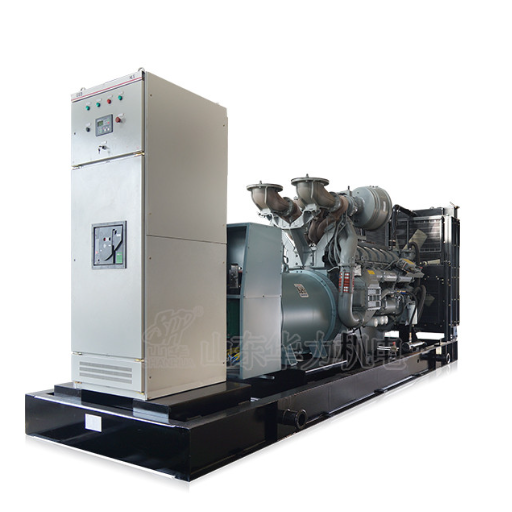
Small and medium farms often face a practical choice when choosing an agricultural diesel generator: buy a power take-off (PTO) generator that runs off the farm tractor, or invest in a standalone diesel generator set.
PTO Generator: Lower Cost, Higher Labor
A PTO generator tractor setup is essentially an alternator mounted on a frame with a shaft coupling. The tractor engine provides the motive power. For a farm that already owns a 75 HP or larger tractor, a 50–100 kW PTO generator costs significantly less than a standalone genset because you are not buying a second engine.
The downsides are substantial. The tractor must be physically connected and running at the correct PTO speed (usually 540 or 1,000 RPM) whenever power is needed. This ties up a valuable asset during critical periods like planting and harvest. There is no automatic start — an operator must connect the PTO shaft, start the tractor, and engage the drive. Response time to an outage is measured in minutes, not seconds, which is unacceptable for poultry ventilation or dairy cooling.
Standalone Generator: Independence and Automation
A standalone farm diesel generator is a complete engine-alternator-controller package. It starts automatically via an automatic transfer switch (ATS) when grid power fails, runs unattended, and shuts down when normal power returns. For irrigation systems that run 12 hours a day for three months straight, a prime-rated standalone unit is the only practical choice.
The capital cost is higher, but the operational flexibility is unmatched. The tractor stays in the field where it belongs. Auto-start protects livestock and refrigerated products during overnight or weekend outages when no staff is present.
Decision Matrix
| Factor | Tractor PTO Generator | Standalone Diesel Generator |
|---|---|---|
| Capital cost | Lower (no engine) | Higher (complete genset) |
| Automatic start / ATS | No | Yes |
| Maximum practical output | ~150 kW (limited by tractor HP) | 3,000+ kW available |
| Best use case | Seasonal, intermittent, attended | Continuous, critical, unattended |
| Labor requirement | Operator must connect and monitor | Fully automatic |
| Fuel flexibility | Diesel (tractor tank) | Dedicated diesel bulk tank |
| Portability | High (tow between fields) | Medium (trailer-mounted available) |
| Maintenance | Shared with tractor schedule | Separate engine maintenance |
Bottom line: For backup power on a small mixed farm with an operator always on site, a PTO generator is a cost-effective solution. For any commercial operation with livestock, refrigeration, or continuous irrigation, a standalone agricultural diesel generator with auto-start is essential.
Essential Features for Your Agricultural Diesel Generator
Farm environments are harsher than typical industrial installations. Dust, humidity, temperature extremes, and rodent activity all threaten generator longevity. Specify these features from the factory.
Weather and Environmental Protection
Agricultural generators are typically installed outdoors near pump houses or barns. An IP23-rated enclosure provides basic drip protection. For dusty or rainy climates, specify IP54 or higher with a sound-attenuated canopy on your farm diesel generator.
Heavy-duty air filters with blockage indicators are essential — a clogged air filter in a dusty feedlot or grain-handling area can cause engine overheating within hours. Rodent-proofing is often overlooked. Generators installed near grain storage attract mice and rats that chew wiring and build nests in warm enclosures. Specify wire mesh on all ventilation openings and sealed cable entry points. Also review your generator exhaust system layout to keep fumes away from animal housing and feed storage.
Noise Control
A silent agricultural diesel generator for farm use, housed in a sound-attenuated canopy, reduces noise to 60–75 dB at 7 meters. This matters for three reasons. First, many jurisdictions have noise ordinances that apply to farm equipment near property boundaries. Second, excessive noise stresses livestock — poultry in particular show reduced feed conversion and weight gain when exposed to sustained noise above 80 dB. Third, farm workers operating near the generator for extended periods need hearing protection if noise exceeds 85 dB.
Fuel System Design
For unattended operation, fuel capacity should cover at least 24–48 hours at average load. A 100 kW generator running at 75% load consumes roughly 20–25 liters of diesel per hour. A 48-hour runtime requires a 1,000–1,200 liter bulk tank.
Remote farms should also consider fuel theft prevention. Lockable tank caps, fuel-level monitoring with cellular alerts, and secure fencing around the installation reduce losses. In some regions, diesel theft from farm generators is a significant operating cost.
Control and Automation
Specify an agricultural diesel generator controller with auto-start and ATS integration. Deep Sea Electronics (DSE 4xxx/7xxx series) and ComAp (InteliGen) are industry standards that support programmable start delays, load shedding, and remote monitoring via cellular or Ethernet. Proper generator room ventilation is equally important for engine cooling and safe exhaust dispersal.
Load shedding is particularly valuable for farms. During a generator overload event, the controller can automatically disconnect non-critical circuits (workshop power, secondary irrigation zones) while maintaining life-sustaining loads (ventilation, milk cooling).
Seasonal Load Planning: Avoiding Wet Stacking and Oversizing
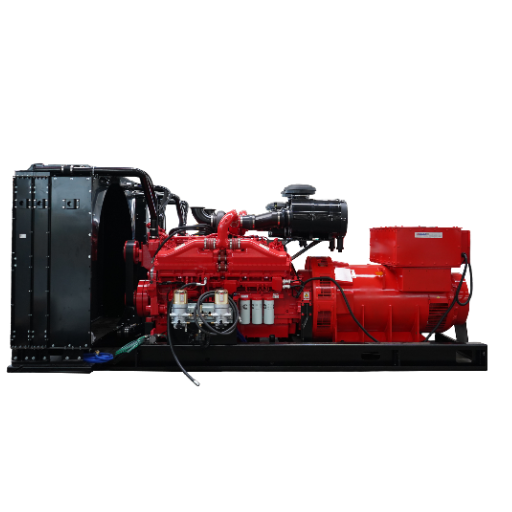
Agriculture has a unique power challenge that data centers and hospitals do not: extreme seasonal variation for any agricultural diesel generator. A farm might need 300 kW during irrigation season and only 30 kW during the dormant off-season. Running a 300 kVA generator at 10% load for six months is a recipe for engine damage.
Diesel engines need to operate above 30% of rated load to reach proper combustion temperature. Below this threshold, unburned fuel accumulates in the exhaust system — a condition called wet stacking. Symptoms include black oil, carbon fouling of injectors, and premature turbocharger failure.
Strategies for Seasonal Balance
- Load bank testing: During low-load seasons, connect a resistive load bank for 30–60 minutes weekly to bring the engine up to 50–70% rated load. This burns off carbon deposits and maintains oil quality. For a complete seasonal and routine maintenance schedule, see our diesel generator maintenance guide.
- Multi-purpose operation: Size the generator for peak irrigation load, but design the electrical distribution to also power workshop equipment, grain dryers, or secondary buildings during off-season. The additional load brings the generator into its efficient operating range.
- Dual-generator configuration: Some large farms install a smaller genset (e.g., 50 kVA) for off-season light loads and a larger unit (e.g., 300 kVA) for irrigation season. The capital cost is higher, but fuel and maintenance savings over 10 years often justify the investment.
- Variable load programming: Modern controllers can schedule load sequencing to maintain minimum load thresholds. For example, the controller can automatically start a water circulation pump or heating element whenever the generator is online and total load drops below 30%.
Altitude and Temperature Derating
Farm generators are often installed in hot, high-altitude locations. Both conditions reduce output. A common rule of thumb is a 1% power loss for every 100 m above 1,000 m elevation, and a 1% loss for every 5.5 degrees Celsius above 40 degrees Celsius ambient. If your farm is at 1,500 m and 45 degrees Celsius, a 100 kVA generator may only deliver ~91 kVA. Always request derating calculations from your supplier.
Buying From a China Factory: Agricultural Generator Checklist
Many agricultural buyers — particularly in Africa, Southeast Asia, and Latin America — source generators directly from Chinese manufacturers for competitive pricing and parts availability. The FAO estimates that over 570 million farms worldwide are in regions with unreliable or no grid access, making on-farm power generation a necessity rather than a luxury. This checklist ensures you receive an agricultural diesel generator that actually meets your farm’s requirements.
Rating Verification
Confirm the generator is prime-rated if you intend continuous or seasonal daily operation. A prime power generator for agriculture is built for unlimited annual hours, unlike standby-rated units. Some suppliers quote standby ratings because the numbers look more impressive at the same price point. A 200 kVA standby unit is not equivalent to a 200 kVA prime unit.
Engine Selection
When specifying an agricultural diesel generator, match the engine brand to your local parts and service ecosystem:
- Cummins: Global service network, excellent for regions with authorized dealers.
- Perkins: Fuel-efficient, strong in Commonwealth markets and Africa.
- Weichai: Cost-effective, large installed base in China and Belt-and-Road markets.
- Yuchai: Budget-friendly, suitable for light-to-medium agricultural duty.
Alternator kVA Sizing
The alternator must handle motor starting surge. Request the supplier provide load acceptance curves showing voltage dip percentage at various load step increases. For a farm with 50 HP pump motors, the alternator should maintain voltage above 80% during a full-load step application.
Controller and Auto-Start
Specify a Deep Sea Electronics DSE 4520 or DSE 6020 controller, or a ComAp InteliGen NT, with auto-start capability and ATS relay outputs. Verify the controller supports your local language for alarm messages.
Enclosure and Environment
For outdoor farm installation, specify:
- IP54 or higher weatherproof canopy
- Heavy-duty air filter with restriction indicator
- Stainless steel or powder-coated enclosure (not plain steel)
- Rodent-proof ventilation mesh
- Lifting eyes and fork pockets for placement
Fuel Tank and Voltage
Confirm voltage and frequency match your region:
- 230/400V, 50 Hz: Most of Africa, Asia, Europe, Australia
- 120/208V or 120/240V, 60 Hz: Americas, parts of Asia
Request an integrated fuel tank with at least 8 hours capacity at 75% load, or specify an external bulk tank with fuel level sensor.
Documentation and Spares
Demand the following before shipment:
- Wiring diagram and terminal connections
- Controller user manual and parameter map
- Engine operation and maintenance manual
- Load acceptance test report
- Spare parts kit: air filter, oil filter, fuel filter, belts (for first 1,000 hours)
ROI and Total Cost of Ownership for Farm Generators
An agricultural diesel generator is capital equipment with a 10–15 year service life. The purchase price is only one component of total cost of ownership — fuel, maintenance, and overhaul expenses often exceed the initial capital outlay over the equipment lifetime.
Cost Breakdown
| Cost Component | Typical Range | Notes |
|---|---|---|
| Capital (generator + installation) | $300–800 per kVA | Lower for open-type, higher for silent/canopy |
| Fuel (diesel) | $0.15–0.30 per kWh | Varies by global diesel price and load factor |
| Maintenance (oil, filters, service) | $0.02–0.04 per kWh | Higher for dusty environments |
| Major overhaul (every 8,000–12,000 hrs) | 30–40% of capital cost | Typically at year 6–10 depending on run hours |
Cost of Failure
The financial case for an agricultural diesel generator is best understood by calculating the cost of a single power failure. The right agricultural diesel generator pays for itself by preventing just one catastrophic failure:
- Crop irrigation outage (3 days): Yield loss of 15–40% depending on crop and growth stage.
- Poultry house ventilation failure (1 hour in heat): 5–20% mortality in a 10,000-bird house.
- Dairy cooling interruption (2+ hours): Full tank spoilage — $1,000–5,000+ depending on herd size.
- Greenhouse climate control failure (overnight): Crop loss in temperature-sensitive produce.
For most commercial farms, one avoided catastrophic failure pays for the generator several times over.
Fuel Efficiency Optimization
Diesel fuel consumption follows a predictable curve. At 100% load, a modern diesel engine consumes approximately 0.22–0.28 liters per kWh. At 50% load, consumption rises to 0.30–0.38 L/kWh. Below 30% load, efficiency drops sharply and wet stacking risk increases. Operate your agricultural diesel generator in the 60–85% load band for optimal fuel economy and engine health.
Solar-Diesel Hybrid Options for Farms
Solar panels can reduce the runtime of a farm diesel generator, especially for irrigation loads during daylight hours. A hybrid system typically combines solar arrays, battery storage, and a diesel generator with an auto-start controller. During sunny periods, solar powers the load and charges batteries. When solar output drops or battery state-of-charge falls below a set threshold, the diesel generator starts automatically.
This setup works best for farms with predictable daytime loads and high solar irradiance. It is not a replacement for a properly sized agricultural diesel generator, but it can cut fuel costs by 20–40% and extend service intervals. A well-sized agricultural diesel generator remains the backbone of farm resilience. If you are considering a hybrid design, request a system simulation from your supplier before committing.
Huali Agricultural Diesel Generator Options
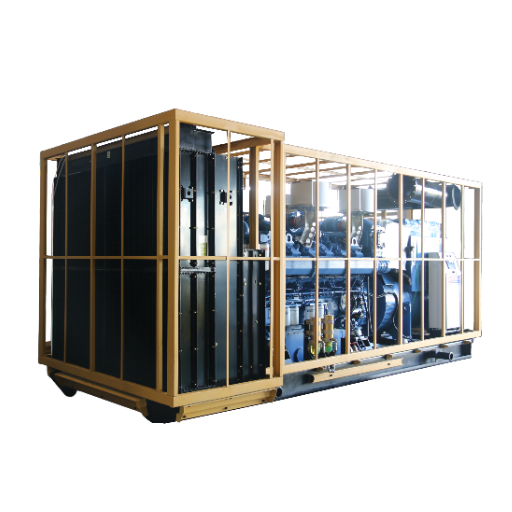
Shandong Huali Electromechanical builds diesel generator sets for agricultural buyers worldwide. Our agricultural diesel generator options range from small 20 kVA prime units for irrigation and smallholdings to 400+ kVA sets for large mixed farms, grain processing, and dairy operations.
We match the engine, alternator, controller, and enclosure to your farm environment. Voltage, frequency, fuel tank capacity, canopy rating, and remote monitoring can all be configured before shipment. We also provide load acceptance test reports, wiring diagrams, and a first-service spares kit so your unit is ready to install and run.
If you are sourcing from a China agricultural diesel generator manufacturer, working with a factory that understands farm duty cycles, motor starting surge, and local service requirements reduces procurement risk. If you need a reliable agricultural diesel generator for export, we can configure voltage, frequency, and canopy rating before shipment. Request a custom sizing review or a quote through the contact page.
Frequently Asked Questions
What size generator do I need for a 10 HP irrigation pump?
A 10 HP pump draws roughly 7.5 kW running. With a 4x starting surge and 0.85 power factor, the starting kVA requirement is approximately 35 kVA. A 40–50 kVA prime-rated agricultural diesel generator is the practical minimum for reliable pump starting.
Can I use a standby generator for continuous irrigation?
No. Standby-rated generators are limited to roughly 200 hours per year and have no overload capability. Irrigation duty requires a prime power generator for agriculture with unlimited annual hours and overload tolerance.
Is a PTO generator good enough for a farm?
A PTO generator is cost-effective for seasonal, attended tasks like running a workshop or intermittent irrigation. It is not suitable for livestock ventilation, dairy cooling, or any application that requires automatic start and unattended operation.
How much fuel does a farm diesel generator use per hour?
At 100% load, expect 0.22–0.28 liters per kWh. A 100 kW agricultural diesel generator at 75% load consumes roughly 20–25 liters per hour. Consumption rises at lower load factors.
Will a generator run my whole farm or just critical equipment?
That depends on sizing. A generator sized for your total simultaneous load can run the whole farm. Most farms size for critical loads first (ventilation, cooling, irrigation) and use load shedding for non-critical circuits during outages.
What is the difference between single-phase and three-phase for farm equipment?
Single-phase power (230V) is common for small motors, lights, and workshop tools. Three-phase power (400V) is required for irrigation pumps, grain dryers, milk cooling compressors, and most equipment above 10 HP. For more detail, see our guide on single-phase vs two-phase generators.
How do I protect my generator from dust and weather on a farm?
Specify an IP54 or higher weatherproof canopy, heavy-duty air filters with restriction indicators, rodent-proof ventilation mesh, and sealed cable entry points. Regular filter inspection and cleaning are essential in dusty environments.
Can I connect solar panels to my diesel generator for a hybrid farm power system?
Yes. A solar-diesel hybrid system uses solar and batteries as the primary daytime source and automatically starts the diesel generator when solar output is insufficient. It can reduce fuel consumption by 20–40% for suitable farm loads.
Conclusion
Choosing the right agricultural diesel generator means matching the unit to your actual farm loads, duty cycle, and operating environment. Start with an honest equipment inventory, calculate both running kVA and motor starting surge, choose a prime rating for continuous or seasonal operation, and specify farm-specific features such as weatherproofing, noise control, and auto-start.
For buyers sourcing from a China agricultural diesel generator manufacturer, the procurement checklist above helps ensure the quoted unit meets real farm requirements rather than just looking good on paper. For a custom sizing review or a quote on a Huali farm diesel generator, contact our team today.
