
A generator rewind costs roughly 30% to 60% of the price of a new machine and takes two to ten weeks. It is the right answer when the stator core is sound and the failure sits in the copper or the insulation. It is the wrong answer when the core is damaged, the frame is obsolete, or the lost production costs more than the difference.
Here is the part that catches buyers out: the copper is rarely what decides the outcome. The core does.
Most maintenance teams reach for a rewind because it looks cheaper, and usually it is. But the quote that arrives after the old winding comes out can be a different number, and by then the machine is already apart. This guide covers what a generator rewind replaces, what drives the price, which tests decide it, and how to specify the work. We build generator sets from 8 kVA to 4,000 kVA, so we see both the machine worth saving and the one that is not.
Key Takeaways
– A generator rewind typically costs 30% to 60% of a new machine, and no credible shop quotes it without inspection.
– IEEE 43-2013 sets the insulation resistance pass line at 5 MΩ below 1 kV, and 100 MΩ for form-wound windings above 1 kV built after about 1970.
– A core loss increase above 20% between the before and after tests means the core should be repaired or replaced, not rewound.
– Lead time runs from two to four weeks for a partial rewind and six to twenty weeks for a full one, depending on rating.
– The cost of downtime, not the price of the repair, is what usually settles rewind versus replace.
What a Generator Rewind Actually Replaces
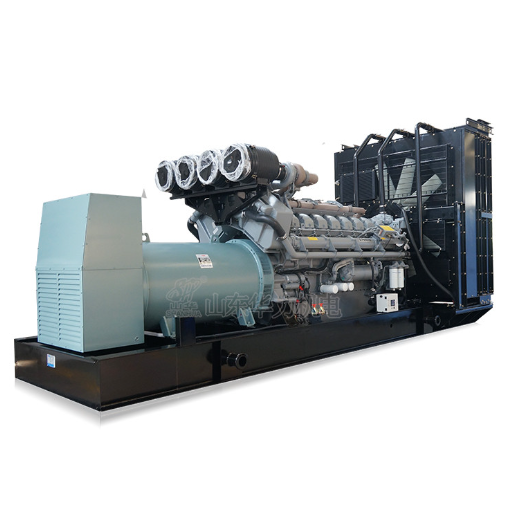
A generator rewind replaces the failed winding, the slot insulation and the impregnation. It leaves the frame, the core, the shaft, the bearings and the control system in place.
The copper and labor are a minority of what an alternator costs to build. Reusing the frame and core is why a rewind can cost less than half of a new machine.
Stator, Rotor, or Both
The stator winding is the armature. It carries the full load current at line voltage, and most failures happen here. When someone says generator rewinding, they usually mean the stator.
The rotor winding is the field. It carries a much smaller direct current, fed through slip rings on older machines or a brushless exciter on modern ones. A field rewind is a separate job with its own price and its own balancing and test sequence.
A stator rewind does not touch the bearings, the automatic voltage regulator, the exciter diodes, the core laminations or the engine. If the machine failed because the AVR was driving it into overexcitation, a new winding will fail the same way. The cause has to be found before the copper goes back in.
If you want the design side of this component, our guide to how a generator winding is built covers pitch, harmonics and insulation class.
Partial Rewind vs Full Rewind
A partial rewind replaces one to three coils. It is only defensible when the damage is local, the rest of the winding passes its tests, and there is enough insulation margin left to carry the load for another few years.
A full rewind replaces every coil, every slot liner and the impregnation across the whole stator. It costs more and takes longer, but it resets the insulation system rather than patching one corner of it.
The trap is that a partial rewind is priced on the damage you can see. Adjacent turns are usually cooked too, and they fail later. Ask what test evidence supports a partial rather than a full rewind, and get it before the work starts.
What a Generator Rewind Costs
Most rewinds land between 30% and 60% of the price of a new machine of the same rating. That’s a trade range drawn from repair-shop guidance, not a Huali price.
The Percentage-of-New Rule
The ratio holds because the parts you reuse are the expensive ones. On a large frame, the core and housing dominate the bill of materials, so replacing the copper is a fraction of a new unit.
Two adjustments matter. On small machines, labor is a larger share, so the percentage sits higher. On large machines, copper weight and handling dominate instead.
Some shops also quote a 50% to 75% rule of thumb, replacing once the bill passes that share of replacement cost. It ignores downtime, which is often the larger number.
What Moves the Price
| Cost driver | Effect on the quote |
|---|---|
| Rating (kVA or MVA) | Copper weight, slot count and winding hours all scale with it |
| Voltage class | Medium-voltage insulation and test equipment cost more than low-voltage |
| Core condition | Core repair or restacking can exceed the winding cost itself |
| Impregnation method | Vacuum pressure impregnation costs more than dip and bake |
| Rotor included | Adds a second winding plus a separate balance and test sequence |
| Remove and refit | Crane, transport and site time dominate on large frames |
| Turnaround | Accelerated schedules carry a premium |
The honest caveat is the important one. No credible shop quotes a generator rewind before inspection, because the core condition is unknown until the old winding is out. A firm price given over the phone is either padded or based on an assumption someone will have to revisit.
Source: cost ratios and lead times are indicative trade guidance, not a Huali quotation. Every job should be priced from inspection.
Take a case we see often. A food plant had a 630 kVA standby set fail a week before its busy season. The first quote came in at about 48% of a new unit, which looked like an easy decision.
The core test then found hot spots under two slots, and the revised scope passed 70% of new. The plant bought a new set and kept the old one as a parts donor. The first number is provisional until the core is tested.
Rewind or Replace: The Tests That Decide
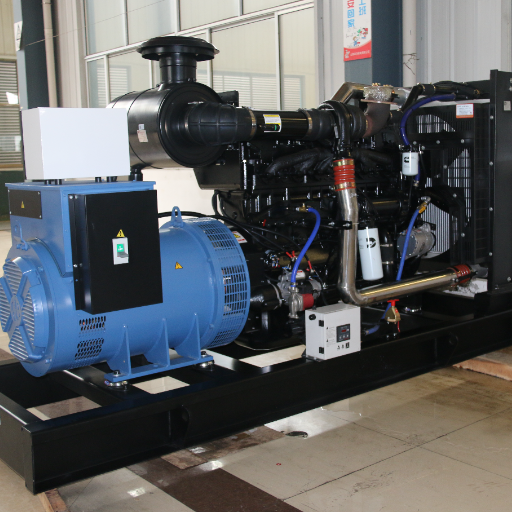
The decision rests on six tests, and one of them outranks the rest. Run them before the winding is removed where possible, and again afterwards.
Insulation Resistance and Polarization Index
Insulation resistance tells you whether the winding can hold voltage without leaking to earth. It is measured at a set temperature and corrected to 40 °C, because resistance roughly halves for every 10 °C rise.
IEEE 43-2013 sets the pass lines. For random-wound stators and form-wound coils rated below 1 kV, the minimum is a flat 5 MΩ. For form-wound AC windings above 1 kV built after about 1970, it is 100 MΩ. For older windings and for field windings, the guide is kV + 1 MΩ, so a 4.16 kV machine needs at least 5.16 MΩ.
The polarization index is the ratio of the 10-minute reading to the 1-minute reading. IEEE 43 sets the minimum at 2.0 for Class B insulation and above, and 1.5 for Class A. A low index points to moisture or contamination rather than a burnt winding, which is a different and cheaper problem.
One instrument rule matters: for machines rated 1 kV and below, IEEE 43 caps the test voltage at 500 V. A megger pushed to 1,000 V on a 400 V alternator stresses the insulation it is meant to be checking.
Core Condition Matters More Than the Copper
The stator core is a stack of insulated laminations. When the insulation between them breaks down, eddy currents circulate and the core overheats locally. A rewind does not fix that, and a new winding on a damaged core fails early.
The test is a core or loop test, run before the old winding is removed and again after. ANSI/EASA AR100 sets the practical limit: if core loss rises by more than 20% between the two tests, the core should be repaired or replaced rather than rewound.
That number determines more generator rewinds than any other. It is also why the burnout process is temperature-limited: AR100 caps the oven at 370 °C (700 °F) so stripping does not damage the lamination insulation and create the fault the test is looking for.
| Test | What it shows | Pass guide | Source |
|---|---|---|---|
| Insulation resistance at 40 °C | Moisture, contamination, earth fault | 5 MΩ below 1 kV; 100 MΩ for form-wound above 1 kV built after about 1970; kV + 1 MΩ for older and field windings | IEEE 43-2013 |
| Polarization index | Moisture and insulation condition over time | 2.0 or higher for Class B and above; 1.5 for Class A | IEEE 43-2013 |
| Winding resistance, phase balance | Open turns, bad joints, shorted turns | Compare phases and previous readings; a consistent deviation needs investigation | AR100 |
| Surge comparison | Turn-to-turn insulation faults | Matching waveforms across phases | AR100 |
| Core (loop) test, before and after | Shorted laminations | Loss increase of 20% or less | AR100 |
| Visual and borescope inspection | End-winding movement, tracking, debris | No mechanical damage or conductive contamination | Shop practice |
A Worked Decision
Take two machines with the same fault.
A 500 kVA standby set at a warehouse runs a few hundred hours a year. A rewind at 45% of new saves real money, and six weeks of downtime costs nothing because the site has grid power. Rewind.
A 2 MW prime-power set at a remote mine runs continuously. The same 45% looks attractive until you price the outage. Two extra weeks of lost production can exceed the entire saving, and the mine may still be running a 15-year-old frame with no spare AVR. Replace.
Put a number on a week of lost output before you compare the quotes.
How Long a Generator Stator Rewind Takes
Lead time scales with the weight of copper and the size of the handling equipment. These bands are indicative, drawn from trade guidance, and a shop with its own crane and oven will beat them on small frames.
| Scope | Typical lead time |
|---|---|
| Partial rewind, one to three coils | 2 to 4 weeks |
| Full rewind, 1 to 5 MVA | 6 to 8 weeks |
| Full rewind, 5 to 25 MVA | 8 to 10 weeks |
| Full rewind, 25 to 100 MVA | 10 to 14 weeks |
| Full rewind, above 100 MVA | 14 to 20 weeks |
| Salient-pole rotor rewind | 3 to 6 weeks |
Add removal, transport and refit to every number. On a large frame that can be a week at each end, and it is the part of the schedule that slips.
The cost that decides the question is not the invoice. It’s the lead time multiplied by the value of the output you lose.
One plant compared a six-week rewind against a ten-day replacement on a 1,250 kVA set feeding a cold store. The rewind was cheaper on paper. Six weeks without refrigeration, in August, was not.
How to Specify a Generator Rewind That Lasts
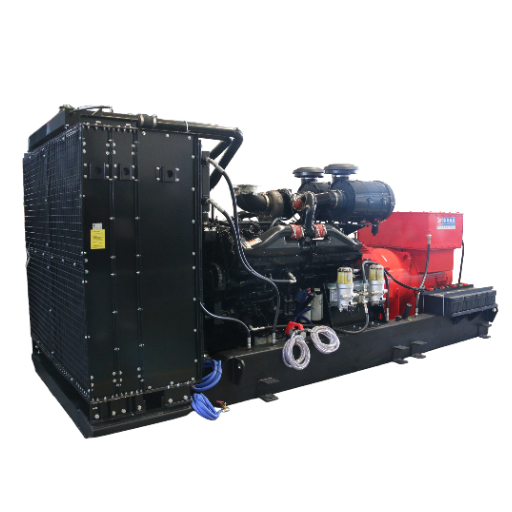
A rewind is a specification, not a repair order. The machine you get back is only as good as the document you sent out.
What Belongs in the Scope
State the operating conditions and the expected life. Name what is included and what is not: core cleaning and testing, rotor work, AVR, bearings, transport, and site labor.
Give the shop the machine data it cannot guess: nameplate details, original winding data, previous test results, and heat-run records. Then set the constraints that matter, such as the insulation system and the maximum acceptable temperature rise.
Specify requirements and acceptance criteria, not the shop’s internal method. The Iris Power guidance on rewind specifications makes this point well: over-specifying proprietary design detail adds cost and disputes without improving the outcome.
Hold Points and Acceptance Tests
Build acceptance into the schedule rather than discovering it at the end:
- Insulation resistance and polarization index before strip-out and after impregnation.
- Winding resistance and phase balance on every phase.
- Surge comparison across phases.
- Core test before the old winding is removed and after it is stripped.
- High-potential test on the completed winding.
On the hi-pot, two ratios are worth knowing. AR100 sets the DC test value at 1.7 times the AC value, and tests a reconditioned winding at 65% of the new-winding value. Repeated hi-pot testing is discouraged because each application stresses the insulation.
A rewind restores the original rating rather than raising it. Check the result against the alternator specifications for the frame. If you need more capacity, that is a new machine decision.
When a Generator Rewind Is the Wrong Answer
Replace instead when any of these is true:
- The core fails the 20% rule. Repair or restack rarely beats a new machine at small and mid ratings.
- The frame is obsolete. No bearings, no AVR, no seals and no drawings turn a cheap rewind into an expensive orphan.
- The cause will recur. If the machine overheated because the room cannot move enough air, a new winding fails the same way. Fix the generator cooling system first.
- You need more capacity or better efficiency. A rewind restores; it does not upgrade.
- The unit is under warranty or the OEM will not support a third-party rewind.
- Downtime outweighs the saving. This is the most common reason, and the one buyers calculate last.
There is also a lifecycle argument. A machine that has already run most of its economic life may not justify a second one. Our guide to how long a diesel generator lasts sets out the duty and maintenance factors behind that judgment.
Frequently Asked Questions
How much does a generator rewind cost?
Expect roughly 30% to 60% of the price of a new machine of the same rating. The exact figure depends on rating, voltage class, core condition, impregnation method and whether the rotor is included. No reputable shop will firm up a price before inspection, because the core is unknown until the winding is out.
Is it worth rewinding a generator or should I replace it?
It is worth rewinding when the core passes its test, the frame is supported, and the failure cause has been found and fixed. Replace when the core fails, the frame is obsolete, or the downtime costs more than the difference. The core test and the downtime calculation decide most cases.
How long does a generator rewind take?
A partial rewind takes two to four weeks. A full rewind runs from six to eight weeks at 1 to 5 MVA, eight to ten weeks at 5 to 25 MVA, and ten to twenty weeks above 25 MVA. Add removal, transport and refit at each end.
Can a rewound generator be as good as new?
It can match the original specification if the rewind uses correct copper, new slot insulation, proper impregnation and a full test sequence. It will not be better than new, and it will not gain capacity. Ask for the test results and the impregnation record before acceptance.
Conclusion
A generator rewind is a sound decision when three things line up: the core passes its test, the failure cause is understood, and the downtime is affordable. When any one of them fails, a new machine is usually the cheaper answer over the life of the asset.
Four points are worth carrying into the conversation:
- Test the core before you approve the rewind. The 20% loss rule settles more cases than the price does.
- Treat the first quote as provisional. It is priced on what can be seen before strip-out.
- Price the downtime, not just the repair. Lead time is the hidden line item.
- Specify the work. Scope, hold points and acceptance tests are what separate a rewind that lasts from one that returns.
If your alternator has failed, send us the nameplate details and photographs of the damage. Our engineers will tell you whether a generator rewind is worth doing against a new set, and quote a replacement if that is the better answer. You can contact our team directly.
