
How long does a diesel generator last? In short: 20,000 to 30,000 running hours before its first major overhaul.
A prime power generator at 2,000 to 4,000 hours a year reaches that in roughly 5 to 10 calendar years. Running continuously at 8,000 hours a year, it is 2.5 to 4 years. For a standby set, the hour figure is nearly irrelevant: a code-compliant standby generator runs about 6 hours a year, so calendar ageing ends its life long before hours ever do.
That is why published answers to this question disagree so violently. One page says ten years, another says twenty, a third says thirty. They are all quoting a real number from a real duty cycle, and none of them tells you which one.
This guide separates the two mechanisms. It gives you a service-life table by duty cycle, in both hours and years. It explains why a stationary generator on standby is governed by the calendar rather than the hour meter. And it sets out the thresholds that should trigger an overhaul, a rebuild, or a replacement.
Key Takeaways
- Hours govern high-runtime sets; calendar time governs standby sets. A prime power unit at 3,000 hours a year reaches 20,000 hours in about seven years. A standby unit at 6 hours a year would need over 3,000 years.
- NFPA 110 requires only 30 minutes of loaded exercise a month, about 6 hours a year, plus a 4-hour load bank test every 36 months. That is the arithmetic behind every “20 to 30 year” standby figure you have read.
- Published overhaul benchmarks run from about 20,000 hours to 32,000 hours, and the spread is real. Larger, slower-turning engines get the higher numbers.
- Underloading is the most common self-inflicted lifespan cut. Running below roughly 30% of rated load causes wet stacking, and it can halve expected engine life.
- A major overhaul typically costs 30 to 50% of a new set and buys another 10,000 to 15,000 hours. Above about 200 kW that is usually worth doing.
Already have a set with high hours and a decision to make? Send us the model and the hour meter reading. Our engineers will tell you what the remaining service life looks like and whether an overhaul or a replacement is the better number.
How Long Does a Diesel Generator Last? Two Numbers, Not One
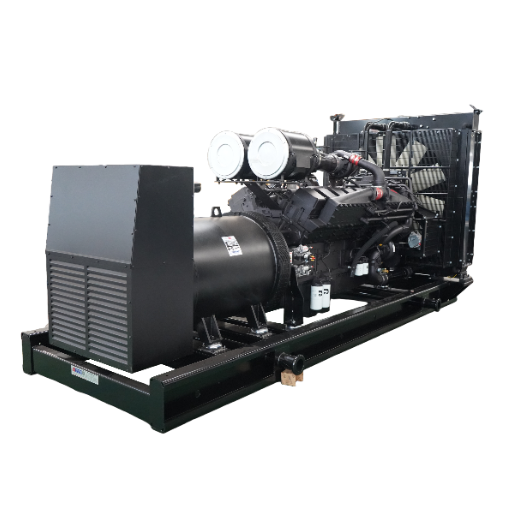
A diesel generator has two independent service lives, and whichever runs out first is the one that matters.
The hour life is the engine’s mechanical endurance: how long bearings, liners, rings, and valve gear last before they need rebuilding. It is measured in running hours and it does not care how old the machine is.
The calendar life is everything that decays whether the engine runs or not: diesel oxidising in the tank, batteries self-discharging, gaskets hardening, coolant chemistry drifting, and bare metal corroding in damp air. It is measured in years and it does not care how many hours are on the clock.
High-runtime sets die of hours. Low-runtime sets die of calendar time. Everything confusing about diesel generator lifespan comes from mixing the two up.
Why Published Generator Lifespan Figures Disagree
Take a 400 kVA set with a 20,000-hour overhaul interval. Put it in a data centre as standby power and it will run a few dozen hours a year, so the hours will not bind for decades. Put the same machine on a construction site as prime power at 3,000 hours a year and it reaches the same 20,000 hours in under seven years.
Same engine. Same overhaul interval. Different answer to “how long does it last” by a factor of five. The set’s duty cycle, not its build quality, sets which clock runs out first.
| Duty cycle | Typical hours per year | Hours to major overhaul | Calendar years to overhaul | What actually ends its life |
|---|---|---|---|---|
| Standby / emergency | 6 to 200 | 20,000 to 30,000 | 100+ (over 3,000 at 6 h/yr) | Calendar ageing: fuel, batteries, seals, corrosion |
| Prime power | 2,000 to 4,000 | 20,000 to 30,000 | 5 to 10 | Running hours |
| Continuous | 8,000+ | 20,000 to 30,000 | 2.5 to 4 | Running hours |
The overhaul interval is the same in every row. The calendar answer changes by two orders of magnitude, because the hours per year change by two orders of magnitude.
Standby Generators: Why They Die of Old Age
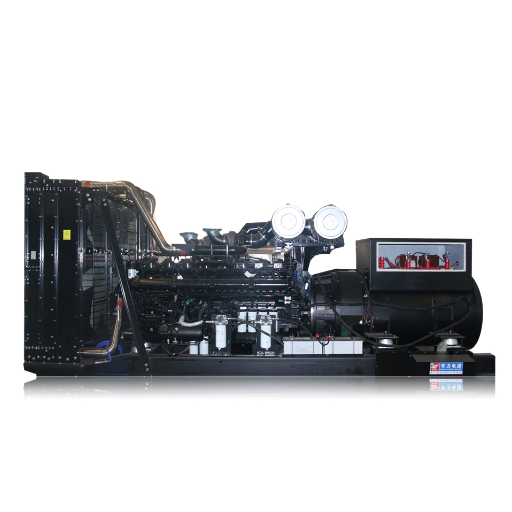
Standby power is the largest part of the stationary generator market and the case where intuition fails hardest.
A standby set is designed to run for minutes or hours at a time, then sit idle for weeks. NFPA 110, the standard governing emergency power systems, requires that a diesel set be exercised under load for 30 minutes a month, which comes to about 6 hours a year, with a 4-hour load bank test every 36 months on top. A fully compliant standby generator therefore accumulates somewhere around 6 to 7 hours of running time annually. What that schedule asks of you in practice is set out in our NFPA 110 generator maintenance guide.
At that rate, reaching a 20,000-hour overhaul interval takes more than three thousand years. The engine will never wear out. Something else will end the machine’s life first, and it is usually one of four things:
Fuel degradation. Diesel fuel shelf life is finite. Stored for long periods without stabilisation or turnover, it oxidises, darkens, and forms gums and sediment that clog filters and injectors. A standby set with a full tank that is never consumed is quietly degrading its own fuel supply. This is covered in more detail in our guide to diesel generator fuel system maintenance.If stored-fuel ageing is a major concern for your site, our diesel vs natural gas generator comparison explains how a piped gas supply avoids on-site fuel degradation, and what you trade off in return.
Wet stacking. An engine run repeatedly at light load never reaches the cylinder temperatures that burn off unburnt fuel and carbon. Deposits accumulate in the exhaust and around the turbocharger. Paradoxically, the monthly exercise run meant to protect the machine can cause this if it is done at no load or light load. Load bank testing is the corrective, and NFPA 110’s periodic test requirement exists partly for this reason.
Batteries. Starting batteries self-discharge when left standing, and battery sulphation sets in as a result. A standby generator’s most common failure mode is not a mechanical breakdown at all, it is a set that will not start because the battery is flat. Battery service life is short and calendar-based.
Seals, hoses, and coolant. Rubber and elastomer components harden and crack on a schedule set by time and temperature, not by engine hours. Coolant chemistry depletes and stops protecting against corrosion and cavitation.
A standby set that failed with 84 hours on it
A hospital in Southeast Asia had a 500 kVA standby set installed in 2019. Six years later, during a grid failure, it started, ran for eleven minutes under hospital load, and shut down on high coolant temperature. The hour meter read 84 hours.
The engine was mechanically almost new. What had failed was the cooling system: the coolant had never been changed, corrosion had narrowed the radiator core, and the hoses had hardened enough to weep under load. The set had passed every monthly start test, because those were done unloaded for ten minutes and nothing ever got hot enough to notice.
The repair cost less than a tenth of what a replacement would have cost. The point is that no hour-based service interval would have caught it. Only a calendar-based one would.
Running a standby fleet? We will map your sets’ calendar-based service items, fuel, coolant, batteries, and hoses, against the intervals that actually matter, rather than the hour counts they will never reach.
Diesel Generator Life Expectancy: Five Factors That Shorten It
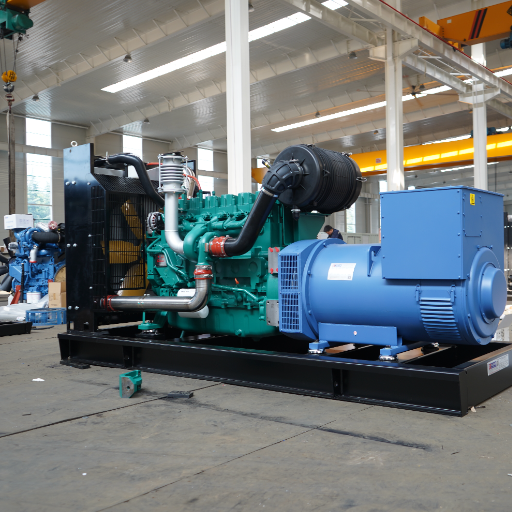
Beyond the hours-versus-calendar split, five factors move service life by years in either direction.
Load factor. The single biggest lever. Engines are happiest between about 70% and 85% of rated load. Running below roughly 30% causes wet stacking and incomplete combustion; running consistently above rated load simply consumes the overhaul interval faster. Underloading a set well below its rating costs you in both fuel and engine life.
Starting frequency. Every start is a cold start with boundary lubrication and a fuel-rich moment before oil pressure builds. A set that starts fifty times a week wears differently from one that runs continuously. This is why prime power and continuous ratings exist at all.
Engine speed. Higher-speed engines (1,500 or 1,800 rpm) have shorter overhaul intervals than larger, slower-turning derivatives. This is one reason a 2,000 kVA set’s hour figure can look better than a 100 kVA set’s.
Fuel and coolant quality. Clean, dry, correctly specified fuel and coolant are the cheapest service life you can buy. Water in fuel is the most common cause of injector damage.
Installation and environment. High ambient temperature, restricted ventilation, and poor vibration isolation all accelerate wear. A set in a properly designed room with correct airflow lasts measurably longer than the same set in a hot, dusty enclosure.
Overhaul, Rebuild, or Replace
When a set does approach the end of its hour life, there are three levels of intervention, and they are not interchangeable.
Top-end overhaul. Cylinder heads off, valves and seats reconditioned, injectors and turbocharger serviced. The bottom end is untouched. Typically appropriate at the first indication of compression loss or rising oil consumption, and much cheaper than a full rebuild.
Major overhaul. The engine comes down fully: pistons, rings, liners, bearings, valve train, injectors, and turbocharger. This is what the 20,000 to 30,000 hour figures refer to. Published guidance puts a major overhaul at roughly 30 to 50% of the cost of a new set, and it typically returns another 10,000 to 15,000 hours of service.
Those benchmarks vary by engine. Caterpillar’s C175-20, a large high-speed set, is quoted at a first major overhaul of 22,000 hours at 60 Hz (Best Magazine). The general pattern is consistent: the larger and slower-turning the engine, the further out the overhaul interval sits.
Replacement. When the alternator, control panel, and switchgear are also at end of life, or when the set no longer meets the emissions or performance standard it is required to meet, rebuilding the engine alone does not restore the asset.
Where the Overhaul-or-Replace Decision Points Fall
The financial case turns on size. For large industrial sets, a major overhaul is almost always cheaper than replacement, which is why a 20,000-hour set is often rebuilt rather than scrapped. For small sets, the labour cost of an overhaul can approach the cost of a new unit, and replacement wins. The crossover typically sits somewhere around 200 kW.
Our breakdown of stationary generator cost sets out where purchase, installation, and lifetime service costs actually land. The diesel generator total cost of ownership framework then compares an overhaul against a replacement on the same basis, rather than by sticker price.
Two identical sets, opposite decisions
A manufacturing plant in the Middle East ran two 800 kVA prime power sets side by side for nine years, alternating weekly. Both passed 20,000 hours within a month of each other.
Set A had clean oil analysis records and no faults. It was given a major overhaul for about a third of a new unit’s price and returned to service with an expected 12,000 hours ahead of it.
Set B had a history of coolant leaks and two years of unscheduled injector failures, and its alternator had been rewound once. The plant replaced it. The engines were equivalent; the assets were not.
The lesson is that the hour meter tells you when to look, not what to decide. Condition, not just hours, drives the overhaul-or-replace call.
Frequently Asked Questions
How long does a diesel generator last?
It depends on duty, and the honest answer is two numbers rather than one. A prime power set at 2,000 to 4,000 hours a year reaches its first major overhaul in 5 to 10 years. A continuous set at 8,000 hours a year gets there in 2.5 to 4 years. A standby set running 6 to 200 hours a year will not reach overhaul hours in any realistic timeframe, so its life is set by calendar ageing at roughly 20 to 30 years.
How many hours is a lot for a diesel generator?
It depends entirely on the duty rating, which is exactly why the number confuses people. For a continuous-duty set, 20,000 hours is mid-life and an overhaul may already be due. For a standby set, 5,000 hours is unusually high and often signals excessive light-load testing rather than productive service. Ask what the set was rated for before judging the meter reading.
How long do diesel generators last in years?
For standby units, 20 to 30 years is a realistic working expectation, and it is set by calendar ageing rather than running hours. For prime power at 2,000 to 4,000 hours a year, expect 5 to 10 years to the first major overhaul. For continuous duty at 8,000 hours a year, 2.5 to 4 years.
What is the 20/20 rule for generators?
It usually refers to the 20-20-20 exercise rule: run the set for at least 20 minutes, at a minimum of 20% load, roughly every 20 days. Each element has its own reason. Twenty minutes is long enough to reach operating temperature and drive off condensation. A 20% load is the floor for producing enough combustion temperature to avoid wet stacking. And a 20-day interval keeps fuel, batteries, and seals from degrading between runs. A shorter, unloaded run satisfies none of those three goals, which is precisely why the rule is stated as a trio. Some sources give the third element as a service every 20 hours of running instead, so confirm which version your maintenance provider means.
How much does it cost to rebuild a generator?
A major engine overhaul typically runs 30 to 50% of the price of a new set of the same rating, and returns roughly 10,000 to 15,000 additional hours. A top-end overhaul costs considerably less. The crossover where rebuilding stops making financial sense usually sits around 200 kW, below which replacement is often cheaper.
Is it worth repairing a generator or replacing it?
Look at the whole asset, not just the engine. If the alternator, control panel, and switchgear are sound, an engine overhaul at a third of replacement cost is usually the right answer on any large set. If electrical components are also at end of life, or the set no longer meets a required emissions standard, an engine rebuild leaves you with an old machine and a new engine.
Should I run my standby generator more often to make it last longer?
More running hours will not extend a standby set’s life, because hours are not what is limiting it. What matters is running it correctly: under adequate load, at operating temperature, long enough to burn off moisture and deposits. Long unloaded exercise runs do more harm than good, which is why load bank testing matters more than start count.
Conclusion
How long does a diesel generator last? It comes down to which clock runs out first. High-runtime sets are limited by hours and will reach a 20,000 to 30,000-hour overhaul interval in a handful of years. Standby sets are limited by calendar time, and no amount of care with the hour meter changes that.
So build the maintenance plan around the right clock. If you run a prime or continuous set, track hours and plan the overhaul. If you run standby, track years and treat fuel, batteries, coolant, and seals as the consumables they are.
The engineering team at Shandong Huali has supplied and supported stationary generator sets from 8 kVA to 4,000 kVA for over 25 years, across standby, prime, and continuous duties. If you are weighing an overhaul against a replacement, or want a service life expectation for a set you already own, send us the model and running hours. We will give you the numbers rather than a range.
