
A standby generator that fails during an outage is worse than no generator at all. NFPA 110 generator maintenance exists to prevent exactly that failure. It turns a silent machine into a proven, documented emergency power supply system (EPSS).
The standard tells facility managers, plant engineers, and safety officers how often to inspect, test, load, and record generator performance. This ensures the unit starts when lives or critical operations depend on it.
Many facilities treat NFPA 110 as a US-only compliance exercise. In practice, the principles apply anywhere backup power matters. Humidity, dust, poor fuel quality, and long idle periods affect generator reliability in every climate.
Your local Authority Having Jurisdiction (AHJ) may or may not enforce NFPA directly. Either way, following the standard is strong proof that your emergency power system will perform under pressure.
In this guide, we translate the 2025 edition of NFPA 110 into a practical maintenance and testing program. You will learn how to classify your EPSS. You will also learn how to build a weekly-to-triennial inspection schedule. The guide covers annual load bank tests, fuel and battery health, and records for an AHJ inspection.
Key Takeaways
- EPSS is classified as Level 1 (life safety) or Level 2 (less critical), with Level 1 requiring stricter testing.
- Monthly testing requires at least 30 minutes under load at 30% or more of nameplate kW.
- The 2025 edition annual load bank protocol is 50% load for 30 minutes plus 75% load for 60 minutes.
- Fuel quality, battery condition, and written documentation are the most common compliance gaps.
What Is NFPA 110 and Why It Matters
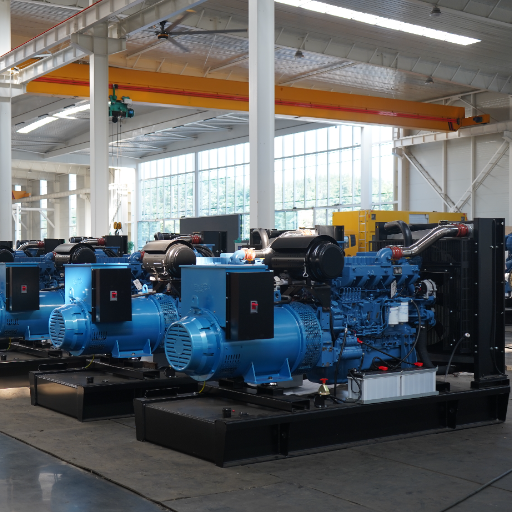
NFPA 110 is the National Fire Protection Association standard for emergency and standby power systems. It defines installation, maintenance, and testing requirements for generator sets that supply power when the normal electrical source fails.
The standard covers the entire EPSS. That means the generator set, transfer equipment, control systems, fuel supply, ventilation, and auxiliary systems. Its purpose is simple: emergency power must start automatically, reach stable operating conditions quickly, and run for the required duration.
NFPA 110 works alongside NFPA 70, the National Electrical Code. It also references NEC Articles 700, 701, and 702, plus healthcare requirements from the Joint Commission and CMS. Those codes tell you where emergency power is required. NFPA 110 tells you how to keep the system ready.
At Shandong Huali Electromechanical Co., Ltd., we design and build diesel generator sets for hospitals, data centers, mines, and industrial plants worldwide. Our after-sales teams support customers through commissioning, NFPA 110-aligned testing programs, and spare parts planning.
This guide reflects what we have learned from the field. Compliance is not a checkbox; it is the operational proof that a generator will start when called upon.
For a broader view of standby power design, see our guide on standby power systems.
NFPA 110 System Classification: Level 1 vs Level 2
NFPA 110 classifies emergency power supply systems by how critical the load is. Understanding this classification is the first step in setting the right maintenance and testing schedule.
Level 1 EPSS
Level 1 systems supply power where failure could result in loss of human life or serious injury. These installations demand the fastest automatic transfer and the strictest maintenance. They also require the longest continuous-run proof.
Typical Level 1 applications include hospitals, emergency response centers, and critical care facilities. Some data centers also fall into this category when patient safety or public safety is on the line.
Level 2 EPSS
Level 2 systems serve loads where failure is less hazardous to life safety. Industrial processes, commercial buildings, and non-life-safety infrastructure usually fall into this category. Level 2 still requires a documented maintenance program, but testing intervals and transfer-time requirements are less stringent than Level 1.
Type and Class Duration
NFPA 110 also defines EPSS by transfer time and fuel duration:
| Classification | What It Means | Typical Application |
|---|---|---|
| Type 10 | Power available within 10 seconds | Hospitals, life-safety loads |
| Type 60 | Power available within 60 seconds | Critical processes |
| Type 120 | Power available within 120 seconds | Less critical standby loads |
| Class 2 | Minimum 2 hours of fuel | Small commercial loads |
| Class 48 | Minimum 48 hours of fuel | Extended outages, remote sites |
| Class 96 | Minimum 96 hours of fuel | Critical infrastructure |
Healthcare facilities often go beyond the minimum. A generator for hospital applications typically needs Type 10 transfer and enough fuel to cover prolonged grid failures.
The Joint Commission commonly requires a 4-hour continuous load test during triennial testing. NFPA 110 may accept a shorter duration for some Level 1 systems, but healthcare standards are stricter.
NFPA 110 Weekly Inspection Requirements
NFPA 110 requires a weekly inspection of the EPSS. The generator does not need to run during this check. The goal is to catch early warning signs before they become no-start failures.
A proper weekly inspection covers the systems most likely to fail.
A proper weekly inspection covers the systems most likely to fail:
| System | What to Check |
|---|---|
| Battery | Charger status, terminal corrosion, electrolyte level, case condition |
| Fuel | Tank level, leaks, water contamination, vent and overflow condition |
| Lubrication | Engine oil level and condition |
| Cooling | Coolant level, hoses, belts, block heater operation |
| Electrical | Wiring, connections, breakers, fuses, control panel alarms |
| Exhaust | Leaks, condensate trap, back pressure signs |
| General | Enclosure cleanliness, ventilation, mode selector in AUTO |
Record the results in a generator logbook. If the control panel shows any alarm, schedule corrective action before the next test cycle. Do the same if battery voltage is outside the manufacturer’s float range. Small issues caught during a weekly check are far cheaper than emergency repairs during an outage.
For a more detailed system-by-system list, see our diesel generator maintenance checklist.
NFPA 110 Monthly Operational Testing
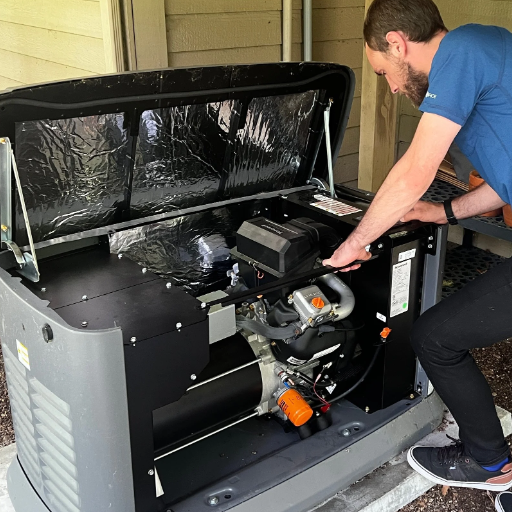
Monthly testing is where many facilities go wrong. NFPA 110 requires the generator to operate under load for at least 30 continuous minutes. Running the engine unloaded or under too light a load doesn’t satisfy the standard. It can also damage the engine.
Load Threshold
The generator must carry enough load to reach one of two targets.
- At least 30% of its nameplate kW rating, or
- The minimum exhaust gas temperature recommended by the engine manufacturer.
Diesel engines that run under light load do not reach full combustion temperature. Over time, unburned fuel and carbon collect in the exhaust system. This condition is called wet stacking. Monthly loaded runs help prevent it.
Transfer Switch Verification
The test must exercise the automatic transfer switch (ATS). Transfer the load electrically from normal power to emergency power and back. Record the transfer and retransfer times. For Type 10 systems, transfer must occur within 10 seconds.
Parameters to Record
During the monthly test, record this data:
- Voltage and frequency
- kW load and power factor
- Engine oil pressure
- Coolant temperature
- Starting battery voltage
- Fuel level before and after the test
- Any alarms or faults
Return the generator to AUTO mode after the test. If the unit isn’t in AUTO, it won’t respond to a real outage.
NFPA 110 Annual Load Bank Testing
If your monthly tests cannot reach the 30% load threshold using building load alone, NFPA 110 requires annual load bank testing. This situation is common in hospitals, data centers, and facilities where the generator is oversized relative to the protected load.
2025 Edition Protocol
The 2025 edition of NFPA 110 specifies the following annual load bank test:
| Step | Load Level | Duration |
|---|---|---|
| 1 | 50% of nameplate kW | 30 minutes |
| 2 | 75% of nameplate kW | 60 minutes |
| Total | 90 minutes continuous |
Earlier editions sometimes used a 25%/50%/75% step sequence over two hours. The 2025 edition simplifies the protocol. It maintains the same engineering purpose: prove the generator can run at high load without overheating, voltage instability, or fuel system problems.
Load Bank Safety
A permanent or portable load bank must automatically disconnect if utility power fails. This allows the building load to transfer to the generator during a real outage. Before starting the test, confirm the load bank’s safety interlocks are functional.
Wet Stacking Correction
If monthly runs have been light or unloaded, the annual load bank test may reveal wet stacking. Warning signs include black oily residue from the exhaust, low compression, or heavy smoke.
A controlled load bank run at 75% load for an extended period can often burn off deposits and restore performance.
You can also review our dedicated article on load bank testing for diesel generators.
Fuel Quality and Battery Maintenance Under NFPA 110
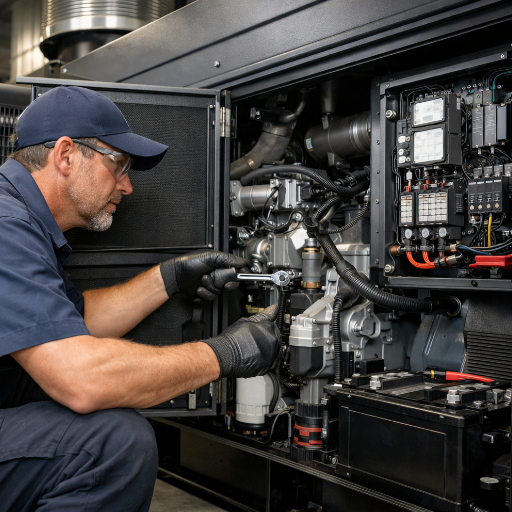
Two systems cause the majority of NFPA 110 compliance failures: fuel and batteries. Both degrade silently while the generator sits idle.
Annual Fuel Quality Testing
NFPA 110 Section 8.3.7 requires annual fuel quality testing. Stored diesel absorbs water, supports microbial growth, and accumulates sediment.
Contaminated fuel can clog filters and damage injectors. It can also cause engine failure during an outage. That’s why sampling matters.
Take the fuel sample 3 to 6 inches above the tank bottom. This is where water and sediment collect. Test for:
- Water content
- Sediment and particulate
- Microbial contamination
- Cetane number and oxidation stability
In tropical or humid climates, fuel quality can degrade faster than one year. Facilities in Southeast Asia, Africa, or Latin America often benefit from six-month sampling and fuel polishing between annual tests.
Starting Battery Maintenance
Battery failure accounts for roughly 60% of generator no-start events. A battery can show normal float voltage and still fail under the high current draw of starting a diesel engine.
Inspect battery terminals for corrosion and ensure the charger maintains the correct float voltage. Conduct a battery load test at least annually. Replace starting batteries every 30 to 36 months in standby applications, or sooner if load testing shows weakness.
Triennial (36-Month) Testing for Level 1 Systems
Level 1 EPSS must undergo a full-duration test at least once every 36 months. This test proves the generator can run for its assigned class duration under load.
For many Level 1 systems, NFPA 110 requires the generator to operate for at least 2 hours under load. Healthcare facilities aligned with Joint Commission standards commonly extend this to a 4-hour continuous load test. The test verifies several points:
- Extended run capability
- Cooling system performance
- Fuel system endurance
- Full EPSS transfer sequence
- Stability of voltage and frequency over time
Plan the triennial test during a controlled maintenance window. Have technicians, spare filters, and fuel on hand. Document every parameter and any corrective action taken.
Documentation and AHJ Inspection Readiness
NFPA 110 Section 8.3 requires a written maintenance program. Random or ad-hoc testing is not acceptable. The AHJ, Joint Commission surveyor, or insurance auditor will ask for records that prove the system has been maintained and tested.
A complete maintenance record should include the following items:
- Date and time of each inspection or test
- Name and qualification of the technician
- Generator run hours at the time of service
- Load level and duration for each test
- Voltage, frequency, oil pressure, and coolant temperature readings
- Fuel levels and fuel test results
- ATS transfer and retransfer times
- Alarms, faults, and corrective actions
- Signature or digital sign-off
Organize records by calendar year and by generator asset. Digital logbooks are acceptable if they are tamper-evident and backed up. Facilities that use a diesel generator maintenance schedule tied to NFPA 110 intervals rarely struggle with audits.
Common NFPA 110 Compliance Failures and How to Avoid Them
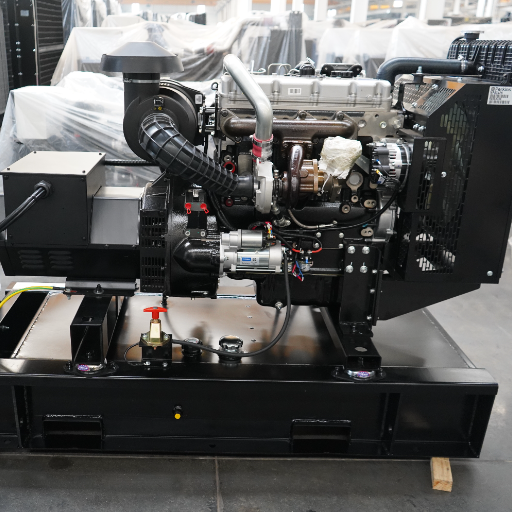
Even well-intentioned facilities fail NFPA 110 audits. The most common gaps are preventable.
| Failure Mode | Why It Happens | How to Prevent It |
|---|---|---|
| Battery no-start | Corrosion, sulfation, weak cells | Annual load testing, 30-36 month replacement cycle |
| Wet stacking | Chronic light-load operation | Monthly loaded runs, annual load bank testing |
| Fuel contamination | Water intrusion, microbial growth, long storage | Annual fuel testing, fuel polishing, biocide treatment |
| Incomplete records | Missing signatures or skipped tests | Written maintenance program, digital logbook |
| ATS failure | Infrequent transfer exercise | Monthly electrical transfer during loaded run |
| Coolant or oil leaks | Hoses and seals age during idle periods | Weekly visual inspection, scheduled fluid changes |
In 2023, a hospital in Southeast Asia passed its monthly generator runs but failed the annual load bank test. The unit had been exercised at no load for months. Carbon buildup caused wet stacking, and the engine could not sustain 75% load. After a controlled load bank treatment and a change to loaded monthly runs, the hospital passed re-inspection and avoided a forced generator replacement.
In another case, a data center in Africa discovered water in its diesel storage tanks during annual fuel testing. Fuel polishing and tank cleaning restored fuel quality. Without that test, the generator could have stalled during the next grid outage.
NFPA 110 Generator Maintenance for Harsh Environments
NFPA 110 assumes a controlled environment, but many Huali generators operate in deserts, tropics, mines, and coastal zones. Harsh conditions change what fails and how often you need to inspect.
In high-dust environments such as mining or construction sites, air filters clog faster. Check them weekly. In humid coastal regions, electrical connections corrode.
Fuel tanks also accumulate water. In regions with poor fuel quality, filtration upgrades and more frequent fuel sampling are essential.
Chinese engine brands such as Weichai, Yuchai, and Shangchai are widely used in these conditions. Their maintenance intervals align with NFPA 110 when the correct oil grade, coolant specification, and filter quality are used.
Always follow the engine manufacturer’s service manual alongside the NFPA 110 schedule. The NFPA schedule defines minimum testing frequency. The manufacturer defines oil change intervals, valve adjustments, and component replacement cycles.
Conclusion
NFPA 110 generator maintenance is not just a compliance task. It is the program that proves your emergency power system will start, transfer, and run when the grid fails.
Classify your EPSS correctly. Run weekly inspections. Exercise the unit under load every month.
Perform annual load bank testing when building load is insufficient. Test fuel quality annually. Keep complete records.
Facilities that treat the standard as a minimum checklist often discover gaps during an outage or audit. Facilities that embed NFPA 110 principles into their maintenance culture avoid the most common failure modes: dead batteries, contaminated fuel, wet stacking, and missing documentation.
At Shandong Huali Electromechanical Co., Ltd., we supply Huali diesel generator sets from 8kVA to 4000kVA. Our engineering team supports customers with commissioning and maintenance training. We also provide spare parts planning and after-sales service.
If you need help building an NFPA 110-compliant maintenance program or sourcing a standby generator for your facility, contact us today.
For a complete maintenance framework beyond NFPA 110, see our complete diesel generator maintenance guide.
