
A stationary generator costs between roughly 20,000 and 20,000 and 115,000 installed for a set in the 125 to 500 kVA range, and the machine itself is only part of that figure. The headline price on a quotation is the least useful number in it.
That is an odd claim for the top of a cost guide. Two suppliers can quote the same 200 kVA machine at figures six times apart, and both can be honest. One is ex-works, one is installed, one includes the fuel tank and one does not. Until you put them on the same basis, comparing them tells you nothing about which is cheaper.
Most industrial buyers approach stationary generator costs the way the market encourages them to, by collecting quotes and ranking the largest number on each. That instinct is reasonable, and it produces the wrong decision often enough to be worth correcting.
This guide gives you a way to translate every quote onto one basis: the four cost layers inside any quotation, the drivers that move each one, reference bands you can plan against, and the exclusions checklist that explains why the cheapest quote so often is not.
If you are still settling the hardware question, our overview of stationary generators covers configurations and applications before the commercial discussion starts.
Key Takeaways
- One published guide prices a 200 kVA set at 18,000to18,000to28,000 for the unit. Another prices the 200 to 500 kW band at 70,000 to 70,000 to 180,000. Expressed per kVA, the two disagree by a factor of five. Both are real, and they measure different scopes on different cost bases.
- Installed cost runs roughly 1.6 to 1.9 times the unit price across the 125 to 500 kVA band, before site-specific civil and electrical work.
- Unit cost per kVA falls from about 96 to 96 to 144 at 125 kVA to about 83 to 83 to 133 at 300 kVA, then levels off and edges back up at 400 and 500 kVA. The knee sits where four-cylinder engine platforms give way to six.
- Four questions normalise any quotation: what cost base, what scope, what duty rating, and what is excluded.
- The cheapest quote is usually the one carrying the longest exclusions list. Compare exclusion lists, not headline figures.
Need a number for a real project rather than a range? Send us your load schedule and site conditions and our engineering team will price your configuration against a stated scope, so you can compare it line for line with anything else on your desk.
Why Published Stationary Generator Prices Don’t Compare
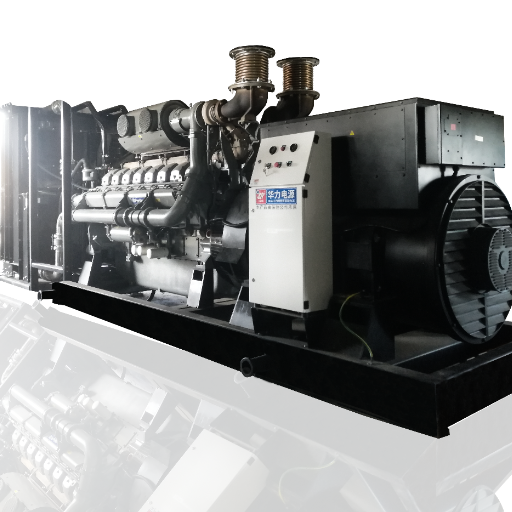
Generator prices published across different channels vary enormously, with the gap between the lowest and highest figures reaching fivefold or more. This situation stems neither from market failure nor from supplier dishonesty; rather, it arises because the industry employs multiple pricing benchmarks, and suppliers often fail to specify which one they are using.
Consider two sets of published price data. A manufacturer’s list price indicates that a 200 kVA generator set sells for between $18,000 and $28,000—translating to approximately $90 to $140 per kVA. In contrast, a U.S. distributor’s list price for units in the 200 to 500 kW range (roughly 250 to 625 kVA, based on a 0.8 power factor) ranges from $70,000 to $180,000. Even accounting for the inclusion of higher-capacity models in the latter range, the calculated unit price ranges between $112 and $720 per kVA.Both sets of figures are accurate. The former represents the ex-factory price of the generator set itself, while the latter reflects the distributor’s costs—including freight and tariffs—as well as U.S.-specific configuration requirements and profit margins.
The two cases differ in terms of freight, tariffs, enclosure ratings, emission standards, control systems, and technical documentation; however, these distinctions are not apparent from the price figures alone.
The Four Questions That Normalise Any Quote
Before you rank two quotations against each other, get an answer to four questions about each. Skip any of them and the comparison is not valid.
- What cost base? Ex-works, FOB, CIF, delivered, or installed. These are five different numbers for the same machine, and each is legitimate on its own terms.
- What scope? Which of the four cost layers below sit inside the figure. A quote that includes the fuel system is not comparable with one that does not.
- What duty rating? Standby, prime, or continuous. The same hardware carries a different rating and price depending on which you need. Our explanation of prime and standby ratings covers how the classes are defined.
- What is excluded? Foundations, cabling, exhaust routing, fuel infrastructure, permits, and commissioning are frequently outside the figure. The cheapest quote often excludes the most.
Daniela learned this lesson the hard way. As the procurement manager for a water treatment operator in northern Chile, she had gathered three quotes for a 400 kW backup power requirement: $34,000, $61,000, and $88,000.
The lowest quote was an “ex-works” price that excluded the enclosure, fuel tank, and control system. However, when all three options were evaluated based on the final cost of delivery and installation, the rankings flipped: the $88,000 quote was actually the most economical complete solution—coming in about $9,000 lower than the others. Yet, at that point, the company’s board was just two days away from approving the quote that appeared cheapest on paper.
The Four Cost Layers: FOB, Landed, Installed, Lifetime
Every generator quotation, however it is formatted, prices some combination of four layers. For a stationary generator, cost questions almost always resolve to one unknown: which of these layers the figure in front of you actually covers. Knowing that is the whole skill of reading one.
Layer 1: FOB or Ex-Works
This is the factory price for the generator set. It covers the engine, alternator, base frame, radiator, control panel, and whatever enclosure or options are specified. It covers no movement of any kind, and nothing that happens on your site.
When a manufacturer quotes FOB, the scope is tightly defined and the variation lives in the option list. A canopy, an upgraded alternator, a paralleling panel, or a higher emissions tier each move this number, and each should be itemised.
Layer 2: Landed
Landed cost is everything required to get the set from the factory gate to your site. Freight and logistics typically add 8 to 15 percent to the FOB figure, and customs duty adds a further share of the CIF value, commonly 5 to 20 percent depending on destination and classification. Marine insurance, port handling, and inland haulage all sit here.
Duty is the variable most often guessed and least often checked. It depends on your country, the HS code the set is declared under, and the trade agreements in force. Confirm it before comparing a landed quote from one origin against another, because a difference in duty treatment can exceed the difference in unit price.
Layer 3: Installed
Installation is the layer that most often surprises buyers, because the site drives the generator installed cost rather than the machine. It includes the concrete pad, the automatic transfer switch, the cable run and terminations, exhaust routing, fuel storage and pipework, ventilation, permits, commissioning, and a load bank test.
Published dealer guidance puts installation anywhere from 35,000 to more than 35,000 to more than 400,000 depending on class and site. That spread is not noise. Access, soil bearing capacity, distance from the fuel point, and cable run length all move this number more than the generator does.
Layer 4: Lifetime
Fuel, scheduled maintenance, overhauls, and eventual replacement make up the final layer. This is where the purchase decision is either validated or regretted, and it sits outside this article because the arithmetic deserves its own treatment. Our guide to diesel generator total cost of ownership carries the lifetime cost model, unit cost per kWh, and the duty-cycle inputs that drive it.
| Layer | What it contains | Who usually controls it | Typical share of total |
|---|---|---|---|
| 1. FOB / ex-works | Engine, alternator, frame, controls, enclosure or options as specified | Manufacturer | 50 to 60 percent |
| 2. Landed | Freight, insurance, duty, port handling, inland haulage | Freight forwarder and customs broker | 10 to 20 percent |
| 3. Installed | Pad, ATS, cabling, exhaust, fuel infrastructure, permits, commissioning | Your contractor and site conditions | 20 to 35 percent |
| 4. Lifetime | Fuel, maintenance, overhaul, replacement | Operations and duty cycle | Multiples of the purchase price |
Reading a quote properly? If you have a quotation and cannot tell which layers it covers, send it to us and we will tell you what is inside it and what is missing.
What Drives the Price of the Unit Itself
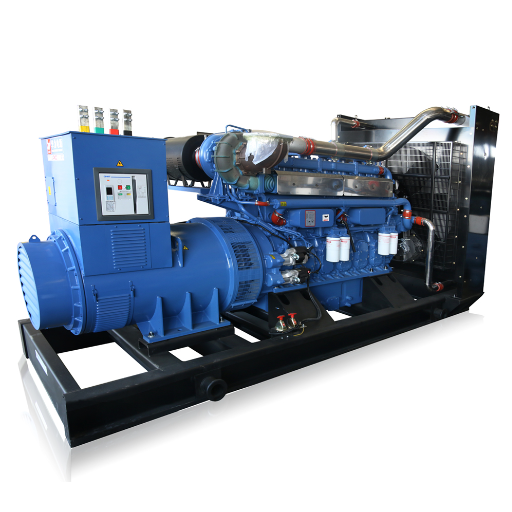
Within Layer 1, industrial generator cost is driven by a handful of specification decisions that move the number more than everything else combined. This is the portion of stationary generator cost you control most directly, and most of it is choices you make rather than differences between suppliers.
Engine brand and origin. Tier 1 engine brands carry a premium of roughly 25 to 40 percent over regional equivalents in the same power class. That buys documented emissions compliance, a global parts network, and predictable service intervals. It is worth paying for prime power at a remote site, and harder to justify for a standby set running forty hours a year, provided the regional engine carries the certification your site requires.
Alternator class. Alternator quality separates a set that holds voltage under motor starting from one that does not. Premium brands command a real premium over generic units of the same rating, and the gap shows up in motor starting capability, waveform quality, and temperature rise. For sites with large direct-on-line motors or sensitive electronics, this is not the place to economise.
Enclosure type. An open skid set is the cheapest option and suits only a protected plant area. A sound-attenuated canopy adds roughly 25,000 to 25,000 to 60,000 in the classes where it matters, and it is what makes a set usable near a boundary. Where noise is regulated, the canopy is optional; generator noise regulations set the limits that decide the specification. A containerized package adds 40,000 to 40,000 to 80,000, buying weather protection, transportability, and simpler site installation.
Emissions tier. This is the largest single swing factor for buyers in regulated markets. Tier 4 Final hardware adds roughly 35,000 to 35,000 to 80,000 over Tier 2 in the same power class, because it requires aftertreatment, more complex combustion control, and additional sensors.
Which tier applies depends on your jurisdiction, engine class, and installation date, and requirements aren’t uniform across countries. In the United States the EPA administers the applicable standards, whose stationary engine programme sets out the regulatory structure. Confirm your obligation before assuming the premium applies to you.
Controls and documentation. A basic control panel is included in any quotation. Remote monitoring, automatic mains failure control, synchronising and load sharing for parallel operation, and integrated fuel management are all line items. Certification packages, including factory test reports and compliance declarations, add a further few percent. They are also the items most likely to be quietly missing from a low quote, and the hardest to add afterwards.
| Specification decision | Typical cost impact | Worth paying when |
|---|---|---|
| Tier 1 engine over regional | 25 to 40 percent premium | Prime power, remote sites, strict certification |
| Premium alternator | Moderate premium | Large motors, sensitive loads, high temperature rise |
| Sound-attenuated canopy | 25,000to25,000to60,000 | Boundary-adjacent sites, regulated noise limits |
| Containerised package | Additional 40,000 to 40,000 to 80,000 | Remote or temporary sites needing weather protection |
| Tier 4 Final emissions | 35,000 to 35,000 to 80,000 over Tier 2 | Where local regulation requires it |
| Paralleling and remote monitoring | Project-specific | Multi-unit sites, unmanned or remote operation |
Cost per kVA: The Curve, and Where It Bends
Unit cost per kVA declines as generator size increases, predictably enough to be useful at the planning stage. It is the most widely quoted rule of thumb in the industry, and the one most often applied to the wrong layer of stationary generator cost. Knowing why the curve bends is what stops buyers from over-reading it.
Three things drive the decline. Fixed costs, including controls, documentation, testing, and factory overhead, spread across more capacity. Engine and alternator frames are built in discrete steps, so a larger platform often delivers disproportionately more output than the price step suggests. And higher-volume power classes attract more manufacturing competition.
The published ranges show the shape clearly. Unit cost per kVA falls from roughly 96 to 96 to 144 at 125 kVA to about 83to83to133 at 300 kVA. It then levels off and edges back up slightly at 400 and 500 kVA, where alternator frames and engine platforms step up a size and the extra hardware costs more than the volume-saving returns.
The steepest part of the decline is the knee where four-cylinder platforms run out of displacement and six-cylinder platforms take over. That transition falls between 150 and 350 kVA depending on the manufacturer.
| Capacity | Unit price range (published) | Unit cost per kVA | Installed total range (published) | Installed cost per kVA |
|---|---|---|---|---|
| 125 kVA | 12,000to12,000to18,000 | 96to96to144 | 20,000to20,000to33,000 | 160to160to264 |
| 200 kVA | 18,000to18,000to28,000 | 90to90to140 | 29,000to29,000to49,000 | 145to145to245 |
| 300 kVA | 25,000to25,000to40,000 | 83to83to133 | 41,000to41,000to70,000 | 137to137to233 |
| 400 kVA | 35,000to35,000to55,000 | 88to88to138 | 57,000to57,000to92,000 | 143to143to230 |
| 500 kVA | 45,000to45,000to70,000 | 90to90to140 | 73,000to73,000to115,000 | 146to146to230 |
One point to note regarding this table is that the cost per kVA is meaningful only when the cost basis is clearly defined. There is a nearly twofold difference between the figures in the “Unit” column and the “Installed” column, yet both are quoted on a per-kVA basis. If one supplier quotes 150/kVA and another quotes 230/kVA, the former is not necessarily cheaper; the key is to clarify exactly which cost components are included in each quote.
Neither figure should drive your sizing decision. A set chosen to hit a favorable number per kVA that then runs continuously at 30 percent load will cost more in fuel and engine wear than the saving was worth.
What a Stationary Generator Costs by Size
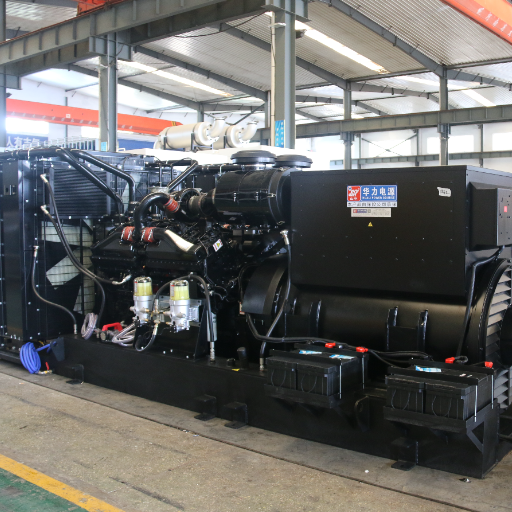
The table below consolidates published unit and installed ranges into one planning reference. Read the scope statement underneath it before you use a figure from it, because that statement is the entire point of this article.
| Class | Typical applications | Unit price range | Installed total range | Duty assumed |
|---|---|---|---|---|
| 20 to 60 kVA | Small commercial backup, farms, workshops | 6,000to6,000to18,000 | 12,000to12,000to45,000 | Standby |
| 60 to 150 kVA | Retail, clinics, small manufacturing | 12,000to12,000to30,000 | 22,000to22,000to70,000 | Standby |
| 150 to 300 kVA | Factories, hotels, small data rooms | 20,000to20,000to45,000 | 35,000to35,000to80,000 | Standby or prime |
| 300 to 500 kVA | Industrial plants, hospitals, larger facilities | 35,000to35,000to70,000 | 57,000to57,000to115,000 | Prime |
| 500 to 1,000 kVA | Heavy industry, data centres, district facilities | 70,000to70,000to180,000 | 150,000to150,000to300,000 | Prime |
Scope statement. These ranges are consolidated from published manufacturer and dealer price guides, in United States dollars, reflecting hardware available in the current market. The unit column is ex-works or FOB for a standard configuration with a canopy, a basic control panel, and no paralleling. The installed column adds a concrete pad, a transfer switch, standard cabling, a day tank, exhaust routing, and commissioning.
Neither includes fuel, site-specific civil works, extended cable runs, permits, or finance costs. These are planning figures, not a quotation, and site conditions routinely move an installed figure by 30 percent in either direction.
Two things move these numbers more than the choice of supplier. The first is what the installed layer contains: the pad, the transfer switch and its enclosure, the cable run to the switchboard, exhaust routing, fuel storage and containment, ventilation, earthing, permits, and commissioning with a load bank test. Several scale with site geometry rather than machine rating, which is why two identical generators on two different sites can carry installed costs that differ by tens of thousands.
The second is site conditions. A set delivered to a plant room beside a switchboard with an existing fuel system needs a pad and a cable. The same set at a remote site with a long cable run, poor access, and rock at two metres needs a project. The machine price is identical.
This is the most common planning error in generator budgeting. Buyers fixate on the unit price, the only figure they can compare easily, and treat the installed layer as a contingency. It should be a first-class line item, quoted from a site survey before the purchase order is raised.
Used sets trade at roughly 20 to 45 percent below equivalent new pricing. That is a genuine saving on Layer 1 and often a false economy on Layer 3, where the installation cost is the same either way.
The Costs Buyers Miss
Two categories of stationary generator cost never appear on a quotation and reliably appear on the invoice. Both are avoidable with specification discipline.
The Cost of Getting the Specification Wrong
Oversizing is the most common and least discussed. A set rated far above the actual load runs at light load, which on a diesel engine means incomplete combustion, cylinder glazing, and wet stacking. The capital premium is only the beginning, because the unit then costs more per running hour than a correctly sized machine would. You pay twice, at purchase and at every service interval.
Derating is the more expensive error because it’s invisible at the quotation stage. A generator rated at sea level loses output at altitude and in high ambient temperatures, and the loss isn’t marginal. A package specified to deliver a given figure at sea level and installed at 2,000 metres will not produce that figure, and neither will one be installed in a plant room at 45 degrees Celsius.
The physics is set out in our guide to generator derating for altitude and temperature. The commercial consequence is that you either accept reduced capacity or buy a larger set than you budgeted for.
Tomas discovered this on a mining project in the Andes. He specified a 500 kVA set against a calculated 380 kVA load, a comfortable margin on paper. At 3,800 metres, derating cut usable output to well under 400 kVA, leaving almost no headroom for motor starting.
Two options were available at the time: replacing the second generating unit (at a cost of approximately 95,000) or replacing the generator and recalibrating the unit’s rated parameters (at a cost of approximately 40,000). He chose the latter, but this resulted in a four-month delay and necessitated the redesign of the protection settings for the distribution panel. In fact, the manufacturer had always provided the derating curve; it was simply that no one had ever requested it.
What Is Not in Your Quotation
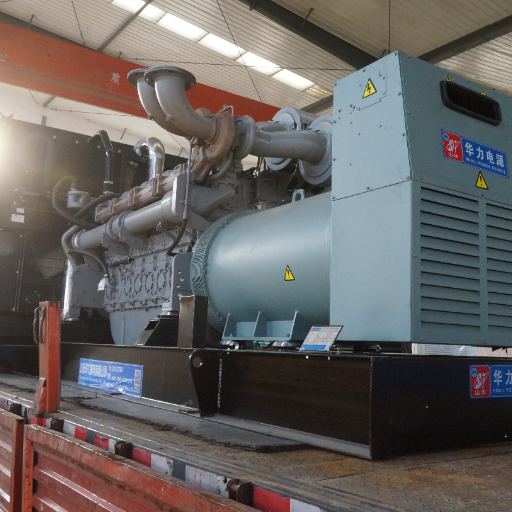
A generator quotation is a scope document, and the exclusions matter as much as the inclusions. Most of them land in generator installed cost, which is why that layer is the one to interrogate. This is what a factory quotation typically does not cover:
- Foundations and pads, including any rock excavation
- Cable runs, trays, and terminations between the set and the switchboard
- The automatic transfer switch and its dedicated enclosure
- Exhaust routing, silencers beyond the standard unit, and wall penetrations
- Fuel storage beyond the day tank, plus pipework, containment, and bunding
- Ventilation, louvres, and combustion air for enclosed installations
- Permits, environmental approvals, inspection fees, and utility notifications
- Site access works, craneage, and offloading at the installation point
- Extended warranties, spare parts kits, and consumables beyond first fill
- Operator training, monitoring subscriptions, and fuel for testing
Every item is a real cost, and every one can sit inside a competitor’s figure while outside another’s. The practical use of the list is as a comparison grid. Ask each supplier to mark it, then compare totals rather than quotes. Our commissioning checklist covers the final stage of that scope in detail.
Frequently Asked Questions
How much does a stationary generator cost?
Published ranges put a 125 kVA set at 20,000 to 20,000 to 33,000 installed and a 500 kVA set at 73,000 to 73,000 to 115,000 installed, covering the unit, pad, transfer switch, and commissioning. Smaller commercial sets start below $12,000 installed. Site conditions, duty rating, and specification move these figures substantially.
What does a 500 kW generator cost installed?
A 500 kW machine sits above the 500 kVA band, where installed ranges range from roughly 150,000 to 150,000 to 300,000 depending on configuration. The unit alone accounts for around 55 to 60 percent of that. Emissions tier, enclosure, and paralleling capability are the largest variables.
Why do two suppliers quote very different prices for the same size?
Usually because they are pricing different things. One figure may be ex-works for the set alone and the other delivered, installed, and commissioned. Duty rating, enclosure, emissions tier, and alternator class also differ. Normalise both onto one cost base before drawing conclusions.
What is the difference between FOB and installed cost?
FOB is the price at the port of shipment, covering the set package for export. Installed cost adds freight, duty, delivery to site, foundations, the transfer switch, cabling, fuel infrastructure, permits, and commissioning. Installed cost typically runs 1.6 to 1.9 times the unit price.
Is a larger generator cheaper per kVA?
Yes, but only up to a certain point. The unit cost per kVA decreases as capacity increases: at 125 kVA, the cost is approximately 96 to 144, whereas at 300 kVA, it drops to about 83 to 133. Beyond this capacity, costs tend to level off before rising slightly again. If the purchased capacity exceeds actual load requirements, the resulting additional fuel and maintenance costs will outweigh the savings gained from the lower unit cost per kVA.
How much does the concrete pad and installation add?
Installation broadly adds 60 to 90 percent to the unit price, and the foundation is one component. Published dealer guidance puts complete installation anywhere from 35,000toover35,000toover400,000 by class. Access, cable run length, soil conditions, and existing fuel infrastructure drive the figure more than machine size.
Is it cheaper to buy a generator from China?
The factory price is usually lower, and the landed price is often still lower after freight and duty. The gap narrows once you account for specification alignment, certification, documentation, and service support. Compare a fully specified delivered price from each origin, not a factory price against a delivered one.
Does the emissions tier change the price?
Substantially. Tier 4 Final hardware adds roughly 35,000to35,000to80,000 over Tier 2 in the same power class, because it requires aftertreatment and more complex combustion control. Whether it applies depends on your jurisdiction, engine class, and installation date.
Conclusion
Stationary generator cost comes down to knowing which of four layers a figure covers. FOB is the factory price. Landed adds freight and duty. Installed adds everything required on your site. Lifetime adds fuel, service, and overhaul across the working life of the machine.
Compare quotes on one basis and the ranking usually changes. Compare them across bases and you are reading four different measurements and calling them one.
The discipline is short. Ask every supplier for the cost base, the scope, the duty rating, and the exclusions list. Mark the exclusions against a standard grid. Then compare totals, with a site survey behind the installed layer rather than a contingency line.
Ready to price a real project? Send us your load schedule, site altitude and ambient temperature, fuel arrangement, and required duty rating. Our engineering team will return a quotation with the scope and exclusions stated explicitly, so it compares cleanly against everything else on your desk.
