
The difference between a prime and a standby generator rating comes down to how many hours a year the set runs. Standby power (ESP) is rated for emergency use under roughly 200 hours a year, while prime power (PRP) is rated for unlimited hours at variable load. If the generator is your main source of power, you need prime, not standby.
Here is the part most buyers miss: the cheapest quote is often a standby rating being sold to a buyer who needs prime power. Same engine, same alternator, a lower price, and a warranty that quietly assumes you will barely run the thing. When that set runs 2,000 hours a year as your main power source, the “savings” disappear into an early overhaul.
You are not wrong to want a lower price. What you need is the right rating class for the duty you actually run. In this guide, we break down the three ISO 8528 ratings, show why one engine carries three different kW numbers, and give you a simple framework to match the rating to your operation. As a manufacturer that builds generator sets from 8 kVA to 4,000 kVA, we quote both numbers on every proposal and tell you which one your duty cycle needs.
Key Takeaways
- Standby (ESP) is for outages under about 200 hours a year at no more than 70% average load, with no overload allowance.
- Prime (PRP) is for unlimited hours at variable load, with a 10% overload for 1 hour in every 12.
- Continuous (COP) is for constant full load, and it is the most expensive rating per kVA.
- The same engine is rated about 10-15% higher in standby than in prime, because standby lets the engine rest between outages.
- A prime-rated engine is built for 15,000-25,000 hours; a standby-rated engine for 5,000-10,000. That is why prime costs 10-20% more.
The Three Ratings, Defined
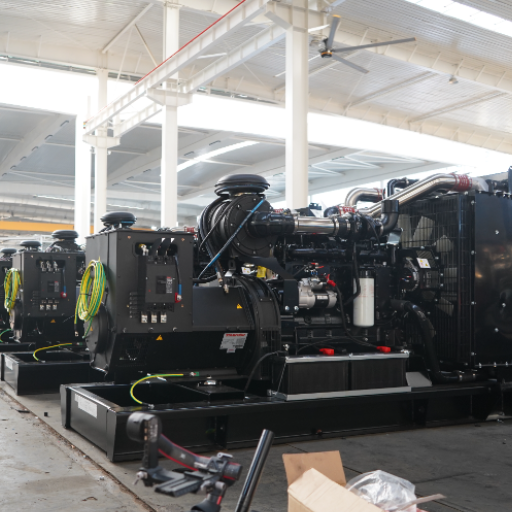
ISO 8528-1 defines four operating classes for generator sets. Three of them matter for this decision. The fourth, limited-time running power (LTP), is a narrow category we cover in our full ISO 8528 generator rating guide.
Standby (ESP): Emergency Only
Standby power, labeled ESP under ISO 8528-1, is for the worst-case moment: the grid fails and you need power now. It is not designed to be your daily workhorse.
The formal limits are tight. A standby-rated set may run up to roughly 200 hours per year, must stay at no more than 70% of its rated load on average over 24 hours, and has no overload allowance at all. The engine is allowed to run hard for short stretches because it then rests for weeks between outages.
That rest is the whole point. It lets the manufacturer squeeze more kW out of the same engine because the engine is not accumulating hours at a rate that matters.
Prime (PRP): Unlimited Hours, Variable Load
Prime power, labeled PRP, is for a generator that is the main source of power, but the load moves around. A mine, a construction camp, a remote factory, an island microgrid. The set runs whenever you need power, potentially thousands of hours a year.
A prime-rated set may run unlimited hours at variable load, so long as the average stays at or below 70% of rated load over 24 hours. It also carries a small overload allowance: 10% above rated power for 1 hour in every 12. That allowance is not free capacity. It is there to cover load spikes like a large motor starting.
Continuous (COP): Constant Full Load
Continuous power, labeled COP, is the rarest and most expensive class. It is for a generator that runs at a steady 100% load for unlimited hours, with no overload allowance.
Think of a generator feeding a base-load process that never throttles back, like a data-center co-location running at a fixed draw, or a manufacturing line at full production. Most real sites are variable-load prime, not continuous. Confusing the two means overpaying.
| Rating | Hours per Year | Average Load | Overload | Relative Output |
|---|---|---|---|---|
| Standby (ESP) | ~200 max | up to 70% | None | Highest |
| Prime (PRP) | Unlimited | up to 70% over 24 h | 10% for 1 h in 12 | ~10-15% below standby |
| Continuous (COP) | Unlimited | 100% constant | None | ~10-15% below prime |
Unsure which class your application needs? Tell us your annual hours and load profile, and our engineers will confirm the correct rating before you spec the set.
Why the Same Engine Carries Three Different Numbers
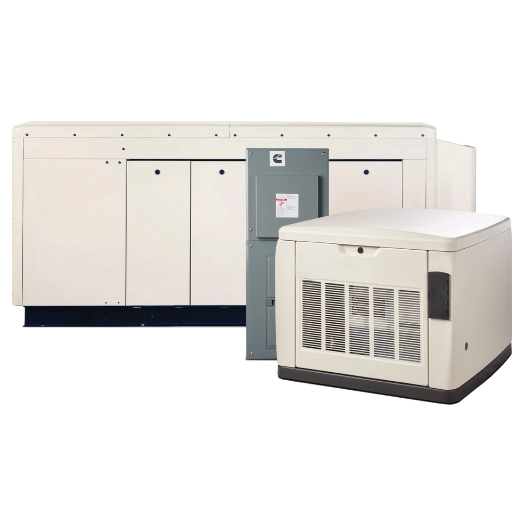
This is the part that confuses almost everyone. The engine under the canopy is the same. The kW on the nameplate changes with the rating class.
Standby = Prime + 10-15%
Take a Cummins 6CTAA engine. Rated for standby duty, it is a 220 kW generator set. The same engine rated for prime duty is a 200 kW set. A Perkins 1106A is 180 kW standby and 165 kW prime. The pattern holds across every engine family: the standby number is about 10-15% higher than the prime number.
The reason is thermal and mechanical. At standby, the engine works hard for a few hours, then cools and rests. The rating assumes that recovery time. At prime, the engine runs continuously, so the manufacturer derates it slightly to keep temperatures and wear within safe limits across thousands of hours.
Prime = Continuous + 10-15%
The same logic drops the number again for continuous duty. Prime assumes a variable load that averages 70%. Continuous assumes a relentless 100%. To survive constant full load, the manufacturer pulls the rating back another 10-15%.
So one engine might be sold as 220 kW standby, 200 kW prime, and 180 kW continuous. Three numbers, one engine. None of them is lying. Each one assumes a different duty.
The Engine Design-Life Difference
Here is the number that makes the price difference real. A prime-rated engine is typically engineered for 15,000 to 25,000 hours before a major overhaul. A standby-rated engine, run only a few hundred hours a year, is engineered for roughly 5,000 to 10,000 hours of accumulated run time.
That gap is why prime sets cost 10-20% more than standby, and continuous sets 25-40% more. You are not paying for a bigger engine. You are paying for an engine rated to survive the hours you will actually put on it.
The Decision Framework: Which Rating Do You Need?
Strip the standards language away and the choice comes down to three questions.
Ask Three Questions
First, is the generator your main power source or a backup for outages? Second, roughly how many hours a year will it run? Third, is the load steady or does it move around?
Your answers slot you into a class almost automatically. Backup power for grid outages under 200 hours a year means standby. Main power with a moving load means prime. Main power at a constant full draw means continuous.
The 200-Hour Line
The cleanest single test is the 200-hour line. If your generator will run more than about 200 hours in a year, you have crossed out of standby territory into prime.
A data-center backup that runs 60 hours a year during outages is on standby. A mine-site generator powering a whole camp 18 hours a day is prime, thousands of hours a year. The same kW of “need” produces two completely different machines.
The 100% Load Trap
One subtle boundary trips up even experienced specifiers. Prime power assumes a variable load averaging 70%. A prime-rated set is only expected to run at full 100% load for a limited portion of the year, on the order of 500 hours.
If your operation genuinely holds the generator at or near full load around the clock, you do not have a prime application. You have a continuous application. Buying a prime set for constant full load pushes it past what the rating allows, and the same warranty and lifespan problems appear.
The Overload Allowance, Explained Honestly
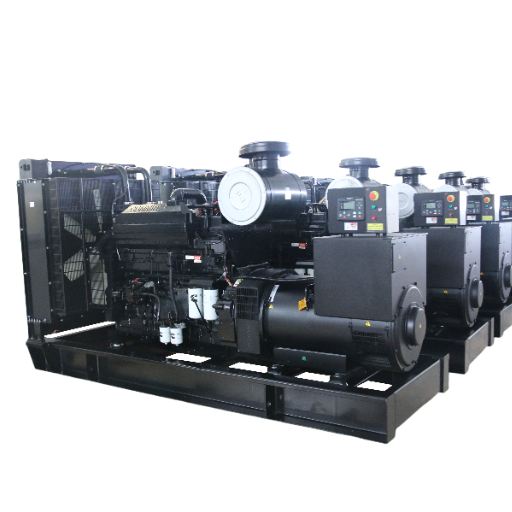
The overload allowance is the most misunderstood number in the rating table, and most competitor articles get it slightly wrong. Here is the straight version.
The 10% for 1 Hour in 12
Prime-rated sets carry a 10% overload allowance: 10% above rated power for 1 hour in every 12. On a 200 kW prime set, that is 220 kW for one hour, roughly twice a day.
Note that the allowance is commonly capped at around 25 hours a year in practice. It is a safety valve, not a permanent upgrade. If you plan to run at 220 kW for hours every single day, your set is undersized and the overload allowance will not save it.
It Is for Motor Starting, Not Bonus Capacity
The overload allowance exists for one main reason: load spikes. When a large electric motor starts, it can draw several times its running current for a few seconds, then settle. The overload allowance lets the generator ride through that spike without tripping or stalling.
It is not there to give you a bigger generator for free. Treating it as bonus capacity is exactly how a generator gets run to death early.
Why the Number Comes From ISO 3046, Not ISO 8528
Here is the detail that separates a manufacturer’s explanation from a dealer’s blog. The 10% overload allowance is defined in ISO 3046, the engine performance standard, and referenced by ISO 8528. Strictly speaking, it is an engine allowance, not a generator-set rating requirement.
This matters because it means the exact overload figure is engine-specific. A Cummins engine and a Perkins engine may carry slightly different overload behavior. When we quote a prime set, we confirm the specific engine’s allowance rather than pasting a generic 10% onto the datasheet.
The Cost of Getting It Wrong
The wrong rating does not usually fail on day one. It fails a year or two in, as a shortened engine life and a voided warranty. Three stories show how it plays out.
Standby Sold as Prime
A mining contractor in northern Australia bought a 300 kVA set at a price his competitors could not match. The quote did not specify the rating class. It was a standby-rated set, and he ran it as prime power for a remote camp, 2,400 hours a year.
The first two years were fine. In year three, the engine reached an overhaul threshold that a prime-rated engine would not have hit for another decade. The overhaul cost more than the difference in price he had “saved.” Worse, the warranty claim was refused because he had run a standby set beyond its rated duty. The cheapest quote became the most expensive machine on his site.
Prime Sold as Standby
The opposite error is quieter but real. An office-facility manager specified a continuous-rated set for a 100-hour-a-year standby duty, because he wanted “the best.” He paid roughly 30% more than a standby set would have cost, for a machine whose extra robustness he would never use in his lifetime.
The set will run flawlessly. It is also the wrong financial decision. Buying a continuous or prime set for a standby application is overpaying for durability you will never need.
The Specifier Who Read the Nameplate
A project engineer for a grid-isolated manufacturing site asked for the rating class on every quote he received. One vendor showed a standby number, another a prime number, and the two prices looked nothing alike until he held the class constant.
He matched the site’s 2,000-hour-a-year variable load to a prime rating, sized the set correctly, and got a generator that is still running past 15,000 hours. The only thing he did differently was ask which rating each quote actually described.
How to Read the Rating on a Quote
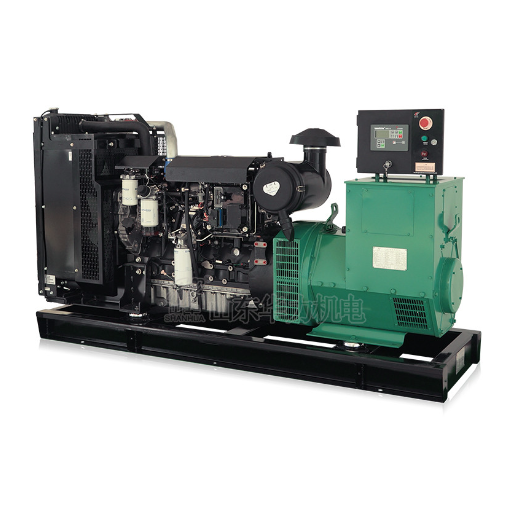
The rating class is not a footnote. It is the single most important line on a generator quotation, and it is the one buyers most often skip.
The Nameplate and the Quote Must State the Class
A proper generator quote states the rated output and the operating class together: “300 kVA / 240 kW at PRP” or “275 kW standby.” If the quote shows only a kVA or kW number with no class, you are comparing apples to a mystery.
The nameplate on the set itself will carry the same information. When the machine arrives, the nameplate rating should match what was quoted. If it does not, stop and ask why before you accept delivery.
Hold the Class Constant Before Comparing Prices
Two quotes for “a 300 kVA generator” can be for two different machines: one standby-rated, one prime-rated, with a real price and capability gap between them. The only way to compare them fairly is to hold the class constant.
Ask every vendor for the rating at the same class, at the same site conditions, at the same power factor. Then the prices line up and the decision is honest. This is the same discipline we recommend when reading a generator specification sheet, and it ties directly to the kW vs kVA distinction on the nameplate.
Frequently Asked Questions
What is the difference between prime and standby generator rating?
Standby (ESP) is rated for emergency use under about 200 hours a year at up to 70% average load, with no overload. Prime (PRP) is rated for unlimited hours at variable load with a 10% overload allowance. The same engine carries a higher standby number than prime number.
Can I run a standby generator as prime power?
No, not without voiding the warranty and shortening engine life. A standby-rated engine is built for roughly 5,000-10,000 hours of accumulated run time, versus 15,000-25,000 for a prime-rated engine. Running it as your main power source crosses that threshold years early.
What does prime power mean on a generator?
Prime power means the generator is the main source of power, running unlimited hours at variable load that averages no more than 70% of rated load over 24 hours, with a 10% overload allowance for 1 hour in 12.
Is prime power the same as continuous power?
No. Prime assumes variable load averaging 70%. Continuous (COP) assumes constant 100% load with no overload allowance. A prime-rated set run at constant full load is being operated beyond its rating, and continuous sets cost 25-40% more.
Why is a standby generator cheaper than a prime generator?
Because the engine is rated for a lighter duty. The standby rating assumes the engine rests between outages, so the manufacturer can rate it higher per kW and build it to survive fewer total hours. Prime sets cost 10-20% more to cover the heavier-duty engine rating.
How many hours a year can a prime generator run?
A prime-rated generator can run unlimited hours, provided the load is variable and averages no more than 70% over 24 hours. At a constant 100% load, a prime set is only expected to run on the order of 500 hours a year; beyond that it is a continuous application.
Conclusion
Prime versus standby is not a quality difference. It is a duty difference. Standby sets rest between outages; prime sets work for a living; continuous sets never throttle back. Pick the wrong one and you either void a warranty early or pay 30% more for durability you will never use.
Before you commit, pin down three facts: whether the set is your main power or a backup, how many hours a year it will run, and whether the load holds steady or moves. Hold the rating class constant across every quote you compare. Read the nameplate when the machine arrives.
The engine choice matters too. The rating class interacts with the brand you select, which is why we built a separate Cummins vs Perkins generator comparison, and why altitude and temperature derating stacks on top of whatever class you choose.
Tell us your duty cycle and annual hours, and Shandong Huali will quote the correct rating class the first time, from 8 kVA to 4,000 kVA. Request a quote tailored to your operation, and our engineering team will match the rating to the duty instead of selling you the bigger number.
