
The price range for megawatt-class generators is vast: a used unit with significant operating hours might cost around $70,000, while a brand-new Tier 4-compliant unit—equipped with an exhaust aftertreatment system—can reach approximately $950,000. Both figures represent accurate, current market pricing, yet the equipment they refer to—despite sharing the same name—has almost nothing in common.
If you search for a megawatt generator price today, that is the answer Google gives you: a range of more than thirteen to one, with the words “used, new, skid-mounted, trailer-mounted, or containerized” doing all the work of explaining it. It is technically true and it tells you nothing you can budget with.
This guide takes that range apart. It shows which number applies to which machine, what each column actually buys, and how to place your own project inside it. We build generator sets and we sit in one of those columns, so we will say which one rather than pretend the others do not exist.
Key Takeaways
- A megawatt generator price is four prices sharing one phrase: used, new Chinese OEM, new Western Tier 4, and a per-kW band that quotes none of them directly.
- This price gap does indeed exist—it is approximately 13-fold. A used 1,000 kW generator set typically sells for around 140,000, whereas a brand-new 1,000 kW generator set that meets Tier 4 Final standards carries a list price of approximately 850,000.
- Published per-kW pricing for 1 to 10 MW diesel runs 300to300to600 per kW, which is a 2x band on its own. At 4 MW that is 1.2Mto1.2Mto2.4M.
- Cost per kW stops falling above about 1 MW. It does not keep dropping the way it does between 100 kVA and 500 kVA.
- The unit price is not the project price. Transport, foundation, switchgear and commissioning add 30 to 50 percent on a first installation.
Why a Megawatt Generator Price Spans 70,000 to 70,000 to 950,000
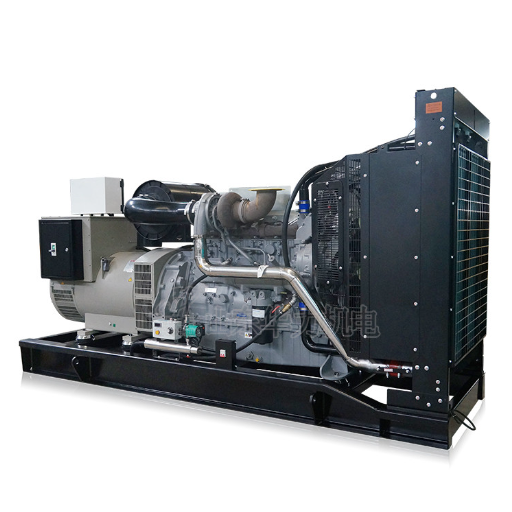
The short answer is that “megawatt generator” describes a rating, not a product.
A 1,000 kW nameplate can sit on a 1996 engine with twelve thousand hours that a dealer wants off the yard, or on a current Tier 4 Final platform with aftertreatment, a digital controller and a factory warranty. Those are not the same asset at different prices. They are different assets that happen to make the same number on a datasheet.
Here is what the published figures actually say, side by side.
| What is being priced | 1 MW figure | Where it comes from |
|---|---|---|
| Used, high hours or auction | 68,000 to 68,000 to 80,000 | AI Overview; a 1996 CAT 3512 at 12,000 h |
| Used, around 4,000 hours | 135,000 to 135,000 to 175,000 | PowerGen, 2026 pricing guide |
| Used, live asking price | $140,000 | A Cummins 1250 kW open set in stock |
| New, Chinese OEM | 125,000 to 125,000 to 220,000 | LetonPower, supplier roundup |
| New, Western platform, Tier 4 Final | ~$850,000 | PowerGen, CAT 3512B list |
| Published per-kW band, 1 to 10 MW | 300 to 300 to 600 per kW | Infinity Turbine |
Read the used column first, because it explains most of the confusion. A 1996 unit at twelve thousand hours is worth $80,000 to someone who will rebuild it. A 2018 unit at two thousand hours is worth twice that to someone who will run it for a decade. Same engine family, same nameplate, different remaining life.
What each number means without context
Equipment priced at $70,000 typically refers to units sold at auctions or through inventory liquidations that have accumulated significant operating hours. This is an accurate price, not a mistake. Such equipment may require a “top-end overhaul” before it can handle critical loads.
Equipment priced at $140,000 refers to pre-owned units purchased from a dealer—units that have been tested and still retain a portion of their useful service life. Most secondary-market transactions occur within this price range. For example, a Cummins 1250 kW open-skid generator set listed at $140,000 would fall into this category.
Equipment priced at $850,000 refers to brand-new units that comply with Tier 4 Final emission standards. The price difference between these and the $140,000 units is primarily due to emission after-treatment systems, warranties, and after-sales support networks, rather than the mechanical structure of the equipment itself.
Equipment priced at $950,000 sits at the higher end of the new-equipment spectrum; these units feature larger frame sizes, higher voltage ratings, and come equipped with protective enclosures (housings) and advanced control systems.
If a buyer sees quotes of $140,000 and $850,000 for what appears to be the “same generator” and concludes that one of the suppliers is “overcharging,” it is usually because they have actually received quotes for two different products. While this is a generalized example—not specific to any particular client—such scenarios are very common in the industry. Before you even request a formal quote, our engineers can help clarify which product category best aligns with your project requirements.
What a Megawatt Generator Price Buys at 1, 2, 4 and 10 MW
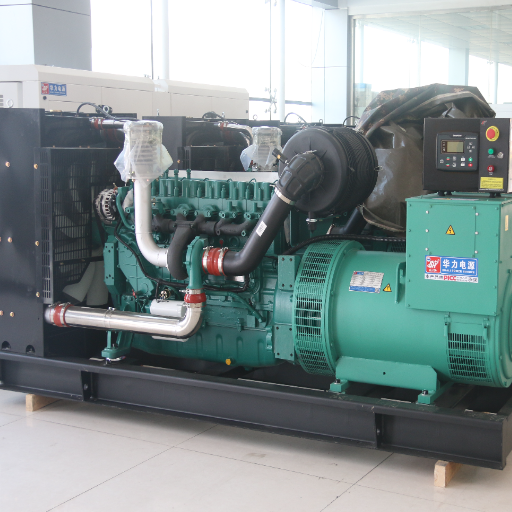
Two ways of quoting exist in this market and they are usually presented as though they were the same thing. One gives a price per kW. The other gives a total.
The per-kW band for new diesel sets between 1 and 10 MW is 300to300to600 per kW, as published by Infinity Turbine. Multiply it out and the absolute numbers fall into place, which is also a useful check on the band itself.
| Rating | At $300 per kW | At $600 per kW | Nearest published absolute |
|---|---|---|---|
| 1 MW | $300,000 | $600,000 | ~850,000newTier4;850,000newTier4;140,000 used |
| 2 MW | $600,000 | $1,200,000 | north of $1.4M new Tier 4 |
| 4 MW | $1.2M | $2.4M | no reliable published figure |
| 5 MW | $1.5M | $3.0M | 1.5Mto1.5Mto3.0M |
| 10 MW | $3.0M | $6.0M | built as a plant, not a unit |
The 5 MW row is the reason to trust the band. The same source that publishes 300to300to600 per kW also publishes 1.5Mto1.5Mto3.0M for a 5 MW unit, and those two statements agree exactly. The band is internally consistent, which is more than can be said for most pricing pages.
The 1 MW row shows why the band matters less than it looks. A new Western Tier 4 set at 850,000sitsabovethetopofthe850,000sitsabovethetopofthe300 to $600 band entirely, because aftertreatment and compliance are not in the per-kW figure.
One warning on that row. The same machine is sold as a 2,000 kVA set at 0.8 power factor, and kVA-framed listings carry their own price band. Convert before comparing, or you will be pricing two different frames.
The phrasing you search with changes the answer you get. A 1 megawatt generator price search returns dealer inventory, and a 1000 kw generator price search returns largely the same machines under a different unit. The 1 mw diesel generator price form is what buyers use once they have settled on diesel. The 1.5 megawatt generator price sits in a thinner part of the catalogue where fewer units are listed and quotations spread wider.
The 10 MW row does not have an absolute because there is no single unit to buy at that rating in the standby and prime market. A 10 MW diesel plant is several smaller sets and a switchboard. The 1 MW row is covered in detail on our 1 MW generator page, including dimensions, weight and the fuel curve for the frame we actually build.
Cost per kW, and Where the Curve Flattens
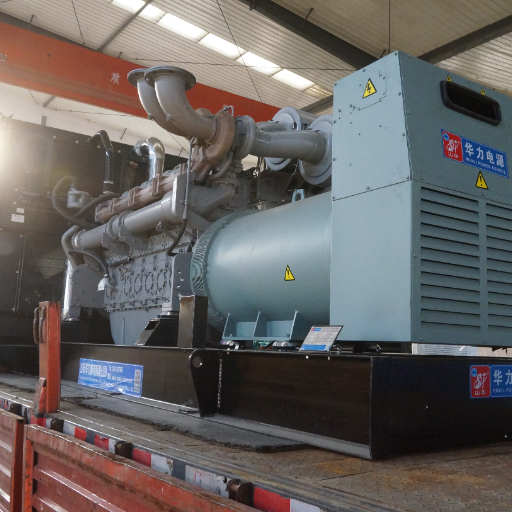
Below 1 MW, generator pricing behaves the way most industrial pricing behaves. Unit cost per kVA falls as size rises, then levels off, then edges back up where frames step up a size. The reasons are fixed costs spread over more capacity and the discrete steps in engine and alternator frames.
Above 1 MW the curve does something less obvious. It flattens.
The published band for 1 to 10 MW diesel is the same 300 to 300 to 600 per kW at every rating in that range. Doubling from 1 MW to 2 MW does not halve the cost per kW. It changes nothing, which is the least intuitive fact about a megawatt generator price.
Four things explain why the decline stops.
Alternator frames step. Above roughly 1 MW, alternators are built in large discrete frames. Moving from 1,600 kW to 2,000 kW often means moving to a physically bigger machine, not stretching an existing one.
Volume falls away. The number of manufacturers building a 2 MW platform is much smaller than the number building a 200 kVA platform. Less competition, less price pressure, and a floor under the number.
Transport becomes a line item. Below 1 MW, freight is a rounding error on a $60,000 machine. At 4 MW and 25 tonnes, freight, permits and crane hire are hundreds of thousands of dollars and they do not scale down with the unit.
Aftertreatment scales with the engine. Emissions hardware is priced roughly with displacement, so a bigger engine adds cost faster than its kW rating suggests.
The practical consequence is that sizing down to save money stops working at about 1 MW. A buyer choosing between 1,800 kW and 2,000 kW to hit a price point is optimising a number that barely moves. The cost per kVA curve below 1,000 kVA, including the knee where four-cylinder platforms give way to six, is covered in our guide to stationary generator cost. Everything here is above that line.
Multi-unit plants push the arithmetic the other way. Four 1 MW sets cost more per kW than one 4 MW set on hardware, and then add four switchgear connections, four foundations and four exhaust runs. Below about 4 MW, splitting a requirement across units is a reliability decision, and it should be budgeted as one rather than justified as a saving. A megawatt generator price quoted per kW will always make the smaller units look worse, and on paper they usually are.
New, Used, or Chinese OEM: The Three Markets
Once you strip out the per-kW band, the price columns resolve into three real markets. They are not quality tiers so much as different trades, and the megawatt generator price you were quoted tells you which one you are standing in.
Used. You buy remaining life. The purchase price is 15 to 25 percent of new, and the risk sits in the hours, the service history and the documentation.
How long a diesel generator lasts at a given duty decides whether a used set is a bargain or a liability. A used set is a good decision when the load is not critical, when a rebuild programme exists, or when the unit is a bridge. It is a poor decision when downtime is measured in revenue and the engine history cannot be verified.
New, Western platform. You buy the compliance position, the warranty, the dealer network and the resale value. Tier 4 Final aftertreatment is most of the premium, and it is not optional in the United States and much of Europe. This is the column that makes $850,000 the right answer for a 1 MW set, and PowerGen’s 2026 pricing guide is the clearest public account of how that number is built. What the column buys beyond iron is a failure you can insure: a dead unit is a warranty claim, not a project crisis.
New, Chinese OEM. You buy new iron at roughly used-Western money. A new Chinese-engineered 1 MW set is commonly quoted between 125,000and125,000and220,000. What you give up is service depth in remote locations, parts lead time, and the resale value that a Western badge carries. What you keep is that the engine block, crankshaft and alternator are the same class of component whichever name is on the canopy.
We build in the third column, so treat that description with the suspicion it deserves. The honest version is that the third column is the right answer for projects where the set is specified well, maintained locally and not resold. It is the wrong answer where a utility-grade service contract is part of the requirement.
What the Megawatt Generator Price Does Not Include
A megawatt generator price is the smallest part of some projects and the largest part of others. On a first-time installation, everything below is outside the quotation and typically adds 30 to 50 percent.
- Transport and lifting. A 2 MW set weighs 14 to 18 tonnes dry and needs a planned lift. Oversize loads need permits.
- Foundation and civil works. The pad carries dynamic load, not just static mass. Vibration isolation and soil bearing belong in the design.
- Switchgear and paralleling. On a multi-unit plant this line can approach the value of one of the sets.
- Fuel storage. A 2 MW set at full load burns about 500 litres an hour. A day of autonomy is a 12,000-litre tank plus bunding.
- Exhaust and ventilation. Silencing to a stated dBA limit is a separate scope, and so is the stack.
- Commissioning and first fills. Coolant, oil, load bank testing and documentation.
The running cost is the other half of the picture and it scales with load, not with purchase price. Our fuel consumption table converts a rating and a load factor into litres per hour, which is the number that decides whether a cheaper set is actually cheaper over five years.
Three things move that 30 to 50 percent. Site access decides the crane and sometimes the road. Voltage class decides the cable and the switchgear.
Whether the machine arrives as an open set or already in a container decides how much work the installers do on site. A project with a wide gate, a hard standing and a 400 V connection can land near 25 percent. A basement plant room with a narrow stair and an 11 kV connection can pass 60.
How to Compare Two Megawatt Generator Quotes
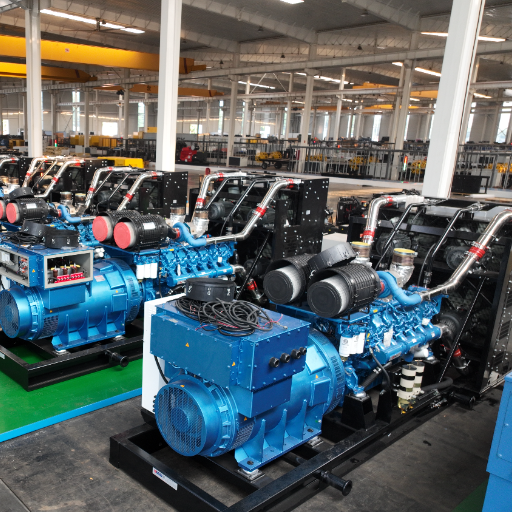
Two quotes for “a megawatt generator” that differ by 40 percent usually differ in scope, not in margin. Three checks close most of the gap, and none of them require a megawatt generator price to be renegotiated.
First, normalise the rating regime. Standby, prime and continuous are different products under ISO 8528 ratings, and a set sold as 2,000 kW standby is often about 1,820 kW prime. Convert both quotes to the same regime before comparing a number.
Second, list what is in. Write the same six scope lines against both quotes: enclosure, breaker, control panel, fuel tank, exhaust, and delivery. Whichever quote is missing lines is the one that will grow.
Third, convert to installed. Add the civil, the crane and the commissioning to both. A quote that is 20 percent cheaper on hardware and excludes the foundation is not cheaper.
Those three checks take an hour and remove most of the spread between quotations. What they do not remove is the difference between a supplier who has built this rating before and one who is learning on your project.
One project we reviewed had two quotes 40 percent apart on a 1.5 MW requirement. The lower one omitted the switchgear, the foundation and the exhaust silencing. Installed and commissioned, it came out about 15 percent higher than the quote that had included everything. That is a composite, like the example above, but the arithmetic is common.
A megawatt generator price that answers those three checks is a number you can budget with. Send us the load profile and the site plan together and we will tell you which column your project belongs in, including when the answer is not ours.
The Range Is Not a Failure of the Market
The 70,000to70,000to950,000 range looks like a market that cannot price its own product. It is not. It is four products sharing one search phrase.
The transaction price for used equipment is around 140,000. New equipment from Chinese manufacturers ranges in price from 125,000 to 220,000. For new equipment from Western manufacturers that meets Tier 4 standards, the starting price is approximately 220,000; for units with a power capacity of 1 megawatt (MW), the starting price is around 850,000. Within the 1 to 10 MW power range, the price per kilowatt (kW) generally falls between 300 and 600; once the power capacity exceeds 1 MW, the unit price ceases to decrease further.
Place your project in the right column before you place it against a megawatt generator price. That single step removes most of the spread, and it is the difference between a budget and a guess.
Our published large-frame range reaches 1,600 kW, which is squarely in the band above. For anything above it, we will say plainly whether it is a project we can take on. Our 1001 kW and up range shows the frames we publish datasheets for, and if you want a sanity check on a quote you already have, send it over.
