
A generator shuts down under load when it is overloaded, starved of fuel or air, or stopped by a protective device. The fastest way to separate those causes is to note whether the engine slowed before it stopped and to read the last-stop code before resetting the controller.
At a food plant, a 320 kVA set passed its monthly no-load test. During an outage, it stopped 20 seconds after the transfer switch closed. The panel logged underfrequency.
The fuel filter had 1,900 hours on it, and the lift pump could not hold pressure once demand rose. A new filter and a line bleed fixed it. The plant’s maintenance lead, whom we’ll call Ana, had been ready to replace the injection pump.
A no-load test proves the engine starts, not that it can carry the plant. This guide gives you a three-way shutdown signature, a fault-code-first sequence, and a stepped-load retest. It covers industrial diesel sets; portable and RV controls differ, but the fuel and air logic still applies. Owners describe the same event in different words: a generator shuts off under load, dies under load, or cuts out under load. The diagnosis below fits all three.
We build and test sets from 8 kVA to 4,000 kVA, with 100% pre-delivery testing in a 20 MW test center. If you have the last-stop code and the load reading, talk to our engineers and we’ll help you narrow the branch.
Key Takeaways
– A generator that shuts down under load usually has one of three problems: the load exceeds the engine’s torque, fuel or air cannot keep up, or a protection device commanded the stop.
– Read the last-stop code before resetting. A low oil pressure or high coolant temperature code points at a protection event, not necessarily a failed engine.
– A set that slows and then dies is an engine-side problem. A set that stops abruptly with an alarm is a controller-side problem. A set that keeps running while the breaker opens is an electrical problem.
– A no-load test proves little about fuel delivery, so retest in steps. A repeatable trip at the same load points to a threshold or a capacity limit.
First, Identify How It Shut Down
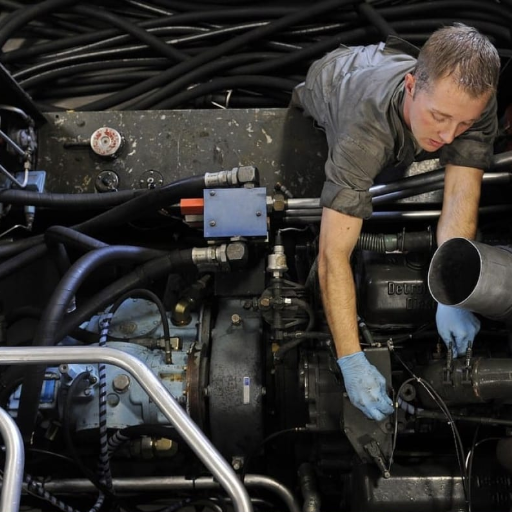
Before you open a filter housing or replace a sensor, classify the event. The question is not only what failed, but which system stopped the engine.
| What you observe | What it means | First check |
|---|---|---|
| Engine slows, frequency and voltage fall, then stops | The engine cannot hold torque: overload, fuel or air restriction, or governor response | Actual load against rating; fuel filter and air intake |
| Engine stops abruptly, panel shows an alarm or fault code | A protective shutdown: oil pressure, coolant temperature, overspeed, frequency, or a stop circuit | Record the code; check the sensor and wiring; do not bypass |
| Engine keeps running, breaker opens | Electrical protection or a downstream fault | Breaker trip flag; insulation or earth fault; motor starting current |
Listen to the stop. A set that runs out of torque slows, hunts, and dies. A set that receives a shutdown command stops cleanly, often within a second or two. A breaker trip leaves the engine running and the panel live.
Write down the last-stop code, the load at the stop, and the time since start. If the controller has no code, record whether the stop happened during a load step, after a steady run, or only when a motor started.
That record turns a parts-guessing exercise into a short list. It also tells you which guide to open: common generator problems for the wider fault map, or the sections below for the shutdown branch.
Why a Generator Shuts Down Under Load
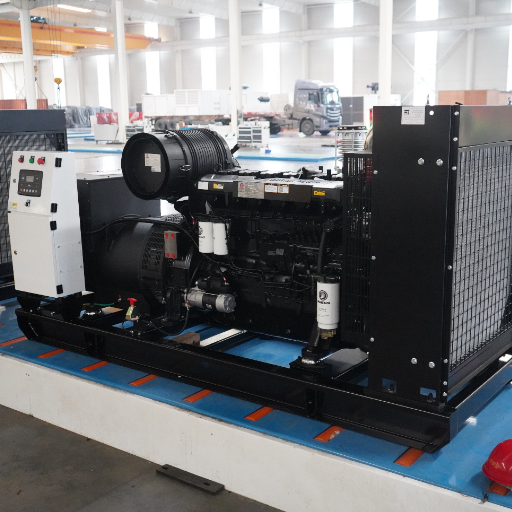
The causes below are ordered by how often they explain a stop that appears only when load is applied. The signature table should send you to one branch first. Use the rest to confirm it.
The Load Is Higher Than the Set Can Carry
Nameplate kVA is not usable kW. A 500 kVA set at 0.8 PF is rated 400 kW. A 430 kW load at 0.9 PF draws 478 kVA, inside the alternator rating but above the engine’s kW rating. The engine runs out of torque, speed falls, and frequency follows: a four-pole set at 1,500 rpm makes 50 Hz; at 1,800 rpm, 60 Hz.
Measure each phase with a clamp meter, then convert to kVA. Compare with the rating at the site’s ambient temperature and altitude, not the brochure rating at sea level. Use the manufacturer’s derating table for hot air and altitude.
Motor starting is a separate surge. A plant at 60% load can still trip on a 90 kW motor start. Size for the starting method, or add a soft starter or drive.
The 80% rule: keeping continuous load at or below about 80% of the rating is a planning margin, not a trip setting. Use the generator sizing calculator to check running and starting load.
If the measured load is above the rating, reduce it or use a larger set. Parts will not add torque; our guide to overloading an industrial generator covers the damage case.
Fuel Starvation Shows Up Only Under Load
A diesel uses little fuel at no load. That is why a restricted filter, weak lift pump, or blocked tank vent can pass a no-load test and fail under load.
Work from the tank forward: level and valve, water separator, filters, air ingress at the filter housing, tank vent, lift pump pressure, and the fuel shutoff solenoid. A vent blocked by mud, ice, or a stuck check valve pulls a vacuum and starves the engine after a few minutes.
Air in the line shows as a rough run or a hunt before the stop. A loaded filter causes a gradual loss of power, often with black smoke. A loose solenoid connection can drop the fuel rack when vibration rises.
Bleed after any filter change or line repair. If it runs clean at no load but fails at the same load, the restriction is still there.
Air and Exhaust Restrictions
A diesel needs a fixed air mass for a given fuel rate. A clogged filter, collapsed intake hose, or boost leak reduces that mass. The engine derates and can stall at high load.
Check the restriction indicator. If it has tripped, replace the element and inspect the intake for rags, nesting material, or a collapsed liner. Inspect the charge-air hoses for soft spots, cracks, and loose clamps.
Exhaust restriction does the same from the other side. A collapsed pipe or blocked silencer raises backpressure, and the engine cannot clear the cylinders.
A Protection Device Stopped the Engine
An industrial controller stops the engine when a measured value crosses a trip point. The Perkins 2506D-E15TA operator manual states that a shutdown condition is one of three events: low lubricating oil pressure, high coolant temperature, or overspeed. The event latches until the ECM is reset.
The Cummins PowerCommand specification sheet lists low oil pressure, high coolant temperature, low coolant level, over and under voltage, over and under frequency, overspeed, overcurrent and short circuit, and overcrank shutdowns. Your controller may have a subset, so read its manual.
| Protection | What it is telling you | First check |
|---|---|---|
| Low oil pressure | Oil pressure fell below the engine maker’s trip point | Oil level; mechanical gauge; sender and wiring |
| High coolant temperature | Coolant temperature crossed the trip point | Coolant level; fan belt; radiator airflow; thermostat |
| Overspeed | Engine speed exceeded the trip point | Governor linkage; fuel rack; speed sensor |
| Over or under frequency | Speed could not stay inside the window | Load against rating; fuel and air delivery; governor |
| Overcurrent or short circuit | Current exceeded the breaker or relay setting | Downstream fault; breaker setting; load balance |
A code is a symptom, not a diagnosis. A low oil pressure code on a full sump is often a sender or wiring fault, but prove it with a mechanical gauge before running the set again. A high coolant temperature code can be a stuck thermostat, a slipping belt, or a blocked core. See generator overheating for the cooling circuit.
A stop command can also come from outside the engine: the e-stop, a remote stop contact, a fire alarm interlock, a low fuel switch, or a loose battery connection. Check battery voltage at the controller, the charging alternator, and the remote start terminals.
Never bypass a protection device. A bypassed low oil pressure switch can turn a failed sensor into a destroyed bearing. Read the generator fault codes guide for the reset procedure.
The Breaker Tripped, but the Engine Kept Running
If output is lost and the engine still runs, the generator did not shut down. The breaker, contactor, or protective relay opened. The cause is electrical: a short circuit, earth fault, breaker set below the starting current, load imbalance, or a motor start the set cannot ride through.
Don’t reset and retry a fault without finding it. If the trip happens only on a motor start, read generator trips when a motor starts before changing the breaker setting.
Generator Shuts Down Under Load: A Step-by-Step Diagnostic Sequence
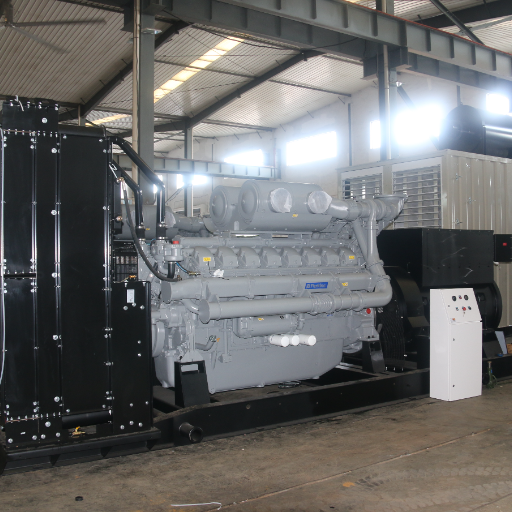
Work in this order. Each step is cheap, and each one narrows the next. Stop when you find a failed test, and don’t continue replacing parts.
- Record the last-stop code and freeze-frame data. Write down the code, load, runtime, and engine temperature. Don’t reset until the record is complete.
- Classify the stop. Use the signature table: slow die-off, abrupt protection stop, or breaker trip with the engine running.
- Measure the load. Clamp all phases, record voltage and current, convert to kVA and kW, and compare with the rating at site conditions. A generator frequency drops under load reading is the fastest engine-side clue.
- Check fuel delivery under load. Level, valve, water separator, filters, tank vent, lift pump pressure, and air ingress. Bleed after any work.
- Check air and exhaust. Restriction indicator, intake path, charge-air hoses, exhaust pipe, and silencer.
- Check cooling and lubrication. Coolant level, belt tension, radiator airflow, oil level, and a mechanical gauge if the code says low oil pressure.
- Check protection sensors and wiring. Oil pressure switch, coolant temperature switch, overspeed sensor, e-stop, and remote stop. Look for chafed insulation, loose pins, and corrosion.
- Retest in steps. Apply 25%, 50%, 75%, and 100% load. Hold each step for 15 to 30 minutes or until temperatures stabilize. Record frequency, voltage, current, coolant temperature, oil pressure, and smoke.
Stop rules: Do not bypass a protection device to test the set. Stop if oil pressure does not rise within seconds of start. Stop if coolant temperature keeps climbing after the fan and radiator are clear. Do not reset a latched shutdown twice without finding the cause.
A quarry fitter we’ll call Ben found a high coolant temperature stop on a 250 kVA set after 12 minutes at about 80% load. The belt and coolant were fine; the radiator core was packed with limestone dust. Cleaning the core restored the set.
If the set trips at the same load every time, send us the load steps and the last-stop code. Talk to our engineers before you replace another part.
Fix It, Then Prove the Repair Under Load
A repair is not proven because the set starts and runs for five minutes at no load. The fault appeared under load, so the proof must also appear under load.
| Cause | Repair | Proof under load |
|---|---|---|
| Overload | Reduce load, stagger starts, add a soft starter, or resize | Hold 100% for 30 minutes; frequency and voltage stay in the controller window |
| Fuel starvation | Replace filters, clear the tank vent, repair the lift pump, and bleed | Hold 75% to 100%; fuel pressure is stable and the engine does not hunt |
| Air or exhaust restriction | Replace the element, repair the hose, or clear the exhaust | Apply a load step; boost and exhaust temperature return to normal |
| Protection sensor | Replace the sender or repair the wiring; verify with a gauge | Load step; no code, and the gauge agrees with the controller |
| High coolant temperature | Clean the core, replace the thermostat or belt | Load bank; temperature stable at rated load |
| Breaker trip | Repair the fault, coordinate the breaker, or add a soft starter | Start the largest motor three times; no trip |
A wastewater electrician we’ll call Chris chased a 200 kVA set that stopped only when the second pump started. The engine kept running and the breaker opened. The starting surge was inside the alternator’s short-time capability but outside the breaker’s setting. A soft starter ended the callbacks.
Use a load bank when the plant cannot provide a steady load. Our load bank testing guide explains the steps; generator fails load bank test covers engine-side causes if the set cannot hold rated load.
Prevent the Next Shutdown
Most shutdowns under load are maintenance or sizing failures that were visible before the outage. A short prevention routine covers the common paths.
- Fuel: keep the tank above the pickup, drain water monthly, test fuel after long storage, and change filters on restriction or hours, not only the calendar.
- Air: check the restriction indicator monthly, clean the intake, and replace hoses that are soft or cracked.
- Cooling: keep the radiator core clean, check the belt, and confirm the fan pulls air through the core, not around it.
- Exercise: run the set under load monthly, not just at no load. A no-load exercise does not prove fuel delivery or protection settings.
- Protection: test the shutdown devices at commissioning and at the manual’s interval. Replace sensors that drift, and do not bypass them.
- Load: keep a load schedule and update it when equipment changes. Leave margin for motor starting and site ambient conditions.
Frequently Asked Questions
Why does my generator shut down when a load is applied?
The most likely causes are overload, fuel or air starvation, or a protective shutdown. Read the last-stop code first. If the engine slows before it stops, check load and fuel delivery; if it stops abruptly with a code, check the named protection.
Why does my generator run fine without load but shut off under load?
At no load the engine needs little fuel and air, so a restricted filter, weak lift pump, or blocked tank vent can pass. Under load, demand rises and the restriction becomes a failure. A motor starting surge can do the same on a correctly loaded set.
What causes a generator to shut down after running for 20 minutes?
Heat-related protection is common: high coolant temperature, low oil pressure as oil thins, or a sensor that drifts as the engine warms. A blocked tank vent can also starve the engine after a few minutes. Check the last-stop code and the coolant and oil readings at the stop.
What is the 80% rule for generators?
It is a planning guide, not a trip setting. Keeping continuous load at or below about 80% of the rating leaves room for motor starting, hot ambient conditions, and load growth. The real limit is the manufacturer’s rating at the site conditions.
Why does my generator start and then shut off?
If it starts but won’t stay running, the fault usually sits in the fuel path or a protection device. Check the fuel shutoff solenoid, oil pressure switch, coolant temperature sensor, e-stop, and battery charging. A protection device may be latching a false fault. Read the code before replacing parts.
Why is my generator losing voltage under load?
If frequency falls with voltage, the engine is losing speed and the cause is load, fuel, or air. If frequency holds and only voltage falls, the alternator or AVR is the likely side. See generator voltage drop under load.
Conclusion
A generator shuts down under load for a reason. It is showing you which system ran out of capacity: the engine, the fuel and air path, the protection circuit, or the electrical distribution.
Start with the last-stop code and the load reading. Check fuel delivery under load, because a no-load test will not find a restricted filter or blocked vent. Then prove the repair at the load where the set failed.
If the trip repeats at the same load, send us the code, the load steps, and the set rating. We’ll help you decide whether the answer is maintenance, a setting change, or a different set. Talk to our engineers.
