
A diesel generator fails a load bank test for one of four reasons. The engine cannot deliver its rated power, the alternator cannot hold voltage under load, a protection device trips, or the test setup itself is invalid. Match your failure to the right one of these four, because each points to a different fix.
Mei-Ling watched an acceptance test fall apart at 75 percent load. The 1,000 kVA standby set she was commissioning for a teaching hospital in Manila had passed its no-load checks cleanly, then tripped on high coolant temperature about ten minutes into the third load step. Her first instinct was to blame the radiator. It wasn’t the radiator. The louver above the set had been painted shut during construction, so at full load the room had no way to shed the heat the radiator was rejecting.
When a generator fails a load bank test, it feels like a random mechanical gremlin. In practice the failure is almost always readable: at what load step it happened, which parameter went out of range first, and which device tripped. This guide shows you how to read that signature, how to tell a real fault from a bad test, what the pass criteria actually are, and how to get the set through a clean retest.
One note on scope. This article is for a test that already failed. Need the full procedure, the NFPA 110 schedule, or the cost? Our load bank testing guide covers how to run the test correctly in the first place.
Shandong Huali Electromechanical builds diesel generator sets from 8 kVA to 4,000 kVA and full-load tests every unit on a load bank before it leaves the factory. We see these failure signatures in our test cells and in the field. Staring at a failed test right now? Send us the set rating, the load step where it failed, and the fault code, and our engineers will help you read the signature before you order parts.
Key Takeaways
- A generator fails a load bank test for four reasons: engine power, alternator voltage, a protection trip, or an invalid test. Check test validity first.
- Read the failure signature: the load step, the parameter that went out of range, and the device that tripped point to the cause.
- Voltage collapse as load rises is usually the AVR or excitation system. Frequency droop is a governor or fuel problem. High temperature after heat soak is cooling or airflow.
- A set that passes no-load runs but fails at 75-100% load on a light-duty site is often wet-stacked, not broken.
- A pass means meeting the class tolerances in ISO 8528-5 or the acceptance criteria in NFPA 110, then a clean retest after any repair.
First, Did the Generator Fail, or Did the Test?
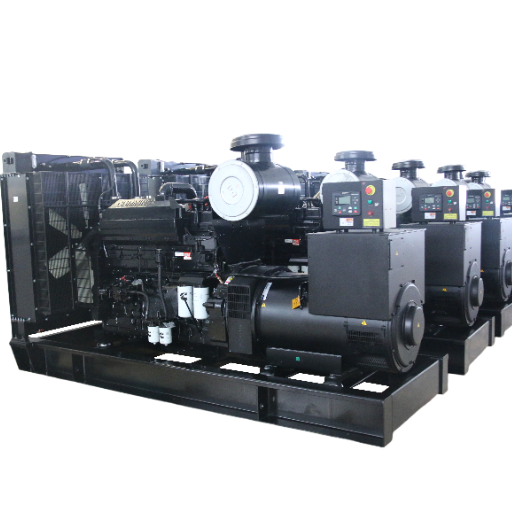
Before you touch the set, verify the test was valid. A surprising share of “failed load bank tests” are failed load bank setups, and engineers have documented real cases where the wrong side took the blame.
Andrés, who managed a cold-storage plant in Guadalajara, was ready to condemn a 500 kVA set that “failed” its annual test at 50 percent load. The technician who arrived checked the load bank first and found one phase of the resistive bank had dropped out when a contactor pin burned open. Two phases loaded, the set loaded lopsided, and the controller tripped on unbalance. The generator was fine. The bank was not.
Check these test-side faults before condemning the generator:
- Wrong load bank voltage tap. A bank set for the wrong system voltage loads at the wrong percentage or trips its own protection.
- Blown fuses or opened resistors. They drop one phase, and the set reads as unbalanced.
- Control power is taken from the tested bus. The bank’s fans shut down with the generator, so you get a hot shutdown, not a real fault.
- Load applied too fast. A full block slammed onto a cold set can stall it; a stepped test starts at roughly 25-40 percent and holds each step.
- Undersized or daisy-chained cables. Long, thin leads drop voltage before it reaches the bank.
- A room that cannot shed heat. A full-load run at high ambient can trip a healthy set on temperature. See the generator room overheating for that failure mode.
Three cheap readings confirm the test. Line current should climb together on all three phases, the kW display should match the load step, and the set should hold each step until temperatures stabilize. If any reading is off, fix the test before you fix the generator.
How to Read a Failed Load Bank Test: The Failure Signature
Every failed test leaves a signature. Capture three facts at the moment of failure: the load step, the parameter that went out of range first, and the protection device that operated. That combination narrows the cause faster than any parts cannon.
| What you observe | Load step | Most likely system | First checks |
|---|---|---|---|
| Voltage sags or collapses toward residual as load rises | 50-100% | AVR or excitation | AVR fuse and sensing, rotating diodes, engine speed |
| Frequency or RPM falls away, engine lugs | Any step, worst at 100% | Governor and fuel | Governor gain and linkage, fuel filters, fuel pressure, rack travel |
| Black smoke with falling speed | 75-100% | Fuel, air, or carbon deposits | Air filter, exhaust backpressure, injectors, wet-stacking history |
| High coolant temperature only after 20-30 min at load | 75-100% | Cooling or room airflow | Coolant level and mix, radiator, fan drive, room louvers |
| Oil pressure alarm after heat soak | 75-100% | Lubrication at temperature | Oil level, viscosity, pressure sender, worn bearings |
| Trip on a single load step, then recovers when retried slowly | Block step | Transient response | Governor response, AVR recovery, load application speed |
| Breaker trips as steps climb | Increasing | Overload or protection settings | Real kW vs. nameplate, power factor, trip settings |
Capture five numbers before you reset: the exact load in kW, the output voltage and frequency, the coolant and oil temperature, and the fault code. They tell the repair technician or your remote support engineer what actually happened. Engine faults that appear only under load are why the no-load weekly run lies to you, the exact gap this article and our diesel generator troubleshooting guide close.
Generator Fails Load Bank Test: Engine-Side Causes
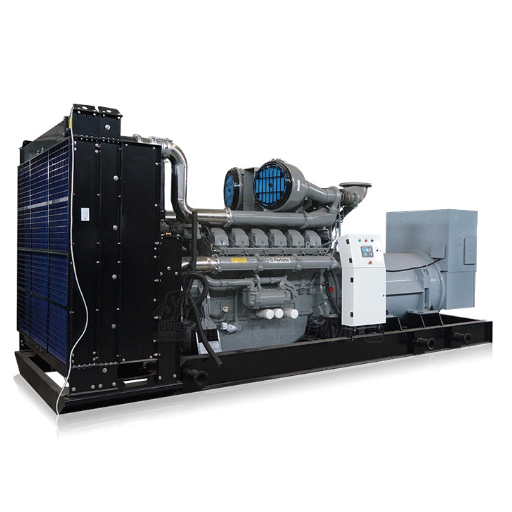
When the signature points at the engine, work through fuel, governor, then air and deposits, in that order. These are the causes we see most often when a set cannot carry its rated power.
Fuel Delivery That Starves the Engine Under Load
An engine that idles fine can run out of fuel only when it asks for more. A clogged fuel filter, a blocked tank pickup, air drawn into the line, or a weak lift pump all show as power loss and falling speed at load, with black smoke first. Dirty or water-contaminated fuel causes the same symptoms. Our diesel generator fuel system maintenance guide walks through each component.
Governor Response and Frequency Control
If frequency droops steadily as load climbs, or hunts around the setpoint, suspect the governor before the fuel system. A weak electronic governor, a worn mechanical governor, or wrong droop settings let speed fall even with clean fuel and filters. A block-load stumble with slow recovery is a governor response, not the engine.
Air, Exhaust, and Combustion Deposits
Every diesel needs a clean air path. A clogged air filter or high exhaust backpressure quietly derates the engine, and the loss only shows at full load. Long light-load periods add carbon to the valves, turbocharger, and exhaust, the wet-stacking trap covered below. Hot ambient air does similar damage, which is why generator derating at altitude and temperature matters on hot sites.
Generator Fails Load Bank Test: Electrical-Side Causes
When the engine holds speed but the electrical output does not hold, the fault is on the alternator side. Voltage behavior is the tell.
AVR and Excitation System
If voltage sags or collapses as load rises, suspect the automatic voltage regulator and the excitation system it drives. The AVR senses terminal voltage and boosts the field to hold it, so a failed board, blown sensing fuse, broken sensing wire, or worn trim pot lets voltage droop. A set that holds only residual voltage at no load, then loses it under load, has an excitation system that is not regulating.
Rotating Diodes on a Brushless Alternator
On a brushless alternator, the rotating rectifier diodes convert the exciter output to DC for the main field. An open diode costs roughly a fifth of the excitation capacity and shows as voltage that droops as load rises; a shorted diode can distort the waveform and damage its neighbors. Testing each diode with a multimeter separates this from an AVR fault.
Overload, Power Factor, and Protection Settings
Sometimes the set fails because the test asks for more than the nameplate. A 500 kVA set at 0.8 power factor delivers 400 kW of real power, so loading it to 450 kW is an overload even when the kVA meter looks fine. See generator kVA vs kW for that boundary. Protection can also trip early, so check the trip settings before you replace hardware.
The Wet-Stacking Trap on Light-Duty Standby Sets
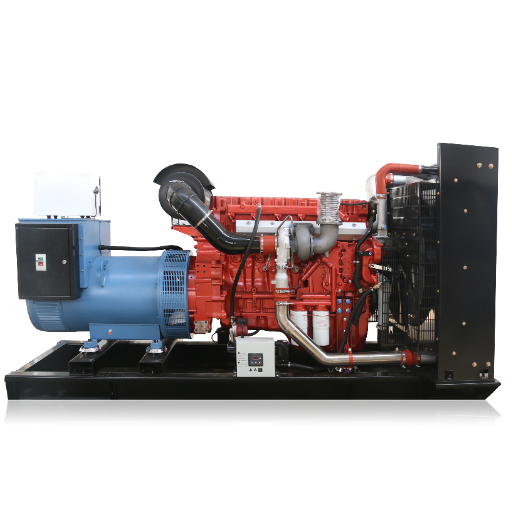
The most frustrating failure is a set that “always passed” its monthly no-load run, then fails at 75 percent during the real test. That is often wet stacking. Running below roughly 30 percent load keeps combustion temperatures low, so unburned fuel and oil build up in the exhaust, on the turbocharger, and in the cylinders, robbing power exactly when you ask for it.
A wet-stacked set needs a corrective burn-off, not new parts. Running at 75-100 percent load long enough to clear the deposits often restores full output, and a load bank is the tool. Our generator wet stacking prevention guide explains the mechanism and the cure.
What “Pass” Actually Means: Load Bank Test Acceptance Criteria
You can’t judge a retest until you define a pass. Generator sets are built to a performance class, spelled out in the specification, and the class sets the voltage and frequency limits the set must hold.
| ISO 8528-5 class | Typical duty | Steady-state voltage | Steady-state frequency |
|---|---|---|---|
| G1 | Basic lighting and heating | ±5% | ±2.5% |
| G2 | Commercial, pumps, fans, general power | ±2.5% | ±1.5% |
| G3 | Telecom, data, thyristor loads | ±1% | ±0.5% |
Most industrial and hospital sets are specified to G2 or G3. ISO 8528-5 also caps how far voltage and frequency dip on a sudden load step and how fast the set must recover, which is why block-load behavior matters. If your set held a G3 spec before it failed, don’t accept a retest that only meets G1. NFPA 110 adds acceptance rules for emergency systems, including full-load run duration and the separate Level 1 start-and-transfer requirement; the load bank testing guide lays out that schedule.
One warning: passing a resistive load bank is not proof against every real load. A resistive bank draws steady, balanced real power at unity power factor. Real facilities add motor starts and UPS capacitor inrush, which can collapse a marginal excitation system a resistive test never stressed. Engineers have documented a 1 MW set that passed every resistive test, then lost its field on its real loads. Sites full of motors or UPS gear should ask whether a reactive test is warranted before calling the set fixed.
Repair, Retest, Record: Getting the Unit to Pass
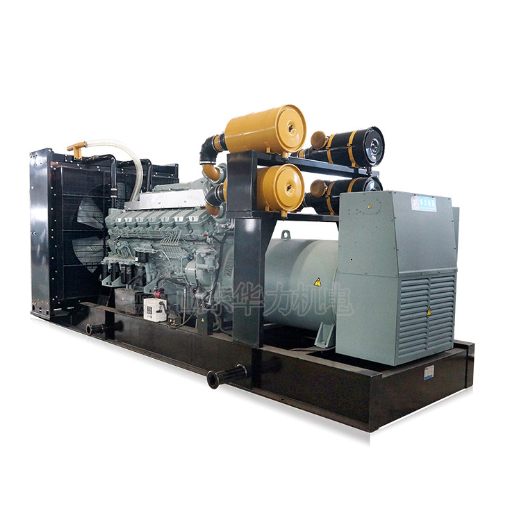
Once you know the cause, the recovery is a three-step loop: repair the cause, retest to the acceptance criteria, and record the result.
- Repair the actual fault. Replace the part the signature pointed to, not a basket of parts. Shotgun replacement hides the real cause and wastes money.
- Retest to the class. Re-run the stepped test and confirm voltage and frequency stay inside the ISO 8528-5 class or the NFPA 110 acceptance criteria for that system.
- Record for the authority. Keep the failure log, the repair, and the clean retest in a permanent file. The authority having jurisdiction wants to see that a failed test was corrected, not just that it happened.
Priya, the reliability lead for a data-center operator in Chennai, followed this loop. Her 800 kVA standby set failed its triennial full-load test at 75 percent with black smoke and falling frequency. The signature pointed to deposits from years of light runs, so her team ran a high-load burn-off instead of replacing the fuel system. A clean retest to G2 followed, and the corrected record satisfied the auditor.
A retest log that captures every load step, the monitored parameters, and the final readings is the document that proves the fix. Our diesel generator maintenance checklist shows the inspection that prevents most of these failures in the first place.
Frequently Asked Questions
Why did my generator fail its load bank test?
A generator fails a load bank test because the engine cannot deliver rated power, the alternator cannot hold voltage, a protection device trips, or the test setup was invalid. Read the load step, the parameter that went out of range, and the device that tripped to identify which one you have.
My generator passes no-load tests but fails under load, why?
Load changes everything. Cooling, fuel delivery, governor response, and excitation are barely stressed at no load, so faults hide there. The load bank applies real demand and exposes them. Light-duty sets also build carbon deposits from low-load running, which only cost power when full load is finally applied.
What does it mean when a generator trips during a load bank test?
The trip device points to the cause. An overfrequency trip after a load drop is an overspeed or load-rejection issue. An undervoltage or overcurrent trip as load rises points to excitation, overload, or protection settings. Read the fault code first, then trace that system instead of resetting and rerunning blindly.
Do I need a reactive load bank or is resistive enough?
Resistive banks test real power at unity power factor and cover most standby tests. Reactive banks add inductive or capacitive load, which stresses the alternator’s excitation the way motor loads do. Sites full of motors or UPS systems should consider a reactive test, because a set can pass resistive and still collapse on real loads.
Can a hot room make a generator fail a load test?
Yes. If the room cannot shed the radiator’s heat, intake air warms, the set derates, and the alternator runs hotter at full load. High-temperature trips that appear only after 20-30 minutes at load are often a room airflow problem rather than a machine fault. Check the room before condemning the generator.
Is a failed load bank test covered by warranty?
On a new set, a factory-tested unit that fails acceptance usually has an installation-side cause such as fuel quality, airflow, or connections, so the first step is to capture the failure log and send it to the manufacturer. Genuine component defects are covered. On an aged set past warranty, the repair is yours, which is why the failure log matters so much.
Conclusion
Here is the bottom line when a generator fails a load bank test. Check the test was valid before you blame the set, because wrong voltage taps, blown load-bank resistors, and blocked rooms produce false failures. Read the signature: the load step, the parameter, and the trip device tell you whether the fault is engine-side, electrical-side, or simply wet stacking. Judge the retest against a real standard, the ISO 8528-5 class or the NFPA 110 acceptance criteria, and record the whole story for the authority.
The pattern is consistent across the field cases we see. Most failed tests trace to a small set of repeating causes, and most are fixed in a day once someone reads the signature instead of replacing parts. A clean retest is how you prove the set is ready for the moment it is actually needed.
At Shandong Huali Electromechanical, we build diesel generator sets from 8 kVA to 4,000 kVA and load-bank test every unit before delivery. If your set failed a test and you want a second set of eyes on the signature, send us the load step, the parameters, and the fault code. Our engineers will tell you which fix applies and help you plan the retest. Contact our team to get the diagnosis started.
