
A 2000 kVA generator delivers 1,600 kW at a 0.8 power factor. That is the short answer, and most buyers never get it before they start comparing prices.
The longer answer is that the label is ambiguous, and the ambiguity is on the results page you just came from. Some listings for this search sell a 1,600 kW machine badged at 2,000 kVA. Others sell a 2,000 kW machine badged at 2,500 kVA. Both are honestly labelled; only one of them is what you meant to buy.
This is not a trick. Engine makers rate in kilowatts, alternator makers rate in kilovolt-amperes, and a dealer lists whichever figure helps the listing get found. The two numbers describe the same alternator from different ends.
This guide shows you how to tell those machines apart in about a minute, what 2,000 kVA actually draws at your voltage, and what to put on a request for quotation so the answer comes back sized for your load rather than a seller’s stock.
Key Takeaways
- A 2000 kVA generator delivers 1,600 kW at 0.8 power factor. Size the load in kW and convert once, at the end.
- “2,000 kVA” and “2,000 kW” nameplates sit 350 to 500 kW apart once you convert both to kW, and both appear in the same search results.
- 2,000 kVA draws 2,887 A at 400 V and 2,406 A at 480 V, which is why cable and breaker sizing usually decides your voltage class before the alternator does.
- The fuel table on this site scales perfectly linearly at 0.324 L/kWh, which no real engine does. Take the 1,600 kW figure from the engine datasheet.
- Four fields on a listing settle the rating question: kW, engine model, alternator kVA, and prime versus standby.
What a 2000 kVA Generator Actually Delivers
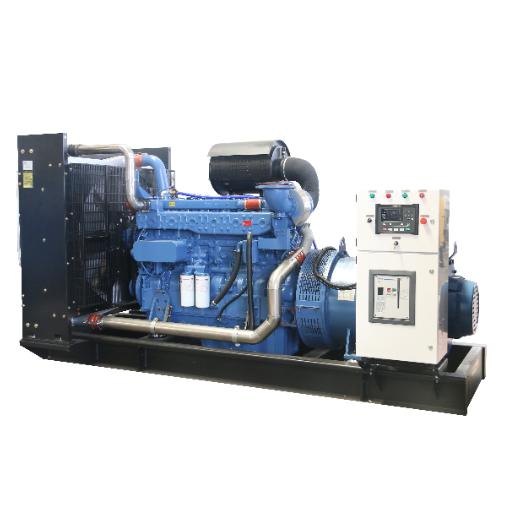
At a 0.8 power factor, 2,000 kVA is 1,600 kW. That is the number to carry into every other calculation on this page.
A single alternator is described by three figures that all refer to the same machine. The engine is rated in mechanical kilowatts. The alternator is rated in apparent kilovolt-amperes, because that is the current it has to carry and cool. The nameplate combines them into whichever label the manufacturer prefers.
This matters because the tolerance on the label is not small. A 350 kW gap between two machines sold under similar wording is more than a fifth of the smaller unit’s capacity.
If you need the arithmetic itself, our guide to kVA versus kW covers the conversion, the power factor and the three-phase formula in full. This page assumes the conversion and moves on to what it means when you are choosing a frame.
Size the Load in Kilowatts, Not Kilovolt-Amperes
Start with the load, not the generator. Your load has a power factor of its own, and at 1,600 kW it is probably better than 0.8 because large industrial loads are usually motors and drives with power factor correction.
Take a real case. Rashid, a plant engineer at a food processing facility in Sharjah, added up his connected load as 1,850 kVA because that was the figure on his existing switchgear. He sized to 2,500 kVA and received quotes for a 2,000 kW set, roughly 30 percent more machine than he needed.
The load he actually had was 1,480 kW at a measured power factor of 0.88. A 1600 kW generator covers that with margin, and it costs materially less than the 2,000 kW frame. The switchgear label was apparent power, his load was real power, and he compared the wrong two numbers.
Add up kW, apply a growth margin, and only then convert to kVA to check the alternator.
Where the 0.8 Comes From, in One Line
Generator ratings assume a 0.8 power factor because that is the convention the alternator industry settled on, not because your load has one. Size against kW, confirm that the kVA holds at your actual power factor, and the convention stops mattering.
Why the Same 2000 kVA Generator Search Returns Two Different Machines
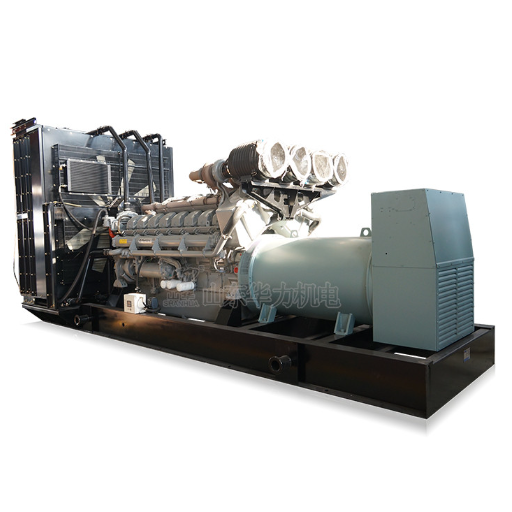
The two machines are not hard to find once you know they exist. They are side by side in the same result set.
Caterpillar lists a 3516 titled “1600-2000 kVA” and a 3606 titled “1650-2000kW(2MW)”. Same manufacturer, two product families, two different rating bases, and a searcher reading the titles quickly would take both as the same size. The first is a 1,280 to 1,600 kW machine labelled in kilovolt-amperes. The second is a 1,650 to 2,000 kW machine labelled in kilowatts.
Dealers inherit the habit. ADE Power lists a Cummins C2000D5 as a 2000 kVA set, which is correct for the alternator. GenPowerUSA lists an SDMO X2500 at 2000 kW and 2500 kVA, also correct. Read the pair without checking the units and you would conclude one dealer is selling a cheaper 2000 kVA machine.
The pattern is systematic enough to plan around: a kVA label describes what the alternator can carry, and a kW label describes what the engine can push. When a set is described as 2,000 kVA, it is a 1,600 kW engine behind a 2,000 kVA alternator. When a set is described as 2,000 kW, that engine needs a 2,500 kVA alternator to deliver it at 0.8.
Four Checks That Settle It in a Minute
Any listing, datasheet or quotation can be classified with four fields. Open the PDF and find them in this order.
- The kW field. If the datasheet shows a kW rating and a kVA rating, the kW figure is what you size against. If it shows only kVA, multiply by 0.8 and treat the result as the ceiling.
- The engine model. A Cummins QSK60, a Cat 3516 or an MTU 16V4000 all have published kW outputs at a stated speed. The engine model is harder to relabel than the headline figure.
- The alternator kVA. The alternator nameplate should exceed the engine kW divided by 0.8. If it does not, the set is either derated or misdescribed.
- Prime or standby. The same frame carries different numbers under each. Our guide to ISO 8528 ratings explains what each definition permits.
Write those four figures down for every quote you receive. The comparison becomes arithmetic instead of guesswork. If the four checks confirm you are being quoted the larger machine, the 2 MW generator guide covers its transport weight and the one-unit-or-two decision in detail.
A Worked Example, Because the Badge Can Sit Between the Ratings
Run the checks on a real listing. ADE Power sells a Cummins C2000D5 described as a 2000 kVA set. The specification block reads: standby 2,063 kVA / 1,650 kW, prime 1,875 kVA / 1,500 kW, engine Cummins QSK60-G3 at 1,500 rpm, alternator Stamford PI734F, 380 to 440 volts, 2,978 amps per phase.
Three things fall out of that block, and none of them is visible in the headline.
The badge overstates the prime rating by about 7 percent. A buyer who sizes to “2000 kVA prime” is 125 kVA short, and the shortfall only shows up when the set is carrying the site continuously rather than for an outage. The two ratings are also 150 kW apart, which is the difference between what the machine can do indefinitely and what it can do for a few hours. And the 2,978 amps is quoted without saying which voltage in that 380 to 440 band it applies to, which is a 400 amp swing across the range.
That is what a properly published datasheet looks like. The four checks work because the information is there, in four fields, on a page that names its engine and its alternator. A listing that gives only a kVA figure and a photograph cannot be checked at all, which is itself worth knowing before you spend time on a quote.
Comparing two quotes and the ratings do not line up? Send both datasheets to our engineers and we will convert them to a common basis before you decide.
What 2,000 kVA Draws at Your Voltage
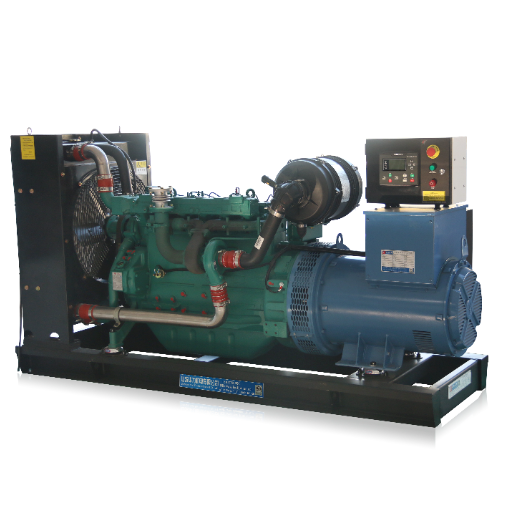
Line current is the number that decides your cable, your breaker and, at the extreme, your whole electrical design. It is fixed by the kVA and the voltage. If your question is the 2000 kVA to amps one, the table below is the entire answer.
| Voltage | Line current at 2,000 kVA |
|---|---|
| 380 V | 3,039 A |
| 400 V | 2,887 A |
| 415 V | 2,782 A |
| 480 V | 2,406 A |
| 690 V | 1,673 A |
| 3.3 kV | 350 A |
| 6.6 kV | 175 A |
| 11 kV | 105 A |
| 13.8 kV | 84 A |
The figure that surprises buyers is the low-voltage row. At 400 V a 2000 kVA generator delivers almost 2,900 amps, and no single cable carries that. You run multiple parallel runs per phase, and the copper cost climbs faster than the generator cost does.
That is the practical pressure behind medium voltage. Every step up the voltage column cuts the current in proportion, and by 11 kV the same machine needs 105 amps instead of 2,887. Whether that trade is worth it depends on cable run length and switchgear cost, which is a project decision rather than a generator decision.
For sizing purposes, take the current at your intended voltage from the table and check it against the breaker and cable schedule you already have. If the low-voltage answer does not fit, your voltage class has effectively been decided for you.
Fuel Burn at 1,600 kW
Fuel consumption scales with load, and efficiency does not stay constant along the way. That second part is where estimates go wrong.
The published diesel generator fuel consumption table on this site stops at 1,000 kW. Read the rows and you will notice something: every size burns exactly 0.324 litres per kWh at 100 percent load. 100 kW takes 32.4 L/h, 500 kW takes 162, and 1,000 kW takes 324. The ratio never changes.
That is a linear model, useful for estimating but not how a real engine behaves. A 1,600 kW engine burns less fuel per kWh than a 1,000 kW engine because it has a better ratio of friction and pumping losses to output. Extending the table’s own maths gives 518 L/h at 1,600 kW and 648 L/h at 2,000 kW. Treat both as upper bounds rather than predictions.
The honest version is that you take the figure from the datasheet of the engine you are actually buying, at the load band you expect to run in. A set that spends most of its life at 40 percent load will not match any 100 percent figure. The 1 MW generator page shows the same treatment with a measured load band, which is what the estimate above is trying to approximate.
Fuel volume then drives tank size, refuelling interval and bunded storage requirements, and those interact with the enclosure you choose.
2000 kVA, 2500 kVA, or Two 1250 kVA Sets
Once the rating question is settled, the next decision is how many machines to buy.
A 2500 kVA generator is a 2,000 kW set. The jump from 2,000 to 2,500 kVA is not just 500 kVA of capacity; it usually moves you onto a larger engine platform with a different transport weight, a different foundation and a different alternator frame. If your load justifies it, one machine is simpler to operate and cheaper per kW.
Two 1,250 kVA sets give you 2,000 kVA in total and one unit of redundancy. If either set can carry the critical load alone, a single failure costs you capacity rather than the site. The trade is double the maintenance, double the switchgear and a paralleling system to keep them sharing load correctly, which is covered in our comparison of one large unit versus parallel generators.
Neither rung is right for every load, and the 1500 kVA generator below this one exists for facilities that grew less than they expected. Pick the rung from the kW figure, not from the badge.
There is a middle option that gets overlooked. Two 1,250 kVA sets are a common containerised configuration because each fits a standard container envelope, and a containerised 2000 kVA set exists as a single unit too, as YorPower’s 2000 kVA containerised set shows. The question is whether your site’s access allows the single larger unit at all. Aminah, a project engineer on a data hall fit-out in Johor, priced both options against the same load and found the paralleled pair came in about 8 percent higher before switchgear and 20 percent higher after it.
She still chose the pair. The redundancy was written into the facility’s availability commitment, and the cost difference was the price of meeting it rather than a mistake in the quotes.
Whatever you choose, agree the rating basis in writing. A 2,000 kVA standby set and a 2,000 kVA prime set are not the same machine, and the gap at this size is measured in hundreds of kilowatts.
What to Put on a 2000 kVA Generator RFQ
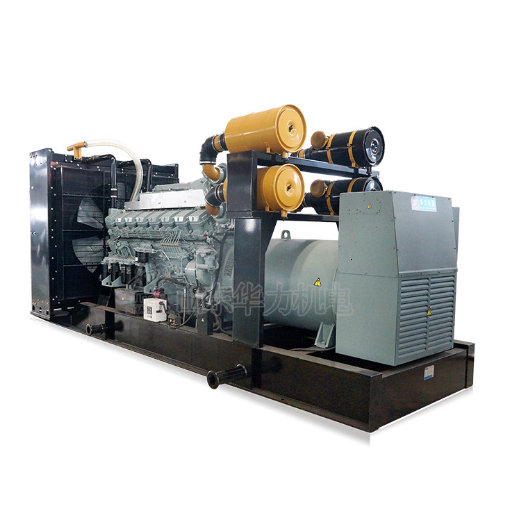
A short, complete request saves a full round of questions. Seven items do most of the work.
- Rating basis. State prime, standby, continuous or data centre. Ask the supplier to quote to one and name it.
- Voltage and frequency. Give the system voltage, the frequency and whether the set must match an existing switchgear busbar.
- Power factor. Say what your load’s measured power factor is, not just the assumed 0.8.
- Site conditions. Altitude, ambient temperature range and whether the set sits indoors, in a container or under an acoustic canopy.
- Fuel autonomy. Hours of operation required between refuelling, which sets the tank and the bund.
- Destination and access. Port of delivery, inland route, and any constraint on crane access or hardstanding.
- Standards and testing. Name the standard you want the set tested to, and ask for the test report with the unit rather than after delivery.
The two items buyers most often leave off are the site conditions and the destination. Both change the price, and both come back as a variation later if they are not on the enquiry.
Ready to price a 2000 kVA set against a real load? Our engineers will check your kW figure, propose a frame and tell you where 2,500 kVA or two smaller units would serve you better.
The Label Is a Question, Not an Answer
A 2000 kVA generator is a 1,600 kW machine. Everything else on the label is context. It also sets the price: a 2000 kVA generator price tracks the 1,600 kW frame inside the enclosure rather than the number on the badge, which is why two quotes for the same headline rating can land far apart.
The label is not misleading on purpose. It is the alternator rating, and the alternator is a real constraint. But two sets sold under a 2000-adjacent label can be 350 kW apart at standby and 500 kW apart at prime, and the search results for this phrase contain both. Comparing them without converting first is how buyers end up paying for capacity they never needed, or discovering at commissioning that they bought less than they planned.
Convert every quote to kW. Check the engine model against its published output. Confirm the alternator kVA exceeds the figure you need. Then compare price.
Do that and the label stops being a question. It becomes a specification you can hold a supplier to.
If you want a second pair of eyes on a 2000 kVA generator rating before you commit, our team will read the datasheet with you and tell you plainly which machine you are looking at.
