
Generator fault codes are controller-specific alarm messages, not a universal list. The same number can mean low oil pressure on one controller and a different fault on another. Read the first-out code from the controller model’s manual, fix the condition, then reset.
Consider a composite case. Marta, a maintenance supervisor at a cold-storage warehouse, learned the hard way at 4:10 a.m. Her 400 kVA standby set threw a “Fail to Start” alarm. The battery was new, so she reset and tried again. It cranked, failed, and locked out.
The event log showed “Fail to Start” followed by “Low Battery.” The first-out code was the clue: a delivery driver had closed the manual fuel valve and never reopened it. Two resets drained a healthy battery and turned a two-minute fix into a 90-minute outage.
You probably already suspect the battery, the fuel, or the sensor. That instinct is useful. The code is a starting point, not a diagnosis.
This guide explains the four code languages, how to read the event log, what the main alarm families mean, and when to reset or stop. For the wider fault picture, see our guide to common generator problems.
We build and test diesel generator sets from 8 kVA to 4,000 kVA. If the set is down now, send the controller model and a photo of the alarm screen to our engineers.
Key Takeaways
– Generator fault codes are controller-specific; there is no universal list.
– A J1939 code is a pair: SPN identifies the component, FMI identifies the failure mode.
– Warning, electrical trip, and shutdown are different actions; read the alarm class before resetting.
– The first-out code in the event log is usually closer to the root cause than the last code.
– Never bypass a shutdown or reset repeatedly; correct the cause, then prove the repair under load.
What Are Generator Fault Codes?
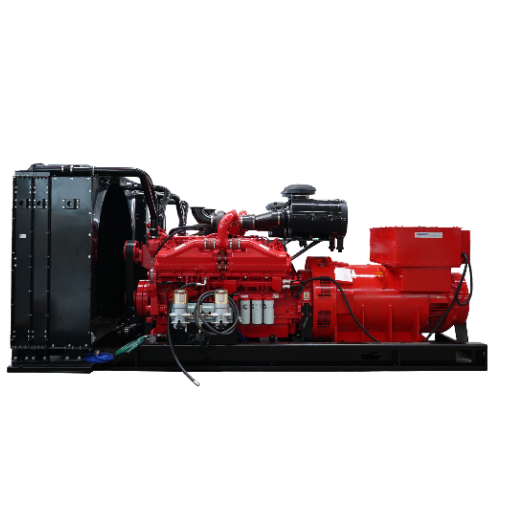
A generator fault code is the controller’s label for a condition that triggered a warning, an electrical trip, or a shutdown. The label may be text (“Low Oil Pressure”), a number (“1100”), a blinking lamp, or a pair of J1939 numbers. It tells you where to look, not which part failed.
The same fault can appear as an ECM diagnostic code, a controller alarm, and a building management system label. Two people can describe the same event with different codes.
| Code language | Example | Defined by | How to read it |
|---|---|---|---|
| Controller alarm | “Low Oil Pressure” or “Fail to Start” | Controller operator manual | Read the event log and alarm class |
| J1939 DTC | SPN 100 FMI 1 | SAE J1939-73 and the engine service manual | Look up both numbers |
| OEM blink code | A two-digit flash pattern | Manufacturer owner’s manual | Count flashes; use the model table |
| Site or CMMS code | GEN-EN-01 | Your asset register or maintenance system | Use for trending, not diagnosis |
The controller is one component inside the generator control panel. When someone says “the panel shows a code,” they mean the controller display. That is why a search for generator control panel fault codes usually ends with a controller manual.
Why There Is No Universal Generator Fault Code List
A fault code is a configured message. The controller maker writes the software, the packager configures the inputs, and the engine maker defines the DTCs.
Consider three examples:
- On some Generac models, code 1100 means overcrank. On another controller, the same number may be unassigned or mean something else.
- A J1939 engine may report SPN 100 FMI 1 for low oil pressure, while the controller displays only “Low Oil Pressure.”
- A two-digit blink code on a portable set is not a J1939 code. A PDF for a different model can send you to the wrong sensor.
A PDF for a 20 kW portable set doesn’t describe a 500 kVA industrial controller, and a list of Cummins fault codes doesn’t describe a Perkins engine. The meaning belongs to the controller model, its firmware, and the engine service manual.
Someone searching for a “generator fault code list” usually wants a PDF, and the results are full of manuals. We don’t publish a universal list because it would be wrong for most readers. We publish a method: identify the controller, read the event log, and look up the code in the right document. SAE J1939-73 defines the diagnostic message structure underneath many of these codes.
Note: A code identifies the circuit or condition that tripped, not always the failed component. A low oil pressure alarm can come from low oil, a worn pump, a blocked filter, a faulty sender, or a damaged wire.
How to Read a Fault Code on the Controller
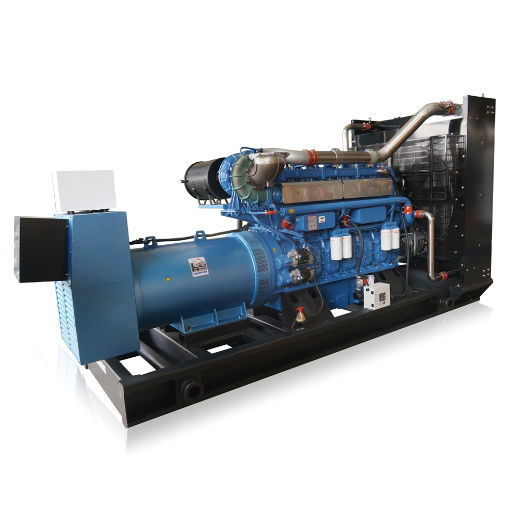
Work through these six steps before you touch the hardware.
- Make the set safe and note its state. Running, stopped, locked out, or tripped? If it shut down, leave it stopped. Do not reset to “see what happens.”
- Identify the controller. Record the make, model, firmware, and serial number; photograph the nameplate; get the operator manual.
- Open the event log, not just the active alarm. Record what happened first, what followed, the timestamps, and the engine hours.
- Record the first-out code and conditions. Note the load, ambient temperature, battery voltage, fuel level, and recent work. A code at 80% load tells a different story from one at no load.
- Classify the alarm. Is it a warning, an electrical trip, a shutdown, or a notification?
- Look up the exact code in the right document. Controller manual for alarm labels and setpoints. Engine manual for SPN and FMI.
Some controllers show the active fault, the last five faults, and a pre-alarm screen with SPN and FMI. Use the manual for the button sequence.
| Record this | Why it matters |
|---|---|
| Controller model and firmware | The same code can differ by model and software version |
| Active code and first-out code | The first code is closer to the root cause |
| Alarm class | Warning, trip, and shutdown call for different actions |
| Engine hours and load | Correlates the fault with service and load conditions |
| Ambient temperature, battery voltage, fuel level | Cooling, starting, and fuel faults often start here |
| Recent work | Air ingress, a disturbed connector, or reversed wiring |
What the Main Generator Alarm Codes Mean
The tables group common diesel generator fault codes by system. They give first checks, not universal setpoints; confirm the setpoint and alarm class in the controller manual and site alarm schedule.
Engine Protection Alarms
| Alarm | Typical trigger | First checks | Escalate if |
|---|---|---|---|
| Fail to start / overcrank | Crank attempts completed without run speed | Battery, fuel valve and level, air in fuel, starter, preheat, interlocks | Cranks but will not fire, or code returns after checks |
| Low oil pressure | Pressure below the configured threshold | Oil level, viscosity, filter, sender, wiring; mechanical gauge | Oil level is correct and the gauge confirms low pressure |
| High coolant temperature | Temperature above the warning or shutdown threshold | Coolant level, belt, radiator airflow, thermostat, water pump, sensor | Engine is hot, fan not turning, or coolant lost |
| Overspeed | Speed above the threshold | Governor, actuator, speed sensor, fuel rack, load rejection | Any overspeed; do not restart until the cause is found |
| Underspeed | Speed below the threshold | Fuel supply, governor, load, speed sensor | Engine cannot hold speed under load |
| Low fuel | Fuel level or pressure below the threshold | Tank level, sensor, transfer pump, leaks | Fuel present but pressure low, or a leak is visible |
| Emergency stop | The E-stop circuit opened | Button, wiring, water ingress, vibration | Button not pressed, or the circuit opens intermittently |
For a high coolant temperature alarm, the cooling system is the first place to look. Our generator overheating diagnosis covers the coolant, airflow, and load checks.
Electrical Protection Alarms
| Alarm | Typical trigger | First checks | Escalate if |
|---|---|---|---|
| Overvoltage | Output above the threshold | AVR setting, sensing, engine speed, load rejection | Voltage stays high at stable load |
| Undervoltage | Output below the threshold | AVR, excitation, overload, speed, sensing | Low at no load, or collapses under load |
| Overfrequency | Frequency above the threshold | Governor, speed setting, load rejection | Frequency unstable or engine races |
| Underfrequency | Frequency below the threshold | Overload, fuel supply, governor | Stays low after the load is reduced |
| Overcurrent / kW overload | Current or kW above the threshold | Load, breaker setting, short circuit, current transformer (CT) | Short circuit, damaged cable, or repeated trip |
| Earth fault | Insulation or residual current fault | Moisture, cable damage, grounding, insulation test | Any earth fault; do not reclose blindly |
| Reverse power | Power flows into the generator | Prime mover, paralleling settings, CT polarity | Paralleled set, or the prime mover has stopped |
| Phase sequence / fail to synchronize | Phase rotation or sync conditions are wrong | Wiring, rotation, governor, AVR, breaker, sync settings | Paralleled set, or the breaker will not close |
Starting, Stopping, and Communication Alarms
- Battery / charge fail: battery, terminals, charger, belt, wiring.
- Sensor open, short, or out of range: connector, harness, shield, ground, resistance.
- ECU data fail / CAN communication: CAN wiring, terminating resistors, ECU power, interference.
- Speed signal loss: magnetic pickup, flywheel teeth, gap, wiring.
Escalate if the battery will not hold charge, the wiring is good but the reading is wrong, multiple modules are affected, or the speed signal is still lost after checks.
Warning, Electrical Trip, or Shutdown: What Generator Fault Codes Tell You
The alarm class tells you what the controller did, and that determines what you should do next.
| Class | Controller action | Typical examples | Reset |
|---|---|---|---|
| Warning | Annunciates; the engine continues to run | Low fuel, high temperature pre-alarm, charge fail | Often clears when the condition returns to normal |
| Electrical trip | Opens the generator breaker, removes load, runs a cooling timer, then stops the engine | Overcurrent, earth fault, reverse power | Latching; correct the cause, then Stop/Reset |
| Shutdown | Stops the engine immediately | Low oil pressure, overspeed, high coolant temperature, emergency stop | Latching; correct the cause before reset |
| Notification | Logs the event only | Maintenance due, configuration change | Clear after the task is complete |
These are common behaviors, not universal rules. A warning on one site may be a shutdown on another, so read the site alarm schedule. Controller makers publish these classes in their operator manuals; Deep Sea Electronics describes warning, electrical trip, and shutdown protection for its DSE3110 controller.
Portable generators often use yellow for warnings and red for alarms that stop the unit. Generac’s support documentation separates reminders and warnings (yellow, unit runs) from alarms (red, unit stops). A solid red light can also mean the unit is off.
On DSE controllers, “Generator Locked Out” is a status, not a fault. An active shutdown or electrical trip alarm is preventing a start; clear the underlying alarm.
The first-out code deserves special attention. A low oil pressure shutdown may be followed by underspeed and fail to stop. The later codes are often consequences. The first code, plus the conditions at the time, is usually closer to the root cause.
For Level 1 systems, NFPA 110 calls for a remote annunciator and routine testing. Common annunciated conditions include low oil pressure, high coolant temperature, low fuel, overcrank, overspeed, and battery charger malfunction. Our NFPA 110 generator maintenance guide covers the testing schedule. NFPA 110 is revised regularly, so confirm the edition adopted in your jurisdiction.
How to Diagnose and Reset Generator Fault Codes Safely
When the Code Is a Sensor Artifact
Not every code is a mechanical failure. A sensor circuit can look like a catastrophic fault.
Look for these signs:
- The code appears only when the engine is hot, vibrating, or wet.
- Several unrelated codes appear at once.
- The sensor reading is pinned at zero or maximum.
- A mechanical gauge or independent thermometer disagrees with the controller.
Check the connector, harness, shield, ground, and supply voltage before replacing the sensor. Compare the controller reading with a mechanical gauge or separate thermometer. If the wiring is good and the reading is still wrong, replace the sensor. If the reading is correct but the alarm persists, check the controller configuration.
A second composite case: Owen, a commissioning engineer at a hospital, saw “High Coolant Temperature” only above 80% load. The thermostat and sensor were replaced, and the alarm returned. The radiator core was blocked with dust and a plastic shipping wrap. A load-bank test held the set at load long enough for the temperature to climb.
The Reset Sequence
Correct the cause first. A reset doesn’t repair a mechanical fault, and a repeated reset can turn a repair into an injury.
- Confirm the fault is cleared. Check the fluid, wiring, load, and recent work.
- Use the controller’s reset sequence. On many controllers, that means Stop/Reset. Some alarms clear automatically; some latch; some need a dealer tool.
- If the code returns immediately, stop. Don’t reset again.
- Record the reset, time, and conditions in the event log.
Don’t power-cycle the controller repeatedly, disconnect the battery to “clear” the code, or change a shutdown to a warning to keep the set running. Those actions erase evidence and defeat the protection that guards the engine and the load.
Prove the Repair Under Load
A set that runs at no load hasn’t proved the repair. Run it unloaded, check voltage and frequency, then apply a controlled load or use a load bank test. Watch for the original alarm, noise, smoke, or a voltage or frequency deviation. If the fault returns, stop.
Stop and call an engineer if you see any of the following:
- Low oil pressure with oil at the correct level.
- Overspeed, or an engine that will not hold speed.
- An earth fault, overcurrent, or damaged cable.
- A fuel leak, smoke, or knocking.
- A shutdown on a life-safety system, such as a hospital or data center.
Before opening any panel, isolate the set and follow lockout/tagout. High voltage, stored energy, hot surfaces, rotating parts, and pressurized fuel remain hazards after the engine stops.
How to Prevent Repeat Fault Codes
Most repeat codes come from a maintenance or documentation gap. Both are cheaper than an outage.
- Keep the documentation on site. Controller model, firmware, operator manual, as-built wiring diagram, alarm schedule, and event log.
- Maintain the battery and charger. Test the battery under load, not with a voltmeter alone. Check the terminals and charger output.
- Protect the fuel. Drain water, change filters, and test fuel quality.
- Maintain the cooling system. Check coolant level, belt condition, and radiator airflow.
- Exercise under load. A no-load exercise doesn’t prove the set can carry the load or expose a cooling or fuel fault. Use a load bank annually or at the interval your standard requires.
- Review the event log monthly and verify the alarm schedule at commissioning. Look for repeated warnings, sensor codes, and start failures.
- Train the operators. They should know how to read the event log, record the first-out code, and stop when an escalation trigger appears.
Our generator maintenance planner provides a place to log fault codes, tests, and service tasks. For emergency power systems, pair it with the testing requirements in our NFPA 110 generator maintenance guide.
Next step: If you need the controller manual, the as-built wiring diagram, or help interpreting a code on a Huali set, talk to our engineers. Send the controller model and a photo of the alarm screen.
FAQ
Are generator fault codes universal?
No. Generator error codes and alarm codes follow the same rule: the controller model, its configuration, and the engine maker’s diagnostic system define the code. Use the manual for the controller fitted to your set.
What is the most common generator fault code?
There is no reliable universal ranking. Fail to start or overcrank and low oil pressure are common, but frequency depends on the fleet, maintenance, and site. The first-out code and conditions matter more.
How do I reset a generator fault code?
Correct the cause first. Then use the Stop/Reset sequence, keypad, or software, following the manual. Some alarms clear automatically, some latch, and some need a dealer tool.
What does overcrank mean on a generator?
Overcrank means the controller completed its crank attempts without the engine reaching run speed. It’s a symptom, not a root cause. Check the battery, fuel supply, air in the fuel line, starter, preheat, and interlocks.
Can I bypass a generator fault code to keep the set running?
No. A shutdown is a protection, not an inconvenience. Bypassing low oil pressure, overspeed, overcurrent, or an earth fault can destroy the engine, damage the load, or injure someone.
What are SPN and FMI in a generator fault code?
SPN and FMI are the two parts of a J1939 diagnostic trouble code. The Suspect Parameter Number (SPN) identifies the component, such as engine oil pressure. The Failure Mode Identifier (FMI) identifies the failure type, such as low voltage or an open circuit. The engine manual maps the pair to the engine.
Conclusion
Generator fault codes are controller-specific, and the code is a starting point, not a diagnosis. Read the event log and first-out code, classify the alarm, and look up the exact meaning. Correct the fault, reset after the fix, and prove the repair under load.
The most useful habit is documentation. Record the controller model, first-out code, load, temperature, and recent work. That record turns a mystery into a pattern.
If the set is down now, contact our engineering team with the controller model and a photo of the alarm screen. If you are planning maintenance, start with the generator maintenance planner.
