
The most common generator problems are starting and cranking failures, no output or unstable voltage, shutdowns and trips under load, overheating, fuel and combustion faults, governor instability, and transfer-switch faults. On an industrial diesel set, the controller’s last-stop code usually identifies which of those families you are dealing with before you open a single panel.
At 2:40 a.m. one February, a facility manager we will call Daniel watched a 500 kVA standby set crank three times and lock out. The controller read “overcrank,” but the batteries were new.
The real fault was a tripped breaker feeding the battery charger. By the time anyone checked it, a cold-storage line had spoiled.
You probably already suspect the battery. That is the right instinct for a portable set. For an industrial diesel set, the controller is the faster starting point. This generator troubleshooting guide ranks the common generator problems by family and gives the first check for each.
If the set is down now, send the controller model and the last-stop code to our engineers. A photograph of the alarm screen is usually enough to narrow the fault before anyone travels to site.
Key Takeaways
- The controller’s last-stop code is the fastest way to separate a starting fault from a fuel, cooling, or sensor fault.
- A battery that rests at 12.6 V can still fail under cranking; test it under load, not with a voltmeter alone.
- A set that runs at no load and trips as load rises is usually overloaded, starved of fuel, or protected by a false sensor signal.
- Black, white, and blue smoke point to different systems: air and fuel, water or unburned fuel, and lube oil.
- Most of these faults have a maintenance task that prevents them; the task matters more than the repair.
What Are the Most Common Generator Problems?
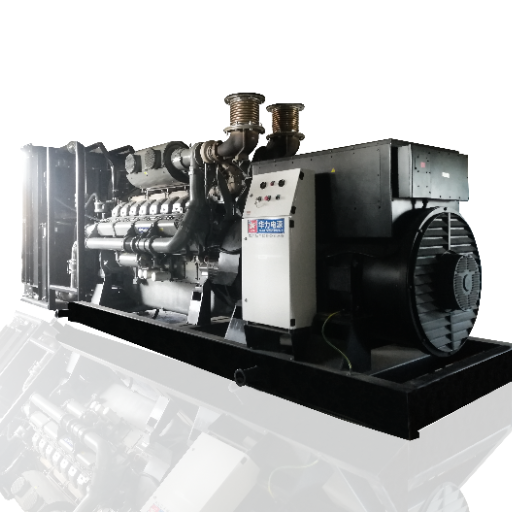
The table groups the diesel generator problems that stop industrial sets into eight families, ordered by where a technician usually starts. The order is editorial, not a statistical survey of failure rates.
| Problem family | Typical first sign | Most likely root cause | First check |
|---|---|---|---|
| Starting and cranking failure | No crank, slow crank, or crank without firing | Battery or charger, fuel priming, air in the fuel line, safety interlock | Battery rest and cranking voltage; charger output |
| No output or low voltage | Engine runs, panel shows zero or low volts | Main breaker open, automatic voltage regulator (AVR), exciter, rotating diodes, residual magnetism | Breaker state and controller voltage reading |
| Shutdown or trip under load | Runs at no load, trips as load rises | Overload, fuel starvation, cooling protection, low oil pressure, sensor fault | Last-stop code and time from load to trip |
| Overheating | High coolant temperature alarm, derate, or shutdown | Coolant loss, airlock, thermostat, radiator airflow, overloading | Coolant level and radiator airflow |
| Fuel and combustion fault | Hard start, rough running, smoke, low power | Water, microbial growth, gelling, air ingress, injector or turbo fault | Fuel sample and filter condition |
| Governor or frequency instability | Surging, hunting, flickering lights, frequency droop | Governor actuator, linkage, fuel pressure, air ingress | Frequency at no load and under load |
| Transfer-switch fault | Set starts but the load does not transfer | Sensing, control wiring, transfer motor, mechanical interlock | Transfer switch display and source voltage |
| Paralleling or load-share fault | Sets fight, reverse-power trip, uneven load | Sync settings, droop, CT polarity, governor or AVR response | Load share and reverse-power alarm |
The table is a triage tool, not a diagnosis. Two families can produce the same symptom, so use the last-stop code and the timing to separate them.
Diagnosing Common Generator Problems: Read Generator Fault Codes First
A controller usually shows three kinds of information: an active alarm, a last-stop code, and a historical log. They answer different questions.
- Active alarm: what is wrong right now. The set may still be running or may be locked out.
- Last-stop code: why the set stopped the last time it ran. This is the most useful field on a set that will not restart.
- Historical log: the pattern. Repeated codes, timestamps, and operating hours show whether the fault is chronic or new.
The same protection can carry different names across brands. Deep Sea, ComAp, and Cummins PowerCommand panels use different code structures, but the alarm families are similar.
| Alarm family | What it usually means | First check |
|---|---|---|
| Overcrank | Set number of crank attempts without engine speed or oil pressure | Battery, fuel supply, air in the fuel line, start signal |
| Low oil pressure | Pressure fell below setpoint, or sensor circuit opened | Oil level, sensor wiring, mechanical gauge verification |
| High coolant temperature | Temperature exceeded setpoint | Coolant level, belt, radiator airflow, thermostat |
| Over or under voltage | Output moved outside protection band | AVR, sensing fuses, breaker, load |
| Over or under frequency | Engine speed moved outside protection band | Governor, fuel supply, load |
| Overcurrent | Current exceeded protection setting | Load, breaker setting, current transformer (CT) ratio |
A code is not always a failure of the system it names. A low oil pressure alarm on a full sump is often a chafed sensor wire or a failed sender. Verify the signal before you dismantle the engine.
Safety note: do not reset and restart repeatedly to see whether a fault clears. A repeated overspeed, overcurrent, or fuel leak can turn a repair into an injury. Find the cause, or stop and call an engineer.
Starting, Output, and Load Failures
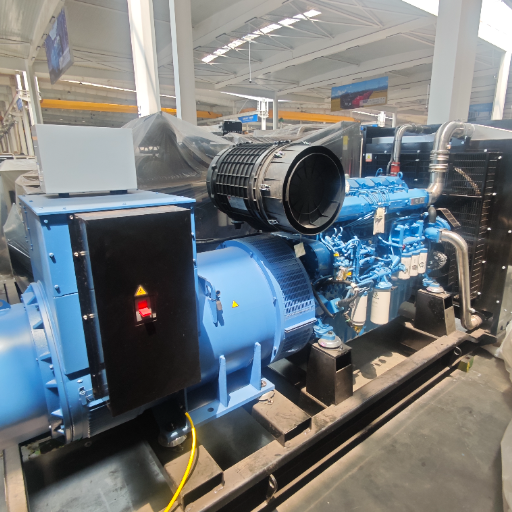
These three families cover most of the calls a service team receives. They share a rule: the symptom tells you where to look, and the last-stop code tells you where to stop looking.
The Engine Will Not Crank or Will Not Fire
Separate the two conditions first. No-crank is electrical or control. Crank-no-fire is fuel or compression.
No crank:
- Battery condition. A healthy 12 V lead-acid battery rests near 12.6 V. During cranking, it should stay above roughly 9.6 V. A 24 V system doubles those figures. Test with a load tester, not a voltmeter alone; a battery can rest at 12.6 V and still collapse under starter load. Check the terminals and cable lugs at the same time.
- Charging circuit. Confirm the charger has AC supply and DC output. A charger on the same circuit as a block heater is a common single point of failure.
- Safety interlocks. Emergency stop, low coolant, low oil, and door switches can inhibit cranking. The controller usually displays which one is open.
Crank but no fire:
- Fuel supply. Confirm fuel reaches the injection pump. A closed valve, clogged filter, or empty day tank will crank cleanly and never fire.
- Air in the fuel line. Air enters after a filter change, a run-dry event, or a loose suction fitting. Prime the system before cranking again.
- Fuel solenoid. The stop solenoid must open when the controller calls for run. If it stays closed, the engine gets no fuel.
- Cold-start aids. At low ambient temperature, a diesel may need a block heater, intake heater, or the maker’s cold-start procedure. A failed block heater produces slow cranking and uneven firing.
- Overcrank lockout. Many controllers allow three attempts before lockout. Reset only after you find why the starts failed.
Prevented by: a battery load test, a charger check, and a fuel-system inspection at the interval in your generator maintenance planner.
Generator No Voltage: When the Engine Runs but Produces No Output
An engine that runs at rated speed with zero or low voltage has a fault in the excitation or output circuit. Work from the terminals inward.
- Main breaker. Confirm the output breaker is closed. A breaker that tripped on overload leaves the engine running with no output.
- Sensing fuses and wires. The AVR needs a voltage signal. A blown fuse or loose wire makes it think output is low and drive the field to maximum or shut down excitation.
- AVR and exciter field. Measure exciter field voltage at the AVR output. If present but main output is not, the fault is downstream: rotating diodes, main field, or winding. If absent, check the AVR power supply and sensing input.
- Residual magnetism. An alternator unused for months can lose residual magnetism and fail to build voltage. Reflashing restores it, but it is a manufacturer procedure. Disconnect the load, use the correct DC source and a current-limiting resistor, and follow the alternator manual. Do not apply live voltage to the output terminals.
If voltage is low but present, check the AVR setting and engine speed.
Generator Shuts Down Under Load or Trips
The time between applying load and the trip is a diagnostic clue.
- Trips immediately on load application: suspect overload, a protection setting that is too low, a short circuit, or a motor-starting inrush the set cannot ride through.
- Runs for seconds to minutes, then trips: suspect fuel starvation, air ingress, cooling protection, low oil pressure, exhaust backpressure, or a sensor that drifts as the engine heats.
- Trips at a repeatable load level: suspect a protection threshold, a governor or AVR limit, or a load above the set’s rating.
Mei, a commissioning engineer we will call, chased a 1,250 kVA set that tripped at about 70% load. The last-stop code said low oil pressure; the dipstick and a mechanical gauge said normal. A chafed sensor wire was shorting against the block only when engine torque rocked the frame. A length of loom and a new sender fixed it; an engine teardown would have taken the data hall off standby for three weeks.
A low oil pressure code on a full sump is often a sensor or wiring fault, especially if the alarm appears only when the engine is hot or vibrating. Verify with a mechanical gauge before opening the engine.
Motor starting is the most common load-side cause. An induction motor can draw five to seven times its running current during start, so a set sized for running load but not starting torque will dip voltage and trip. Use a larger set, reduced-voltage starting, or a load sequence that brings the motor on last.
The 80% rule is a planning guide: keep continuous load at or below about 80% of rated capacity so motor starting has headroom. It is a rule of thumb, not a code limit; the real limit depends on rating, ambient, altitude, and load profile.
Prevented by: a load schedule and a generator sizing calculator check before the set is ordered, and a load-bank exercise that proves the set can carry its rated load.
Overheating, Fuel, and Combustion Problems
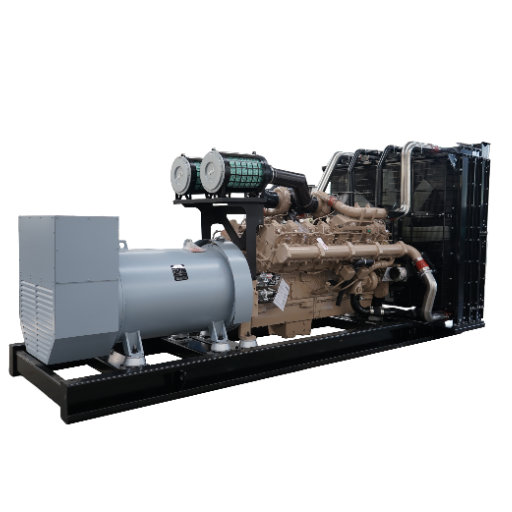
These faults often start as a performance complaint: the set runs hot, smokes, loses power, or uses more fuel. By the time the alarm appears, the cause may have been present for weeks.
Generator Overheating and Coolant Loss
As a rule of thumb, a diesel set rejects roughly a third of its fuel energy through the cooling system, and another third out the exhaust. When that heat cannot leave, the controller derates or shuts down the set.
Check the simple causes first:
- Coolant level. Check at the expansion tank when cold. A low level with no visible leak may be a head gasket, a pinhole hose, or a cap that is not holding pressure.
- Airlock. After a coolant change or hose repair, trapped air can stop circulation. Fill and bleed per the engine manual.
- Thermostat. A thermostat stuck closed restricts flow; stuck open delays warm-up and can cause low-temperature operation.
- Radiator airflow. Blocked fins, a failed fan, a slipping belt, or recirculating hot air raise temperature under load. Check the radiator face and fan drive.
- Ambient and altitude. A set rated at 40°C ambient loses capacity at 45°C, and a set at altitude loses air density. Correct the rating for site conditions.
- Overload. A set above its rating will overheat even with a perfect cooling system.
For a full diagnostic sequence, see generator overheating diagnosis. For the circuit design behind it, see the generator cooling system guide.
Diesel Fuel Contamination and Bad Diesel Symptoms
A standby tank can sit for months between runs. That is enough time for water to collect, microbes to grow at the fuel-water interface, and diesel to oxidize.
Common signs of contaminated fuel:
- Hard starting, rough running, or a set that starts and then dies
- Black or white smoke that does not match the load
- Low power and high fuel consumption
- Frequent filter clogging
- A dark, cloudy, or foul-smelling fuel sample
Ahmed, a maintenance supervisor we will call, ran a hospital standby set monthly for 20 minutes at no load. It started every time.
When the mains failed, it ran for four minutes and stopped. Fourteen months of condensation had fed a microbial bloom that blocked both filters. The repair was a tank clean, fuel polishing, and two injectors.
Water is the root of most diesel contamination. It enters through tank vents, condensation, or a delivery. Once water sits at the bottom, microbial growth forms a sludge that blocks filters and corrodes injectors. Cold weather adds gelling, where wax crystals block the filter.
Test the fuel before you treat it. A clear sample in a glass jar shows water and sediment; a laboratory test shows microbial growth, water content, and the cold-filter plugging point. Treatment depends on the cause: drain water, polish fuel, clean the tank, add a biocide, or switch to a winter blend. ASTM D975 defines the fuel specification, but it does not guarantee the fuel in your tank still meets it.
Stored diesel is commonly consumed within 6 to 12 months and tested before emergency use. That is typical guidance, not a legal limit. A tank untested for a year is a risk in a humid or coastal climate.
Black, White, and Blue Smoke
Smoke color is a fast, low-cost diagnostic. It does not replace a compression or injector test, but it tells you which system to inspect first.
| Smoke color | What it usually indicates | First check |
|---|---|---|
| Black | Incomplete combustion: overload, restricted air, turbo boost leak, injector fault, or wet stacking | Air filter, boost pressure, load level, injector condition |
| White | Unburned fuel or water: cold engine, low compression, injector fault, coolant ingress | Engine temperature, coolant level, injector condition |
| Blue | Lube oil burning: worn rings, valve guides, or turbo seals | Oil consumption, turbo play, crankcase pressure |
Black smoke under load with a light load history is often wet stacking: unburned fuel and soot accumulate because the set never reaches a high enough load to burn them off. A load bank test is the usual remedy and proof.
White smoke at startup on a cold engine can be normal briefly. White smoke that continues after warm-up, or comes with falling coolant level, points to coolant entering the cylinder. Stop the set and investigate.
Governor, Frequency, and Transfer Faults
The engine can start, produce voltage, and still fail to hold frequency or transfer load. These faults are less visible and damage equipment slowly.
Generator Surging, Hunting, and Frequency Droop
Frequency is a direct reading of engine speed. A 50 Hz set runs at 1,500 rpm; a 60 Hz set runs at 1,800 rpm on a four-pole generator. When frequency moves, the governor or fuel system is not holding speed.
- Hunting at no load: the governor is overshooting and correcting. Check the actuator, linkage for wear or binding, fuel rack, and governor settings. Air in the fuel line can also cause a rhythmic surge.
- Droop under load: the governor is responding but not holding the setpoint. Check fuel pressure, filter restriction, and droop setting. A diesel governor fault is rarely a carburetor problem; that advice belongs to gasoline engines.
- Frequency collapse under a large load: the set is asked for more torque than it can deliver. Check the load, motor-starting method, and rating.
ISO 8528-5 defines performance classes for voltage and frequency deviation. The applicable class belongs in the specification, not in a troubleshooting guess. If the set is new, compare measured deviation with the class the supplier quoted.
Automatic Transfer Switch (ATS) Will Not Start, Transfer, or Retransfer
An automatic transfer switch (ATS) moves the load between mains and generator. Split the fault by stage, because each stage has a different cause.
- The set never starts. The ATS is not sending a start signal, or the controller is not accepting it. Check the ATS display, start wiring, and remote-start mode.
- The set starts but the load does not transfer. Check source availability, transfer motor or solenoid, control wiring, and mechanical interlock. A switch that sees generator voltage outside its band will refuse to transfer.
- The load transfers but does not retransfer. Check mains sensing, the retransfer timer, and the ATS mode. A switch left in manual or test mode will not retransfer.
- The switch chatters or transfers repeatedly. Check for unstable sensing voltage, a loose neutral, or a control relay picking up and dropping out.
NFPA 110 Type 10 requires the emergency system to accept load within 10 seconds. That is a system-level test, not a controller setting. Test start, transfer, and retransfer under load.
Paralleling and Load-Sharing Faults
Two or more sets in parallel add failure modes that a single set does not have.
- Sync check failure: the breaker will not close because voltage, frequency, phase angle, or phase sequence does not match.
- Reverse power trip: one set is taking power from the bus instead of supplying it. Check the governor, fuel supply, and CT polarity.
- Uneven load sharing or circulating current: the governors or AVRs are not drooping together. Check load-sharing lines, CT ratios, and settings, including reactive droop compensation.
Paralleling is a design and commissioning discipline, not a field repair. For a new plant, the choice between one large set and several smaller ones belongs with the N+1 redundancy design, not the service technician.
Prevention: The Checks That Stop Most Failures
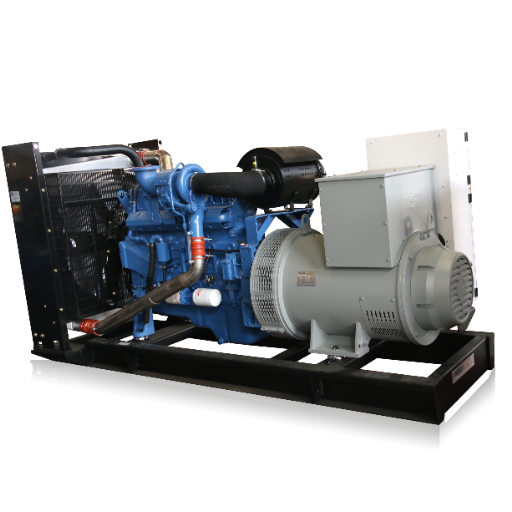
Every fault here has a maintenance task that reduces its probability. It is usually cheaper than the repair and almost always cheaper than the outage.
| Fault family | Prevention task | Typical timing |
|---|---|---|
| Starting failure | Battery load test; charger output check; terminal inspection | Monthly, or at the manual interval |
| No output | Insulation resistance check; AVR and wiring inspection | Annual, and after any overload trip |
| Shutdown under load | Load-bank exercise at rated load; fuel pressure check | Annual, or per the maintenance plan |
| Overheating | Coolant level and concentration check; radiator cleaning; belt inspection | Monthly visual, annual service |
| Fuel contamination | Fuel sample test; water drain; tank cleaning; biocide treatment | Quarterly test, or before reliance |
| Governor instability | Linkage inspection; fuel filter change; governor check | Annual, or at the manual interval |
| ATS fault | Full transfer test under load; control wiring check | Monthly exercise, annual full test |
| Paralleling fault | Load-share and reverse-power test; CT and wiring check | At commissioning and annually |
Timings are typical. The applicable schedule comes from the engine manual, controller manual, and code or authority having jurisdiction. NFPA 110 sets routine maintenance and testing requirements; confirm the class and local requirement before setting an interval.
Three tasks prevent a disproportionate share of failures:
- Exercise the set under load. A set that runs at no load every month warms the engine but does not prove the fuel, cooling, or alternator under load. A load-bank test does.
- Test the battery, not just the voltage. A load test or conductance test finds a battery that will fail on the next start.
- Test the complete transfer sequence. The ATS is part of the emergency system. A set that starts but never transfers is still a failed system.
The NFPA 110 maintenance testing page covers the code-driven side. The generator maintenance planner covers the task schedule.
When to Stop and Call an Engineer
Some faults are not maintenance tasks. Stop the set, isolate it, and call an engineer if you see:
- A fuel leak, smell, or pooling under the set
- Coolant loss with no visible leak
- Repeated breaker trips after load verification
- A burning smell, arcing, or discolored wiring
- Cracked insulation, or a falling insulation resistance reading
- Overspeed, runaway, or a set that will not shut down
- Exhaust leakage into the room, or any carbon monoxide (CO) alarm
- Any work that requires opening a live panel or bypassing protection
Use lockout/tagout, correct personal protective equipment (PPE), and the manufacturer’s procedure. A generator involves electrical, thermal, and mechanical energy. All three can injure an experienced technician.
FAQ
What causes a generator to fail?
The most common causes are battery or charging faults, fuel starvation or contamination, cooling faults, and protection trips from overload or a sensor. On an industrial set, the last-stop code is the fastest way to identify the cause.
Why does my generator run but produce no power?
The output circuit is open or the alternator is not exciting. Check the main breaker, AVR sensing fuses and wires, exciter field voltage, rotating diodes, and residual magnetism, in that order.
Why does my generator shut down under load?
The set is overloaded, starved of fuel, protected by a cooling or oil-pressure fault, or reacting to a sensor that drifts under heat or vibration. The last-stop code and time-to-trip separate those causes.
Why is my generator smoking?
Black smoke points to incomplete combustion, often from overload, restricted air, a turbo boost leak, or wet stacking. White smoke points to unburned fuel or water, especially after a cold start or with coolant loss. Blue smoke points to lube oil burning through rings, valve guides, or turbo seals.
How often should a generator be serviced?
Follow the engine manual and the code or authority having jurisdiction. As a baseline, inspect monthly, test the battery and charger monthly, exercise under load at least annually, test the ATS transfer under load, and test fuel quarterly in a standby tank. NFPA 110 adds requirements for emergency systems.
What is the 80% rule for generators?
Keep continuous load at or below about 80% of rated capacity so motor starting and transient loads have headroom. It is not a code limit. The real limit depends on rating, ambient, altitude, and load profile.
Conclusion
Most common generator problems fall into a few families: starting, output, load-related shutdowns, cooling, fuel and combustion, governor stability, and transfer. The last-stop code tells them apart fastest. The first check is usually simple, and prevention is cheaper than repair.
If the set is down, do not reset and restart until the fault clears. Read the code, check the system it names, and stop at the safety thresholds above. If the cause is not obvious, send our engineers the controller model, last-stop code, and a photo of the alarm screen. We build and test diesel generator sets from 8 kVA to 4,000 kVA, and we can usually narrow the fault before anyone travels.
