
A generator cooling system is a closed circuit that removes heat from the engine and releases it to the atmosphere through a radiator or heat exchanger. Coolant is pushed through the engine by a belt- or gear-driven pump, and a thermostat decides when that coolant is allowed to reach the radiator. Everything else in the system exists to make those four jobs reliable.
That sounds simple, and it is. What makes cooling problems hard to solve is that the circuit sits inside a building, and the building has its own heat problem. When a diesel generator overheats, the first thing most people check is the room. That is often the wrong place to look.
Daniel ran facilities at a plastics plant where an 800 kW standby set tripped on high water temperature every August. His maintenance team spent two summers adding louvers and clearing intake screens. The room was never the problem.
A thermostat that had been sticking partially open for three years finally failed closed, and the circuit stopped rejecting heat entirely. The ventilation work was not wasted, but it never had a chance of fixing the fault.
This guide covers what the circuit does, the components inside it, the temperatures that tell you it is working, and how to maintain it before it fails. If you already suspect a room-side problem, our guide to generator room overheating covers the building. This one covers the engine.
Want your cooling system reviewed as part of a full generator specification? Send us your site conditions and our engineers will size the radiator, the pump, and the room together.
Key Takeaways
- A generator cooling system is a closed loop: pump, engine, thermostat, radiator, and back. It is not the same thing as room ventilation, and confusing the two is the most common diagnostic error.
- Large diesel sets run two circuits, not one. The high-temperature jacket-water circuit cools the engine block; the low-temperature charge-air circuit cools the air leaving the turbocharger.
- Normal coolant temperature is typically 80 to 95 °C. The thermostat starts opening near 71 to 82 °C depending on the engine, and shutdown protection usually sits between 103 and 120 °C.
- Coolant chemistry matters as much as coolant level. On wet-liner engines, the wrong coolant causes liner pitting that eats the block from the inside.
- Remote radiators are limited by static head and dynamic head, not by pipe length alone. Exceeding the static-head limit causes gasket and seal failure.
What a Generator Cooling System Actually Does
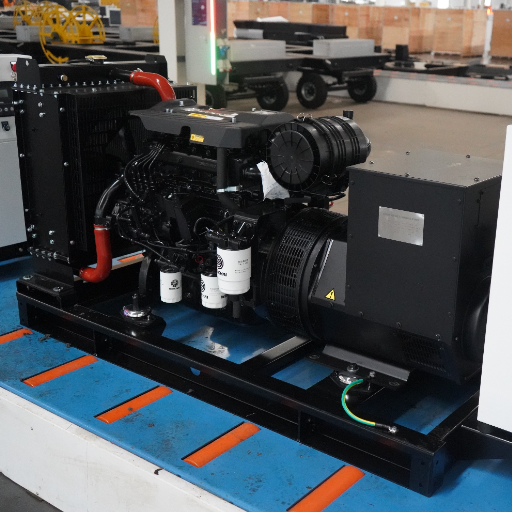
A diesel engine turns roughly a third of the energy in its fuel into useful work at the crankshaft. Most of the rest becomes heat, and around 30% of the fuel energy leaves through the cooling system alone. If that heat is not carried away, metal expands, oil films break down, and the engine destroys itself in minutes.
The circuit’s job is to move that heat to the atmosphere. It does so by circulating a liquid through passages cast into the engine block and head, then through a radiator where moving air carries the heat away. The Electrical Generating Systems Association sets the terminology the industry uses for these components, which is worth knowing when you compare quotations.
The Two Circuits Most Large Generators Run
Most large generators do not have one cooling circuit. They have two.
The high-temperature (HT) circuit is what people mean when they say “the cooling system.” It circulates coolant through the engine block and head, through the oil cooler, and out to the radiator.
The low-temperature (LT) circuit cools the charge air. A turbocharger compresses intake air, and compression heats it. That hot air has to be cooled before it enters the cylinders, or the engine loses power and emits more nitrogen oxides. Mitsubishi’s engine service documentation describes the same split.
This matters because the two circuits run at different temperatures and reject different heat loads. In a separate-circuit arrangement, the HT circuit rejects the jacket water plus the oil cooler load, while the LT circuit rejects the aftercooler load alone.
One detail is easy to miss, and Kohler’s engineering note on remote cooling states it plainly. The charge-air cooler must hold a specific temperature rise over ambient, typically around 20 °C, because the engine’s emissions certification depends on it. A remote cooling design that lets charge air run hotter does not just cost power. It can push the engine outside its certified envelope.
Why This Is Not Room Ventilation
Here is the distinction that causes most wasted effort. The cooling circuit rejects heat into the room. Room ventilation then has to reject that heat out of the building. These are two separate systems, and they fail in different ways.
If the room is hot, the radiator cannot shed heat and the engine runs hot. That is a ventilation problem, and the fix belongs in generator room ventilation. If the room is cool and the engine still runs hot, the fault is inside the circuit: a stuck thermostat, a scaled radiator, a failing pump, or low coolant.
Work out which side you are on before you spend money. A temperature gauge tells you the coolant is hot. It does not tell you why.
The Components of a Diesel Generator Cooling Circuit
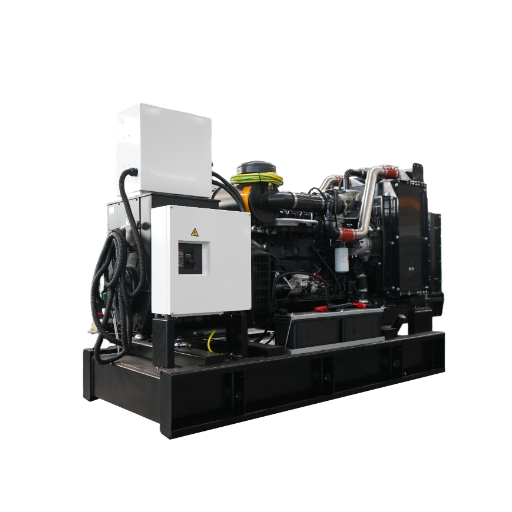
Seven components do the work. Each has one common failure mode, and knowing them turns a vague “it’s running hot” into a specific check.
| Component | Function | Typical failure mode |
|---|---|---|
| Radiator | Rejects heat to the air | Clogged fins, internal scale, leaking core |
| Cooling fan | Moves air through the radiator | Slipping belt, failed bearing, damaged blades |
| Water pump | Circulates coolant | Seal leak, failed bearing, eroded impeller |
| Thermostat | Regulates flow to hold temperature | Sticks open (slow warm-up) or closed (overheat) |
| Coolant | Carries heat; protects against corrosion and freezing | Wrong chemistry, depleted additive, contamination |
| Heat exchanger | Transfers heat when the radiator is remote | Fouled tubes, failed seals |
| Expansion tank and cap | Absorbs thermal expansion; holds system pressure | Failed cap, cracked tank, low level |
The Radiator and Fan
The radiator passes hot coolant through thin tubes lined with fins. Air moving across the fins carries the heat away. Its capacity is fixed at the factory for a design ambient temperature, which is why a radiator that copes at 25 °C can fall short at 45 °C.
When a radiator underperforms, the cause is usually airflow or scale. Fins packed with dust, pollen, or insects block air. Hard water leaves scale inside the tubes. That scale insulates the coolant from the metal.
Both are preventable. Additionally, both relate to the ambient conditions covered in our guide to altitude and temperature derating for hot, high-altitude sites.
The Water Pump
The water pump is almost always centrifugal, driven by a belt from the crankshaft or by gears from the timing train. It has one moving assembly and one seal, and both wear with hours.
A leaking pump shows as coolant loss and a stain at the weep hole. A failing bearing shows as noise or play in the pulley. An eroded impeller is the quiet one. The pump turns, the belt is tight, and flow is simply too low to carry the heat away.
The Thermostat
The thermostat is a wax-filled valve that opens as coolant warms. It is the cheapest part in the circuit and the one most often responsible for temperature faults.
A thermostat stuck open makes the engine run cold. That sounds harmless and is not. Cold running causes incomplete combustion, cylinder glazing, and a condition called wet stacking. A thermostat stuck closed blocks flow to the radiator entirely.
That second failure overheats the engine within minutes regardless of load. Never remove a thermostat to “fix” an overheating complaint. You trade a controlled system for an uncontrolled one that still overheats under load.
The Coolant and Its Chemistry
Coolant is not just water. The difference is more than freeze protection. The additive package prevents corrosion, raises the boiling point, and, on some engines, prevents a specific and expensive failure.
Diesel coolants fall into four families, distinguished by their additive chemistry:
- IAT (inorganic acid technology), the traditional green coolant
- OAT (organic acid technology), usually orange or red
- HOAT (hybrid organic acid technology), often yellow
- SCA pre-charged coolants, for engines with wet cylinder liners
The critical rule is to never mix IAT and OAT. The two chemistries react. The result is a gel that blocks radiator tubes and coolant passages.
Wet-liner engines, which include many Cummins, Perkins, and Deutz units, need additives called supplemental coolant additives, or SCA. Without them, vibration makes the liner walls flex, microscopic bubbles form, and the liner surface erodes in a process called cavitation. The holes that result go straight into the crankcase.
Priya learned this the expensive way at a regional data center. A contractor topped up a wet-liner standby engine with ordinary automotive coolant because that was what the service van carried. Nobody flagged it.
Eighteen months later the engine failed a coolant test with a liner already pitted, and the rebuild cost more than the site’s annual coolant contract. A 50/50 mix of the correct coolant and deionised water would have prevented it, and the price difference was a few dollars a litre.
The Heat Exchanger
When the radiator has to sit far from the engine, or when there is no clean air to use, a heat exchanger takes its place. The engine coolant passes through one side. A separate cooling medium passes through the other.
In a marine installation, that medium is seawater. On land, it is usually a secondary loop feeding a remote radiator.
The heat exchanger therefore adds a second fluid and a second set of seals, so it adds failure modes. It exists because the alternatives are worse. That brings us to remote cooling.
What Normal Looks Like
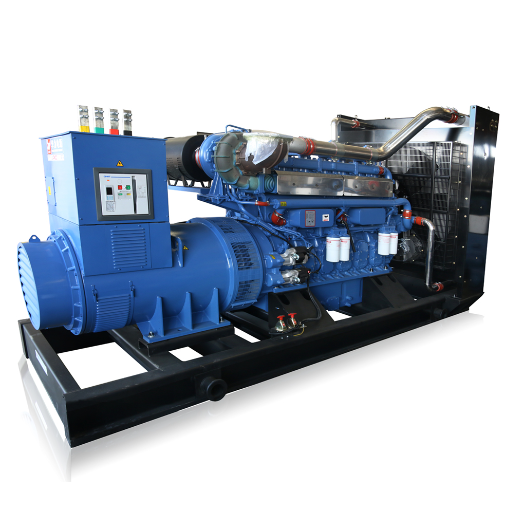
You cannot diagnose a cooling fault without knowing the normal range. Two numbers matter: where the thermostat opens, and what the engine holds afterward.
Diesel generator coolant typically runs between 80 and 95 °C once warm and loaded. The thermostat begins to open around 71 °C or 82 °C, depending on the engine model.
| Stage | Typical coolant temperature |
|---|---|
| Thermostat begins to open | 71 °C or 82 °C, model-dependent |
| Thermostat fully open | 12 to 15 °C above the opening point |
| Normal operating band | 80 to 95 °C |
| High-temperature alarm | 105 to 110 °C |
| Automatic shutdown | 103 to 120 °C |
Treat those as typical values, not universal ones. The governing figure is always the number in your engine’s operation manual. Manufacturers set them differently. What matters is the pattern: opening, normal band, alarm, shutdown, each step above the last.
A gauge in the normal band tells you the circuit is coping. A gauge that climbs toward the alarm under load tells you capacity is marginal, even if it never trips. Marginal capacity is still a fault.
A gauge that never reaches normal tells you the thermostat is stuck open or the load is too light.
Instruments lie in predictable ways. A sender that has drifted reads low and hides the fault. A gauge pinned at one value is a wiring fault, not a stable engine.
Air-Cooled and Liquid-Cooled Generators
Not every generator uses liquid. Small sets, typically up to around 20 to 25 kW, are often air-cooled. An engine-driven fan blows air directly across finned cylinders and heads, so there is no coolant, no pump, and no radiator.
Air cooling suits small, intermittent, outdoor installations. It has no coolant to change, no freeze risk, and fewer parts. It also has a hard ceiling. Air carries heat away far less effectively than liquid, so air-cooled sets cannot scale.
Ask an air-cooled engine to run continuously at full load in a hot climate and it will derate or overheat.
Everything above roughly 25 kW, and every industrial diesel set built for continuous duty, is liquid-cooled. That is why the rest of this guide assumes liquid cooling, and why choosing between the two is really a choice of size class.
Remote Radiator and Heat Exchanger Configurations
Sometimes the radiator cannot sit on the engine. A generator in a basement has no exterior wall. A room with low headroom cannot take a unit-mounted radiator. A site with obstructions to airflow has nowhere for the hot air to go.
Each case forces the same decision. The radiator moves outdoors and connects to the engine through pipework. That pipework introduces two limits, and they are the reason remote cooling is an engineering exercise rather than a plumbing one.
Static head is the pressure that exists when no coolant is flowing, set purely by how much higher the radiator sits than the engine. Exceed the engine’s static-head limit and you expose gaskets and seals to more pressure than they were designed for, which leads to premature failure.
Dynamic head is the resistance while coolant is flowing. It depends on flow rate, pipe size, and the pressure drop across the radiator. You can reduce dynamic head by using larger pipe, but the cost climbs and the benefit shrinks.
The two limits have different fixes. If only dynamic head is exceeded, a booster pump can overcome the extra restriction. If static head is exceeded, no pump helps, and the radiator must be isolated from the engine by a heat exchanger. That design adds an expansion tank, vent lines, and a fill point at the lowest part of the engine.
Tomas found the limit on a hospital generator replacement in 2023. The new radiator went on a roof two floors above the plant room, and the static head came close to the engine’s limit. The installing contractor proposed a booster pump. It would not have helped, because the problem was static head, not dynamic.
The correct fix was a heat exchanger separating the roof loop from the engine. Redoing the design cost two weeks; running it as drawn would have cost a set of seals and a flooded plant room.
Cooling System Maintenance
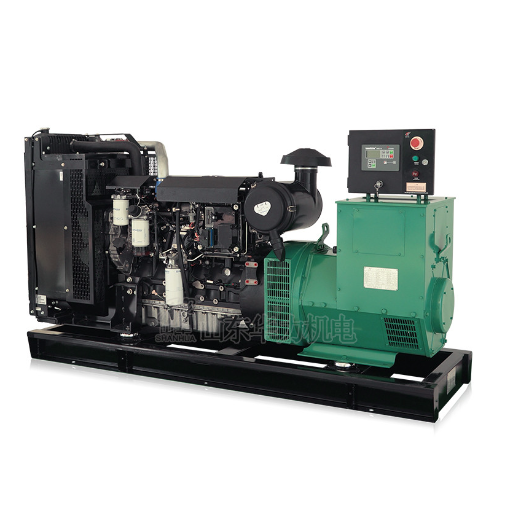
Cooling faults rarely appear without warning. They develop over months, and a short inspection list catches them early.
Weekly, on a running plant:
- Check coolant level when the engine is cold, against the marked range
- Look for leaks at the pump weep hole, hose joints, and the radiator core
- Listen for belt squeal and check for fan noise
- Confirm the gauge reaches and holds the normal band under load
Annually, or at the hours your manual specifies:
- Test the coolant for freeze point, additive level, and contamination
- Clean the radiator fins with low-pressure air or water, never at close range with a pressure washer
- Inspect the fan belt for cracking, glazing, and correct tension
- Check the pressure cap, because a cap that will not hold pressure lowers the boiling point
- Flush and replace coolant on the manufacturer’s interval
Our generator maintenance planner turns this into a schedule, and the maintenance schedule chart gives the hour-based intervals by service task.
Two failures deserve a specific mention. First, running a standby set lightly loaded without ever reaching full temperature causes wet stacking, where unburned fuel and carbon accumulate in the exhaust. That is a load problem with cooling-system symptoms, covered in our guide to preventing wet stacking.
Second, a set that never carries real load never proves its cooling capacity. That is what load bank testing is for.
After any overheating event, do not simply reset the alarm and restart. Check coolant level and condition, confirm the thermostat opens, verify the fan turns, and inspect the oil. Overheating damages oil and can distort the head, and a second event on already-damaged components is far more expensive than the first.
When a Generator Overheats
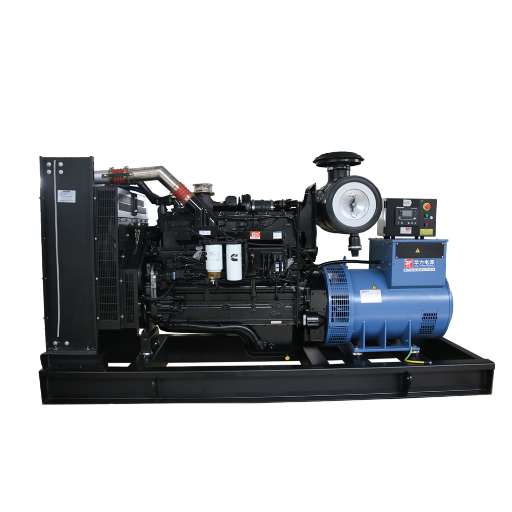
Cooling faults fall into three groups. Working out which group you are in narrows the diagnosis quickly.
Circuit-side causes live inside the cooling system: low coolant, a stuck thermostat, a failing water pump, a clogged radiator, a slipping fan belt, or a leaking heat exchanger. These show as a temperature that climbs regardless of ambient conditions.
Load and fuel-side causes make the engine produce more heat than the cooling system was sized for. Sustained overload, incorrect injection timing, a restricted air filter, and wet stacking all push heat output past the design point. These often appear alongside black smoke or rough running.
Environmental causes reduce the cooling system’s capacity: high ambient temperature, high altitude, a hot room, or obstructed airflow. These track the weather and the site, not the engine’s hours.
However, the three groups overlap, and a single event can involve more than one. A hot day, a clogged radiator, and a lightly loaded set can combine to trip an alarm that none of them would cause alone.
The practical sequence is to check the environment first because it is free, then the circuit because it is cheap, then the engine because it is expensive. Start with our fuel consumption data if you suspect the set is overloaded, and our exhaust system design guide if hot exhaust is heating the room.
Specifying a Cooling System
If you are buying rather than fixing, four questions decide whether the cooling system will cope.
What is the design ambient temperature? A radiator sized for 25 °C will fall short at 45 °C. State the real maximum, not the annual average.
What is the altitude? Air thins with height, so both the radiator and the engine lose capacity.
Will the radiator be unit-mounted or remote? This decides the pipework, the static-head check, and whether a heat exchanger is needed.
What coolant does the engine require? Establish the chemistry and the additive requirement before the first fill, not after a liner failure.
Ask a supplier to confirm all four in writing. A quotation that lists a radiator without a design ambient temperature has not specified a cooling system.
Not sure which configuration suits your site? Tell us your ambient, altitude, and room constraints and we will confirm the radiator, the pipework, and the coolant specification together.
Frequently Asked Questions
How does a generator cooling system work?
A pump circulates coolant through passages in the engine block and head, where it absorbs combustion heat. A thermostat opens as the coolant warms and allows it to flow to a radiator, where air carries the heat away. The cooled coolant returns to the engine, and the cycle repeats continuously while the engine runs.
What is the normal operating temperature of a diesel generator?
Coolant typically runs between 80 and 95 °C once the engine is warm and loaded. The thermostat usually begins to open around 71 to 82 °C depending on the model. High-temperature alarms commonly sit near 105 °C and shutdowns between 103 and 120 °C. Confirm the exact values in your engine manual.
What are the two ways a generator can be cooled?
Air cooling, used on small sets up to roughly 25 kW, blows air directly across finned engine surfaces. Liquid cooling circulates coolant through the engine and rejects heat through a radiator or heat exchanger, and it is the method used on every industrial diesel set above that size.
What is HT and LT cooling?
Large generators often run two circuits. The high-temperature circuit cools the engine block and oil, while the low-temperature circuit cools the compressed charge air from the turbocharger. The two run at different temperatures and reject different heat loads, so a remote cooling design must accommodate both.
Can I run a generator without a thermostat?
No. Removing the thermostat lets coolant flow through the radiator constantly, so the engine warms slowly, runs cold, and suffers incomplete combustion and wet stacking. It also removes temperature control at full load, so the engine can still overheat. Replace a faulty thermostat; never delete it.
Does a generator cooling system need maintenance?
Yes. Coolant level and leaks should be checked weekly, and coolant condition, belt tension, radiator cleanliness, and the pressure cap should be checked annually. Coolant is replaced on the interval in the engine manual, which varies with the coolant chemistry.
Conclusion
A generator cooling system is a closed loop with one purpose: move heat from the engine to the atmosphere. The pump circulates, the thermostat regulates, the radiator rejects, and the coolant chemistry protects the metal while it happens. When the system runs hot, the fault is almost always inside that loop or in the room around it, and telling the two apart is the first step.
Carry these five points into your next inspection:
- Separate the circuit from the room. A cool room and a hot engine means the fault is in the circuit. Start there.
- Know the normal band. Coolant should hold roughly 80 to 95 °C. A gauge that climbs toward the alarm under load is a warning even if it never trips.
- Never delete the thermostat. A stuck-open thermostat causes wet stacking; a stuck-closed one causes immediate overheating. Replace it, do not remove it.
- Match the coolant to the engine. Wet-liner engines need SCA additives. Mixing IAT and OAT coolants can gel and block the radiator.
- Check static head before buying a remote radiator. Exceeding it causes seal failure, and no booster pump will fix it.
Shandong Huali Electromechanical Co., Ltd. manufactures diesel generator sets from 8 kVA to 4,000 kVA and supplies cooling systems, radiators, and remote cooling packages as integrated assemblies, with full OEM/ODM customization.
Send us your design ambient temperature, site altitude, and room constraints. We will confirm the radiator, the coolant specification, and whether your installation needs a remote radiator or a heat exchanger.
