
Generator radiator cleaning is two jobs, not one. The air side is where dust, pollen and insects coat the fins. The coolant side is where scale and corrosion products settle inside the tubes. They block in different ways, require different cleaning methods, and fixing one never fixes the other.
That distinction is the whole article. Most overheating sets that get “cleaned” have had one side done and the other left alone, which is why the temperature improves for a few weeks and then climbs back.
This page is the procedure: what to do, in what order, with what tool, and what each result tells you. For the component overview, sizing, and remote mounting, our generator radiator guide covers the design side. This page assumes the radiator is already correctly sized and asks only what is blocking it.
Key Takeaways
- A generator radiator blocks in two places, the air side and the coolant side, and they need different cleaning methods. Cleaning one and not the other is the most common reason a “cleaned” radiator keeps overheating.
- Never use a pressure washer at close range. It flattens fins against each other and permanently removes surface area. A flattened core looks clean and cools poorly.
- A dry pass before a wet pass removes most of the debris and stops you turning dust into mud in the fins.
- A flush is a different job from a clean, with its own interval. P3 Generator Services puts it at least every five years, and sooner if the coolant has drifted out of spec.
- If cleaning does not change the temperature, the fault is not the radiator. The last section is a triage table for what it probably is.
Why a Generator Radiator Blocks in Two Different Ways
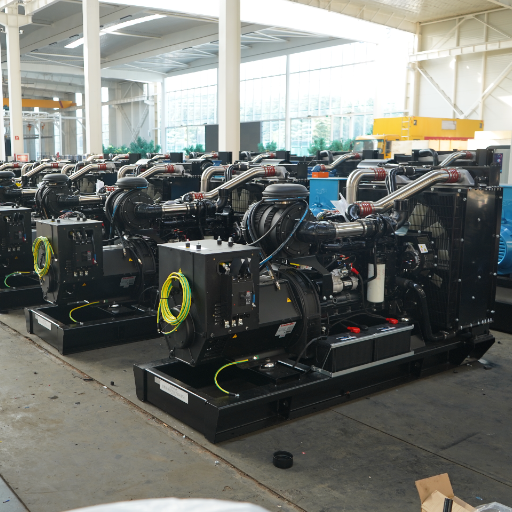
The radiator transfers heat from coolant to air. Block either half of that transfer and capacity falls, but the two blockages look different on the set and respond to different work.
The air side
Fins are where air meets metal. Anything coating them insulates the core from the airflow and reduces heat transfer directly.
Dust, pollen and insects are the common offenders. In industrial settings you can add airborne fibres, oil mist and, near construction, cement dust that sets. All of it builds over months rather than days, which is why the failure creeps up on people. A maintenance write-up from HOSEmpower lists clogged fins as the first thing to check on any generator radiator that is running warm, and it is the right instinct.
An air-side blockage is the most common radiator fault and the easiest to rule out. It reduces airflow without changing anything else, so the set runs hot only when it is producing enough heat to matter. Our guide to the generator cooling system puts cleaning the fins on the annual service list for exactly this reason.
The coolant side
The second blockage is inside the tubes, and it comes from the coolant rather than the air. Hard water deposits scale, and scale insulates the coolant from the metal it is supposed to be transferring heat into.
The giveaway is history. If the set has been topped up with tap water for years, radiator scale is likely. If the coolant has been maintained to spec, it is much less likely. Our guide to generator coolant covers the chemistry and the correct mix, which is what prevents scale forming in the first place.
Before You Start: Tools, Access and Safety
A radiator clean is a low-tool job. The mistakes come from access and from using the wrong tool, not from a shortage of equipment.
What you actually need
- Low-pressure air or a gentle water hose. Not a pressure washer.
- A soft brush for loosening surface debris before either.
- A torch. You cannot assess a core without light behind it.
- A fin comb if the fins are already bent. More on this below.
- A catch tray and appropriate disposal if you are flushing.
- The engine manual, for torque figures, capacities and coolant specification.
That is the list. A radiator clean that needs more than this is usually a radiator replacement. Vital Power’s generator cleaning guide lands on the same two tools, a soft brush and compressed air, which is a useful confirmation that this is not a job that benefits from more equipment.
The safety points that matter
Let the set cool completely before you touch the radiator. Coolant above atmospheric boiling point is pressurised, and opening a cap on a hot system will scald you.
Isolate the set so it cannot start. On an automatic standby set this means more than turning the key, because the controller can start it on a mains failure while your hands are in the fan.
Watch the fan. Even with the engine stopped, a belt-driven fan turns freely and a blade edge is sharp.
A note on access
Tomas, a maintenance supervisor at a food-processing plant, had a 500 kVA set in a room where the radiator sat about 300 mm from a wall. His team could reach the front of the core and nothing else. They cleaned the front every quarter, the temperature held for two years, and then it did not.
The back face of that core was fully blocked. Nobody had ever seen it. When the set was finally pulled out for a service, the rear third of the core was solid.
Access decides what cleaning you can actually do. If you cannot reach both faces of the core and see light through it, plan for the radiator to come out rather than pretending a front-face clean is a clean.
Generator Radiator Cleaning on the Air Side
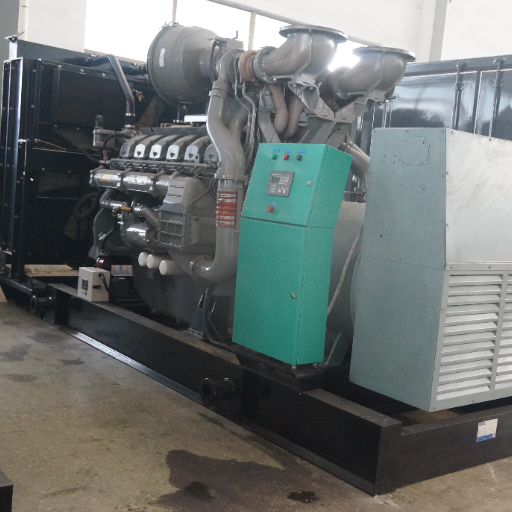
Work in two passes, dry then wet, and always from the cleaner side toward the dirtier side where you can.
Dry first, then wet
Blow the core out with low-pressure air before any water touches it. Dry debris lifts off and leaves; wet debris turns into mud that packs into the fin gaps and is harder to shift than what you started with.
Work along the fins rather than across them. Air directed across the fin pack bends them; air directed along the gaps lifts debris out. If you need to clean radiator fins that have already been bent by a previous attempt, see the combing section below.
Then, if the core is still dirty, rinse with a gentle hose at low pressure. Again, along the fins, from the clean side.
Why a pressure washer is the wrong tool
A pressure washer at close range flattens the fins against each other. Once they are flattened, the surface area is gone and it does not come back on its own.
The result is a core that looks clean and cools poorly, which is worse than a core that looks dirty and cools badly, because it removes the visual cue that something is wrong.
If you must use a pressure washer on a heavily contaminated industrial core, keep the nozzle well back, keep it moving, and never hold it on one spot. Even then, the risk of fin damage is real and the benefit over low-pressure air is small. The question to ask before you start is not whether a pressure washer radiator clean is faster, but whether you can afford to lose the fins.
Reading the core with a light behind it
Put a torch behind the core and look through from the front. A core that looks clean from the front can be fully blocked a few millimetres in.
What you are looking for is light coming through the fin pack evenly. Patches with no light are blocked. A band of no light along one edge usually means debris has been drawn in from that direction and the airflow path is telling you where the contamination comes from.
Check both faces. The face you can see is rarely the one that is blocked.
Straightening flattened fins
This is the part most cleaning guides skip. If the fins are already flattened, from a previous pressure-wash or from debris impact, a fin comb can open them back up.
A fin comb is a small plastic or metal tool with teeth sized to the fin pitch. You draw it along the fin pack and the teeth separate and straighten the fins as they pass.
Three things worth knowing before you buy one:
- Match the comb to the fin pitch. Combs come in different tooth spacings and the wrong one damages more than it fixes. Count the fins per inch on your core before ordering.
- It works on bent fins, not crushed ones. A fin that has been folded flat against its neighbour can often be opened. A section that has been crushed into a solid block cannot.
- It is a partial recovery, not a repair. Straightened fins will not return the core to its original performance. If a large area has been flattened, the honest answer is that the core has lost capacity permanently and replacement is the only full fix.
Comb the damaged area gently, in the direction of the fins, and stop when the teeth stop catching. Forcing it further bends the fins you have already recovered.
Generator Radiator Cleaning on the Coolant Side
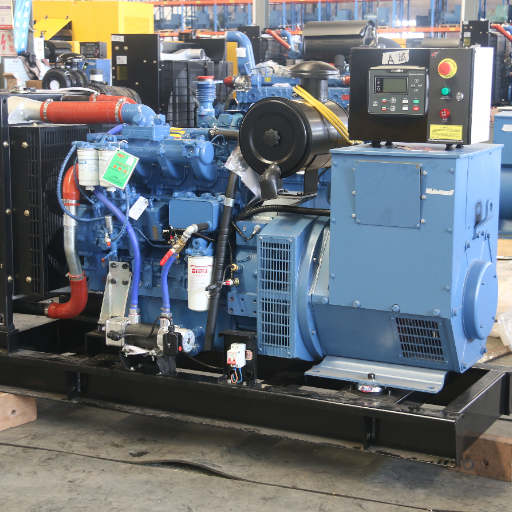
The coolant side is not cleaned by washing. It is cleaned by flushing, and a flush is a scheduled service rather than something you do when the temperature climbs.
Clean or flush? The test that decides
Before flushing anything, work out which side is actually blocked, because a radiator flush will not fix an air-side blockage and cleaning the fins will not fix scale.
| What you see | Which side | What fixes it |
|---|---|---|
| Debris visible in the fins | Air | Clean the core |
| Core blocks light when backlit | Air | Clean the core, comb if flattened |
| Fins flattened by a previous wash | Air | Comb, or replace if crushed |
| Temperature climbs over weeks, fins clean | Coolant | Flush |
| Coolant discoloured, rusty or cloudy | Coolant | Flush and investigate |
| History of tap-water top-ups | Coolant | Flush, then correct the mix |
The flush sequence
The sequence below follows the process P3 Generator Services describes, and it matches what we specify on our own sets.
- Add a cooling system cleaning solution to the system.
- Run the set for around 15 minutes so the cleaning agents circulate fully.
- Drain the old coolant completely.
- Rinse with fresh water, and keep rinsing until what comes out runs clean. This step removes residual coolant, cleaning agent and loosened deposits.
- Refill with fresh coolant to the engine specification. Not to whatever is on the shelf.
- Replace the thermostat and gasket while the system is open. P3 recommends this during the same service, and it is sound: the thermostat is cheap, it is already accessible, and a thermostat that fails weeks later means doing the job twice.
When a flush is due
P3 gives four triggers, and they are a reasonable standard to work to:
- At least every five years, regardless of hours.
- When coolant pH has drifted. Coolant becomes acidic with age and attacks metal; pH that runs too high attacks the aluminium in and around the radiator. High pH can eat through the thin tubes of the core and turn a flush into a radiator replacement.
- When the boiling point or freezing point is out of spec, which is what a refractometer or test strips tell you.
- Whenever the cooling system is opened for a repair. If a hose or fitting is coming off anyway, the labour for a flush is largely already spent.
Our guide to generator coolant covers the test methods and the intervals by chemistry.
What comes out tells you what happened
Aisha, a facilities engineer looking after a hospital standby set, drained a system that had run for six years without a flush. What came out was rust-brown, and there was grit in the bottom of the catch tray.
That told her three things at once: the coolant had been breaking down for a while, corrosion was active inside the block, and something had been shedding particulate into the system. She flushed it twice, replaced the thermostat, refilled to spec, and then had the coolant tested at the next service rather than assuming the job was done.
The colour and the debris are diagnostic. Rust-brown points at corrosion. Cloudy or milky points at oil or air ingress. Grit points at a component breaking down somewhere in the circuit.
Chasing a temperature fault and not sure which side of the radiator is at fault? Our engineers can review the cleaning history, the coolant records and the load profile together, which is usually what separates an airflow problem from a coolant problem. Talk to our engineering team →
When Generator Radiator Cleaning Does Not Fix It
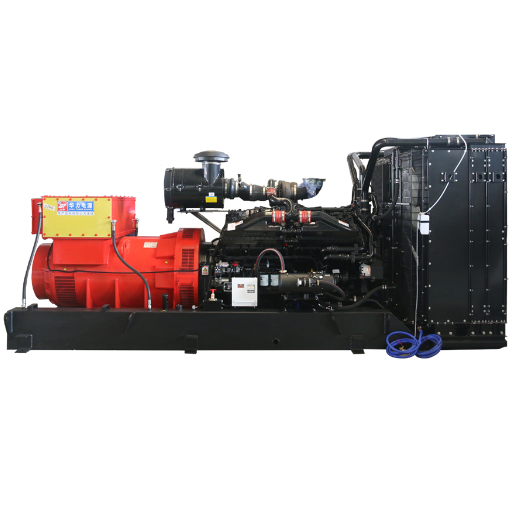
If you have cleaned both sides properly and the temperature still climbs, the radiator is not the fault. Continuing to clean it is the most expensive way to avoid diagnosing the set.
| Symptom after cleaning | What it points to | Where to look |
|---|---|---|
| Still overheats under load, fins clean, coolant fresh | Airflow is not reaching the core | Room ventilation and enclosure airflow |
| Temperature sits low and never reaches band | Thermostat stuck open | Thermostat |
| Overheats quickly from cold | Thermostat stuck closed, or no coolant flow | Thermostat and water pump |
| Fine at light load, overheats at full load | Coolant flow too low | Water pump impeller, belt |
| Temperature rises with load, coolant loss with no puddle | Pressure cap not holding | Test the cap |
| Improves only when the load is removed | Not a cooling fault at all | Load profile and duty cycle |
The first row is the one people miss. A radiator can be spotless and still fail to cool because the room it sits in cannot get rid of the hot air the fan is pushing out. That is a ventilation problem wearing a radiator costume.
Our generator overheating guide walks the full symptom tree if you are past the point of cleaning.
After Cleaning, Prove the Capacity
Cleaning restores capacity. It does not prove capacity.
A standby set that never carries real load never demonstrates that its cooling system works under the conditions it was bought for. The temperature gauge at 20% load tells you almost nothing about whether the set will hold at 80%.
That is what a load bank test is for. Running the set at rated load and watching the temperature stabilise inside its band is the only way to confirm the clean actually achieved something, and it catches the sets that were marginal before the blockage and are still marginal after. Our guide to load bank testing covers how to run one properly.
If the set passes a load bank test after cleaning, you are done. If it does not, you have a real fault and the triage table above is where to start.
Conclusion
Generator radiator cleaning is two procedures with one shared rule: clean the whole system, not the part you can see.
- Identify the side first. Debris in the fins is an air-side fault; a core that blocks light is an air-side fault; a temperature that climbs over weeks with clean fins is a coolant-side fault. Generator radiator cleaning only works when you pick the right side.
- Dry before wet, along the fins, from the clean side. Never a pressure washer at close range.
- Check both faces with a torch behind the core. The blocked face is usually the one you cannot reach.
- Comb flattened fins only if the damage is bent rather than crushed, and accept that it is partial recovery.
- Flush on a schedule, not on a symptom, and replace the thermostat while the system is open.
- Prove it under load. A clean that has not been load tested has not been verified.
Shandong Huali has built diesel generator sets since 1999, and our engineering team specifies cooling packages against the conditions each set actually sees. If a set has been cleaned and still runs hot, send us the cleaning history, the coolant records and the load profile. Contact our engineers →
