
Air-cooled generators suit small sets in light or intermittent duty, usually somewhere under 25 kW. Liquid-cooled generators take over above that and are universal on industrial diesel sets. That is the short answer, and the caveat matters more than the number.
Published crossover points for this decision range from 22 kW to 100 kW, and not one of them cites a source. Search “air cooled vs liquid cooled generator” and you will find pages confidently naming different figures, each presented as settled fact. The disagreement is not a mistake in any single article. It reflects that the real boundary depends on duty cycle and environment, not on kilowatts alone.
Brendan ran a small workshop where a 15 kW air-cooled set had done standby duty for six years without complaint. During a storm in 2024 it ran continuously for eleven hours instead of the usual forty minutes. By hour seven it was derating itself, and by hour nine it tripped.
Nothing had failed. The set was simply being asked to do a job its cooling architecture was never sized for.
This guide explains how both systems work, how to tell which one you have, why the published crossover numbers disagree, and where the line genuinely falls for industrial duty. If you want the wider circuit rather than the architecture, our generator cooling system guide covers that.
Sizing a set and unsure which cooling type you need? Send us your load profile and site conditions and our engineers will confirm the right architecture for the duty.
Key Takeaways
- Air cooling suits small sets in light or intermittent duty; liquid cooling takes over above roughly 20–25 kW and is standard on all industrial diesel sets.
- Published crossover points range from 22 kW to 100 kW, and none is sourced. Duty cycle and environment decide more than kilowatts do.
- Air cooling has no pump, radiator, coolant or hoses, so there is less to fail. Liquid cooling controls cylinder temperature far more tightly and holds rated output under sustained load.
- Air-cooled engines cannot support a charge-air cooler in the same way, which is a structural reason the two architectures stop competing above a certain size.
- For continuous industrial duty, the question is usually already settled: the set will be liquid-cooled.
Air Cooled vs Liquid Cooled Generators: How Each Works
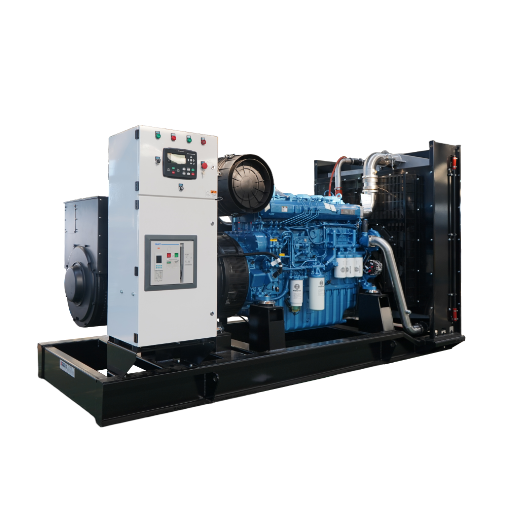
Both architectures do the same thing: move combustion heat out of the engine. They differ in what carries the heat away, and that difference drives everything else.
Air Cooling: Fins and a Fan
An air-cooled engine has metal fins cast onto the cylinder and head. A fan, usually driven off the crankshaft, pushes air across those fins, and the heat leaves with the air.
There is no coolant, no water pump, no radiator, no thermostat and no hoses. Fewer parts means fewer things to fail, freeze, leak or corrode. It also means the engine’s temperature is largely at the mercy of the air around it.
The practical ceiling is set by physics. Air carries heat away far less effectively than a liquid does, so once an engine produces heat faster than fins and airflow can shed it, temperature climbs with no regulator to intervene.
Liquid Cooling: Jacket, Pump and Radiator
A liquid-cooled engine circulates a coolant mix through passages cast into the block and head. The coolant absorbs heat, travels to a radiator, gives that heat up to moving air, and returns cooler.
A thermostat regulates the flow so the engine reaches and holds a narrow operating band regardless of load or ambient conditions. That control is the point. On Kohler’s account of remote cooling design, a large generator’s cooling system serves two circuits: the jacket water circuit (the engine block, high temperature) and the charge air circuit (air leaving the turbocharger, low temperature). Each rejects its own heat load separately.
Side by Side
| Air-cooled | Liquid-cooled | |
|---|---|---|
| Heat carrier | Air across fins | Coolant through a jacket |
| Moving parts | Fan | Pump, thermostat, fan |
| Temperature control | Limited | Regulated band |
| Typical duty | Light, intermittent | Continuous, heavy |
| Coolant to maintain | None | Yes |
| Freeze risk | None | Yes, without the right mix |
| Noise | Generally higher | Lower; radiator can be remote-mounted |
| Where it suits | Small portable and standby sets | Industrial diesel sets |
Which One Does Your Generator Have?
This is a live question on the search results and almost nobody answers it plainly. It takes under a minute.
Look for a radiator. A liquid-cooled set has a finned radiator, usually at one end, with a pressure cap on top and a coolant level marked on the side. An air-cooled set has fins directly on the engine and no separate radiator at all.
Look for coolant hoses. Rubber hoses running from the engine to a radiator mean liquid cooling. Air-cooled engines have no coolant hoses.
Check for a water pump and belt. A liquid-cooled engine drives a coolant pump, usually by belt from the crankshaft.
Look at the size. If the set is above roughly 25 kW, it is almost certainly liquid-cooled. This is a strong signal rather than a rule.
Knowing which you have matters before you order parts, before you service the set, and before you rely on it for a long outage. A spare-parts order placed against the wrong architecture wastes weeks.
Where the Air-Cooled vs Liquid-Cooled Generator Line Falls
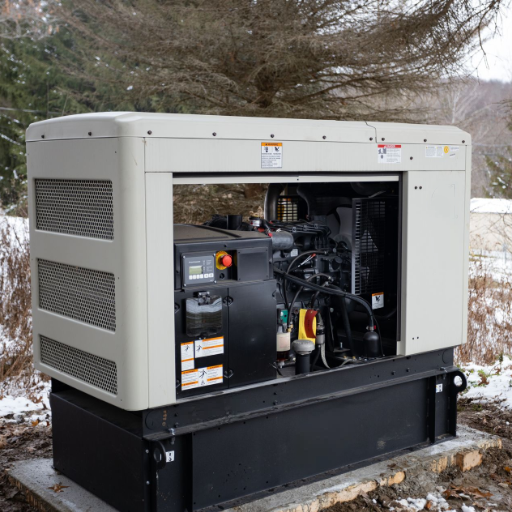
This is where most guides become confident and unreliable. The air-cooled vs liquid-cooled generator question is usually framed as a size threshold, and that framing is the source of the confusion.
Why Published Figures Disagree
Search the question and you will find at least three incompatible answers. One widely quoted source caps air cooling at around 22 kW. Another puts the air-cooled ceiling at 50–80 kW and sets its decision threshold at 100 kW. An engine manufacturer that builds air-cooled diesel engines, arguably the party with most reason to state a figure, declines to give one at all.
That is a five-fold spread, and none of the three cites a test, a standard, or a manufacturer limit. Two of the three do not name an author or a source.
Why the Numbers Cannot Agree
The discrepancy is not carelessness. There is no single crossover, because the boundary moves with three things:
- Duty cycle. A set that runs forty minutes a month sheds heat between runs. A set that runs eleven hours straight does not. The same engine survives one and derates on the other, which is exactly what happened to Brendan’s workshop.
- Ambient temperature. Air cooling relies on the temperature difference between the engine and the air. On a 45 °C site that gap narrows sharply, and a set that performs in a temperate climate falls short.
- Altitude. Thinner air carries less heat away. A site at 2,000 m has less cooling capacity than the same set at sea level, before the engine loses output of its own.
So the honest answer is that kilowatts alone do not determine this. A 20 kW set in continuous duty on a hot site needs liquid cooling. A 30 kW set in occasional standby in a cool climate can be air-cooled. Both statements are true, which is why the published figures contradict each other and why none of them can be adopted with confidence.
What Kilowatts Do Tell You
The kilowatt rating still matters, because the architecture choices narrow as size climbs.
Air-cooled diesel engines are built in small sizes. Yanmar’s air-cooled lineup, for instance, spans roughly 4.7 to 10 horsepower, with generator applications in the 5–20 hp range.
Above that, the market simply stops offering air-cooled diesel gensets. It is not that they become illegal or forbidden. They stop being made.
Performance Differences That Matter
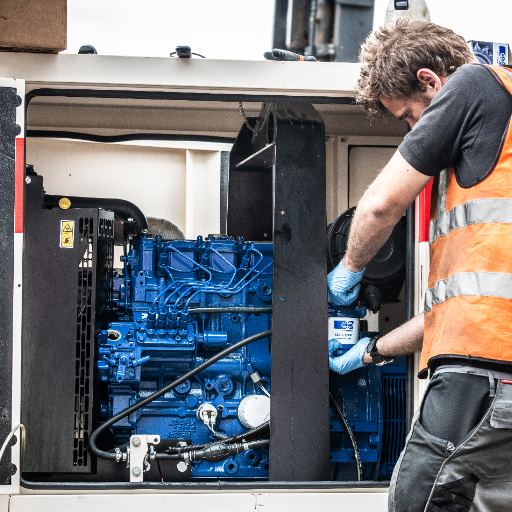
Continuous Load and Heat Soak
The clearest difference between the two is what happens under sustained load.
A liquid-cooled engine holds a narrow temperature band because the thermostat actively regulates flow. An air-cooled engine has no equivalent regulator: when load rises or ambient climbs, temperature follows. Under long continuous duty that shows up as heat soak, then derating, then shutdown. That is the mechanism behind most generator overheating on air-cooled sets.
If a set is expected to run for hours rather than minutes, liquid cooling is not a preference. It is a requirement.
Hot Climates and Altitude
Air cooling depends on the gap between engine temperature and air temperature. Anything that narrows that gap, high ambient, altitude, or a hot enclosure, reduces capacity.
Liquid cooling is not immune. Radiators are sized to a design ambient, and a set rated at 25 °C will not deliver the same output at 45 °C.
But liquid cooling gives the designer somewhere to put the problem: a larger radiator, a remote radiator, or a heat exchanger. Air cooling has no equivalent lever. Our guide to altitude and temperature derating covers the correction factors.
Noise
Air-cooled sets are generally noisier, because the cooling fan, the finned surfaces and the engine casing all radiate sound directly. Liquid cooling separates the noise source from the heat rejection: the radiator can be remote-mounted, which moves a significant part of the noise away from the set.
On a noise-sensitive site, that separation is often worth more than any other difference.
The Charge-Air Problem
One structural difference deserves its own note, because it explains why the two architectures stop competing.
A turbocharged diesel engine compresses its intake air, and compression heats it. That air has to be cooled before it enters the cylinders or the engine loses power and produces more emissions. There are two ways to do it: air-to-air, running intake air directly through the radiator, or water-to-air, using an integrated heat exchanger and a separate liquid circuit.
Both depend on a radiator package. An air-cooled engine has no such package to place, which is one of the reasons air cooling does not scale into the sizes where turbocharging becomes standard. The Kohler remote cooling note puts the charge-air temperature rise over ambient at typically around 20 °C and ties it directly to emissions certification, a control an air-cooled architecture cannot offer.
Air Cooling’s Genuine Advantages
It would be wrong to present this as one architecture being simply better. Air cooling has real strengths, and in the right application they win.
Cold, Altitude and Water Scarcity
An air-cooled engine has no coolant to freeze. That matters on a remote site where winter temperatures fall below −30 °C and a liquid system needs the right glycol concentration or the block cracks.
It also has no coolant to boil at altitude, and no water supply to find. On a dusty, water-scarce site where maintaining coolant quality is difficult, removing the coolant circuit removes a whole category of maintenance.
Simplicity and Maintenance
No pump, no thermostat, no radiator, no hoses, no coolant chemistry. On a small set in a remote location, that simplicity is worth a great deal, because every one of those parts is a failure point and a maintenance task.
Maintenance on an air-cooled set is largely cleaning and inspection. There is no coolant to test, no mix ratio to get right, and no risk of the wrong chemistry being added.
That does not make air-cooled maintenance-free. Fins still clog, and a clogged fin stack on an air-cooled engine has no radiator to clean instead. It is a smaller job, not no job.
Choosing an Air-Cooled or Liquid-Cooled Generator
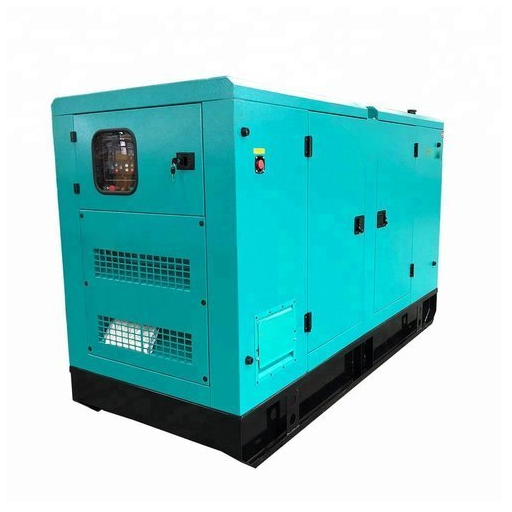
For industrial duty, the decision usually resolves itself quickly.
Petra specified backup power for a mine site and began with the kilowatt question. The load came to about 90 kW, which put her in the range where the published crossovers disagreed. What settled it was the duty: the set was expected to carry the site for up to twelve hours at a time in 40 °C summer heat with dust in the air.
At that duty and that ambient, air cooling was not a candidate, and the kilowatt figure had never been the deciding factor.
Four questions do the work:
- What is the longest continuous run? Hours, not minutes, is the threshold that decides this.
- What is the design ambient? A hot site narrows the gap air cooling depends on.
- What altitude? Both architectures lose capacity, but air cooling has less margin to lose.
- How remote is the site? Water scarcity and extreme cold can favour air cooling despite its limits.
If the answer to the first question is “hours at a time,” the architecture is already settled in favour of liquid cooling. If the site is a cold, remote, water-scarce location running a small set intermittently, air cooling earns its place.
Our generator sizing calculator covers the load side of the question, and the generator room ventilation guide covers the airflow a unit-mounted radiator needs from the space around it.
Frequently Asked Questions
What is the difference between an air-cooled vs liquid-cooled generator?
An air-cooled generator sheds engine heat through fins cast onto the cylinder and head, with a fan moving air across them. No coolant, pump, radiator or thermostat is involved. A water-cooled, or liquid-cooled, generator circulates coolant through passages in the engine to a radiator, with a thermostat regulating temperature.
How do I know if my generator is air-cooled or liquid-cooled?
Look for a radiator. If there is a finned radiator at one end of the set with a pressure cap and a coolant level mark, it is liquid-cooled. Coolant hoses running between the engine and a radiator confirm it. Air-cooled engines have fins directly on the engine and no separate radiator or coolant hoses.
At what size does a generator need to be liquid-cooled?
Published crossover points range from about 22 kW to 100 kW, and none is sourced. The practical answer depends on duty cycle and ambient temperature rather than kilowatts alone. As a guide, continuous duty in a hot climate needs liquid cooling at almost any size, while intermittent standby in a cool climate can remain air-cooled well above 25 kW.
Are Generac generators air-cooled or liquid-cooled?
Both. Generac builds air-cooled home standby units in the smaller sizes and liquid-cooled models in the larger ones. The same split applies across the industry: the smaller the set, the more likely it is air-cooled.
Why is liquid cooling used on large generators?
Because air cannot carry heat away fast enough under sustained load, and because a thermostat-regulated liquid circuit holds a narrow temperature band regardless of load or ambient. Liquid cooling also allows a charge-air cooler, remote mounting of the radiator, and quieter operation, none of which an air-cooled architecture can match.
Does a liquid-cooled generator need more maintenance?
It has more to maintain: coolant level and condition, the pump and belt, the radiator core and the pressure cap. An air-cooled set has none of those parts but still needs its fins cleaned. The trade is between more items to check and fewer ways to be surprised.
Conclusion
Air-cooled and liquid-cooled generators do the same job by different means, and the choice is far less about kilowatts than most pages suggest. The published crossover points disagree because duty cycle and environment outweigh size.
Five things are worth carrying into the decision:
- Treat the crossover as a range, not a number. Published figures run from 22 kW to 100 kW and none is sourced. Ask what duty and ambient your site actually has.
- Continuous duty decides it. If the set runs for hours rather than minutes, liquid cooling is the answer whatever the size.
- Air cooling wins in specific places: extreme cold, altitude, water scarcity, small intermittent duty. It deserves consideration there.
- Check what you already have before ordering parts. Look for the radiator and the coolant hoses.
- Above small sizes, the question is settled. Air-cooled diesel gensets are no longer manufactured, which ends the debate for industrial ratings.
Shandong Huali Electromechanical Co., Ltd. manufactures liquid-cooled diesel generator sets from 8 kVA to 4,000 kVA and supplies cooling systems, radiators, and remote cooling packages as integrated assemblies, with full OEM/ODM customization.
Have our engineers confirm the right cooling architecture for your site →
Send us your load, the longest run the set must cover, and your site’s ambient and altitude. We will confirm which architecture the duty requires and what it means for the set you order.
