
A remote radiator generator is a generator set whose radiator is mounted away from the engine and connected to it by pipework. It exists because some rooms cannot supply enough cooling air, and moving the radiator outside solves that. Two limits then govern the design: static head and dynamic head. Understanding the difference between them is what separates a working installation from one that fails quietly.
Every page on this subject tells you to check static head against “the engine’s allowance.” Almost none says what that limit is, or what happens when you cross it. That gap is worth closing, because the two limits have different fixes and only one of them can be solved with a pump.
Marek’s team installed a standby set in a plant room with no exterior wall. The design went in as a roof-mounted radiator, pipework was ordered, and the pressure calculation came last. The radiator sat four floors above the engine, and the static head at that height was well past anything the engine seals were designed to take.
The fix was not a bigger pump. It was a heat exchanger that separated the two loops entirely.
This guide covers what a remote radiator generator is, the two head limits that govern the design, how to size the pipework and expansion volume, what the cooling fan costs you, and when remote mounting is the wrong answer. Our generator cooling system guide covers the circuit itself.
Designing a remote cooling system? Send us your layout and elevation and our engineers will check the static and dynamic head against your engine’s limits before you order pipework.
Key Takeaways
- A remote radiator generator mounts the radiator away from the engine and connects it by pipework, used when the room cannot supply or remove cooling air.
- Static head is the pressure with no flow, set only by how much higher the radiator sits than the engine. Exceeding it causes gasket and seal failure.
- Dynamic head is the resistance while coolant flows. A booster pump fixes dynamic head. No pump can fix static head: the radiator must be isolated by a heat exchanger.
- A remote cooling system must serve both the jacket water circuit and the charge air circuit, and an air-to-air charge-air cooler is much harder to move off the engine than a water-to-air one.
- On a standby set, NFPA 110 requires the cooling fan to run on the emergency power source, so the fan’s load comes off your generator’s usable output.
What a Remote Radiator Generator Is
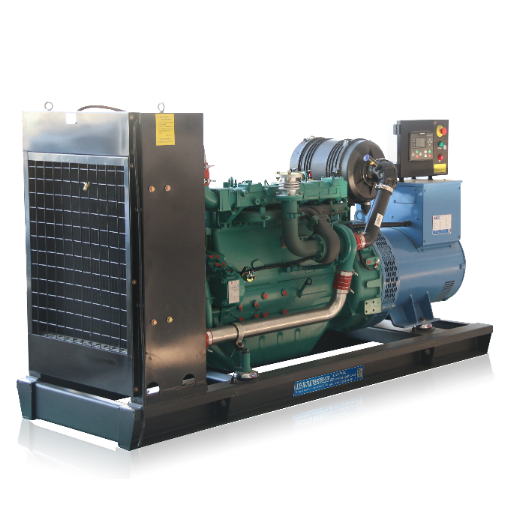
A remote radiator generator separates two things that are normally bolted together: the engine and the radiator that cools it. Coolant travels from the engine through supply and return pipework to a radiator mounted on a roof, a wall, or a plant deck, and back again.
Nothing about the engine changes. What changes is that the heat rejection now happens somewhere with air to spare.
Why the Radiator Leaves the Engine
Three situations push a radiator off the engine, and all three are about the room rather than the machine.
No exterior wall. A set in a basement has nowhere to discharge hot air. The radiator has to go where the air is.
Low headroom. A unit-mounted radiator needs vertical space above the engine for its own height plus airflow clearance. A plant room with restricted height cannot provide it.
Obstructed airflow. Something outside the room blocks the airflow, or the room cannot accommodate the volume the radiator needs. Our generator room ventilation guide covers how that volume is calculated, and the generator room size requirements resource covers the space side.
The Two Circuits a Remote System Must Serve
Here is a detail that catches people out, and it comes from Kohler’s engineering note on remote cooling design.
Large generators do not have one cooling circuit. They have two.
The jacket water circuit cools the engine block and the oil cooler and runs hot. The charge air circuit cools the air leaving the turbocharger and runs cooler. A remote cooling system has to serve both, and each rejects a different heat load.
That matters because the two circuits behave differently when they are moved. A water-to-air charge-air cooler uses an integrated heat exchanger and a separate liquid circuit, which relocates reasonably well. An air-to-air cooler runs intake air directly through the radiator, and moving it away from the engine means long, large-diameter charge-air piping. That causes pressure drops, increases turbo lag, and can reduce the set’s transient response.
The charge air also has to hold a temperature rise over ambient of typically around 20 °C, because the engine’s emissions certification depends on it. A remote design that lets charge air run hotter does not just cost power. It can push the engine outside its certified envelope.
Static Head and Dynamic Head
These two terms are used interchangeably in a lot of writing on this subject. They are not interchangeable, and confusing them leads to expensive mistakes.
Static Head: Height, Not Flow
Static head is the pressure that exists when no coolant is flowing at all.
It depends on exactly one thing: how much higher the radiator sits than the engine. If the radiator is four floors up, the column of coolant in the return pipe is pushing back on the system continuously, whether the engine is running or not.
Every engine has a static-head limit, set by the pressure its gaskets and seals are designed to contain. Exceeding that limit exposes them to more pressure than they were built for, and the failure is premature gasket and seal failure. It is a mechanical failure caused by height alone.
Dynamic Head: Resistance While Circulating
Dynamic head is the total resistance the coolant meets while it is moving.
Three things determine it: the coolant flow rate, the size of the pipe, and the pressure drop across the radiator itself. Longer pipe runs, more fittings, and smaller diameter all increase it.
You can reduce dynamic head by using a larger pipe. But the cost climbs quickly and the benefit shrinks, so there is a point where the pipework becomes more expensive than the problem it solves.
Why a Booster Pump Fixes One and Not the Other
This is the single most useful thing to take from this article.
| Limit exceeded | What a booster pump does | Correct fix |
|---|---|---|
| Dynamic head | Fixes it. The pump overcomes the additional flow resistance. | Add a booster pump |
| Static head | Nothing. The pressure exists with no flow, so a pump has nothing to push against. | Isolate the radiator with a heat exchanger |
A booster pump moves coolant. Static head is pressure with no coolant moving, so the pump is irrelevant to it. Specifying a pump against a static-head problem means the fault comes back, and the original diagnosis gets blamed instead.
The correct fix for excessive static head is to break the hydraulic connection between the engine and radiator. A heat exchanger does that: the engine coolant circulates in a closed primary loop, a second fluid carries heat to the remote radiator in a secondary loop, and the two never mix. The engine no longer sees the height of the radiator at all.
That arrangement also brings its own parts: an expansion or surge tank, vent lines, and a fill point at the lowest part of the engine.
Designing a Remote Cooling System
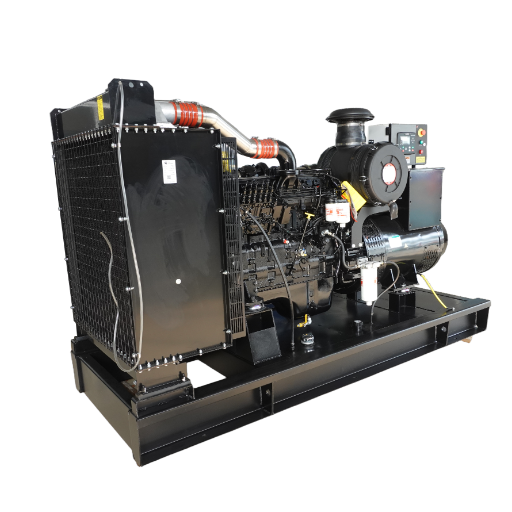
Once the head limits are settled, three design tasks remain.
Pipe Sizing and the Pressure-Drop Budget
Pipe diameter is chosen to keep dynamic head inside the engine’s allowance at the required flow rate. A smaller pipe is cheaper to buy and more expensive to live with, because the pump has to work harder and the engine sees more restriction.
Two practical notes. Flexible connectors at the engine absorb vibration and prevent it travelling down the pipework. And the circuit runs hot, one specialist puts it above 200 °F, so insulation is a design requirement, not a nicety, for both heat retention and personnel protection.
There is a parallel here worth borrowing from: our exhaust pipe sizing calculator runs the same logic for exhaust runs, where diameter is traded against back pressure. The principle is identical.
Expansion Volume and the Surge Tank
Coolant expands as it heats. A closed remote system needs somewhere for that expansion to go, and that is the surge or expansion tank’s entire job.
Size it too small and the system overflows every time it reaches operating temperature, the symptom is coolant loss with no leak and a puddle under the pressure cap.
Callum ran maintenance for a district heating plant and inherited a remote-cooled set that had “used a litre a week for three years.” Two contractors had looked for a leak. There was none. The surge tank had been sized by eye at installation, and the system was simply discharging its thermal expansion every cycle. A correctly sized tank ended a three-year mystery in one afternoon.
Radiator Placement and Spacing
The remote radiator needs air, and it needs to not be fed its own exhaust.
Placement rules worth following:
- Keep clear of hot-air recirculation. A radiator discharging into a corner or against a wall draws its own heated air back in and loses capacity.
- Allow separation between units. Where several radiators share a deck, one specialist recommends spacing them at 1.5 times the fan diameter apart: three 6-foot fans need about 9 feet between them.
- Keep the air path clear. The same source cites a maximum external static restriction of 0.50 inches of water for skid-mounted cooling packages, which is the resistance the fan can work against.
Fan Power and the Standby Power Trap
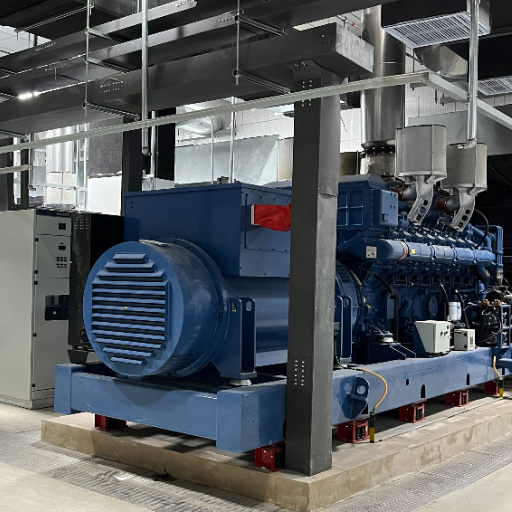
The fan is the part of a remote radiator that people forget to count.
What the Fan Draws
A remote radiator’s fan is driven by an electric motor rather than off the engine. On a large set that motor can draw tens of kilowatts, and it is a continuous load for as long as the set runs.
Because the fan is electric rather than engine-driven, the engine’s parasitic load goes down when the radiator moves off it. That looks like free capacity. It is not, for a reason worth stating clearly.
NFPA 110 and the Emergency Source
NFPA 110 requires cooling system fans to be powered by the emergency power source.
On a standby set, that means the remote radiator’s fan must run off the generator it is cooling. So the capacity that removing the engine-driven fan appeared to free up is largely consumed by the replacement fan. The set’s usable output is often very close to what it was with the radiator mounted on the engine.
Ifeoma found the harder version of this. A remote radiator on a hospital set was wired to the building’s normal supply rather than the generator’s output. Everything passed commissioning, because commissioning happened on mains power.
When a utility outage finally came, the generator started and ran correctly, and the radiator fan did not start at all. The set reached shutdown temperature in under nine minutes.
The wiring was a single-line change. Finding it took an outage and an investigation.
Sizing a Remote Radiator Generator
If you are specifying a remote cooling system, the quality of the result depends on what you give the supplier. Two lists matter.
What to provide:
- Engine heat rejection to coolant, and the coolant flow rate
- Site design ambient temperature and altitude
- Required pipe run: horizontal distance and, critically, vertical separation between engine and radiator
- Radiator location, orientation and available airflow
- The duty: standby, prime, or continuous
- Whether the charge-air cooler is air-to-air or water-to-air
What to ask for back:
- The calculated static head, and confirmation it is within the engine’s limit
- The calculated dynamic head, and the pipe diameter it assumes
- Fan motor power and starting current
- Expansion tank volume and its basis
- Whether the design needs a booster pump, a heat exchanger, or neither
The vertical separation figure is the one that gets omitted most often, and it is the one that determines whether the design is feasible at all. A supplier who quotes a remote radiator package without asking for it has not designed the system.
When Not to Remote-Mount
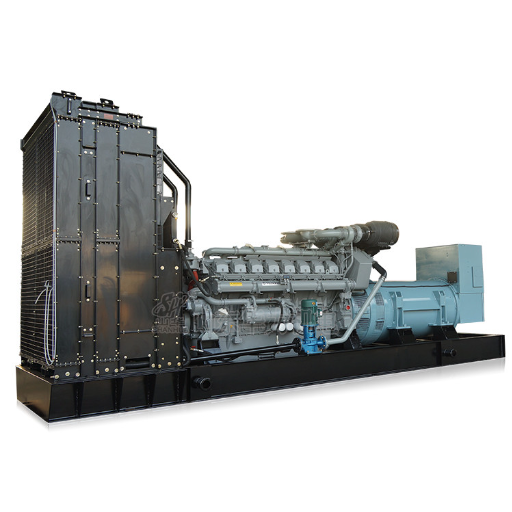
Remote mounting is more complex and more expensive than leaving the radiator on the engine, and it adds pipework, an electric fan, and usually an expansion tank. It is the right answer when the room forces it, and the wrong answer otherwise.
If the room can supply and remove the required airflow, keep the radiator on the set. A unit-mounted radiator has no static head, no interconnecting pipework, no separate fan to power, and no charge-air relocation problem.
Our generator radiator guide covers sizing, cleaning and maintenance for the integral case, and the generator coolant article covers the fluid that both arrangements depend on.
The genuine advantages of going remote are real, and worth restating. Siting freedom for the set itself. A cooler plant room, because the heat is rejected somewhere else.
Lower noise at the set, since the fan and the radiator are no longer bolted to the engine. And for a noise-sensitive building, that last one is often the deciding factor rather than airflow.
Frequently Asked Questions
What is a remote radiator generator?
A remote radiator generator is a generator set whose radiator is mounted separately from the engine and connected by coolant pipework. It is used when the generator room cannot supply or discharge the cooling airflow a unit-mounted radiator needs, such as in a basement, a low-headroom plant room, or a space with obstructed airflow.
What is static head in a generator cooling system?
Static head is the pressure in a cooling system when no coolant is flowing. It is determined entirely by how much higher the radiator sits than the engine. Every engine has a static head limit, and exceeding it exposes gaskets and seals to more pressure than they were designed for, causing premature failure.
Can a booster pump fix static head problems?
No. A booster pump adds flow, and static head is pressure that exists with no flow at all. A pump cannot correct it. If static head is exceeded, the radiator must be isolated from the engine with a heat exchanger, which breaks the hydraulic connection so the engine never sees the radiator’s height.
How far can a remote radiator be from a generator?
There is no single distance. Two limits apply: dynamic head, which depends on pipe length, diameter and fittings, and static head, which depends on vertical height only. A radiator can sit a long way away horizontally if the pipe is sized correctly, but the vertical separation is bounded by the engine’s static head limit regardless of pipe size.
Why does a remote radiator fan need to run on the generator?
Because NFPA 110 requires cooling system fans to be powered by the emergency power source. On a standby set that means the remote radiator’s fan must run off the generator it cools, otherwise the set will overheat during the outage it exists to cover. It also means the fan’s load is not free capacity.
Is a remote radiator better than an integral radiator?
Not in itself. A remote radiator adds pipework, an electric fan, an expansion tank and two design limits that an integral radiator does not have. It is the better answer when the room cannot supply the airflow, or when noise at the set needs to be reduced. Where an integral radiator will work, it is simpler and cheaper.
Conclusion
A remote radiator generator solves a room problem by moving heat rejection away from the engine, and it introduces two design limits in exchange. Both are manageable, but only if you know which one you are dealing with.
Five points are worth carrying into the design:
- Start with the vertical separation. Static head depends on height alone, and it decides whether the layout is feasible before pipe sizing matters.
- A pump fixes dynamic head and never static head. If the engine’s static limit is exceeded, the answer is a heat exchanger, not a bigger booster.
- Count the fan. On a standby set, NFPA 110 requires it on the emergency source, so its load comes off your usable output.
- Serve both circuits. The jacket water and charge air circuits reject different loads, and an air-to-air cooler is hard to relocate.
- Keep the radiator on the engine where you can. Remote mounting is the right answer to a room constraint, not a default.
Shandong Huali Electromechanical Co., Ltd. manufactures diesel generator sets from 8 kVA to 4,000 kVA and supplies remote cooling packages, radiators and heat exchangers as integrated assemblies, with full OEM/ODM customization.
Have our engineers check your remote cooling design →
Send us the engine model, the intended radiator location, and the vertical separation between the two. We will confirm the static and dynamic head against your engine’s limits and tell you whether the design needs a booster pump, a heat exchanger, or neither.
