
A generator winding is the set of insulated copper coils seated in the stator slots that converts rotating magnetic flux into voltage. Its pitch, normally two-thirds or five-sixths of a pole, decides which harmonic frequencies the machine generates and whether two generators can safely share a neutral.
Here is the part that surprises people: neither pitch is better. The one you need is decided by your distribution system, not by the machine.
Pitch sounds like a drawing detail that should never reach a buying decision. Then you parallel a new set with an existing one, or you earth a neutral. At that point it decides whether the job works.
By the end you will know which pitch your system calls for and what to ask a supplier who does not publish the figure. We build sets from 8 kVA to 4,000 kVA and use Wuxi Stamford alternators on our large frames, so the winding is a component we specify rather than a black box we resell.
Key Takeaways
- Two-thirds pitch cancels the 3rd harmonic completely but leaves the 5th and 7th at 86.6% of full value.
- Five-sixths pitch cuts the 5th and 7th to 25.9% but keeps 70.7% of the 3rd harmonic.
- On any three-phase four-wire system with a distributed neutral, use 2/3 pitch. Cummins recommends it for every four-wire system because it suppresses third-harmonic neutral current.
- Alternators with different pitches can be paralleled, but the neutrals must not be tied together without mitigation.
- Two machines can publish the same THD percentage and still have completely different harmonic spectra.
What Is a Generator Winding?
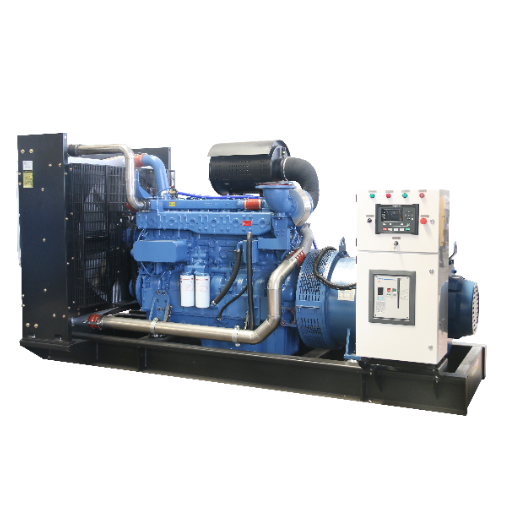
A generator winding is the assembly of insulated copper coils that carries current in a generator. In an alternator the armature winding sits in the stator slots and delivers the output. The field winding on the rotor carries direct current and creates the magnetic field the armature cuts.
That definition covers both halves. Both behave very differently.
Stator and rotor windings do different jobs
The stator winding is the armature. It sees the full load current at line voltage and determines the machine’s kVA rating. This is the winding people mean when they talk about a generator coil winding in the abstract.
The rotor winding is the field. It carries a much smaller direct current, through slip rings on older machines or a brushless exciter on modern ones. Its job is to set the flux level that the voltage regulator controls.
Note the inversion. In a DC machine the field sits on the stator. In an alternator the field rotates and the armature is stationary. That is why an alternator can be built at megawatt scale without a commutator.
When someone refers to an alternator winding, they almost always mean the stator side.
Coil, turn, conductor, slot: the vocabulary
Four words get used interchangeably and mean different things on a drawing.
A conductor is one insulated strand of copper. A turn is one complete loop. A coil is several turns wound and taped as a unit. A slot is the groove in the laminated core that holds it.
A coil spans a number of slots, and that span is the pitch.
Why the winding, not the engine, caps the kVA rating
Customers often assume the engine decides how much power a set can deliver. At the top end it does not. The winding does, because the winding is what overheats.
Insulation class sets that limit. Class B is rated to 130 °C, Class F to 155 °C and Class H to 180 °C, with typical temperature rises of 80, 105 and 125 °C. Our large-frame sets use Class H, and our guide to alternator specifications covers the classes in full.
That is also why sets are rated in kVA rather than kW, since the winding carries reactive current as well as real. Our explanation of kVA vs kW walks through the arithmetic.
Generator Winding Pitch: 2/3 vs 5/6
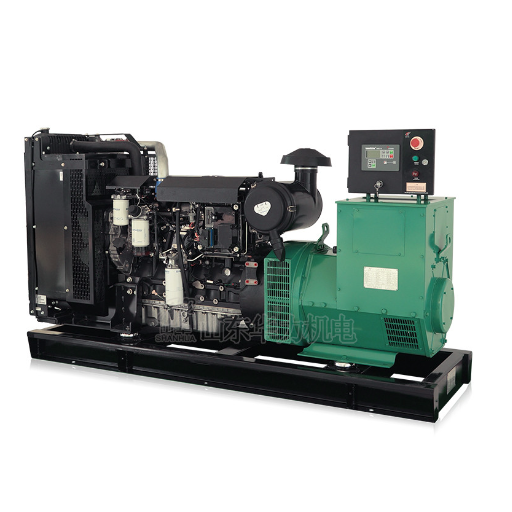
Pitch is the most consequential choice in the winding, and it is almost never discussed in a sales conversation.
What pitch actually measures
Take the arc between two adjacent pole centres and call it pole pitch. A full-pitch coil spans that arc. A short-pitched coil spans a fraction of it, and that fraction is the pitch.
Two-thirds pitch means each coil spans two-thirds of a pole. Five-sixths pitch means five-sixths. Both are deliberate. Winding a coil short of full pitch costs a little fundamental voltage and suppresses specific harmonics in exchange.
The arithmetic comes from one formula. The pitch factor for harmonic number n is kp = sin(n × α / 2), where α is the coil span in electrical degrees. Full pitch is α = 180°, 2/3 pitch is α = 120° and 5/6 pitch is α = 150°. The table below is the result, and it matches Cummins’ published Table 1 to two decimals.
| Harmonic | Full pitch | 2/3 pitch | 5/6 pitch |
|---|---|---|---|
| Fundamental (1st) | 1.000 | 0.866 | 0.966 |
| 3rd | 1.000 | 0.000 | 0.707 |
| 5th | 1.000 | 0.866 | 0.259 |
| 7th | 1.000 | 0.866 | 0.259 |
| 9th | 1.000 | 0.000 | 0.707 |
2/3 pitch and the triplen harmonics
Read the 2/3 column down. The 3rd and 9th harmonics go to zero, and so does every other multiple of three. These are the triplen harmonics, and at 2/3 pitch the machine cannot generate them at all.
The alternator produces no third-harmonic voltage, so there is nothing to drive current around a neutral circuit. This is why the pitch matters on earthed systems.
The fundamental drops to 86.6%, so a 2/3-pitch machine needs slightly more steel and copper for the same kVA. It also leaves the 5th and 7th at 86.6%, essentially untouched.
5/6 pitch and the 5th and 7th
Now read the 5/6 column. The 5th and 7th fall to 25.9%, roughly a three-quarter reduction. The fundamental holds at 96.6%, so output per frame is better than 2/3 pitch.
The trade is visible two rows up. The 3rd harmonic stays at 70.7%, and so does the 9th. A 5/6-pitch machine still generates triplen voltage.
If your system has a neutral, 5/6 pitch hands you a third-harmonic source you did not ask for.
Why two machines can post the same THD
Total harmonic distortion is one number, and one number cannot describe a spectrum. Stamford’s engineering note on 2/3 and 5/6 pitch makes the point directly. A well-designed machine can show similar THD on either pitch while the harmonics inside that number are completely different.
Two alternators can both publish 5% THD. One has its energy in the 5th and 7th; the other has it in the 3rd and 9th. On a three-wire system they behave almost identically. On a four-wire system the second one puts current in your neutral.
So do not buy on THD alone. Ask which harmonics make up the figure.
Neutral Current: The Consequence Buyers Miss
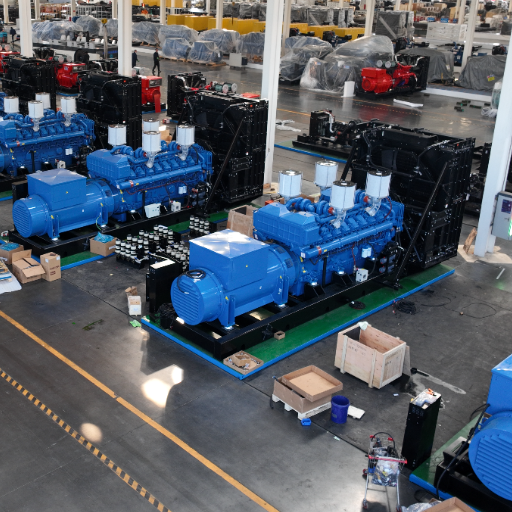
This is where pitch stops being an academic question and starts costing money.
How third-harmonic current reaches the neutral
In a balanced three-phase system, the fundamental currents are 120° apart and cancel in the neutral. The neutral carries nothing.
Triplen harmonics do not behave that way. The third harmonic in each phase is in phase with the third harmonic in the other two. The three add arithmetically instead of cancelling, and in a four-wire system that sum returns along the neutral.
A 5/6-pitch alternator generates that third harmonic at 70.7% of the full-pitch value. When the star point is earthed and a neutral is distributed, the harmonic voltage drives a zero-sequence current around the loop formed by the three phase windings and the neutral.
Nothing controls it. The governor does not see it, and the voltage regulator does not correct it. It simply flows at three times line frequency, heating the neutral conductor and the winding.
A 2/3-pitch machine cannot generate the third harmonic at all, so there is no source to drive that loop. The problem does not need managing because it does not exist.
The four-wire rule
Cummins states the rule plainly in its power topic on alternator winding pitch: 2/3 pitch is recommended for all four-wire systems, and 5/6 pitch is acceptable where there is no neutral.
The reasoning matches the mechanism above. Any distribution that carries a neutral gives the third harmonic somewhere to go. Getting this wrong produces neutral overheating, nuisance trips on neutral or earth-fault protection, and regulator instability that is very hard to diagnose. Nothing looks wrong at the generator terminals.
If your installation distributes a neutral, our guide to generator grounding requirements covers how the star point should be earthed and what that decision changes.
Where 5/6 pitch is the right answer
Five-sixths pitch is not a compromise. On the right system it is the better machine. Where there is no neutral to return on, the third harmonic has nowhere to circulate, and the 5/6 advantage in the 5th and 7th comes free.
That covers three-wire delta distribution and most medium and high-voltage installations, where the neutral is absent or handled by a transformer.
Paralleling Generators With Different Winding Pitch
Now the case that catches people out, usually months after commissioning.
What happens when star points are joined
Put two generators in parallel and tie their neutrals together, as most common-neutral schemes do. If both machines have the same pitch, their third-harmonic voltages match and nothing flows.
If the pitches differ, one machine generates a third-harmonic voltage at 70.7% and the other generates none. That difference drives a circulating third-harmonic current between the two alternators through the interconnected neutrals.
Nobody designed this current. It flows whenever both sets are running, at three times line frequency, and it appears in the neutral busbar and in both windings.
Zero-sequence reactance and single-phase fault current
Two-thirds pitch lowers the zero-sequence reactance of the machine. That is precisely why it suppresses neutral circulating current so effectively. However, the same property raises the line-to-neutral fault current, because the machine drives more current into a single-phase fault than a 5/6-pitch equivalent would.
So a 2/3-pitch set gives you a clean neutral and a higher single-phase fault level. Both matter for protection settings. Our guide to generator short circuit protection explains why the main breaker alone rarely covers this, and the study should be run against the actual winding configuration rather than assumed.
How to mitigate it, and when not to try
Cummins notes that different pitches can be paralleled if neutral circulating current is mitigated. That word is doing a lot of work. Mitigation means one of four things:
- Do not interconnect the neutrals. Give each set its own neutral and earth at a single point. This is the cleanest answer and the one most often overlooked.
- Specify one pitch across the fleet. If you are buying the second set, match what you already own.
- Insert a transformer. An earthing or zig-zag transformer gives the third harmonic a path that is not the machine winding.
- Derate. Accept the circulating current and size the neutral and winding to carry it.
Do not assume the paralleling switchgear will handle it. Synchronising relays match voltage, frequency and phase angle. They cannot see a third-harmonic current circulating through a neutral they are not measuring.
If you are weighing one large unit against several smaller ones, our comparison of one large generator vs parallel generators covers the redundancy argument. Add this harmonic question to that decision, because it only exists in the parallel case.
If you are adding a set to an existing plant, send us the alternator details of the machine already installed. We will tell you whether the windings will sit together before you order, not after commissioning.
Reading Generator Winding Data Off a Datasheet
What a good datasheet states
A usable alternator datasheet covers five things about the winding:
- Insulation class and temperature rise, for example Class H at 125 °C rise.
- Pitch, as a fraction such as 2/3 or 5/6.
- Conductor material, copper or aluminium.
- Number of leads, which tells you whether the machine is reconnectable.
- Rated voltage and connection, three-phase four-wire or three-wire.
Three of those five appear on most datasheets. Pitch often does not.
When the pitch is missing
Pitch belongs to the alternator rather than the generator set. As a result it is frequently lost between the alternator maker’s drawing and the set maker’s brochure. Ask for it in writing and put it in the purchase order.
This matters more than it sounds. A buyer comparing quotes weighs kVA, engine brand, enclosure and price, because those are the numbers in front of them. Pitch is the one that decides whether the winning quote can be paralleled with the set already on site.
One project engineer we worked with shortlisted two 1,000 kVA sets in the same week. The cheaper quote listed a 5/6-pitch alternator; the other listed 2/3. The plant distributed a neutral to single-phase loads. At face value the machines were interchangeable, and the difference appeared nowhere on the comparison sheet.
Ask early. The answer is free before the order and expensive afterwards.
When a Generator Winding Fails: Rewind or Replace
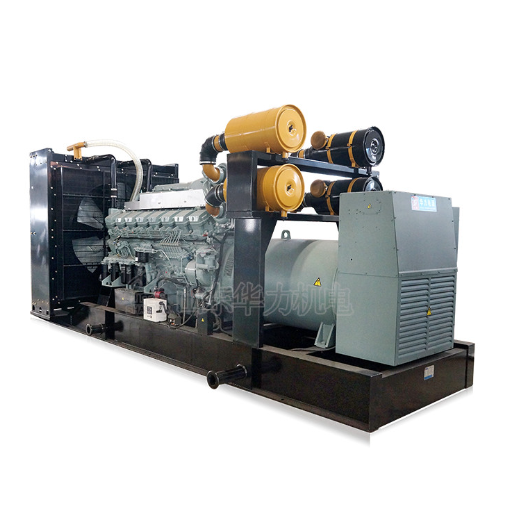
How windings fail
Most failures are thermal before they are electrical. Insulation ages faster when the machine runs above its class temperature, and the ageing accelerates with every 10 °C. Class H insulation rated to 180 °C lasts a long time at 160 °C and much less at 180 °C.
There are four mechanisms. Turn-to-turn shorts occur where insulation between adjacent turns breaks down. Contamination arrives as moisture, oil mist or conductive dust.
End-winding movement happens when vibration chafes the coil ends. Overcurrent damage follows a single-phase fault or a sustained overload.
A generator rewinding is only one possible response, and it is not always the right one.
The economics of rewinding
A rewind makes sense when the core and frame are sound. The laminations, shaft and housing are most of an alternator’s cost, so replacing the copper is a fraction of a new machine.
Replacement wins when the core is damaged, when the cause will recur, or when the frame is old enough that the rewound winding sits inside a machine with no spare parts for anything else.
Ken, a maintenance manager at a cold store, faced this after a stator winding burnt out eight days before peak season. The rewind quote was about a third of a new alternator, with a four-week lead time. The replacement was in stock in ten days. The rewind was the better engineering answer and the wrong commercial one, because four weeks of lost storage capacity cost more than the machine.
If your alternator has failed, send us the nameplate details and a photograph of the damage. We will tell you honestly whether a rewind is worth doing.
Frequently Asked Questions
What is the winding of a generator?
A generator winding is the set of insulated copper coils that carries current inside the machine. In an alternator, the stator winding is the armature that delivers output power, while the rotor winding is the field that creates the magnetic flux.
What is the difference between a coil and a winding?
A coil is one wound unit of several turns. A winding is the complete set of coils connected to form a phase, and three windings make a three-phase armature.
Is 2/3 or 5/6 pitch better?
Neither, in general. Use 2/3 pitch whenever the system distributes a neutral, because it eliminates the third harmonic that would otherwise circulate there. Use 5/6 where there is no neutral, including most medium and high-voltage systems, because it reduces the 5th and 7th without creating a neutral current problem.
Can you parallel generators with different winding pitch?
Yes, but not with the neutrals simply tied together. Different pitches generate different third-harmonic voltages, which drive a circulating current through interconnected neutrals. Keep the neutrals separate, specify matching pitch, or insert an earthing transformer.
Is copper or aluminum better for generator windings?
Copper conducts better and needs less slot space, so a given frame reaches a higher rating with copper. Aluminium costs less and weighs less, and is used where those matter more than output per frame. We cover it in detail in our guide to copper vs aluminum generator windings.
How long does a generator winding last?
It depends almost entirely on operating temperature. A Class H winding run well below its 180 °C limit can last decades. The same winding run near the limit will fail far sooner.
Conclusion
Generator winding pitch is a small design decision with three large consequences, and only one of them is visible on a datasheet.
Four things are worth carrying into your next specification:
- Two-thirds pitch eliminates the triplen harmonics, which makes it the correct choice on any system with a distributed neutral.
- Five-sixths pitch reduces the 5th and 7th and is the better machine where no neutral exists, including most MV and HV work.
- THD alone is not a specification. Two machines at the same THD can have completely different spectra.
- Paralleling different pitches is possible, but the neutrals must not be commoned without mitigation.
Ask for the pitch in writing, and put it on the purchase order before price decides the order for you.
Our sets run from 8 kVA to 4,000 kVA with Class H insulation and Stamford alternators on the large frames. If you are specifying a generator winding for a system with a neutral, our 1001 kW and up range lists the frames, or you can send your single-line diagram to our engineers for a configuration that matches it.
