
Paralleling multiple smaller generators wins on redundancy, scalability, and low-load efficiency, while a single large generator wins on upfront cost, footprint, and simplicity. The break point is usually around 3,000 to 4,000 kVA, and it shifts depending on how critical your load is.
Here’s the problem most buyers hit. Two facilities need the same 1,600 kW of standby power. One buys a single 2,000 kVA unit. The other buys four 500 kVA units running in parallel. Both systems work perfectly on day one. The difference only shows up later, on maintenance day or the first time a unit fails.
You probably already sense that redundancy is valuable. What you may not know is exactly how much reliability, cost, and complexity separate the two choices. This guide gives you the real numbers, the failure modes each option hides, and a decision framework you can apply to your own load profile.
Key Takeaways
- A single generator offers roughly 98–99% reliability; an N+1 paralleled system reaches 99.96–99.99%, and N+2 reaches 99.999% or higher.
- Paralleling costs 19–23% more upfront than a single unit, and 45–49% more once you add N+1 redundancy.
- Over 20 years, a paralleled system runs 25–35% higher in lifecycle cost, or 40–55% higher with N+1.
- Paralleling lets you shut down idle units so the active ones run in the efficient 60–80% load band instead of wet stacking below 30%.
- Shandong Huali supplies both architectures from one factory: a single large unit or a matched paralleled package, from 8 kVA to 4,000 kVA.
What Does “Paralleling Generators” Actually Mean?
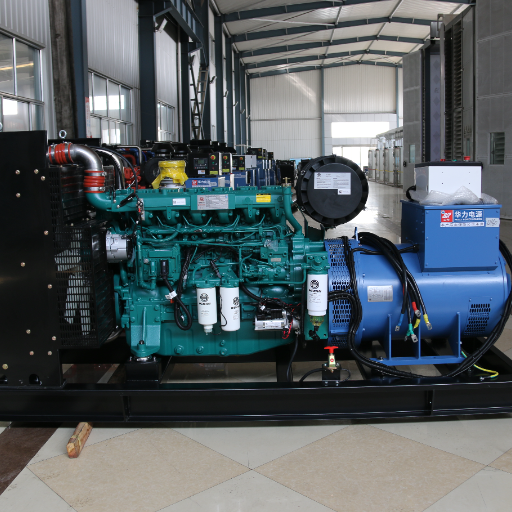
Before weighing one large generator vs parallel generators, you need to understand what paralleling actually involves, because the complexity is real and it’s the main reason paralleling costs more.
Single Large Generator Architecture
A single large generator is the simpler design. One engine, one alternator, one set of cables to the transfer switch. When the utility fails, the generator starts, reaches speed, and the automatic transfer switch (ATS) moves the load onto it.
There is less equipment to install and less to fail. The trade-off is that all of your eggs sit in one basket. If that one unit is down for service or fails to start, your critical load has no backup.
Paralleled Generator Architecture
Paralleled generators are two or more units connected to a common bus, feeding the load together. Each generator must be synchronized so that its voltage, frequency, phase angle, and phase sequence match those of the others before its breaker closes.
Once online, the units share the load through their governors and automatic voltage regulators (AVRs). Active power (kW) sharing is handled by speed droop, and reactive power (kVAR) sharing by voltage droop. A master controller, from brands like Deep Sea, ComAp, or DEIF, manages the whole sequence automatically.
This is where the cost and complexity come from. Paralleling requires additional switchgear, synchronizing controls, and protection relays that a single unit simply does not need. But it also buys you the ability to run only the generators you need, service one while others carry the load, and add capacity in steps.
Reliability and Redundancy: The Core Difference
If you strip away cost and complexity, the one large generator vs parallel generators decision comes down to a single question: what happens when one generator is unavailable?
A Single Unit Is a Single Point of Failure
A single generator has an accepted industry reliability of roughly 98–99%. That sounds high until you realize what it means in practice. A 98% reliable unit is unavailable for about 175 hours a year, almost all of it during planned maintenance rather than random failure.
The catch is that those 175 hours are not optional. You have to service the engine, change the oil, and inspect the alternator. With a single unit, every one of those maintenance windows leaves your critical load completely unprotected. You are betting that no outage happens while the machine is down.
N+1 and N+2 Paralleled Configurations
Paralleling changes the math entirely. In an N+1 configuration, you install one more generator than the load actually requires. If one unit fails or is taken offline, the remaining N units still carry the full load.
The reliability jump is dramatic. According to Kohler’s paralleling whitepaper, an N+1 paralleled system reaches roughly 99.96–99.99% availability, and N+2 pushes toward 99.999% or higher. That is the difference between minutes of exposure per year and seconds.
Amara, the facilities director at a 400-bed hospital in Lagos, learned this the hard way. Her facility ran on a single 1,500 kVA unit. Every six months, the entire hospital had to schedule backup around a four-hour service window. During one of those windows, a grid outage left the ICU on temporary mobile power for 40 tense minutes.
She upgraded to three 800 kVA units in an N+1 arrangement. Now one generator is serviced during normal hours while the other two carry the hospital without interruption. The upfront cost was higher, but for a critical facility the alternative was never acceptable.
The reliability advantage is not just theoretical. Consulting-Specifying Engineer notes that paralleling’s main reliability risk is the common bus or control cabinet itself, and that redundant controllers and hardwired backup logic can mitigate that single point of failure.
Cost: Upfront vs Lifecycle
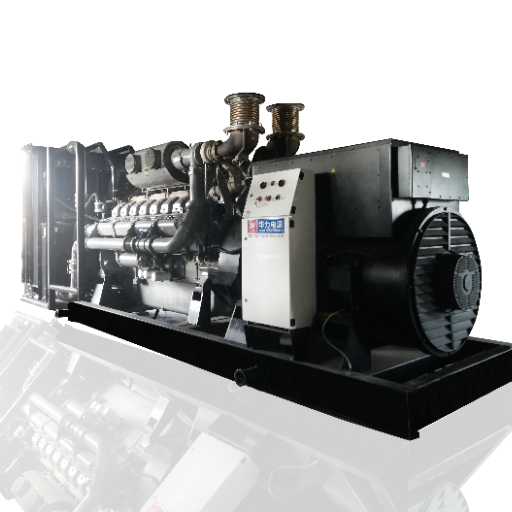
Cost is where the single large generator wins, and the numbers are worth understanding precisely so you can weigh them against the reliability gain.
Upfront Cost
Paralleling is genuinely more expensive to buy. For the same total capacity, a paralleled system costs roughly 19–23% more than a single generator, and that premium jumps to 45–49% once you add N+1 redundancy. The extra money goes to switchgear, synchronizing controllers, extra foundations, additional fuel and exhaust connections, and more control wiring.
However, there is a counterintuitive detail here: the cost per kilowatt is not fixed. A 600-kilowatt generator costs approximately $200 per kilowatt, whereas a 3-megawatt generator costs closer to $400 per kilowatt. Although smaller units have a lower cost per kilowatt, you need to deploy more of them, and each unit adds corresponding maintenance points and connection interfaces.
| Factor | Single Large Generator | Paralleled Generators |
|---|---|---|
| Reliability | 98–99% | 99.96–99.99% (N+1) |
| Upfront cost | Baseline | +19–23% (or +45–49% with N+1) |
| Lifecycle cost (20 yr) | Baseline | +25–35% (or +40–55% with N+1) |
| Footprint | Smaller | Larger |
| Maintenance access | Requires shutdown | Service one unit, load stays live |
| Scalability | Replace or overbuild | Add units in steps |
| Complexity | Simple | Switchgear + synchronization |
Lifecycle Cost
The premium does not stop at purchase. Over 20 years, a paralleled system costs 25–35% more to own than a single generator, or 40–55% more with N+1 redundancy. The drivers are more oil changes, more filters, more batteries, and more testing across multiple machines. Three smaller units can carry more than double the annual maintenance cost of one large unit with the same total capacity.
Daniel manages a colocation facility in Singapore and faced exactly this tradeoff. His load was projected to double over five years, but he did not want to buy day-one capacity that he would not use for years. He chose four 500 kVA units running in parallel instead of a single 2,000 kVA unit.
The paralleled system costs about 22% more upfront, but it adds capacity in 500 kVA steps as tenants sign on. No single maintenance event ever takes his facility dark. He accepted the higher lifecycle cost as the price of not overbuilding on a guess.
Efficiency and Load Matching: The Underloading Trap
Cost is not the only number that matters. How efficiently the generator burns fuel at your actual load profile often decides whether a single large generator is even the right tool.
The Optimal Load Band and Wet Stacking
Diesel generators run most efficiently between 60% and 80% of their rated load. Below that band, fuel efficiency falls off. Below roughly 30% load, a diesel engine can start to “wet stack,” where unburned fuel and carbon build up in the exhaust and on the valves. Left alone, wet stacking fouls the engine, reduces performance, and shortens its life.
This is the hidden failure mode of the single large generator. Buy a 2,000 kVA unit because that is your worst-case peak, and if your typical load is only 400 kVA, the machine idles at 20% most of the time. You paid for capacity you rarely use and then punish the engine for not being loaded.
Paralleling Lets You Shut Down Idle Units
A paralleled system solves this directly. With four 500 kVA units, you run two at 80% load during normal operation and shut the other two down. The active units stay in their efficient band, fuel burn per kilowatt-hour improves, and the idle units avoid wet stacking entirely.
Marta, a plant engineer at a textile factory in Guadalajara, saw this play out in real numbers. Her factory ran a single 1,800 kVA standby unit that loaded to only 25% during off-peak shifts. Within two years the exhaust showed heavy carbon deposits and the maintenance team was fighting wet stacking.
She switched to three 800 kVA units. Now the plant runs one or two units in the 70% band and shuts down the rest, cutting off-peak fuel consumption noticeably and eliminating the wet-stacking problem altogether.
This is why the one large generator vs parallel generators question is not just about upfront price. A single unit sized for peak demand often costs more to operate over time than a paralleled system matched to your real, day-to-day load.
Footprint, Installation, and Maintenance
Beyond cost and efficiency, the two architectures differ in how much space they take and how they are maintained.
Single Large Unit: Fewer Engines, Simpler Switchgear
A single large generator has a smaller overall footprint for a given capacity. In one 10 MW comparison, using 3.5 MW units required two fewer generators and about 1,500 fewer square feet than using 2.0 MW units for the same total output. Fewer engines also mean less paralleling switchgear, fewer controllers, and fewer points of failure.
The tradeoff is maintenance access. Because the unit cannot be taken offline without dropping your backup, you must schedule maintenance around the load, and you cannot service the machine during an extended outage.
Paralleled System: More Units, More Service Points, No Full Shutdown
A paralleled system spreads the same capacity across more machines, so it needs more floor space, more foundations, more exhaust and fuel connections, and more control wiring. Every additional unit is another oil change, another battery, and another set of filters.
But the maintenance story flips in its favor. Because any one unit can be isolated and serviced while the others carry the load, maintenance happens during normal business hours, not in a critical outage window. For facilities that can never go dark, this single advantage often justifies the extra cost on its own.
When Does Paralleling Make Sense? A Decision Framework
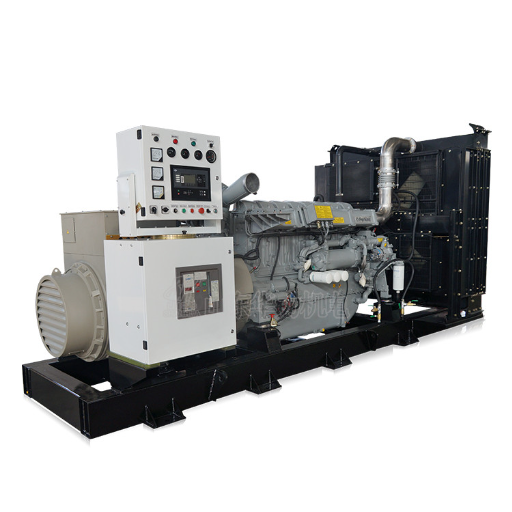
Paralleling is not automatically better. Below a certain size, it is overkill. Here is how to know where your project falls.
The Roughly 3,000–4,000 kVA Threshold
For smaller standby systems, a single generator with multiple transfer switches is often simpler and cheaper than a full paralleling installation. Paralleling becomes more attractive as total load grows, with most engineering guidance placing the crossover at roughly 3,000 to 4,000 kVA. Below that, the cost and complexity of synchronizing multiple units are hard to justify unless redundancy is mandatory.
Application-by-Application Guidance
- Data centers and hyperscale facilities often favor larger single units to simplify deployment and reduce footprint, but they almost always layer in N+1 redundancy, which pulls them back toward paralleling.
- Hospitals and regulated environments typically choose multiple smaller parallel units because regulatory compliance and maintenance without shutdown are non-negotiable.
- Municipal and commercial facilities favor modular 500–1,000 kW sets that match current size while allowing future growth.
- Remote or isolated sites often benefit from multiple paralleled small diesel units, which can reduce cost per kWh and lifecycle cost even though capital cost is higher.
When to Use Parallel Generators (List Snippet)
Choose paralleled generators when any of these are true:
- Your load is critical and must never be unprotected during maintenance.
- You need N+1 or N+2 redundancy to hit 99.99% or higher uptime.
- Your typical load is far below your peak, so a single unit would underload and wet stack.
- You expect to grow capacity over time and want to add units in steps.
- Your total load is roughly 3,000–4,000 kVA.
Choose a single large generator when your load is non-critical, maintenance can be scheduled, your load runs consistently near its peak, and you want the lowest upfront and lifecycle cost.
How to Choose: A 5-Step Checklist
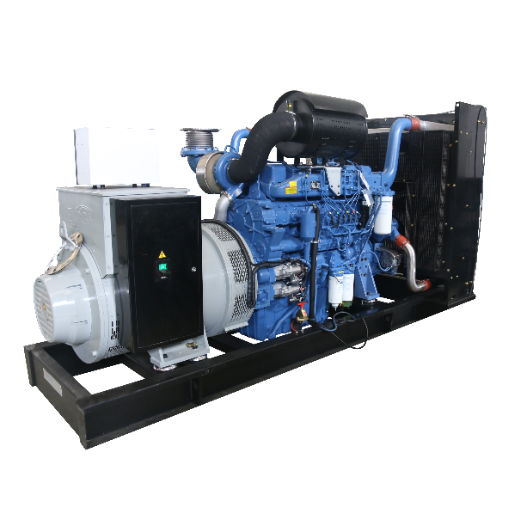
Work through these five steps in order, and the decision usually makes itself.
- Define your critical load. If power loss during maintenance or failure is unacceptable, you need redundancy, which points to paralleling.
- Profile your load. Compare typical load to peak load. A wide gap favors paralleling to avoid underloading a single large unit.
- Set your uptime target. Need 99.9%? A single unit may do. Need 99.99% or better? You are looking at N+1 paralleling.
- Model both costs. Get quotes for both architectures, including 20-year maintenance, not just the purchase price.
- Plan your growth. If capacity will rise, paralleling lets you scale in steps instead of replacing a single unit.
The order matters because each step depends on the one before it. Criticality and load profile should drive the decision, with cost as the final filter rather than the starting point.
Still weighing the tradeoffs? See our single phase vs three phase generator guide for the load-side considerations, or our how to size a diesel generator guide to nail down your capacity before you choose an architecture.
Frequently Asked Questions
Is it better to have one large generator or multiple generators?
For critical loads that must never go down, multiple paralleled generators with N+1 redundancy are better. For non-critical loads where upfront cost and simplicity matter most, a single large generator is usually the better value. The right answer depends on your load’s criticality and profile.
What is the benefit of paralleling generators?
Paralleling delivers redundancy (one unit can fail or be serviced without losing power), better low-load fuel efficiency by shutting down idle units, and scalability by adding capacity in steps. It costs 19–23% more upfront, or 45–49% more with N+1 redundancy.
How much more reliable are paralleled generators?
A single generator is about 98–99% reliable. An N+1 paralleled system reaches roughly 99.96–99.99% availability, and N+2 can reach 99.999% or higher.
At what size does paralleling generators make sense?
Paralleling generally becomes more attractive above roughly 3,000 to 4,000 kVA of total load. Below that, a single generator with multiple transfer switches is often simpler and cheaper unless redundancy is mandatory.
What is N+1 generator redundancy?
N+1 means you install one more generator than your load requires. If one unit fails or is taken offline for maintenance, the remaining N units still carry the full load without interruption.
Conclusion
The one large generator vs parallel generators decision is a tradeoff between simplicity and resilience. A single large generator is cheaper to buy, smaller, and easier to install. Paralleled generators cost more but deliver N+1 redundancy, better efficiency at partial load, and the ability to scale and service without going dark.
Here is what to remember:
- Single unit = 98–99% reliability with a single point of failure.
- Paralleling with N+1 = 99.96–99.99% and no maintenance blackout.
- Paralleling costs 19–23% more upfront, 45–49% with N+1.
- Below ~3,000–4,000 kVA, a single unit is usually the simpler choice unless redundancy is mandatory.
- Match the architecture to your load profile, not just your peak.
Shandong Huali Electromechanical Co., Ltd. builds both options from one factory, so you never have to settle for a biased recommendation. With diesel generator sets from 8 kVA to 4,000 kVA, matched synchronizing controllers, and full OEM/ODM customization, we’ll cost a single large unit and a paralleled package for your exact load and let the numbers decide.
