
A single-phase generator produces one alternating current (AC) waveform and suits homes and light commercial loads, while a three-phase generator produces three waveforms spaced 120° apart and delivers continuous, higher-capacity power for industrial equipment. The right choice comes down to the voltage your equipment runs on and the size of your total load.
Here’s the problem, though. Most buyers only find out they chose the wrong phase after the generator is wired in and the motor trips, or the alternator overheats. Choosing incorrectly doesn’t just waste fuel. It can damage the very equipment you bought the generator to protect.
This guide breaks down the real differences between a single phase vs three phase generator, so you can make the decision with confidence. You’ll learn how each type works, how they compare on voltage, capacity, and cost, and exactly how to match a generator to the equipment you need to power.
Key Takeaways
- A three-phase generator delivers continuous power and never drops to zero, while a single-phase generator pulses twice per cycle.
- Single-phase generators are generally limited to about 25 kVA; three-phase units scale from 10 kW to multi-megawatt industrial systems.
- Three-phase power is the standard for motors above roughly 4–5 kW (about 5 HP); below that, single-phase is usually enough.
- A three-phase generator can power single-phase loads, but a single-phase generator cannot run three-phase motors without a phase converter.
- Shandong Huali manufactures both single- and three-phase generator sets from 8 kVA to 4,000 kVA, with full OEM/ODM customization.
What Is the Difference Between Single-Phase and Three-Phase Generators?
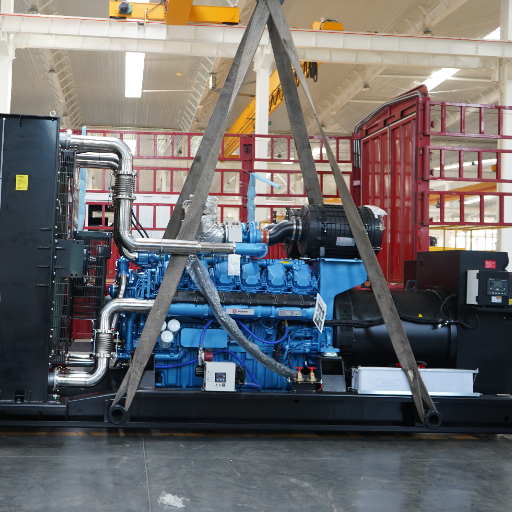
The core difference is in how many alternating current (AC) waveforms the alternator produces. A single-phase generator creates one sine wave from a single set of stator windings. A three-phase generator creates three separate sine waves from three windings set 120 electrical degrees apart.
That single fact explains almost everything else: why three-phase power is smoother, why it carries more load, and why most industrial equipment runs on it.
How a Single-Phase Generator Works
Inside a single-phase generator, one set of stator windings forms a single circuit. As the rotor turns, it induces a single AC voltage that rises, peaks, and falls back to zero twice during every full rotation.
That pulsing is the key limitation. At 50 Hz, a single-phase waveform drops to zero 100 times per second. Most of the time this doesn’t matter for simple loads like lights, heaters, and small motors. But the delivery is never perfectly smooth, and heavier or more sensitive equipment notices.
A single-phase generator uses two conductors: one live (phase) wire and one neutral. That simple two-wire setup keeps installation straightforward and keeps costs down.
How a Three-Phase Generator Works
A three-phase generator uses three independent windings positioned 120° apart around the stator. Each winding produces its own AC waveform, but the three waveforms are offset so that when one is at its peak, the others are still rising or falling.
The result is continuous power. At no point do all three waveforms reach zero together, so the combined output stays steady. This is why three-phase motors run more smoothly, vibrate less, and last longer than their single-phase equivalents.
Three-phase systems use three live conductors plus an optional neutral. Because the current is spread across three wires, each conductor can be thinner for the same total power, which reduces transmission losses and copper cost over distance.
When Marco took over facilities at a 300-seat furniture workshop outside São Paulo, he bought a single-phase generator to back up the whole building. It cost $1,800 less than the three-phase model. The first outage showed him why. The workshop’s 7.5 kW dust-extraction motor, a three-phase unit, refused to start, and production stopped for nine hours while a rented set was sourced. The “savings” cost him a full day of output and a missed client deadline. He now runs a three-phase generator matched to his motors.
The lesson is not that three-phase is always right. It is that the generator must match the load. Not sure which phase your site needs? Shandong Huali’s engineers review load lists and specify the correct phase at no obligation.
Single-Phase vs. Three-Phase Generator: Key Technical Differences
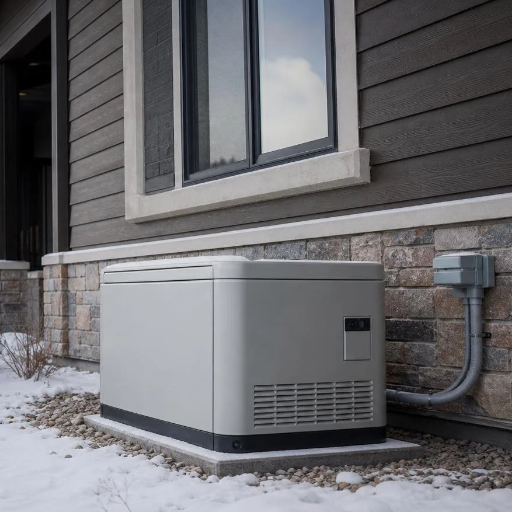
The differences between these two generator types are practical, not academic. They show up in the voltage standards, the power capacity, and the total cost of ownership.
Voltage and Wiring Standards
Single-phase and three-phase systems operate at different voltage levels depending on where in the world you are.
Most of the world follows the IEC standard of 230 V single-phase and 400 V three-phase at 50 Hz. North America is the notable exception, running 120/240 V split-phase for residential power and 208 V or 480 V three-phase at 60 Hz for commercial and industrial service.
A quick point worth clearing up: what many people casually call “two-phase” in North America is actually split-phase power. It’s a single-phase supply with a center-tapped transformer that produces two 120 V legs 180° apart. True two-phase systems are largely obsolete. When in doubt, match your generator’s output to the voltage printed on your equipment’s nameplate.
Power Capacity and Efficiency
Single-phase generators are typically limited to around 25 kVA. They’re fine for a home, a small shop, or a handful of tools, but they hit a ceiling quickly.
Three-phase generators scale far higher. The same basic alternator design that powers a 20 kW site can be scaled to hundreds or thousands of kilowatts for factories, hospitals, and data centers. Three-phase also wins on efficiency: it delivers more power per unit of fuel and handles heavy starting currents, like the inrush when a large motor spins up, far more gracefully.
Cost, Size, and Maintenance
Single-phase units are smaller, lighter, and cheaper to buy. Maintenance is simpler too, since there’s less to go wrong.
Three-phase units cost more upfront and weigh more. But you’re paying for capacity and longevity. A three-phase generator running a properly balanced load typically lasts longer and burns less fuel per kilowatt-hour over its life, which narrows the total cost gap over time.
| Factor | Single-Phase Generator | Three-Phase Generator |
|---|---|---|
| Output waveform | One AC sine wave | Three sine waves, 120° apart |
| Power delivery | Pulses drop to zero twice per cycle | Continuous, never drops to zero |
| Conductors | Two (phase + neutral) | Three (plus optional neutral) |
| Typical capacity | Up to ~25 kVA | 10 kW to multiple MW |
| Best for | Homes, small shops, light tools | Industrial, commercial, large motors |
| Initial cost | Lower | Higher |
| Efficiency | Moderate | High |
Applications: When to Choose Each Generator Type
The clearest way to decide is to look at what you’re actually powering. Here’s how the two types map to real-world use.
When a Single-Phase Generator Makes Sense
Choose a single-phase generator when your loads are modest and your equipment runs on standard household voltage. Common examples include:
- Home and small business backup, keeping lights, refrigerators, computers, and basic appliances running during an outage.
- Small shops and retail spaces, point-of-sale systems, lighting, and light HVAC.
- Construction site lighting and power tools, drills, saws, and portable lighting that run on single-phase supply.
- Agriculture, irrigation pumps and small motors under roughly 4 kW.
- Camping, events, and recreational use, where portability and low noise matter more than raw power.
As a rule of thumb, if your total load stays under about 20–25 kVA and every motor you run is under 4–5 kW, a single-phase generator will almost always be the more economical choice.
For Priya, who runs a 40-hectare farm in Punjab, the math pointed the same way. Her only heavy loads were two 2 kW irrigation pumps and a milking machine, all single-phase. A three-phase generator would have meant a larger engine, more fuel, and more money than she needed. Her 15 kVA single-phase diesel set starts reliably, uses little fuel, and cost a third less upfront. The right choice is not always the bigger one.
When a Three-Phase Generator Is the Better Choice
Choose a three-phase generator when you need high capacity, continuous power, or the ability to run industrial equipment. This includes:
- Factories and manufacturing plants, production lines, compressors, and motors above 5 HP.
- Data centers and hospitals, where power must never flicker or drop, even for a moment.
- Mining and large construction sites, heavy pumps, crushers, and welders with high starting currents.
- Commercial buildings and shopping centers, HVAC systems, elevators, and distributed power.
- Agriculture at scale, large irrigation systems and grain-handling motors.
A three-phase generator also makes sense when you have a mix of equipment. It can feed single-phase loads by tapping between one phase and neutral, so one unit can serve an entire facility with different voltage needs.
Want to see how phase selection fits a real project? Explore Shandong Huali’s range of three-phase generators and single-phase generator voltage options to find a unit matched to your site.
Can a Three-Phase Generator Run Single-Phase Loads?
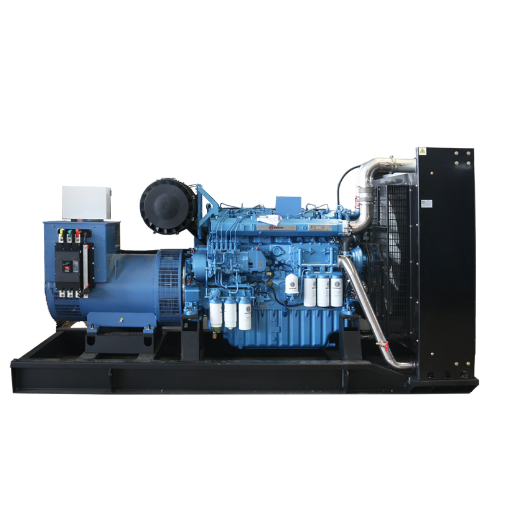
Yes, and this is one of the biggest advantages of three-phase power. The reverse, however, is not true, and understanding both directions can save you from an expensive mistake.
Converting a Three-Phase Generator to Single-Phase
A three-phase generator can supply single-phase equipment by connecting the load between one phase and neutral. For example, on a 400 V three-phase supply, tapping between a phase and neutral gives you roughly 230 V, which is exactly what most single-phase equipment needs.
You can also run a three-phase alternator in a single-phase configuration, typically by rewinding the stator in a zigzag or double-delta connection. But this comes with a real cost: the generator is derated to about 60–67% of its three-phase rating. A 100 kVA three-phase alternator reconfigured for single-phase output becomes roughly a 60–67 kVA machine. That derating is usually a factory-level modification, not a field adjustment.
Why a Single-Phase Generator Can’t Run Three-Phase Motors
A single-phase generator simply cannot start and run a true three-phase motor. Three-phase motors need three voltage waveforms 120° apart to generate their rotating magnetic field. A single-phase supply offers only one, so the motor won’t turn, and forcing it will trip protection or damage the windings.
The only workaround is a phase converter, either a rotary converter or a variable frequency drive (VFD), which synthesizes the missing phases. It works, but it adds cost, complexity, and another point of failure. In most cases, if you have three-phase motors, you should buy a three-phase generator.
There’s one more practical rule to keep in mind. When you do run single-phase loads off a three-phase generator, distribute them evenly across the three phases. Unbalanced loading causes phase imbalance, which can overheat the alternator and shorten its life.
When a logistics company in Hamburg upgraded its cold-storage facility, its engineers specified a 400 kVA three-phase generator from Huali. The same unit feeds the 400 V compressors and, through a phase-to-neutral tap, the 230 V office and lighting circuits. The catch was balance. Single-phase loads had to be evenly spread across all three phases, and an unbalanced early test overheated one winding before the loads were redistributed. The mistake was caught during commissioning, not during a real outage.
How to Choose the Right Phase for Your Operation
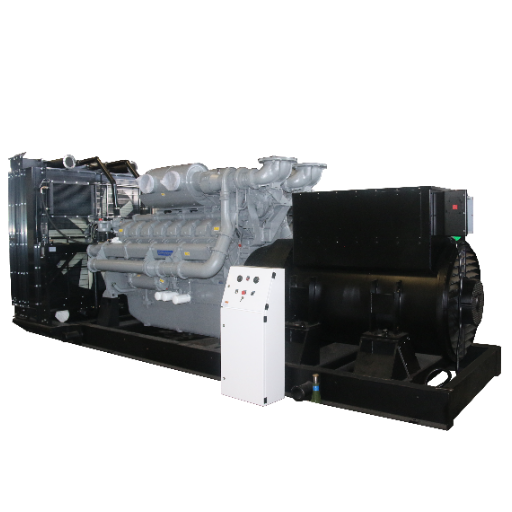
Let’s translate the theory into a decision you can make today.
A 5-Step Selection Checklist
- List every load you need to power, along with its voltage and wattage from the nameplate.
- Check your motors. Are any rated above 4–5 kW or stamped for three-phase supply? If yes, you need three-phase.
- Inspect your existing panel. A three-pole main breaker with L1, L2, and L3 bus bars means three-phase service. A single- or double-pole main breaker means single-phase.
- Add up the total load and apply a margin for motor starting current, usually 20–30% above running power.
- Match the generator’s voltage and frequency to your site’s grid standard, 50 Hz or 60 Hz, and the local single- or three-phase voltage.
Matching Your Generator to Your Site’s Supply
The generator you choose should mirror the supply your facility already uses. If your building is wired for three-phase, a single-phase generator can’t feed the whole panel properly. If your home is single-phase, buying a three-phase generator to run a few appliances is overkill, and you’d still have to manage the load balancing.
This is where a supplier’s engineering support matters. A manufacturer that understands your site’s electrical system can specify the right phase, voltage, and capacity the first time, rather than leaving you to sort it out after delivery.
Frequently Asked Questions
Which is better, a single-phase or three-phase generator?
There’s no universal “better.” A three-phase generator is better for high-capacity, continuous, industrial power, while a single-phase generator is better for homes and light commercial loads. The best choice is the one that matches your equipment’s voltage and your total load.
Can you get three-phase power from a single-phase generator?
Not directly. A single-phase generator produces only one waveform, so running three-phase equipment requires a phase converter or VFD to synthesize the missing phases. In most cases, buying a three-phase generator is simpler and more reliable.
What voltage is a single-phase generator?
Standard single-phase voltages are 230 V (IEC, 50 Hz) and 120/240 V split-phase (North America, 60 Hz). The exact output depends on the generator’s configuration and your region.
Is a three-phase generator more fuel-efficient?
Yes, generally. Three-phase generators deliver more usable power per unit of fuel and handle heavy loads more efficiently, which typically lowers fuel consumption per kilowatt-hour over the generator’s life.
How do I know if my facility needs three-phase power?
Check your main electrical panel. A three-pole main breaker with three live bus bars indicates three-phase service, and any motors above about 5 HP will typically require three-phase supply.
Conclusion
The decision between a single-phase vs three phase generator comes down to load and equipment, not brand preference. A single-phase generator handles homes, small shops, and light tools at a lower upfront cost. A three-phase generator delivers continuous, higher-capacity power for industrial equipment, large motors, and critical facilities that can’t afford a flicker.
Here’s what to remember:
- Match the phase to your motors. Anything above 4–5 kW is almost always three-phase.
- Three-phase scales further and runs more efficiently under heavy load.
- A three-phase generator can feed single-phase loads, but not the reverse.
- Balance your loads if you run single-phase equipment off a three-phase generator.
Shandong Huali Electromechanical Co., Ltd. has manufactured single- and three-phase diesel generator sets from 8 kVA to 4,000 kVA for over 25 years, with Cummins, Perkins, Weichai, and Yuchai engines and full OEM/ODM customization. If you’re still unsure which phase your operation needs, our engineers can review your load list and specify the right unit.
