
A generator voltage drop under load of 2 to 3 percent from no-load to full load is normal. A sustained drop above 5 percent, or a deep transient dip that takes seconds to recover, points to an excitation, governor, cable, or load problem.
The distinction matters. Operators replace automatic voltage regulators that were never faulty, pay for alternator services that change nothing, and run equipment on power that slowly destroys it. Voltage drop is not one condition. It is three, and each one has a different cause, a different first check, and a different fix.
Tomas, the plant engineer at a bottling facility in Medellin, learned this the hard way. Every time the 75 kW air compressor kicked in, the lights dipped and his control panel logged a low-voltage alarm.
Over three months his site replaced the AVR twice, then called in an alternator specialist. The dip never changed. The alternator was sized for the running load, not the compressor’s starting kVA. A soft starter fixed it in a day, at a fraction of the cost of one AVR.
This guide gives you the thresholds to tell normal from faulty, the three conditions to separate, and the exact diagnostic sequence to find the cause. For the preventive side, our generator motor-starting kVA guide shows how to size for the worst motor, not the running load. Dealing with a live fault right now? Send us your no-load voltage, loaded voltage, frequency, and load, and our engineers will help you read the numbers.
Key Takeaways
- A 2 to 3 percent voltage droop from no-load to full load is normal; a sustained drop above 5 percent signals a fault.
- Tell apart the three conditions first: a transient dip that recovers, a steady-state droop that holds low, and a sustained low voltage that never comes up.
- The AVR and excitation system cause most persistent drops; a single open rotating diode can cut excitation capacity by 15 to 25 percent.
- A 5 percent engine-speed drop produces roughly a 5 percent voltage drop, so always check frequency alongside voltage.
- Motor inrush draws 3 to 10 times rated current, so an undersized alternator causes deep dips no AVR can fix. Size for starting kVA.
Is Generator Voltage Drop Under Load Normal?
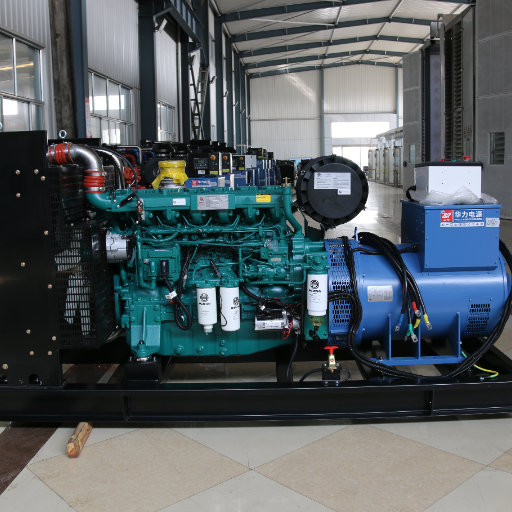
Every generator drops voltage a little as load rises. That is physics, not a fault. As load current increases, the current through the alternator windings creates an internal drop, and the excitation system needs a moment to compensate.
For a healthy set, the generator voltage drop under load from no-load to rated load sits in the 2 to 3 percent range. The IEEE 446 recommended practice for critical-load power quality allows plus or minus 5 percent steady-state voltage and plus or minus 10 percent during transients. So on a 230 V system, a dip to 223 V under load is normal. A dip below about 218 V that stays there is not. That dividing line separates a routine diesel generator voltage drop from a fault worth chasing.
The percent-regulation figure on an alternator datasheet tells you what to expect. Regulation equals (no-load voltage minus rated-load voltage) divided by rated-load voltage. A self-excited alternator typically regulates within plus or minus 1.5 to 2.5 percent, and a permanent magnet generator (PMG) type within about plus or minus 1 percent. ISO 8528-5 class G2 allows roughly plus or minus 2.5 percent steady-state regulation for the genset as a whole.
Two numbers matter most when you check your own set. First, the steady-state drop: if it exceeds about 5 percent and stays there, investigate. Second, the recovery time: a brief dip that returns to within 1 percent within a second or two is a normal transient. One that lingers for several seconds is a warning.
The Three Voltage-Drop Conditions You Must Tell Apart
Treating every drop the same is how good money goes after bad. Separate the three conditions before you touch anything.
Transient voltage dip. The load hits; voltage sags for a fraction of a second to a few seconds, then recovers. This is the inrush signature of motors, transformers, and welders. It is the most common event and, up to a point, the most normal. The question is how deep and how long.
Steady-state droop. Voltage drops when load is applied and holds low as long as the load stays on, then returns when the load leaves. This steady generator voltage droop under load points to the AVR, excitation, governor, or cable, not to the load itself.
Sustained low voltage. The set runs at low voltage even with no load, or recovers only partially. This is usually lost excitation, a failed rotating diode, a bad AVR, or an alternator winding fault.
| What you see | Condition | First check |
|---|---|---|
| Dip, recovers in 1 to 2 seconds | Transient | Motor starting load, alternator sizing |
| Low while loaded, returns when unloaded | Steady-state droop | AVR, excitation, frequency, cable |
| Low all the time, loaded or not | Sustained low | Excitation, rotating diodes, AVR, windings |
This one table replaces most guesswork. If it recovered, the fix is about capacity. If it holds low, the fix is about regulation. If it never comes up, the fix is about excitation.
Why Does Generator Voltage Drop Under Load?
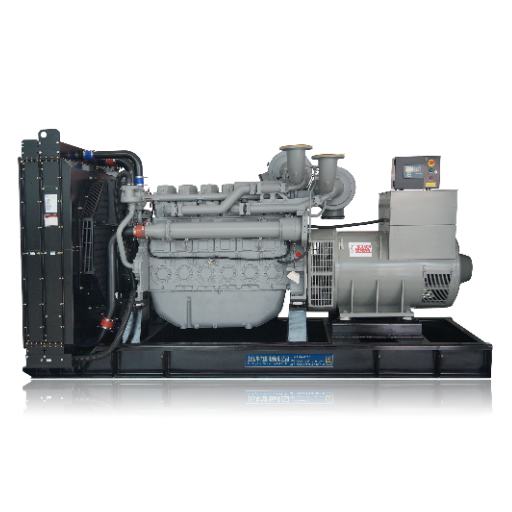
Behind every condition sit the same handful of causes. Knowing them in order of probability saves you time.
AVR and excitation response lag
The AVR reacts within milliseconds, but the exciter and rectifier bridge have inertia. When load appears, excitation cannot jump instantly, so voltage sags briefly. This is the normal part of every transient dip.
Governor speed lag
Voltage is directly proportional to engine speed. When a block load hits, torque demand jumps, and until the governor adds fuel the engine slows. Electronic governors respond in 150 to 250 milliseconds; mechanical ones take 300 to 500. During that window, frequency and voltage both dip. A 5 percent speed drop produces roughly a 5 percent voltage drop even with a healthy AVR.
Motor inrush and starting kVA
An induction motor draws 3 to 10 times its running current at start. A set sized for running load only cannot hold voltage against that surge. No AVR fixes an alternator that is simply too small for the largest starting motor.
Overload and low power factor
A generator rated in kVA vs kW delivers current based on apparent power. A low-power-factor load (motors, transformers) draws more current than the kW figure suggests, demanding more excitation. Loads pushed past rated capacity drop voltage and heat the windings.
Undersized or degraded cables
The drop measured at the load is the generator’s drop plus the cable’s drop. Conductors that are too small, loose connections, and corroded terminals all add resistance. The NEC recommends limiting voltage drop to 3 percent for branch circuits and 5 percent total for feeder plus branch.
Alternator winding faults
Shorted turns, insulation deterioration, or loose internal connections show up under load as current and heat rise. Less common, but they do not respond to an AVR replacement.
Excitation System: The #1 Cause of Persistent Drop
When voltage holds low under load, the excitation system is the first suspect. The alternator can only output as much voltage as the rotor field magnetizes it to produce.
AVR failure
A failing AVR can hold normal voltage at no load and lose it as load rises, which is exactly the generator AVR not maintaining voltage complaint. Before replacing one, check the sensing leads. Loose or corroded sensing wires mimic a dead AVR, and roughly nine out of ten AVR “failures” trace to wiring, not the board.
Rotating diode failure
In a brushless alternator, rotating diodes convert the exciter’s AC to DC for the main rotor. One diode that fails open cuts excitation capacity by 15 to 25 percent. The signature is exactly what you are chasing: voltage fine at no load, droop under load. A shorted diode produces erratic, jumping voltage and can damage the AVR.
Weak excitation and residual magnetism
A self-excited set that sits for months can lose residual magnetism and fail to build voltage, sometimes reading near zero. Flashing the field with a 12 V source on the F+ and F- terminals for one to two seconds restores it in most cases.
Self-excited vs. PMG
The excitation design decides how well the set holds voltage under disturbing loads. A self-excited (shunt or auxiliary-winding) alternator takes its excitation power from the main output, so a deep dip weakens the very signal it needs to recover. A PMG has a permanent-magnet pilot exciter that feeds excitation independently of output voltage, so it holds voltage far better through motor starts and short circuits.
Mei, the maintenance lead at a hospital in Guangzhou, watched a 500 kVA standby set droop 12 percent under the MRI suite’s start sequence. Unloaded voltage was perfect, so the local technician pronounced the AVR dead. When our engineers tested the rotating diodes, one read open in both directions. Two diodes and a day of labor later, the set held steady through every start. The AVR was fine.
That is why the diagnostic sequence matters more than the part names. When a set holds voltage unloaded but sags loaded, test excitation before you spend on an AVR. A PMG upgrade is the longer-term fix for sites where motor-heavy loads are a permanent feature.
How to Diagnose Generator Voltage Drop Step by Step
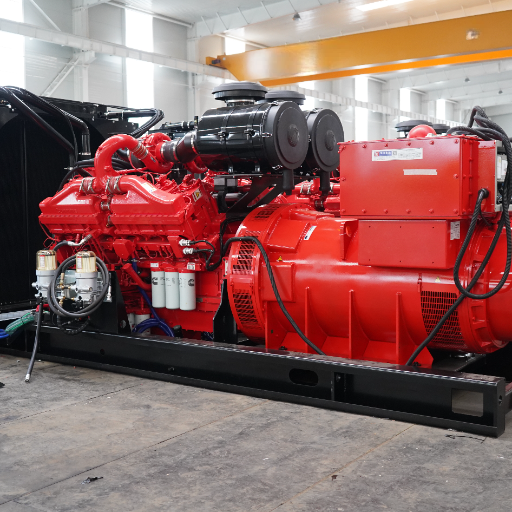
Run this sequence in order. Each step narrows the cause, and most take minutes.
- Record the no-load baseline. Start the set at rated speed and measure all phases. A healthy set reads within about 2 V between phases at no load. A low reading here points to a generator low-voltage output fault that exists before any load is applied.
- Apply a controlled load. Note the transient dip, the recovery time, and the steady-state loaded voltage. The gap between no-load and loaded voltage is your regulation figure.
- Measure at the terminals and at the load. Voltage that holds at the generator but sags at the load end is a cable problem, not a generator problem.
- Check frequency with voltage. If frequency drops alongside voltage, look at the governor and fuel system before the alternator. If frequency is stable and voltage still drops, look at the AVR and excitation.
- Test the excitation path. Check AVR sensing voltage, excitation output, and the rotating diodes with an ohmmeter.
- Isolate with a load bank. A controlled load bank separates a generator fault from a site-load fault. If the set holds voltage on a resistive load bank but sags on the real site load, the issue is load characteristics, not the set.
A load bank test is the cleanest way to make this call. It is the same tool we use on the test floor to verify voltage regulation before any set ships.
How to Fix Generator Voltage Drop
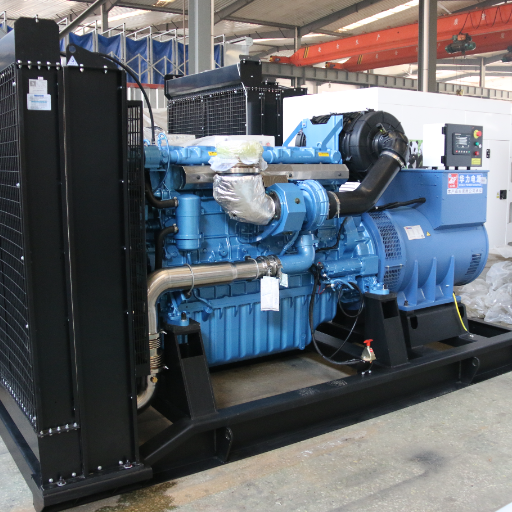
Once the cause is identified, the fix is usually specific and small.
Recalibrate or replace the AVR
Adjust the voltage trim pot only within its stated range. Masking an underlying fault by cranking a pot more than about 5 percent from center leads to complete failure later. Match the sensing voltage, excitation current, and the 50 or 60 Hz rating when replacing.
Replace failed rotating diodes and flash the field
An open or shorted diode swaps out quickly. Lost residual magnetism flashes in seconds with a 12 V source.
Upgrade cables and connections
Right-size the feeder for the generator’s output and the run distance, and clean and retorque every termination. This fixes the gap between the terminal readings and the load readings.
Manage the load steps
Soft starters, star-delta starting, or staggered motor starts cut inrush dramatically. Most of Tomas’s dip was fixed by sequencing, not hardware.
Oversize the alternator
Doubling the alternator size can cut a deep transient dip from about 14 percent to about 6 percent. For sites with frequent motor starts, an oversized alternator is cheaper over its life than a replacement AVR every season.
Upgrade to PMG excitation
For data centers, hospitals, and production lines that cannot tolerate a sag, a PMG alternator holds voltage through the dips a self-excited unit cannot.
Preventing Voltage Drop at the Spec Stage
The cheapest fix for generator voltage drop under load is the one made before purchase. Most drop complaints trace back to a sizing or specification decision, not a failed part, which is why how to size a diesel generator is the natural first step.
Size for the worst motor, not the running load
Calculate starting kVA for the largest motor, then confirm the alternator absorbs the inrush without a dip beyond tolerance. Our How to Calculate Motor Starting kVA guide walks through the calculation.
Read the voltage regulation spec on any datasheet
Compare the generator voltage regulation percentage, not just the kVA rating. ISO 8528-5 class G2 allows roughly plus or minus 2.5 percent; a PMG set does better. If a supplier cannot state a regulation figure, ask why.
Match the alternator to the load profile
A set for a data center should specify a PMG alternator and a tight regulation band from day one. A set for a construction site with many motor starts should specify an oversized alternator or soft-starter provisions.
Load-test before you accept delivery
Every Shandong Huali set is run at 100 percent rated load on our test floor, and voltage regulation is verified against the datasheet before shipping. That is the standard to demand from any supplier, because it is the only way to confirm the spec is real.
Monitor voltage data
A remote monitoring and smart control panel records voltage and frequency against load continuously. Trends catch a slowly failing excitation system weeks before an outage does.
A generator alternator specification is where regulation, excitation type, and steady-state performance are decided. Read it before you sign, and the fault-fixing sections above rarely become necessary.
Frequently Asked Questions
What is a normal voltage drop for a generator?
A healthy set drops 2 to 3 percent from no-load to full load. On a 230 V system that is roughly 5 to 7 V. A sustained drop above 5 percent, or a transient dip below about 10 percent of nominal, warrants investigation.
Why does my generator voltage drop when a motor starts?
Motor inrush draws 3 to 10 times the rated current for a moment. The AVR and governor cannot fully compensate that fast, so voltage sags and then recovers. A deep or slow dip usually means the alternator is undersized for the motor’s starting kVA.
Generator voltage drops but frequency is stable. What is the cause?
Stable frequency with a voltage drop points away from the engine and toward the AVR, excitation, or cable. Check AVR sensing, rotating diodes, and the voltage at the load end to separate a generator fault from a wiring fault.
Can a bad AVR cause a voltage drop under load?
Yes. A failing AVR can hold normal voltage at no load and lose it under load. Test the sensing leads and excitation before replacing it, because loose wiring causes the same symptom.
Do I need a PMG generator?
Choose PMG excitation when loads are motor-heavy or when voltage must hold tight through starts, such as data centers, hospitals, and production lines. A self-excited set is usually adequate for steady loads and simple backup duty.
What size cable stops voltage drop from the generator to the load?
Size the feeder for the generator’s full-load current and the run distance, keeping total drop under 5 percent. Measure at the terminals and at the load end. If the load reading sags while the terminals hold, the cable or a termination is the culprit. Our copper vs aluminum wire comparison covers the sizing trade-offs.
Conclusion
Generator voltage drop under load is three conditions, not one. A transient dip that recovers is about capacity. A steady-state droop that holds low is about regulation. A sustained low voltage is about excitation. Name the condition first, and the cause narrows itself.
The numbers give you the decision. Normal droop runs 2 to 3 percent. Sustained drop above 5 percent is a fault. A 5 percent frequency drop drags voltage with it. Motor inrush at 3 to 10 times current exposes an undersized alternator that no AVR can rescue.
Most of these faults never happen when the set is sized and specified correctly from the start. Shandong Huali designs, builds, and load-tests diesel generator sets from 8 kVA to 4,000 kVA, and we verify voltage regulation on the test floor before any unit ships. Talk to our engineers about your load profile, motor-starting demands, and excitation options, and get a set that holds voltage under everything your site throws at it.
