
Motor starting kVA, not running kVA, is what sets the size of most generators on motor-heavy sites. A motor that needs only 65 kVA once running can demand over 400 kVA for the few seconds it takes to spin up, and the generator must be sized to absorb that surge, not just carry the running load.
Here is what that looks like in practice. A contractor named Samuel powered a stone-crushing site in Ghana with a generator he sized by adding up his running loads. On paper, 120 kVA was plenty. But the moment his 55 kW crusher motor started direct-on-line, the voltage dipped, the contactors dropped out, and the whole site went dark. The running calculation was right. The starting calculation, the one he skipped, was the one that mattered.
If you have ever sized a generator for pumps, crushers, compressors, or fans and felt unsure whether you got it right, this guide is for you. You will learn the two ways to calculate motor starting kVA, what each starting method does to the number, and how to check the voltage dip that actually decides the answer. It is written by the engineering team at Shandong Huali Electromechanical, a manufacturer that runs this exact calculation on every motor-heavy application it quotes.
Key Takeaways
- Motor starting kVA, not running kVA, drives generator size: a motor draws 6-8x its full-load current on a direct-on-line start, and its power factor collapses to about 0.2.
- You calculate starting kVA two ways: SkVA = hp x locked-rotor kVA/hp (using the NEMA code letter), or inrush kVA = √3 x V x A / 1000.
- The starting method changes everything: DOL needs roughly 3-4x motor kW in generator, star-delta 1.5-2.5x, soft starter 1.25-1.75x, and VFD 1.1-1.3x.
- A 55 kW crusher on DOL needs about a 200 kVA generator to hold voltage dip near 20%, but only about 150 kVA with a soft starter.
- Voltage dip is the real limit: keep it under 15-20% for general loads and 10% for sensitive ones, or contactors drop out and motors stall.
Why Motor Starting kVA (Not Running kVA) Sets Generator Size
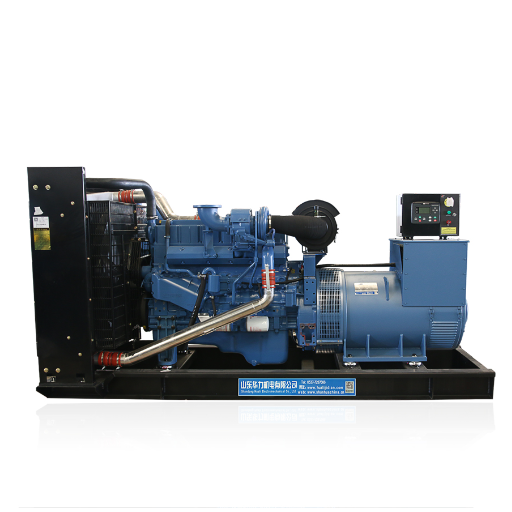
A generator carries two very different loads. The running load is steady and easy to predict: you add up the kW of everything running and convert to kVA. The starting load is a short, violent spike that happens every time a motor switches on. For a few seconds, an induction motor draws many times its normal current, and the generator must supply that spike without letting the voltage collapse.
This is why so many generators that are “correctly sized” on paper still trip on start. The running load said 120 kVA, but the starting spike on the crusher said 440 kVA, and the machine that was sized for 120 could not hold the line through the surge.
The Starting Power Factor Collapse (About 0.2 PF)
The spike is worse than a simple current multiple suggests, because the power factor also collapses. A motor that runs at 0.85 power factor draws its starting current at roughly 0.2 power factor. Since apparent power (kVA) equals real power divided by power factor, a collapsing PF inflates the kVA demand far beyond the starting kW.
This is the same kVA-versus-kW relationship covered in our guide to generator kVA vs kW, and it is the reason starting current must be worked in kVA, not kW. If you size only in kW, you will understate the starting demand by the width of that PF collapse.
How to Calculate Motor Starting kVA
There are two accepted ways to calculate motor starting kVA. Both give the same ballpark; use the one you have the data for.
Formula 1: SkVA = hp x Locked-Rotor kVA/hp
The first method uses the motor’s horsepower and its locked-rotor code, printed as a NEMA code letter on the nameplate. The code letter tells you how many kVA the motor draws per horsepower at the instant it is locked (stalled, before it begins to turn).
The formula is simple:
SkVA = motor hp x locked-rotor kVA/hp
A 74 hp motor with a code letter that specifies 6.0 kVA/hp draws about 74 x 6.0 = 444 kVA at the moment of starting. The code letter, not a guess, is what makes the number defensible.
Formula 2: Inrush kVA = √3 x V x A / 1000
The second method uses the motor’s starting current. If you know the full-load amps (FLA) and the starting-current multiple, multiply them, then convert to kVA:
Inrush kVA = √3 x voltage x starting amps / 1000
If a 55 kW motor has a nameplate FLA of 93 A at 400 V and draws 6x that on a direct-on-line start, its starting current is 558 A, and its inrush is 1.732 x 400 x 558 / 1000 = 386 kVA. Close to the NEMA method, and the same order of magnitude. When the nameplate lists the locked-rotor current directly, use that number instead of either estimate.
The NEMA Code Letter Table
Most motors above a few horsepower carry a NEMA code letter, and this table turns it into the locked-rotor kVA/hp you need. No competitor publishes this table, even though every guide tells you to go look it up.
| NEMA Code | Locked-Rotor kVA/hp |
|---|---|
| F | 5.0 – 5.59 |
| G | 5.6 – 6.29 |
| H | 6.3 – 7.09 |
| J | 7.1 – 7.99 |
| K | 8.0 – 8.99 |
| L | 9.0 – 9.99 |
A code G motor draws about 5.6 to 6.3 kVA/hp; a code K motor draws 8.0 to 9.0. Two motors with the same horsepower can have very different starting demands, which is why the code letter matters more than the kW rating.
Starting Methods and What They Do to kVA
The starting method is the single biggest lever you have, because it controls the inrush current. Here are the four most common methods side by side.
| Starting Method | Starting Current | Starting kVA | Torque | Generator Size (x motor kW) |
|---|---|---|---|---|
| Direct-on-line (DOL) | 6-8x FLC (8-10x for high-efficiency) | 5-7x running kVA | 100% | 3-4x |
| Star-delta | 2-3x FLC | 2-3x running kVA | ~33% | 1.5-2.5x |
| Soft starter | 2-4x FLC | 2-3x running kVA | 10-50% adjustable | 1.25-1.75x |
| VFD | 1.1-1.5x FLC | 1-1.5x running kVA | 100% controlled | 1.1-1.3x |
Direct-on-line (DOL) is the simplest and cheapest, but it throws the full inrush at the generator. Star-delta and soft starters are reduced-voltage methods that cut the current, and a VFD is the gentlest of all, ramping the motor up with near-unity current.
The Torque Caveat: Lower Current Can Mean Lower Torque
Reduced starting current does not come free. Star-delta cuts the current to roughly a third, but the torque also drops to roughly a third, because the motor is started at reduced voltage. Soft starters reduce torque with the square of the voltage reduction. A motor that starts fine direct-on-line may stall under star-delta if the load needs full torque to break away.
A plant engineer named Amara learned this the hard way. To save money, she specified a star-delta starter on a heavily loaded screw conveyor, allowing a smaller generator. On commissioning, the conveyor would not start at all: the reduced torque could not overcome the material sitting in the screw. The fix was a soft starter with a higher torque setting, and the generator she “saved” was never actually enough. Always confirm the motor can break the load away at the reduced torque before you size down.
Voltage Dip: The Real Constraint
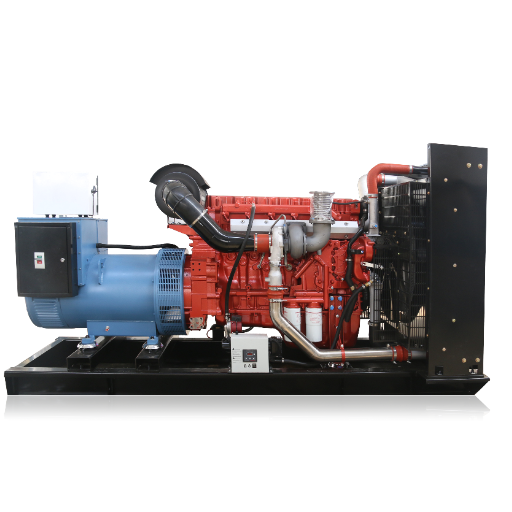
Starting kVA matters because of what it does to voltage. When a large current flows through the generator’s own impedance, the output voltage sags for the duration of the start. If the sag is deep enough, contactors drop out, electronics reset, and other equipment shuts down.
How Much Dip Is Acceptable
As a general rule, limit the instantaneous voltage dip to 15-20% for general industrial loads, and to 10% for sensitive loads like servers and instrumentation. Beyond roughly 35%, magnetic starters may not hold and the motor may fail to reach speed. These limits, not the running load, are what the generator selection is really checked against.How tightly a set must hold voltage and frequency through events like these is exactly what the performance bands describe, so it is worth reading these dip limits alongside our guide to generator performance class G1 G2 G3 G4, which sets out the control tolerances each class must meet.
What Subtransient Reactance (X”d) Has to Do With It
How much the voltage dips depends on the alternator’s subtransient reactance (X”d). A lower X”d means less dip for the same starting kVA. A robust alternator paired with a fast excitation system, typically a PMG or AREP exciter and a digital AVR, recovers voltage more quickly. This is why two generators with the same kVA rating can behave differently on motor starting, and it is a spec worth reading on the datasheet.
Where do you find X”d, excitation type, and AVR response? All three live on the specification sheet, covered field by field in how to read a generator specification sheet. And the motor-start capability ties back to the prime rating defined in ISO 8528 generator ratings, which sets the overload and load-factor limits a motor-heavy site must respect.Once those datasheet figures are confirmed, the next step is locking them into a binding purchasing document — our guide to writing a generator set specification for tender shows exactly how to do that so every supplier quotes to the same numbers.
A Fully Worked Example: 55 kW Crusher
Here is the calculation every guide skips, shown step by step. The load is a 55 kW crusher motor, 400 V, three-phase, running at 0.85 power factor, NEMA code G, started direct-on-line.
Step 1: Convert the running load to kVA.
Running kVA = kW / power factor = 55 / 0.85 = 65 kVA.
Step 2: Find the locked-rotor kVA from the code letter.
55 kW is about 74 hp. A code G motor draws 5.6 to 6.29 kVA/hp, so take 6.0 kVA/hp as the midpoint.
Starting kVA = 74 hp x 6.0 = 444 kVA.
Step 3: Compare starting to running.
The ratio is 444 / 65 = 6.8x. A generator sized for the running load alone would face a starting spike nearly seven times larger than anything it was specified to hold.
Step 4: Size for an acceptable voltage dip.
To hold the dip near 20%, keep the starting kVA under roughly 2.5 times the generator rating. That means the generator kVA = 444 / 2.5 = 178 kVA, so select a 200 kVA set. Cross-check with the rule of thumb: DOL needs 3-4x motor kW, and 3 to 4 times 55 kW is 165 to 220 kVA. Consistent.
Step 5: See what a soft starter would do.
A soft starter that limits inrush to 3x full-load current cuts the starting demand to about 3 x 65 = 195 kVA. That is only 1.3x a 150 kVA generator, which holds the dip to the 5-15% range. The soft starter shrinks the required generator from 200 kVA to 150 kVA, a 25% smaller machine.
The difference between 200 kVA and 150 kVA is not trivial. On larger motors, it can be tens of thousands of dollars. If you are weighing DOL against a soft starter or VFD, send us the motor nameplate and we will run the same five steps and show you the trade-off.
How Staggered Starting Collapses Peak kVA
Starting one motor is hard on a generator. Starting several at once is far worse because the starting kVA values add together. Three 50 kW motors started simultaneously on DOL demand roughly 3 x 50 x 7 = 1,050 kVA of surge, but started one at a time, the peak is a single motor’s 350 kVA.
Staggered starting, where the largest motor starts first and others start after it is running, is often the cheapest way to shrink the generator without touching a single starter. A simple sequencing relay or controller can do the work.
Generator Sizing Rules of Thumb by Method
If you want a fast first pass before the detailed calculation, these multipliers get you close. They are expressed against motor kW, so multiply your largest motor’s kW by the factor for its starting method.
| Starting Method | Generator Size (x largest motor kW) |
|---|---|
| Direct-on-line (DOL) | 3-4x |
| Star-delta | 1.5-2.5x |
| Soft starter | 1.25-1.75x |
| VFD | 1.1-1.3x |
These are starting points, not substitutes for the worked calculation. They do not account for the rest of the running load, and they do not check the voltage dip.
When Derating Stacks on Top of Starting Load
One more factor compounds the problem. Altitude and temperature derating, covered in the specification sheet article, reduces a generator’s output at high altitude or high ambient temperature. A set that must both start a large motor and operate at 2,000 m elevation needs the starting kVA checked against the derated capacity, not the sea-level rating. Stack the two together and you may need another size step up. A generator rated 200 kVA at sea level can behave like 170 kVA at 2,500 m, and if your starting demand is 178 kVA, the margin is gone.
Once you have settled on the rating that survives both the motor start and the site derating, lock those figures into your purchasing document so every supplier quotes to the same numbers. Our guide to writing a generator set specification for tender shows how to translate a sizing result into clauses a bidder cannot dodge.
Frequently Asked Questions
How do you calculate motor starting kVA?
Two ways. Multiply the motor’s horsepower by its locked-rotor kVA/hp from the NEMA code letter (SkVA = hp x kVA/hp), or convert starting current to kVA with inrush kVA = √3 x V x A / 1000. Both give the same ballpark; use the nameplate figure when you have it.
What size generator do I need to start a motor?
Multiply the motor’s kW by 3-4 for direct-on-line starting, 1.5-2.5 for star-delta, 1.25-1.75 for a soft starter, and 1.1-1.3 for a VFD. Then check the voltage dip against the starting kVA, because the multiplier is only a first pass.
Why does my generator trip when a motor starts?
The motor’s starting current, 6-8x its running current, causes a voltage dip deep enough to drop out contactors and trip protection. The fix is a larger generator, a reduced-voltage starter, or staggered starting so two large motors never start together.
Does a soft starter reduce generator size?
Yes, and it is often the cheapest way to do it. A soft starter that limits inrush to 3x full-load current can cut the required generator by a quarter or more, as in the 55 kW crusher example where it dropped the need from 200 kVA to 150 kVA.
What is locked rotor current (LRC)?
Locked rotor current is the current a motor draws at the instant of starting, before the rotor begins to turn. It is many times the running current, and the NEMA code letter on the nameplate converts the motor’s horsepower into the locked-rotor kVA you need for sizing.
Conclusion: Size for the Start, Not Just the Run
Generator motor starting kVA is the calculation that separates a site that runs from one that trips. The running load is easy; the starting spike, with its 6-8x current and collapsing power factor, is what decides the machine. Work it two ways, by NEMA code letter or by inrush current, then check the voltage dip, because that is the real constraint the multiplier only approximates.
Do that, and you will never be the buyer who sizes a generator to the running load and watches it die the first time the crusher starts. If you would rather have an engineer run the numbers, that is what we do every day. Shandong Huali Electromechanical builds diesel generator sets from 8 kVA to 4000 kVA, with PMG and AREP excitation options and motor-start capability verified on every quoted set.
Send us your largest motor nameplate and our engineers will calculate the starting kVA, check the voltage dip, and recommend the exact generator rating, at no cost.
