
Generator performance class G1 G2 G3 G4 is the ISO 8528-5 system that grades how tightly a diesel generator set holds its voltage and frequency, at steady state and in the seconds after a load switches on. G1 is the loosest grade for simple loads that tolerate dips. G4 is the most demanding, and unlike the others it is not a fixed spec: its limits are agreed between you and the manufacturer.
Here is why the class matters on a real order. Two suppliers quote you a 500 kVA set, same number on paper, but one spec line reads ISO 8528-5 G2 and the other reads G1. The rating says how hard you may run the machine. The class says how clean the power stays the moment a load lands. The first question is answered in our ISO 8528 generator rating guide, which covers the ESP, PRP, LTP and COP duty ratings. This article answers the second.
A facilities engineer named Wanjiru learned the difference the expensive way at a diagnostics group outside Nairobi. Her tender asked for ISO 8528-certified generators but never named a class, so the supplier quoted the loosest grade that passed: G1. The lights and water pumps ran fine. The laboratory analyzers and the phone exchange reset whenever a large water pump kicked in. Re-specifying to ISO 8528-5 G3 made every bidder quote the same machine, and the resets stopped.
Shandong Huali has built and tested diesel generator sets from 8 kVA to 4,000 kVA since 1999, and we prove the class on a load bank before export. If you’re comparing quotes right now, send our engineers the spec sheets. We’ll tell you which performance class each set genuinely offers and which one your loads need.
Key Takeaways
- A generator performance class (G1, G2, G3, G4) grades voltage and frequency stability under load steps, not how much power the set can deliver.
- The rating (kVA, ESP, PRP, COP) and the class (G1 to G4) are two separate questions; a spec line like “ISO 8528-5 G2” answers both.
- G2 suits general commercial and industrial plant and behaves much like a public grid. G3 is the class for telecom, rectifier, and critical electronic loads.
- G4 is not a fixed tier above G3. Its limits are agreed between buyer and manufacturer, which is why many data centers specify G3 plus their own tighter window.
- The class is verified by load acceptance and rejection tests at the set’s own terminals, so confirm it on the test report, not just on the datasheet.
Generator Performance Class G1 G2 G3 G4: What the Letters Mean
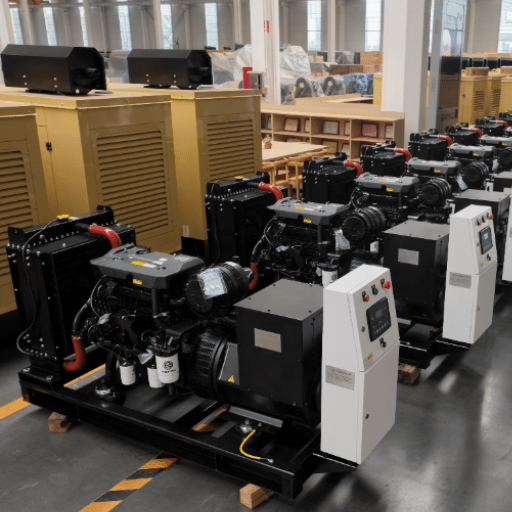
The letters are the four performance classes defined in ISO 8528-5, the standard that covers generating-set performance and test methods. Each class sets limits on how far voltage and frequency may deviate and how quickly they must recover, both in steady operation and during load steps. Move from G1 to G4 and the limits tighten and the recovery times shorten.
| Class | What is it for |
|---|---|
| G1 | Loads that need only basic power: general lighting and simple circuits that tolerate larger dips and surges. |
| G2 | Loads that behave like a public supply: pumps, fans, hoists, and general commercial or light industrial plant, where temporary deviations are acceptable. |
| G3 | Loads that make moderate demands on voltage, frequency, and waveform: telecommunications equipment, thyristor-controlled rectifier loads, and similar electronics. |
| G4 | Loads that make severe demands, typically data-processing and computer equipment, where the criteria are agreed between the buyer and manufacturer rather than taken from a fixed table. |
One warning before you read deeper. The class and the rating are different things, and the words look alike. Our how to read a generator specification sheet guide walks through every field, including this one: the class line sits in the electrical section next to kVA, power factor, and voltage, and it describes output quality, not output size.
Generator Performance Class G1 G2 G3 G4: The Limits at a Glance
The table below sets the four classes side by side. The values are the limits commonly reproduced for ISO 8528-5 and quoted by test-equipment makers; G4 is left as agreed because the standard reserves it for criteria the buyer and the manufacturer set together.
| Class | Steady-state voltage | Steady-state frequency | Worst dip on a full load step | Recovery to steady state |
|---|---|---|---|---|
| G1 | ±5% | ±2.5% | Voltage up to −25%, frequency up to −15% | Voltage about 10 s, frequency about 10 s |
| G2 | ±2.5% | ±1.5% | Voltage up to −20%, frequency up to −10% | Voltage about 6 s, frequency about 5 s |
| G3 | ±1% | ±0.5% | Voltage up to −15%, frequency up to −7% | Voltage about 4 s, frequency about 3 s |
| G4 | Agreed with the manufacturer | Agreed with the manufacturer | Agreed with the manufacturer | Agreed with the manufacturer |
Two habits make the table useful. Read the dip and the recovery together: a set can dip deep and recover fast, or dip shallow and hang, and the class judges both. And remember the mirror case, because it surprises people. When a full load drops off suddenly, voltage briefly rises instead of dipping, up to roughly +35% for G1, +25% for G2, and +20% for G3 in the widely reproduced tables. Load-bank maker Avtron, which builds the test equipment used to verify these limits, reproduces the ISO 8528-5 G1 to G3 values here.
Apply the numbers to a real supply and you’ll see why equipment makers care. On a 230 V system the worst-case overshoot after a full load rejection peaks near 310 V for G1, 288 V for G2, and 276 V for G3. Power-supply maker TDK-Lambda notes that products rated to survive 300 V for five seconds therefore run on G2 or G3 sets, while open-frame supplies built into ITE systems are typically specified against G4.
The letters are stable across editions. The numbers are not always: the current standard is ISO 8528-5:2022, and newer revisions are already appearing in national catalogues. Confirm the exact limits against the edition your contract enforces before you hold a supplier to a specific figure.
G4 Is Not “Better Than G3”: It Is Agreed Between You and the Manufacturer
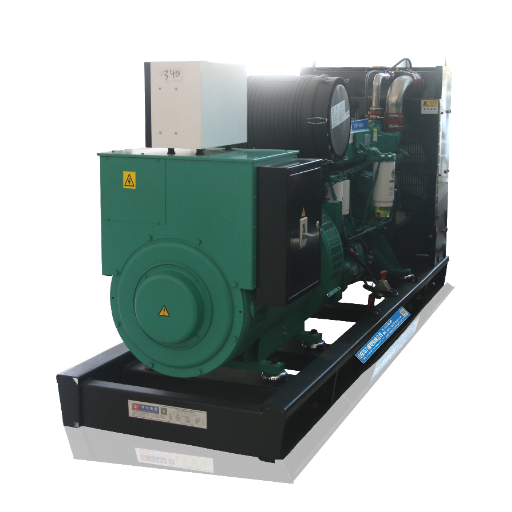
Many buyers read G1 to G4 as a ladder and assume G4 is simply the strictest rung. The standard works differently. In ISO 8528-5, G4 is reserved for performance criteria that are agreed between the supplier and the buyer, so there is no fixed G4 row to compare with G1, G2, and G3.
You reach for G4 when the standard’s fixed values do not fit the job. That happens with data-processing and computer loads, where even a G3 window may be too loose, or where the project wants its own load-step schedule instead of the one ISO 8528-5 uses. You and the manufacturer then write the voltage window, the frequency window, and the recovery times that the site actually needs, and the test report proves the set meets your agreed values, not a generic row.
The trap is overspecification. A regional data-center operator in Manila wrote “G4” on every genset because it sounded like the top tier. The useful reply was a question: Which criteria? What the site really needed was a G3 set with a tighter, custom recovery window and UPS compatibility written into the spec. Agreeing on the right criteria saved the upgrade budget, and the test still proved every number.
How a Generator Earns Its Class: Load Acceptance and Rejection
A class is not a sticker the manufacturer chooses. It is a measured outcome of the whole set, engine, governor, alternator, and voltage regulator together, tested at the set’s own output terminals. Two tests decide it.
Load acceptance applies load in steps and watches the voltage and frequency dip and recover inside the class window. Load rejection is the sharper one: the set runs at full load, the load is removed in one step, and the voltage and frequency must stay within the class limits while they recover. If a set labeled G3 cannot hold the G3 window through rejection, it is not a G3 set.
The size of the test step matters, and it is not a fixed percentage for every machine. ISO 8528-5 determines the step from the engine’s characteristics and how well the engine and alternator are matched. Older practice commonly tested naturally aspirated engines with a 100% step and turbocharged engines with a 60% step. That is why two sets of the same kVA can be, and often are, tested at different step sizes.
What it takes to hold a tighter class is engineering, not paperwork. The engine governor must respond fast enough to catch the frequency dip, which usually means an electronic governor for G3. The generator alternator specifications guide explains the excitation and AVR side because voltage recovery depends on how quickly the regulator forces the field back up. And the step itself has to fit the engine’s real margin, which is where generator motor starting kVA calculations come in. If frequency keeps sagging after the step instead of recovering, that is a governor-and-engine fault, and the generator frequency drops under load guide is the right read.
A buyer’s engineer called Amin watched this play out at a factory acceptance test for a drinks bottling line. The specification demanded G3, and a 60% step pushed the set just outside the G3 frequency recovery window. The alternator was fine. The engine governor was the laggard. A re-tune to electronic response and a check that the test step matched the set’s rated step brought recovery inside the window, and the set then passed the 100% rejection cleanly. The class was earned in the test cell, not assumed from the datasheet.
That is also why the test report matters as much as the spec sheet. Our generator fails the load bank test article tables the steady-state G1, G2, and G3 acceptance criteria that a pass must meet, and shows how to read a failure signature when a set misses them. If you are buying a set for a class, ask to see the acceptance test report for that class, not a general test certificate. And since ISO 8528-5 notes that sets are normally rated at a lagging power factor, usually 0.8, ask whether the acceptance run was done at the rated power factor or on a purely resistive load. A resistive-only pass can be incomplete.
If you want the proof before you pay, our engineers can host you at the factory for a witnessed step-load and rejection test on your set, from 8 kVA to 4,000 kVA. You watch the class being taught.
Which Generator Performance Class Do You Need?
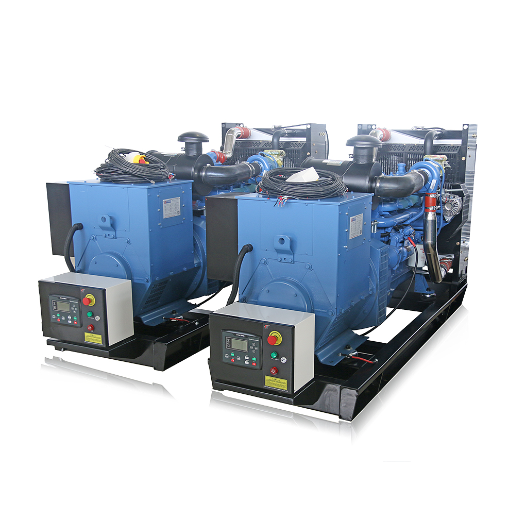
Match the class to the most sensitive load on the set, then check the margin. These are the working rules we use when we help customers specify:
- G1 if the load is lighting, heating, and simple circuits that tolerate dips. Most small domestic and site sets fall here.
- G2 if you run pumps, fans, hoists, compressors, or a general industrial plant that behaves like a mains feed. G2 is the default for most commercial and light industrial backup.
- G3 if the load includes telecom equipment, rectifiers, drives, medical imaging, or process controls. A data center’s generators should be specified G3 or better, and the generator for data center guide covers the UPS interaction that makes the class matter.
- G4 (agreed) if you have data-processing or computer loads with requirements tighter than G3, or a project-defined load-step schedule. Work out the numbers with the manufacturer and write them into the spec.
When you are buying, the class is one clause. Our generator set specification for tender guide shows how to write it so bidders cannot dodge it: name the class, name the power factor for the acceptance test, and require the test report. Hospitals face a mixed load, imaging plus telecom plus mechanical plant, and the generator for hospital guide explains how to handle more than one class on one site.
Right-sizing beats oversizing. A set that struggles on a 60% block step is often cured by splitting the step with sequenced starting rather than by buying a bigger machine. The class you need is the tightest one your equipment demands, nothing more.
Generator Performance Class G1 G2 G3 G4: Frequently Asked Questions
What Is the Difference Between G2 and G3 Generator Classes?
G3 sets tighter limits and faster recovery than G2. As commonly quoted for ISO 8528-5, G2 holds voltage to about ±2.5% and frequency to about ±1.5%, while G3 holds ±1% and ±0.5%. G3 also recovers from a load step in roughly half the time, which is why electronics loads specify it.
Which Generator Performance Class Do I Need?
Choose the class your most sensitive load demands. Simple lighting and heating can run on G1. Pumps, fans, and general plant run on G2. Telecom, rectifier, and critical electronic loads need G3. Data-processing and computer loads often need agreed G4 criteria. When in doubt, state the load and let the manufacturer confirm the class with a load acceptance test.
What Class Generator Do Data Centers or Hospitals Need?
Specify G3 as the working class for both, because each carries sensitive electronics. Data centers often add their own agreed limits on top of G3 because UPS and server loads tolerate very little frequency drift. Hospitals mix classes: imaging and controls lean toward G3, while mechanical plant can run on G2.
Why Is G4 Different from the Other Classes?
Because G4 is not a fixed tier. ISO 8528-5 reserves it for performance criteria agreed between the supplier and the buyer, so there is no standard G4 row of numbers. You use G4 when the fixed G1 to G3 values do not match your load, usually data-processing equipment or a project-defined load-step schedule.
Is the Class or the Rating (ESP, PRP, COP) More Important?
They answer different questions, so you need both. The rating, from ISO 8528-1, says how long and how hard you may run the set. The class, from ISO 8528-5, says how clean the output stays under a load step. A set can have a strong standby rating and a loose G1 class.
What Is ISO 8528-5?
ISO 8528-5 is the international standard for reciprocating-engine generator set performance and test methods. It defines the G1 to G4 performance classes, the voltage and frequency limits each class must hold, and the load acceptance and rejection tests that verify a set meets its declared class.
Conclusion
Generator performance class G1 G2 G3 G4 answers one question: how clean the power stays when a load lands. G1 covers simple loads, G2 behaves like a grid, G3 protects telecom and critical electronics, and G4 is the agreed class for the most demanding data-processing and computer loads. Remember the pair of traps. Do not confuse the class with the rating, and do not treat G4 as a fixed step above G3 when it is actually a contract between you and the manufacturer.
Specify the class your loads demand, write it into the tender so every bidder quotes the same machine, and ask for the acceptance test report that proves the class at the set’s own terminals. If you are not sure which class your site needs, or you want to compare two spec sheets honestly, send our engineers the load list and the quotes. We’ll tell you which performance class fits, and we’ll demonstrate it on a load bank before your set ships, from 8 kVA to 4,000 kVA.
