
Generator frequency drops under load are a symptom, not a disease. A brief dip when a large load steps on is normal governor behavior; frequency that settles low, sags slowly, or hunts points to a load, governor, fuel, air, or engine problem. Because frequency is engine speed, diagnosis starts at the speed-control loop, not the alternator.
Two control loops run a generator set, and confusing them causes most misdiagnoses. The governor meters fuel to hold frequency; the AVR trims excitation to hold voltage. When the hertz reading falls, the engine is slowing, so look at what is loading or starving it, and leave the AVR out.
Victor manages a cold store near Mombasa fed by a 400 kVA set. When the second refrigeration skid’s compressor block-started, frequency dipped to about 47.5 Hz and voltage with it, then both recovered. His team wanted to replace the set.
A controlled test showed that the 180 kW start, stacked on base load, exceeded what the machine returns cleanly. Staging the skid starts 30 seconds apart held at 50.0 Hz through the same window. The generator was fine all along.
This guide gives the numbers that separate normal from fault on 50 and 60 Hz sets, a signature table to match what you see to what to check, a four-step test before you adjust anything, and a fix order that ends most complaints without new parts. It also flags two traps that cause shutdowns: raising no-load speed to hide droop and misreading protection trips as faults.
A note on scope. For the general symptom-to-cause map, see our diesel generator troubleshooting guide. Sagging voltage is an AVR story, covered in our generator voltage drop under load guide, and the formal load-bank test and its acceptance table live in our generator fails load bank test article. This piece owns the frequency side.
Shandong Huali Electromechanical builds diesel generator sets from 8 kVA to 4,000 kVA and load-tests every unit before delivery. If your controller reads low hertz when you add load, send us a photo of the kW, Hz, and load and our engineers will tell you whether it is normal droop or a fault.
Key Takeaways
- Frequency is engine speed; voltage is the AVR’s job. A low Hz reading under load points to the speed and fuel path, not the alternator.
- A brief dip of a few hertz for a second or two on a sudden load step is normal; frequency that settles low, sags over minutes, or hunts is a fault.
- Log kW and Hz together before you touch anything, at no load, mid load, near full load, and across one controlled step.
- Fix in order: load, governor, fuel, air, engine power. A slow Hz sag over minutes or hours is almost always fuel or air restriction.
- Never raise the no-load speed to hide droop; you trade low Hz for an overspeed trip the moment the breaker opens.
Generator Frequency Drops Under Load: What “Normal” Looks Like

The governor is the only thing that controls frequency. It senses engine speed, and when the load slows the crankshaft, it adds fuel to hold rpm up. Until it reacts, speed sags, and how deep that moment goes is the difference between normal and not. The alternator follows the engine exactly: a four-pole machine at 1,500 rpm gives 50 Hz and at 1,800 rpm gives 60 Hz.
Governors are tuned in in one of two ways. A droop governor lets frequency fall a little as load rises, typically 3 to 5 percent from no load to full load, which lets parallel sets share load, as the Depco guide to voltage versus frequency regulation explains. On a 3 percent droop, a 60 Hz set idles at about 61.8 Hz and settles near 60.0 Hz at full load, and 50 Hz sets behave the same way. That steady fall is by design, not a fault.
A single unit running alone is usually set to be isochronous: the governor holds one frequency and returns it to 50.00 or 60.00 Hz after every load change. If your set is isochronous and reads 47 Hz under load, that is a fault, not a setting choice. Knowing which mode you run is the first filter, because settling at 48.5 Hz at full load is a repair on an isochronous set and a normal reading on a droop set.
The healthy transient is the part that scares operators. Even a healthy set dips for a moment when a load step lands, because the governor reacts after the engine slows. A block step that drops a few hertz and recovers within a second or two is ordinary on many industrial sets. How far down and how fast it returns is what your performance class specifies; the ISO 8528-5 G2 and G3 limits are tabled in our fails-load-bank article, so we do not reproduce them here.
Why the Frequency Drops Under Load: Five Real Causes
Working causes fall into five buckets, and most low-Hz complaints land in the first three, in the order below.
1. Load beyond the set, or start bigger than it can catch. If running kW already sits near the rating, any added step pushes frequency down. A motor that draws several times its running current for a moment slows the engine farther than the governor can recover. Sizing is covered in our generator motor starting kVA guide, and trip-on-start behavior in our generator trips when motor starts article.
2. Governor: setpoint, droop, and hardware. The no-load speed setting may have drifted, droop may be set wrong for the duty, or a worn linkage, actuator, or mechanical governor may lose authority as fuel demand rises. A governor fault usually shows as frequency that droops harder than its setting, or that hunts.
3. Fuel restriction, the classic slow-sag cause. When the engine needs more fuel but draws only a trickle, the set sags slowly over minutes or hours. Clogged filters, a blocked tank pickup or vent, air in the line, a weak lift pump, and poor fuel all read the same way, a list the Power Continuity knowledge base shares from its rental fleet. If the drop is slow and steady, suspect fuel first.
4. Air and exhaust restriction. A clogged air filter or high exhaust backpressure quietly derates the engine, and the loss only shows as load climbs.
5. The engine cannot make rated power. Turbocharger, injectors, compression, or the fuel-stop limit can leave an engine short of its rating. Falling speed with black smoke means the engine is asking for more than fuel and air can deliver, the signature in our diesel generator black smoke under load guide. Light-load running adds the carbon deposits that cost power when you ask for it.
Generator Frequency Drops Under Load: Read the Signature
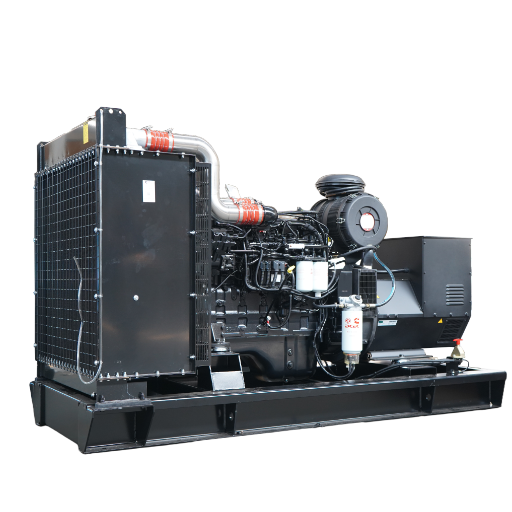
Stop guessing and read the pattern. Match what you see across one load change to a row below. The fails-load-bank article covers the formal test; this one is for a set running in service.
| What you observe | Most likely cause | First checks |
|---|---|---|
| Brief dip of a few Hz on a big start, recovers in a second or two | Normal governor response to a block step | Stage the start; compare the dip to the class limit |
| Hz settles a few percent low and tracks load, kW near rating | Overload, or droop governor by design | Confirm kW versus rating; no-load Hz; droop setting |
| Hz sags slowly over minutes or hours at steady load | Fuel or air restriction | Filters, tank vent and pickup, lift-pump pressure, air filter |
| Hz hunts or oscillates around the setpoint | Governor instability | Gain, linkage, actuator, fuel quality |
| Hz and voltage collapse together on a step, engine lugs | The engine cannot deliver or overload | Real kW on the controller; governor and fuel; smoke color |
| Set shuts down on low frequency under load | Under-frequency protection or overload | Real kW versus rating; alarm setpoint |
If the dip never recovers and the controller resets or trips, you’re on the overload or protection rows, not normal behavior. Falling Hz with black smoke behind it points at the fuel-air side of the cause list, so do not tune your way past a fuel problem.
How to Test Frequency Under Load Before You Replace Anything
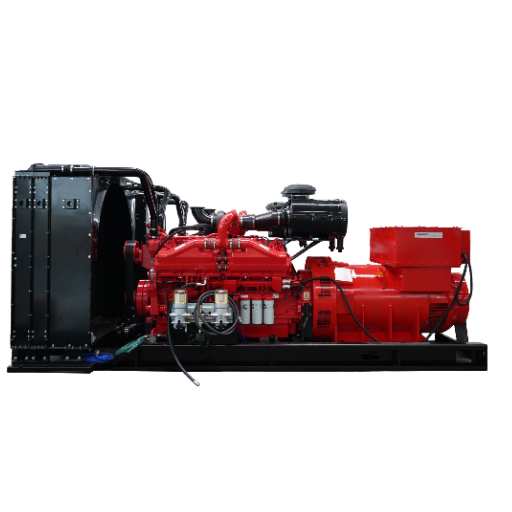
Run these four checks with a clean log sheet before you authorize any adjustment. They take about an hour.
- Log kW and Hz together at three points. At no load, about half load, and the heaviest load you can safely apply, record both from the controller and a hand meter on the same phase. A controller that misreads one number hides the diagnosis.
- Confirm the set is genuinely loaded. Frequency faults only make sense against real kW. If the controller shows low Hz while the kW meter shows almost nothing, you may be watching a lightly loaded motor bus; that scenario belongs to our generator low power factor guide. Verify kW before you diagnose.
- Apply one controlled block step. Start the largest motor or load you normally start and watch how far the Hz dips and how long recovery takes. That single number separates the healthy-transient row from the governor and fuel rows.
- Then decide, and never fix the meter. If the signature matches a normal transient or designed droop, stop; there is nothing to repair. If it matches a fault row, you have a named cause. Do not raise the no-load speed to push the reading back to 50 or 60 Hz; the fixing section explains why that backfires.
Captured the numbers? Send our engineers the load log and a controller-screen photo, and we will tell you whether your set is within class or needs a governor, fuel, or sizing fix.
Fixing the Frequency: Governor, Fuel, Air, in Order
Fix the cause the signature named, in the cheapest, safest order. You cannot adjust your way around a frequency problem.
Governor first when the signature says Governor. If no-load Hz is off, reset it to the rating, then confirm full-load Hz lands where the droop setting intends. On an isochronous single unit, verify the reference holds 50.00 or 60.00 Hz. Check the linkage and actuator for wear before blaming calibration, and treat gain as a last adjustment, made in small steps with a load on the set.
Then fuel, then air. When the cause is restriction, work the sequence in our diesel generator fuel system maintenance guide: filters, tank vent and pickup, lift-pump pressure, fuel quality, then the air filter and exhaust backpressure. Most slow-sag complaints end here.
In a rural hospital running a 300 kVA prime set, frequency sagged a little more each afternoon until the controller shut the unit down on low frequency every evening. Governor adjustments changed nothing. A lift-pump pressure check found a clogged primary filter and a tank vent so restricted that the tank pulled a vacuum as it emptied. Cleared both, and the set held frequency through the peak-load window for the rest of the week. Slow, steady sag is a fuel and air story.
Load-side fixes. If the load is the problem, you don’t rebuild the generator. Stage the big starts so no single step exceeds what the set returns from cleanly, the fix that solved Victor’s cold store, and see our generator trips when motor starts guide. Where the running load genuinely exceeds the set, shed load or size up.
The overspeed trap. Raising the no-load speed to fix a low reading is the most common self-inflicted wound in this trade. One technician did exactly that for a sagging-frequency complaint. The set then showed a healthy 50 Hz under load, but every time the breaker opened the engine ran past 52 Hz and tripped on high frequency, because the added no-load speed had removed the governor’s headroom. The real cause, a dirty fuel filter, was still there. A new filter and correct calibration gave a steady 50.0 Hz and a clean load drop.
When Low Frequency Trips the Set: Protection, Not Panic
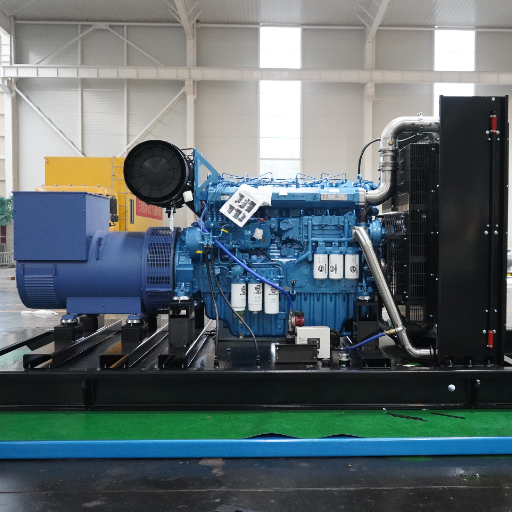
Every controller guards the set against running too slow, because a diesel loses cooling and oil pressure as speed falls and connected motors overheat. Under-frequency protection is controller-specific, so read your manual, but bands are similar: 50 Hz systems commonly alarm around 47 to 48 Hz and shut down lower, often near 45 Hz; 60 Hz systems sit roughly in the 56 to 58 Hz band. Delays of a couple of seconds ignore momentary dips, so a trip means the low frequency lasted.
A second, quieter protection surprises people. As frequency sags, many digital AVRs roll voltage back to hold a safe volts-per-hertz ratio for motors and transformers, a function called under-frequency roll-off or V/Hz limiting. That is why low Hz and low voltage travel together, and why a voltage drop riding on low frequency is the AVR protecting the load, not a second fault. The AVR-side detail lives in our generator voltage drop under load guide.
When a low-frequency trip is a warning, respect it. If the real kW sits below the rating and the set still shuts down at a plausible band, compare the setpoint with the manual before distrusting the hardware. Never bypass a shutdown to force a run: a diesel held below its safe band at full rack can starve its own bearings.
Frequently Asked Questions
Why Does Generator Frequency Drop When Load Is Applied?
Adding load adds torque demand on the engine, which slows the crankshaft for a moment until the governor adds fuel to hold the speed up. That momentary dip is normal. Frequency that settles low and stays there, or sags over time, means the governor, load, or fuel and air path cannot keep up; the signature table tells you which.
What Frequency Should a Diesel Generator Run At (50 Hz vs 60 Hz)?
The frequency a set should run at is what its market is built to: 50 Hz in most of the world, 60 Hz in the Americas and parts of Asia. A healthy single unit on isochronous control holds 50.00 or 60.00 Hz under load within its class. For market details, see our 50 Hz vs 60 Hz generator guide.
Is a Small Frequency Drop Under Load Normal?
Yes, in two specific ways. A brief dip of a few hertz for a second or two on a sudden load step is a normal governor response. On a droop-governed set running in parallel, settling a few percent below the no-load value at full load is by design. What’s not normal is a drop that keeps sagging under a steady load or never recovers.
Why Does My Generator Slowly Lose Hz Under Load Over Time?
A slow sag over minutes or hours is almost always a fuel or air restriction, not the governor. Clogged filters, a blocked tank vent or pickup, a weak lift pump, or air in the line starves the engine as it asks for more. Check fuel delivery first; the hospital example above is exactly this signature.
Can Low-Frequency Damage My Generator or Equipment?
It can, which is why the protection exists. Motors run slower, cool worse, and draw more current at low frequency; transformers can saturate; and the diesel itself loses cooling and oil pressure below rated speed. Under-frequency trips and AVR volts-per-hertz roll-off stop that damage. Treat a low-frequency trip as a warning and fix the cause, not the reset.
At What Frequency Will a Generator Trip on Low Frequency?
There is no universal number, so read the controller manual. As a guide, 50 Hz systems alarm around 47 to 48 Hz and shut down lower, and 60 Hz systems sit around 56 to 58 Hz, with delays that ignore brief dips. If yours trips at a very different band, check the setpoint before suspecting hardware.
Conclusion
When generator frequency drops under load, the answer is almost always on the speed-control side of the machine, and it’s usually not a broken generator. Keep the frame: a brief dip on a load step can be normal, a settling, sagging, or hunting frequency is not, and voltage that rides down with it is the AVR protecting the system, not a second fault.
Log kW and Hz together, read the signature, test before you touch, and fix in the order load, governor, fuel, air, engine power. Never hide a sag by raising no-load speed, and never bypass a low-frequency shutdown. On a healthy, correctly sized set, the isochronous control holds 50.00 or 60.00 Hz, and a droop set settles where its setting says it should.
If the numbers show the load genuinely exceeds the set, or a governor or fuel fault is beyond your team, send our engineers your load log and a controller-screen photo. We will tell you whether the answer is a staging change, governor calibration, a fuel-system repair, or a correctly sized generator.
