
Diesel generator low power factor is a load condition, not a machine fault: the motors and equipment on the site draw reactive power, so the set delivers fewer useful kilowatts than its rating suggests, and the alternator reaches its current limit while the engine is still underloaded. A reading near 0.6 or 0.7 is common on motor-heavy sites, and it tells you to look at the load first, not the generator.
Marta manages a bottled-water plant outside Nairobi with a 500 kVA set that kept tripping on high alternator temperature at 360 kW, well under its 400 kW engine rating. A load survey found the motor-driven line sitting at 0.63 power factor. Staged power factor correction lifted the measured figure to about 0.92, and the same set now carries roughly 455 kW without overheating. The generator was never the problem. The power factor was.
This guide explains what a low reading means, whether it is a fault or a meter artifact, what it costs in real capacity, and how to fix it safely. It also warns of the leading power factor trap, where correction damages the set it meant to help.
One note on scope. For the definition of kVA, kW, and the conversion math, see our guide to generator kVA vs kW. For alternator excitation and nameplate ratings, read how to read generator alternator specifications. This article is the operational side: what a low power factor does to a set you already run.
Shandong Huali Electromechanical builds diesel generator sets from 8 kVA to 4,000 kVA and load-tests every unit before delivery. If you are unsure whether your low reading is load or meter, send us a photo of the controller screen and your load list, and our engineers will read it with you.
Key Takeaways
- A low power factor is a property of your loads, not a defect in the generator, and it is not fixed by replacing the machine.
- Below about 0.8 the alternator hits its current limit first, so a 500 kVA set at 0.65 PF is capped at roughly 325 kW while its windings run at full rated current.
- Check the meter before the machine: on a balanced resistive load the power factor must read about 1.0, so a 0.5 reading there points to phase rotation or wiring, not a fault.
- Fix a genuinely low power factor with correction toward about 0.95 lagging, or upsize by kVA; never let the set drift into a sustained leading power factor.
- A capacitor bank left connected to an off-load generator can self-excite and push voltage up until the AVR or rectifier fails.
Diesel Generator Low Power Factor: A Load Problem, Not a Fault
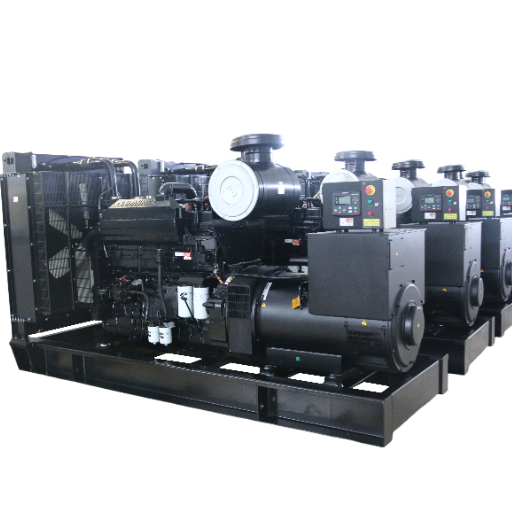
Every diesel generator is rated at a design power factor, and 0.8 lagging is the industry standard. A 500 kVA set rated at 0.8 is matched to a 400 kW engine, and dealers quote ratings the same way, as the guide to generator power factor from Depco Power Systems explains.
That 0.8 is a matching point, not an operating target. You do not have to run the set at exactly 0.8, and a reading above it is not a fault. The set simply has two separate limits. The engine sets the kilowatt ceiling. The alternator windings set the kVA ceiling, really a current limit, because winding heat rises with the square of the current.
When you hear “low power factor,” three different things can be going on, and they need three different responses.
- A genuinely low site power factor below 0.8, caused by reactive loads. This caps your real power and heats the alternator.
- A controller reading that looks wrong, such as 0.4 on a load you know is resistive. This is usually a wiring or rotation problem in the metering, not a fault.
- A low reading at light load on an all-motor circuit. Magnetizing current dominates when a lightly loaded motor runs, so the number is low but harmless.
The fastest way to separate them is a resistive load test. Run a balanced bank of heaters and read the power factor; it should sit near 1.0. If it does, the low number under real load is genuine. If it reads about 0.5, go to the wiring checks in the meter section before you touch the generator.
Why the Power Factor Drops: Four Real Causes
Inductive loads are everywhere in an industrial site. Motors, transformers, welding sets, and older lighting all draw magnetizing current that does no useful work but still flows through the alternator. That reactive current is what pulls the power factor below 1.0.
The first and largest cause is motors that run below their rating. A motor’s power factor tracks its load: near 0.8 to 0.85 at full load, roughly 0.5 at 30 percent, and close to 0.2 at no load. A plant of oversized motors, each loafing at half load, lands the whole site in the 0.6 to 0.7 range even though every motor works correctly.
The second cause is the load mix. Older fluorescent ballasts, small transformers, and welding machines pull a lower power factor than motor-driven pumps and fans. Add a few of these and the site average drops further.
The third cause is a metering artifact at light genset load. On an all-motor circuit at low load, small real current and large magnetizing current combine into a power factor that reads 0.3 to 0.5. The number is real on the meter but meaningless as a fault signal. Judge the power factor at about 80 percent genset load or higher, never on an idling set.
The fourth cause is harmonic current from electronic loads. Variable frequency drives and UPS systems distort the current waveform, and the distortion results in extra heating and a confused power factor number. Depth on harmonics lives in our kVA vs kW guide, where the fix is alternator oversizing and filtering, not capacitor correction.
What Diesel Generator Low Power Factor Costs You
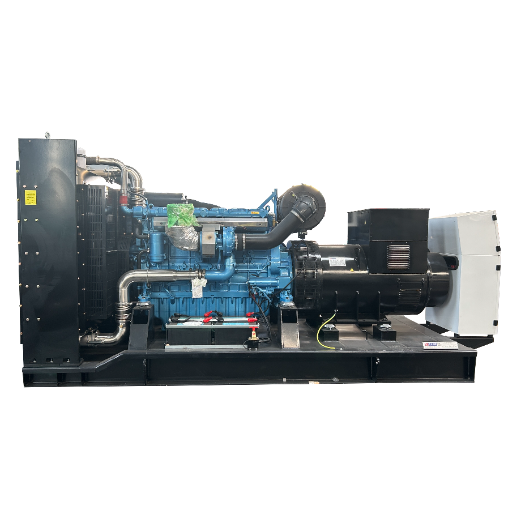
The cost is the capacity you paid for and cannot use. The alternator is current-limited at about 722 amps on a 400 V system, and that current does not drop when the power factor falls. It stays fixed while the useful kilowatts shrink, because only the power factor decides how much of the set’s kVA becomes kW.
| Load power factor | Usable kW ceiling | Which limit binds | Engine load at the ceiling |
|---|---|---|---|
| 1.0 | 400 kW | Engine | 100% |
| 0.9 | 400 kW | Engine | 100% |
| 0.8 | 400 kW | Both matched | 100% |
| 0.7 | 350 kW | Alternator | 88% |
| 0.6 | 300 kW | Alternator | 75% |
| 0.5 | 250 kW | Alternator | 63% |
Read the table this way. Above 0.8 the engine is the ceiling; below 0.8 the alternator is the ceiling; at 0.8 the two limits meet. That is exactly why manufacturers pick 0.8 as the rating point. The 722 amps the windings carry at 400 kW and 0.8 are the same 722 amps they carry at only 300 kW and 0.6. The heat does not change, only the useful output does.
A second cost sits in that table. The engine makes the kilowatts, and at low power factor it is never asked for its full output. A 500 kVA set running a 0.5 PF load caps at 250 kW, so the diesel idles along at 63 percent while the alternator works at full current. Now run that site light overnight, below a third of the engine rating, and you add wet stacking, the carbon buildup we cover in our generator wet stacking prevention guide.
A third cost sits in the excitation system. To hold terminal voltage against a lagging reactive load, the AVR pushes more field current through the rotor, so below the 0.8 design point the exciter and rectifier run hotter. Confirm sustained deep-below-0.8 operation with the alternator manufacturer; its capability curve narrows as you leave the 0.8 design point in either direction.
If the set cannot hold voltage under load steps, see our generator fails load bank test and ISO 8528 generator ratings guides.
When the Controller Shows a Power Factor That Is Not Real
Sometimes the load is fine and the number is wrong. Controller manuals share the same short list of causes. Start with a balanced resistive load: the power factor must read near 1.0. If it does not, one of four things is usually wrong.
- Power factor reads about 0.5 on a pure resistive load. Check phase rotation. Many controllers compute power factor from the sequence, and a non-standard rotation, such as a reversed pair, throws the number off even when volts and amps look healthy.
- One phase reads negative 1.0 while the others look sane. That is a current transformer with reversed polarity on that phase.
- The total power reads near zero while each phase shows healthy amps. Two current transformers are swapped, so the controller sees the phases cancel.
- Two parallel sets show very different power factors under the same load. The excitation or droop settings differ, so one unit exports more reactive power than its twin. Align the AVR droop and nominal voltage settings before suspecting hardware.
Work through those checks before you authorize any repair. A technician on a hotel contract once reported a genset at 0.4 power factor and pushed for an alternator exchange. A senior engineer ran the resistive test, found 0.5 on clean heaters, corrected the phase rotation, and the same set read 1.0 under the test load. The bill was for two hours of labor, not a new head end.
If the meter passes every check, the low number is real, and you move to the fixes below. If the set also sags when big motors start, our generator motor starting kVA guide and the troubleshooting pillar cover that ground.
How to Fix a Genuinely Low Power Factor
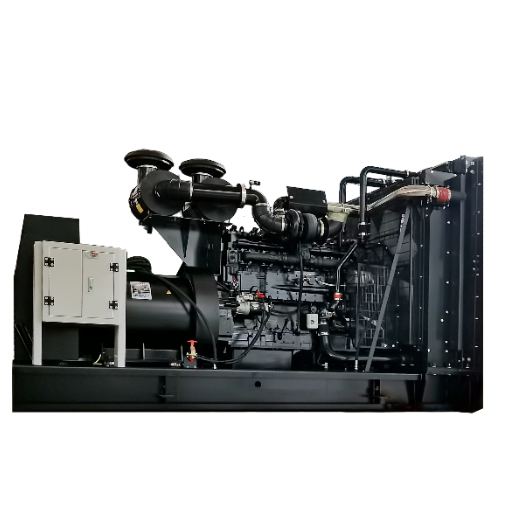
Fix the power factor, not the generator. Two paths work, and you choose between them with the numbers.
The first path is power factor correction on the load side. Capacitor banks supply the magnetizing current locally, so the generator no longer ships reactive power across its terminals. To deliver 400 kW at 0.9 instead of 0.65, the set needs 444 kVA instead of 615 kVA, which is what freed capacity in Marta’s plant. Correcting from 0.65 to 0.9 cuts apparent power demand by about 28 percent, and your supplier sizes the bank from a measurement, not a guess.
Genset-fed sites need stricter rules than grid-fed sites. Correct toward about 0.95 lagging, and stop there. Do not push for a perfect 1.0. Do not use a fixed bank that stays connected when the genset idles, and switch automatic banks out the moment the transfer switch sends the load to generator power. Detuned banks with series reactors are preferred where drives and UPS systems share the bus, because plain capacitors can resonate with harmonic current. Not sure what your site needs? Have an engineer measure the actual power factor over a full day before you buy.
The second path is sizing the generator for the real power factor. If the load is what it is and you will not correct it, then you buy kVA, not kW. Required kVA equals the real kilowatts divided by the actual power factor. A site that needs 400 kW at 0.6 PF needs about 667 kVA, which means a 700 kVA set and an engine big enough to carry its kilowatts. Our guide to choosing the right generator size walks through that full calculation.
Whichever path you take, verify the result under load. A corrected or resized installation should be proven with a loaded run, and our load bank testing guide shows the procedure and the pass criteria.
Ready to size it properly? If your loads run below 0.8 power factor, send our engineers the site’s real kW demand and the motor list. We will tell you whether correction or a bigger kVA is the cheaper answer, and we can spec the alternator to match the real load.
The Leading Power Factor Trap: When the Fix Damages the Set
Here is where capacitor correction goes wrong. Add too much capacitance, and the site’s power factor climbs past 1.0 into the leading range. The generator is then absorbing reactive power instead of supplying it, which engineers call underexcited operation. The machine’s safe region on its capability curve shrinks sharply there. The classic power systems textbook explains the two limits: stator iron can overheat at the winding ends, and the machine moves closer to its stability limit as the field weakens, because the torque angle cannot pass 90 degrees without losing synchronism.
The worst case is self-excitation. Connect a capacitor bank to a generator that is off-load or barely loaded, and the capacitance can excite the alternator on its own. Terminal voltage climbs without the AVR being able to stop it, and the first victims are the AVR, the rectifier diodes, and anything downstream rated for nominal voltage.
A facility manager Daniel, knew added a fixed capacitor bank would clean up his monthly power factor bill. During the weekly no-load exercise, the standby set’s voltage ran away and took out the automatic voltage regulator. The bank was still connected because no one had interlocked it to the transfer switch. The fix cost more than the bank saved. The corrected installation now switches the capacitors out whenever the genset carries the site, and the target is 0.95 lagging, not 1.0.
Three rules keep you out of the trap. First, target about 0.9 to 1.0 lagging and never plan for a sustained leading power factor. Second, never leave shunt capacitors connected to an off-load or idling generator. Third, prefer a bank with an automatic controller that monitors the generator’s real power and disconnects below a set load, or active electronic correction that works with the voltage regulator rather than against it.
Frequently Asked Questions
Why Is My Generator Power Factor Low?
Most often the loads are the reason. Motors, transformers, and welders draw reactive current, and when they run below their ratings the site power factor can sit at 0.5 to 0.7. First confirm the meter with a resistive test load, which must read about 1.0. If it does, your low reading is real and belongs to the load.
What Power Factor Are Diesel Generators Rated At?
Diesel generator sets are conventionally rated at 0.8 lagging power factor, the industry standard that matches engine kilowatts to alternator kVA. A 500 kVA set rated at 0.8 is matched to a 400 kW engine. The 0.8 figure is a design matching point, not a required operating point.
Does a Low Power Factor Damage a Diesel Generator?
Sustained operation well below the 0.8 design point stresses the alternator because it runs at full rated current while the engine stays underloaded, and the exciter works harder to hold voltage. A low reading at light load is harmless. The danger is high current plus low real power for hours at a time.
Can I Add a Capacitor Bank to My Diesel Generator?
Yes, with strict rules. Correct toward about 0.95 lagging and stop there. Use detuned banks where drives are present, switch the bank out when the genset carries the load, and never leave capacitors connected to an off-load set, because they can self-excite and push voltage up until the AVR fails.
Do I Need a Bigger Generator for a Low Power Factor Load?
Only if you choose not to correct the load. Divide your real kilowatts by the actual power factor to find the kVA you need. A 400 kW load at 0.6 power factor needs about 667 kVA. Correcting the power factor to 0.9 cuts that demand to 444 kVA and usually beats buying a larger set.
Is a Low Power Factor at No Load a Problem?
No. An idling set on an all-motor circuit legitimately reads a low power factor because magnetizing current dominates and real current is tiny. Judge the number at about 80 percent load. A low reading at no load is not a fault and needs no correction.
Conclusion
Diesel generator low power factor is a load conversation, not a repair order. Start by trusting the meter or distrusting it with one resistive test. If the reading is genuine, the set has not broken; it has a capacity problem because the alternator reaches its current limit while the engine stays underloaded. Fix the load with correction toward about 0.95 lagging, or size the set by kVA at the real power factor, and verify the result under load.
The costs are measurable: at 0.6 power factor the 500 kVA set in our example is capped at 300 kW while its windings carry full rated current, and an uncorrected 400 kW load forces a jump from 500 kVA to roughly 700 kVA. Correction returns that capacity at a fraction of the price. The trap is overcorrection into a leading power factor, which can take out the very set you are trying to help.
If you want certainty instead of a spreadsheet argument, send our engineers the site kW, the motor list, and a photo of the controller’s power factor reading. We will tell you whether the answer is a capacitor bank, a bigger alternator, or nothing at all, and we will spec it against your real load.
