
A generator set specification for tender must define the power rating class (ESP, PRP, or COP per ISO 8528), electrical and engine requirements, site conditions with derating, testing and acceptance criteria, documentation deliverables, and warranty terms. Without these six elements, bids cannot be compared and the project carries the risk.
Two bids land on your desk for the same tender. One offers a 500 kVA generator set at 48,000.Theotherquotes48,000.The other quotes 71,000 for what looks like the same machine. Without a precise specification, you cannot tell whether they are even quoting the same equipment. The specification is the comparison.
If you write or evaluate tender documents, you already know the tedious part: reverse-engineering clauses from old PDFs written for lawyers, not engineers. This guide gives you a complete, clause-by-clause framework instead. It covers rating classes, sizing math, site conditions, testing protocols, and evaluation criteria, and it works whether you write tenders or answer them.
At Shandong Huali Electromechanical, we have supplied generator sets from 8 kVA to 4000 kVA into government, hospital, and infrastructure tenders across more than 20 countries. This framework reflects what actually separates compliant bids from winning ones.
Key Takeaways
- Every generator tender spec must state the ISO 8528 rating class: ESP for standby (200-500 hours/year, no overload), PRP for prime power (unlimited hours, 10% overload for 1 hour in 12), or COP for continuous base load.
- Motor starting, not running load, usually decides the rating: direct-on-line motors draw 6-8 times full-load current at start.
- Site derating is roughly 3% per 300 m of altitude and 3% per 5°C above 40°C; a spec without site conditions is not enforceable.
- Critical facilities should specify ISO 8528-5 performance class G3, start-to-load acceptance within 10 seconds, and a defined fuel runtime.
- Require a clause-by-clause compliance statement and a Guaranteed Technical Particulars (GTP) schedule, or bids cannot be evaluated fairly.
What a Generator Set Specification for Tender Must Include

A complete generator tender technical specification contains eight building blocks. Missing any one of them creates ambiguity that bidders will price around, or exploit.
- Power rating and duty class. kVA output at 0.8 power factor, plus the ISO 8528 rating class (ESP, PRP, or COP).
- Electrical requirements. Voltage, frequency, phase, voltage regulation, alternator type, insulation class, and protection rating.
- Engine requirements. Cooling, speed, governor type, starting system, and start-to-load acceptance time.
- Site conditions and derating. Ambient temperature range, altitude, humidity, and any corrosive or dusty environment factors.
- Enclosure, fuel system, and noise. Canopy type, noise limit, fuel tank capacity, and required runtime.
- Control and protection. Controller functions, automatic mains failure (AMF), transfer switch, and synchronization if needed.
- Testing and acceptance. Factory tests, site load tests, and the documentation that proves compliance.
- Warranty and after-sales. Warranty duration, spare parts availability, response times, and training.
The rest of this guide walks through each block with the values and standards that real tenders use. If you want a parameter-by-parameter decoder that goes beyond the procurement context, our complete generator set specification guide breaks down every line item in one place.
Power Rating: The Clause That Decides Everything
The rating clause is where most tender specifications succeed or fail. Get it wrong and every downstream clause inherits the error.Before you fix the kVA figure, it helps to be clear on what that number actually promises, and our guide to generator kva vs kw explains how power factor links the apparent power the alternator carries to the real power your equipment can use.
ISO 8528 Generator Rating Classes (ESP, PRP, COP, LTP)
ISO 8528 is the governing standard family for reciprocating engine generator sets. Part 1 defines four rating classes, and your spec must name one explicitly:
| Class | Duty | Overload Allowance | Typical Hours/Year | Typical Use |
|---|---|---|---|---|
| ESP (Standby) | Emergency backup only | None | 200-500 | Hospitals, offices, grid backup |
| PRP (Prime) | Unlimited hours, variable load | 10% for 1 hour in every 12 | Unlimited | Mining, construction, off-grid sites |
| COP (Continuous) | Constant base load | None | Unlimited | Power plants, remote facilities |
| LTP (Limited-Time) | Limited running hours | None | ~500 | Peak shaving, seasonal duty |
A common and costly error is specifying ESP equipment for a prime power application. The set will be cheaper, and it will also wear out years early. Always match the class to the actual duty cycle.For the full run-time, load, and overload limits behind each class, and why they change the sustainable rating, see our guide to the ISO 8528 generator rating.
Generator kVA Sizing for Tender Documents: Motor Starting and Transient Loads
Running load rarely decides the generator size. Motor starting does. A direct-on-line motor draws 6-8 times its full-load current at start. Star-delta starting cuts that to roughly 2 times, and a VFD to about 1.5 times.
A worked example shows the math. Say the running demand calculates to 392.5 kVA, but the largest motor’s starting transient pushes the requirement to 609 kVA. The engineers select the next standard rating, 700 kVA, giving a 56% load factor. That sits comfortably inside the preferred 50-80% operating band. If your site is motor-heavy, work the numbers properly first, and our guide to generator motor starting kva shows the two ways to calculate starting kVA and check the voltage dip before you commit to a rating.
Note that oversizing fails too. A diesel engine run below 30% load for long periods suffers “wet stacking,” where unburned fuel and carbon foul the exhaust and injectors. Your spec should state both the calculated load and the expected load factor.
Site Derating for Altitude, Temperature, and Humidity
Ratings assume standard reference conditions. Real sites rarely match them. As a rule of thumb, engines lose about 3% of output per 300 m of altitude and about 3% per 5°C above a 40°C ambient baseline. These losses stack faster than most buyers expect, so before you size for a hot or high site, work through the full curves in our guide to generator derating altitude temperature.
A composite case drawn from tender failures illustrates the cost our engineers see. A procurement team for a coastal resort project reused a specification written for a European warehouse. The document said nothing about salt air, so no bidder priced corrosion protection. Two alternators failed within 18 months, and the replacement cost exceeded the original savings from the lowest bid. One sentence in the site conditions clause, requiring IP23 protection and an anti-corrosion coating, would have prevented it.
Electrical and Engine Requirements in a Generator Tender Technical Specification

Alternator and Voltage Regulation
Specify a brushless, self-excited alternator with an automatic voltage regulator (AVR). Standard tender values include:
- Voltage regulation of 2.0% or better from no-load to full load
- Class H insulation for thermal headroom
- IP23 protection minimum, higher in dusty or coastal sites
- Compliance with IEC 60034 for rotating electrical machines
Engine and Governor Requirements
For 50 Hz markets, specify a water-cooled, 1500 RPM diesel engine with closed-circuit lubrication and a fuel-water separator. Sets at 100 kVA and above should have an electronic governor for tighter frequency control. State the start-to-load acceptance time: 10 seconds or less is the norm for standby applications.
Performance Class G1 to G4: When to Specify G3
ISO 8528-5 defines performance classes G1 through G4, covering frequency droop, voltage deviation, and transient recovery. G2 suits general industrial loads. Specify G3 for critical applications such as hospitals and backup power for data centers, where connected equipment is sensitive to voltage and frequency excursions. Writing the class into the spec removes the guesswork from evaluation.For the exact voltage and frequency tolerances each class must meet, and how to decide which one your loads demand, see our breakdown of the generator performance class G1 G2 G3 G4.
Site Conditions, Enclosure, and Installation Clauses
Beyond derating, this block of the generator tender specification covers the physical installation:
- Enclosure type. Open, silent canopy, or containerized. Silent canopies typically carry a noise limit of 75 dB(A) at 1 meter, and site-level generator noise regulations may impose their own limits.
- Fuel system and runtime. State the required autonomy clearly, for example “fuel capacity for 8 hours at 100% prime load.” Fuel storage design must also meet local diesel fuel storage regulations, including bunding and separation distances.
- Control and switching. AMF control, automatic transfer switch (ATS) rating, and synchronization capability for parallel sets.
- Installation scope. Define who supplies foundations, cabling, exhaust, and ventilation. Vague installation scope is a top source of post-award disputes. Exhaust routing has safety and emissions dimensions of its own, covered in our generator exhaust safety guide.
Testing, Documentation, and Acceptance Criteria
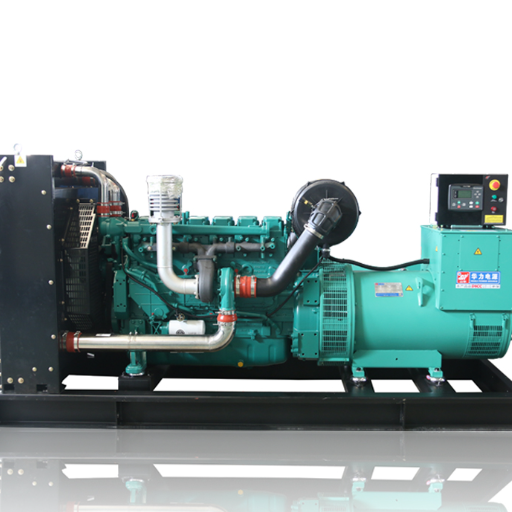
Factory Acceptance Test (FAT) and Site Test Requirements
Require a factory acceptance test (FAT) with certified results before shipment. Then define the site acceptance test precisely. A protocol used in real government tenders runs 6 hours at full load, 1 hour at 110% overload, then 6 more hours at full load, for 13 hours total. State who witnesses the tests and what records must be handed over. For the load steps, the pass/fail line, and the evidence pack that closes each gate, our guide to the generator acceptance testing procedure walks through both the factory and site tests in full.
GTP Schedules and Compliance Statements
A Guaranteed Technical Particulars (GTP) schedule is a form where the bidder fills in the actual guaranteed values for every specified parameter: output, fuel consumption, regulation, dimensions, weight, and more. Pair it with a clause-by-clause compliance statement, where the bidder responds “comply,” “deviate,” or “alternative offered” to each numbered clause with supporting detail.If you have never built one, our guide to the guaranteed technical particulars generator schedule shows exactly which values to demand so a bidder cannot walk a claim back after award.
These two documents turn evaluation from guesswork into arithmetic. Accept “yes/no” compliance statements without detail, and you will discover the deviations after delivery instead of before award.
Drawings, Certifications, and References
Require layout, foundation, and single-line drawings with the bid. Ask for quality certifications such as ISO 9001 and ISO 14001, type test reports, and a reference list of comparable installations with contactable addresses. A bidder with no comparable references is a risk your evaluation criteria should price in.
Generator Tender Evaluation Criteria That Get You Comparable Bids
A specification only works if the evaluation method matches it. Use pass/fail gates for the fundamentals: correct rating class, valid GTP schedule, complete compliance statement, required certifications. Then score the survivors on lifecycle value rather than lowest price alone.
On lifecycle cost, the numbers argue for themselves. Fuel dominates the cost of ownership for prime power sets, so a 5% fuel consumption advantage can outweigh a 15% price difference within two to three years. Include warranted fuel consumption at 50%, 75%, and 100% load in the GTP, and score it.
One more safeguard: avoid naming a single brand without an equivalency clause. “Cummins, Perkins, Weichai, or equivalent” keeps competition open while holding the quality line. Specifications written around one brand invite challenges and shrink your bidder pool.
Common Generator Tender Specification Mistakes
After 25 years of reading tender documents, these are the errors we see most:
- No rating class. “500 kVA diesel generator” is a wish, not a specification. State ESP, PRP, or COP.
- Sizing for running load only. Motor starting transients decide the rating; include the starting method and voltage dip limit.
- No derating clause. Altitude and temperature silently delete capacity. A 1000 kVA set at 2,000 m and 45°C delivers far less than the nameplate.
- Missing fuel runtime. “Adequate fuel tank” means something different to every bidder.
- Copy-pasted specs. A document written for another climate, voltage, or duty cycle imports someone else’s assumptions.
- Vague warranty terms. “Standard warranty” is unenforceable. State duration, coverage, response time, and spare parts support in years.
A second composite case, from utility tenders we have reviewed, shows the third point. A regional utility’s tender for a mountain telecom site specified 100 kVA with no altitude clause. The winning set was correctly built to the paper spec, and it still could not carry the site load at 2,300 m. The variation order for a larger unit cost more than competitive bidding on a correct spec would have.
Generator Set Technical Specification Template: 10-Point Tender Checklist

Use this checklist as a copy-and-fill generator set technical specification template. Each numbered item becomes a clause in your tender document; audit any draft against it before the document goes out:
- Rating class stated (ESP/PRP/COP per ISO 8528-1) with kVA at 0.8 power factor.
- Load calculation attached, including motor starting analysis and target load factor of 50-80%.
- Site conditions defined: temperature range, altitude, humidity, corrosive or dusty environment.
- Derating method specified and guaranteed values required at site conditions, not reference conditions.
- Electrical requirements listed: voltage, frequency, regulation, alternator class, IP rating, IEC 60034 compliance.
- Performance class named per ISO 8528-5 (G2 general, G3 critical), plus start-to-load time.
- Fuel runtime and enclosure specified, with a noise limit where relevant.
- Testing protocol defined: FAT plus a timed site load test with witnessed results.
- GTP schedule and clause-by-clause compliance statement required with the bid.
- Warranty and after-sales quantified: duration, response time, spare parts availability, training.
Frequently Asked Questions
ESP vs PRP vs COP: What is the difference between generator ratings?
ESP (Emergency Standby Power) is for backup use only, typically 200-500 hours per year with no overload allowance. PRP (Prime Power) allows unlimited hours at variable load with a 10% overload capability for 1 hour in every 12. COP (Continuous Power) covers constant base-load operation with no overload allowance. Using ESP equipment in a prime application voids warranties and shortens engine life.
What performance class should a hospital or data center specify?
Specify ISO 8528-5 class G3 for hospitals, data centers, and other critical facilities. G3 sets tighter limits on frequency and voltage deviation and on transient recovery, which protects sensitive medical and IT equipment. General industrial loads can use G2.
How long should a generator warranty be in a tender?
Most tender documents specify 12 months to 3 years, with 12 months from commissioning or 18 months from delivery being common baselines. Government and infrastructure tenders increasingly require defined after-sales support for up to 10 years, including spare parts availability and response times. Ask bidders to include a generator maintenance checklist and service schedule with their after-sales terms; a supplier who cannot produce one will not support the set well in year three.
Can a tender specify a generator brand name?
Public procurement rules in most markets restrict brand-name specifications. The standard approach is to name acceptable quality benchmarks with an “or equivalent” clause, such as “Cummins, Perkins, Weichai, or equivalent.” This keeps the tender competitive while protecting quality.
What documents should bidders submit with a generator tender?
Require technical datasheets, a completed GTP schedule, a clause-by-clause compliance statement, layout and foundation drawings, single-line diagrams, type test reports, quality certifications, warranty terms, and a reference list of comparable installations.
Conclusion: A Good Generator Set Specification for Tender Buys the Generator You Actually Need
Writing a generator set specification for tender is not paperwork. It is the engineering decision, expressed in contract language. The clauses you write decide what gets delivered, how it performs at your altitude and temperature, and how fairly you can compare the bids.
The framework is straightforward: name the ISO 8528 rating class, size for motor starting, derate for site conditions, define testing and documentation, and quantify the warranty. Ten clauses, one checklist, no ambiguity.
Key takeaways:
- State ESP, PRP, or COP explicitly; duty class mismatch is the most expensive spec error
- Size for motor-starting transients, then check the 50-80% load factor band
- Write site conditions and derating into the spec, or the nameplate rating is fiction
- Require GTP schedules and clause-by-clause compliance statements for fair evaluation
- Score lifecycle cost, not just price; fuel consumption decides the real winner
If you are preparing a tender, start from the checklist above and adapt it to your site. If you are responding to a diesel generator specification for bidding, mirror the structure in your response and let the documentation prove compliance.
Shandong Huali manufactures diesel generator sets from 8 kVA to 4000 kVA with Cummins, Perkins, Weichai, and Yuchai engine options, all built under ISO 9001 and ISO 14001 certified processes and tested before delivery. Our engineers work with tender specifications every week, and we can review yours or supply a complete, tender-ready technical package.
Tell our team your rating class, site conditions, and runtime requirements, and we will respond with guaranteed technical particulars you can evaluate line by line. For a broader buyer’s perspective, see our guide to choosing the right diesel generator.
