
There is no single winner between Cummins and Perkins. Cummins is the heavy-duty, continuous-duty choice; Perkins is the fuel-efficient, cost-sensitive choice. The right engine depends on your duty cycle, not the brand name.
We can say that plainly because we build generator sets with both engines. A dealer who sells only one brand has an agenda. We do not. When you ask us “Cummins vs Perkins generator,” our answer starts with a question about how you actually run the set. That honesty is the whole point of this article.
You have probably heard the shorthand: Cummins for heavy industry, Perkins for standby and agriculture. That is roughly right, but it hides the real decision. The engine is only half the set, and the rating class, the site conditions, and the assembler all change the answer. Here is how to compare the two properly, from someone who makes both.
Key Takeaways
- There is no universal “better”, Cummins wins for continuous 24/7 prime power; Perkins wins for standby, light commercial, and cost-sensitive duty.
- Perkins typically costs 15-20% less upfront and burns 5-10% less fuel at comparable load.
- Cummins offers a 190+ country service network and a longer track record in demanding continuous operation.
- The engine is only one component, the alternator, AVR, and assembly quality decide the set just as much.
- Always compare the same ISO 8528 rating class (PRP vs PRP, not PRP vs ESP) before you compare prices.
The Two Brands at a Glance
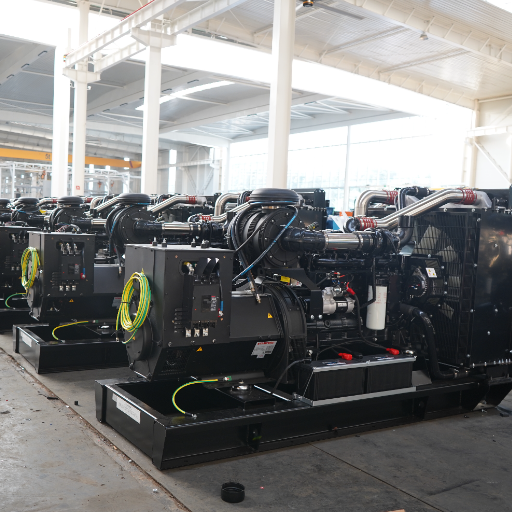
Cummins: The Heavy-Duty Workhorse
Cummins is an independent American engine manufacturer with a global reputation built on continuous-duty reliability. Its generator engines power data centers, hospitals, mining operations, and telecom sites where a set must run for weeks at a time without interruption.
The company designs its engines and generator sets as an integrated package, which means the engine, cooling system, and control electronics are tuned to work together. In demanding, high-load, or variable-load applications, Cummins is the conservative, proven choice. The trade-off is price, and to a smaller degree fuel economy.
Perkins: The Fuel-Efficient Workhorse
Perkins is a British engine maker, a subsidiary of Caterpillar since 1998. It built its name in agriculture, construction, and light industrial machinery, where fuel cost and ease of servicing matter more than 24/7 uptime.
Perkins engines are typically quieter, simpler to service, and more economical to run at partial load. For standby generators that only run a few hundred hours a year, those attributes usually outweigh the extra durability you pay for in a Cummins. The trade-off is that Perkins is less commonly the first choice for continuous prime power.
Ownership, Range, and Backing
The two brands also differ in structure and range. Cummins is independent (NYSE: CMI) and spans roughly 10 kW to 2,000+ kW. Perkins, backed by Caterpillar’s global parts network, spans from small 5 kW units (400 series) through the 1100 series (about 30-200 kVA) and up to the 4000 series at 2,000+ kVA. Both cover the common industrial band; the difference is where each is strongest.
Head-to-Head: Cost, Fuel, Service, Noise
Upfront Cost
Perkins almost always wins on sticker price. Across comparable ratings, a Perkins-powered set typically costs 15-20% less than an equivalent Cummins, with the gap largest below 200 kVA. In one Southeast Asian price guide, a 100 kVA Perkins set listed around RM 45,000-55,000 against RM 55,000-70,000 for Cummins. If the budget is the binding constraint and the duty is standby, Perkins is the obvious call.
Fuel Consumption
Perkins generally burns 5-10% less fuel at comparable load, especially in partial-load or standby operation. A 400 kVA Perkins might consume roughly 61-65 L/hr at full load against 67-68 L/hr for Cummins. Over thousands of hours, that gap is real money. The caveat: fuel economy is load-dependent, and Cummins holds its efficiency well across a wider load range, so the advantage narrows in heavily loaded continuous duty.
Service Network and Parts
This is where Cummins pulls ahead. Cummins supports equipment in 190+ countries with extensive authorized dealers, service centers, and remote-monitoring tools. Perkins has a solid aftermarket, strengthened by Caterpillar’s distribution, but generally fewer service locations and less digital support. For a remote site in a country with thin service coverage, Cummins’ reach can be worth the premium on its own.
Noise and Packaging
For noise-sensitive urban or hospital sites, Perkins often has the edge. Perkins sets are frequently rated around 60-65 dB(A) in standard enclosures, versus 65-70 dB(A) for comparable Cummins units. The difference is enclosure-dependent, but as a rule Perkins packages quieter at the small and mid-range.
| Factor | Cummins | Perkins |
|---|---|---|
| Upfront cost | Higher (baseline) | ~15-20% lower |
| Fuel consumption | Good, stable across load | ~5-10% better at comparable load |
| Service network | 190+ countries, strong digital tools | Solid, via Caterpillar |
| Typical noise | 65-70 dB(A) | 60-65 dB(A) |
| Power range | ~10 kW – 2,000+ kW | ~5 kW – 2,000+ kVA |
| Best duty | Continuous prime, heavy load | Standby, light commercial, agriculture |
| Overhaul life | Often 20,000-25,000+ hours | Strong for standby duty |
The Decision Framework: When to Choose Each
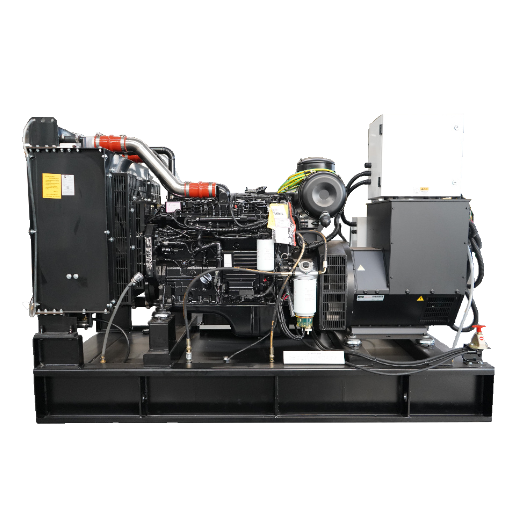
Here is the part most comparisons skip. “It depends on your application” is true but useless without a way to decide. Use these two lists, then check the overlap zone below.
Choose Cummins When…
- The set runs 24/7 as prime power, not just for outages
- Downtime is expensive: hospitals, data centers, telecom, oil and gas
- The load is heavy or variable, with large motors or step loads
- The site is remote and needs the deepest global service reach
- You expect to run the set thousands of hours a year
Choose Perkins When…
- The set is standby and runs only a few hundred hours a year
- The budget is the binding constraint and upfront cost matters most
- The load is light to moderate and stable
- The site is noise-sensitive (urban, hospital, hospitality)
- Fuel efficiency at partial load matters more than maximum durability
The 150-400 kVA Overlap Zone
Between roughly 150 and 400 kVA, both brands are genuinely competitive and the decision is close. In this band, Perkins’ fuel and price advantages are still present, but Cummins’ durability and service reach start to matter. This is where the other two factors in this article, the rating class and the assembler, decide more than the brand badge does.
The Rating-Class Trap Most Comparisons Ignore
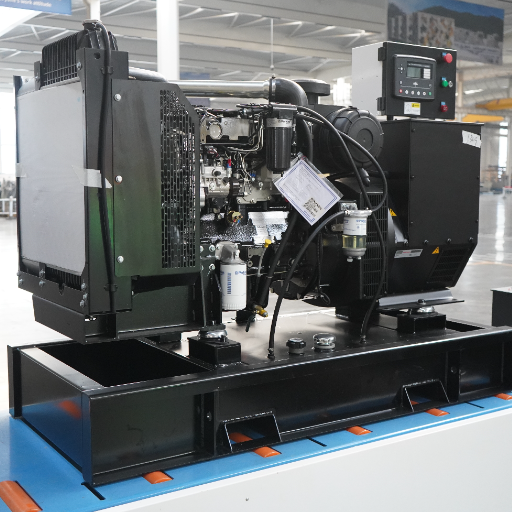
Hold PRP vs ESP Constant Before You Compare Price
Here is a mistake that makes most “Cummins vs Perkins” price comparisons meaningless: comparing different rating classes. A set sold as ESP (Emergency Standby Power) is rated to run only a few hundred hours a year at up to 70% load. A PRP (Prime Power) set is rated for unlimited hours at up to 70% load, with a 10% overload allowance.
A “cheaper Perkins” that is actually an ESP-rated set is not cheaper than a “more expensive Cummins” that is PRP-rated. They are different products. Before you compare any price, hold the rating class constant. Our ISO 8528 guide explains the four rating classes and why ESP and PRP prices legitimately differ by 10-15% on the same engine.
Derating and Site Conditions Change the Answer
Site conditions also shift the comparison. At high altitude, the engine’s turbocharging and aspiration matter more than brand. In extreme heat, the alternator’s insulation class can bind before the engine does. A Perkins set with a high-altitude turbo and a Class H alternator can out-perform a standard Cummins at a thin-air mine. Our derating guide shows how altitude and temperature change the real available output of either brand.
The Assembler Question Nobody Asks
The Engine Is Only One Component
A generator set is not just an engine. It is the engine, the alternator, the automatic voltage regulator (AVR), the control panel, and the integration between them. A great engine with a mismatched alternator or a weak AVR produces a poor set. When you choose “Cummins vs Perkins,” you are really choosing the engine; the set quality depends on who bolts the rest together. Our alternator specifications guide covers the alternator half of that equation.
Gray-Market “Cummins” Sets vs Factory-Integrated Sets
This is the trap we see most often. A buyer gets a “Cummins” set at 25% below market price from a trading company, only to find a mismatched alternator, a counterfeit AVR, and no factory test report. The engine is genuine; the set is not.
Here is a specific story. A contractor in West Africa bought a “Cummins 500 kVA” set through a broker to save money. The Cummins engine was real. The alternator was an unbranded unit with no temperature-rise documentation, and the AVR failed within three months. The set sat dead for six weeks waiting on a replacement board. The savings evaporated in one downtime event.
A properly integrated set, built by a manufacturer who sources the engine from Cummins or Perkins and matches it to a Stamford alternator and a proven AVR, avoids that failure mode. The brand on the engine matters, but the integrator matters just as much.
What to Verify Before You Buy Either Brand
Whether you choose Cummins or Perkins, verify four things before you pay:
- The engine serial number traces back to the genuine manufacturer
- The alternator is a recognized brand (Stamford, Leroy-Somer, Marathon) with a temperature-rise rating
- The set has a factory test report with witnessed load-bank results
- The rating class is stated (ESP, PRP, LTP, or COP) on the nameplate
A Like-for-Like 200 kVA Worked Comparison
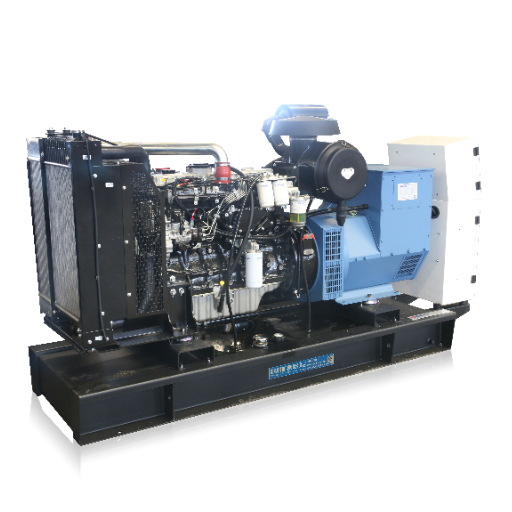
Let’s put both brands side by side at a common rating, 200 kVA prime, so the numbers are honest.
| Specification | Perkins 1106A-70TAG4 | Cummins 6BTA5.9-G2 (equiv.) |
|---|---|---|
| Prime rating | 160 kW / 200 kVA | 160 kW / 200 kVA |
| Configuration | 6-cylinder, inline | 6-cylinder, inline |
| Displacement | 6.6 L | 5.9 L |
| Aspiration | Turbocharged | Turbocharged |
| Fuel burn @ 75% load | ~30-34 L/hr | ~33-38 L/hr |
| Typical relative price | Baseline (lower) | +15-20% |
The two sets deliver the same 200 kVA. The Perkins burns slightly less fuel and costs less to buy. The Cummins carries the deeper service network and a longer continuous-duty track record. Neither is “better.” At 200 kVA standby, the Perkins is usually the smarter buy. At 200 kVA continuous prime in a remote location, the Cummins’ service reach and durability tip the scales.
The point of the table is not to declare a winner. It is to show that at a fixed rating, the real differences are fuel, price, service, and duty, not quality. Both engines are excellent. The decision is about which set of trade-offs matches your operation.
Frequently Asked Questions
Which is better, a Cummins or a Perkins generator?
Neither is universally better. Cummins suits continuous prime and heavy-duty applications; Perkins suits standby, light commercial, and cost-sensitive duty. Match the engine to your duty cycle.
Is Cummins more reliable than Perkins?
Cummins has the longest track record in demanding 24/7 industrial operation and often exceeds 20,000-25,000 hours before overhaul. Perkins is highly reliable for standby and commercial duty. The reliability difference only shows up in continuous operation.
Is Perkins cheaper than Cummins?
Yes. Perkins-powered sets typically cost 15-20% less upfront than comparable Cummins units, with the largest gap below 200 kVA.
Which engine is more fuel-efficient?
Perkins generally burns 5-10% less fuel at comparable load, especially at partial load. The gap narrows in heavily loaded continuous duty.
Is Perkins owned by Cummins?
No. Perkins is a British manufacturer and a subsidiary of Caterpillar since 1998. Cummins is a separate, independent American company.
Conclusion
Cummins vs Perkins is not a contest with a single winner. Cummins is the heavy-duty continuous-duty workhorse with the deepest service network. Perkins is the fuel-efficient, cost-sensitive workhorse that shines in standby and light commercial duty.
Three things decide more than the brand badge: the rating class you are actually comparing, the site conditions the set must survive, and the assembler who integrated the engine into a complete, tested set. Hold those constant, and the engine choice becomes straightforward.
Tell us your duty cycle, your load profile, and your site conditions. Because we build with both engines, our engineering team will recommend the one that fits, not the one we happen to stock, and back it with a factory-tested set that carries the rating it claims.
