
Generator noise regulations typically limit residential areas to 55-65 dBA at the property line, with lower limits at night. In workplaces, OSHA caps exposure at 90 dBA over 8 hours. In the European Union, Directive 2000/14/EC sets mandatory sound power limits for generators under 400 kW. The limit that applies to you depends on your location, zoning, and how the generator is used.
Here is the part that catches people out. An untreated open-frame generator can exceed 100 dB(A), which is louder than a motorcycle at full throttle. And the “emergency use” exemption written into most noise ordinances does not cover the weekly test run that usually triggers the complaints.
If you buy, install, or manage generators, you have probably found the rules scattered across federal guidance, workplace law, and local ordinances. This guide pulls them together. We map US and EU requirements, explain how noise limits are actually measured, and show you how to turn a legal limit into the right equipment specification.
At Shandong Huali Electromechanical, we build silent and containerized diesel generator sets for hospitals, data centers, and construction sites in more than 20 countries. Noise compliance is something our engineers design for every day.
Key Takeaways
- Most residential ordinances cap generator noise at 55-65 dBA at the property line, dropping to around 55 dBA or lower at night.
- OSHA 29 CFR 1910.95 sets a 90 dBA permissible exposure limit over 8 hours, with an 85 dBA action level that triggers a hearing conservation program.
- The EU’s Directive 2000/14/EC sets mandatory sound power limits for generators below 400 kW, calculated as LWA = 95 + lg P_el; an amendment (Directive (EU) 2024/2749) applies from 30 May 2026.
- A noise limit means nothing without a measurement point: sound drops about 6 dB per doubling of distance, so a 75 dB limit at 1 meter and at the property line are completely different requirements.
- Emergency exemptions cover genuine outages, not routine testing. Weekly test runs must comply with standard limits in most jurisdictions.
How Generator Noise Is Measured (and Why It Changes Everything)
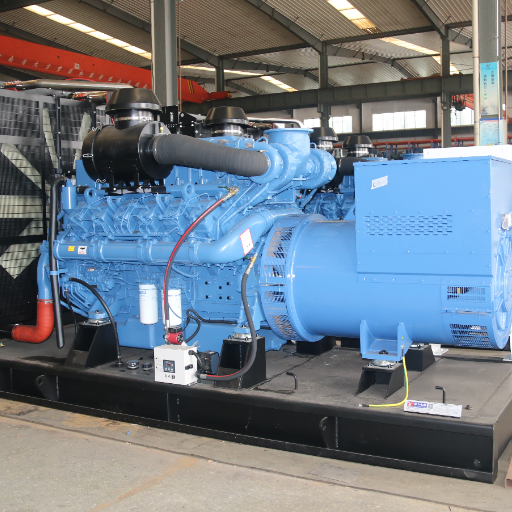
Before any regulation makes sense, you need to know three things about the number on the label.
First, dB(A) means decibels weighted for human hearing. It filters out very low and very high frequencies, so it approximates loudness as people experience it. Nearly all regulations use dB(A).
Second, there are two different measures. Sound pressure level is what a meter reads at a specific spot, and it changes with distance. Sound power level (LWA) is the total acoustic energy the machine emits, and it does not change with distance. The EU regulates sound power; most US ordinances regulate sound pressure at a property line.
Third, distance does a lot of work. Sound pressure drops about 6 dB per doubling of distance in open space. A generator measuring 85 dB(A) at 1 meter reads about 73 dB(A) at 4 meters and 61 dB(A) at 14 meters. This is why “75 dB” is meaningless until someone says where the meter stands.
A facility manager in Texas learned this the expensive way. His team bought a unit advertised at 72 dB(A), verified it at 1 meter during commissioning, and filed the paperwork. The city inspector measured at the property line, 12 meters from the installed unit, and logged 68 dBA against a 60 dBA limit. The generator was fine; the siting was not. Compliance is a geometry problem as much as an equipment problem.
Generator Noise Regulations in the United States
The US has no single federal generator noise limit. Rules stack in three layers: federal guidance, workplace law, and local ordinances.
Federal Baseline: EPA and the Noise Control Act
The Noise Control Act of 1972 gave the EPA authority over environmental noise. In 1982, the federal government shifted that responsibility to states and cities. Today the EPA sets no specific generator decibel limit. Its role lives on through emissions rules and guidance, while actual noise limits come from local government.
OSHA Workplace Limits
OSHA generator noise exposure rules govern any workplace where people operate near running sets. OSHA’s occupational noise standard, 29 CFR 1910.95 sets the key numbers:
- 90 dBA permissible exposure limit as an 8-hour time-weighted average
- 85 dBA action level, which triggers a hearing conservation program with monitoring and training
- 140 dB peak ceiling for impulse noise
An open-frame generator at 100 dB(A) puts an unprotected worker over the limit in roughly 2 hours. Enclosure, distance, or hearing protection must close that gap.Noise is only one of the workplace hazards a running set creates, so pair these exposure rules with our broader guide to generator safety tips, which covers the electrical, fuel, and exhaust risks that sit alongside hearing protection.
State and Local Ordinances
This is the layer that governs most installations. Typical patterns include:
- Residential zones: 55-65 dBA at the property line during the day, 50-55 dBA at night
- Commercial zones: 65-75 dBA
- Construction sites: up to 80-85 dBA during permitted daytime hours
- Setback rules: some ordinances specify minimum distances instead of, or alongside, dB limits
One real example: South Miami caps generator noise at 65 dB measured at a minimum 12.5-foot setback from property lines. Your city’s numbers will differ, so check the municipal code before you finalize equipment.On active jobsites, those noise limits stack on top of other duties, so our guide to construction site generator safety covers the grounding, placement, and crew-protection rules that apply alongside the sound thresholds.
Emergency Exemptions and Testing Restrictions
Most ordinances exempt generators during genuine power outages and emergencies. Routine testing is another matter. Weekly or monthly exercise runs must usually meet standard limits, and some jurisdictions restrict testing to weekday daytime hours.
This is now a live issue for backup power for data centers. Several US cities have adopted ordinances that limit data center generator testing noise, with caps around 70 dBA at short distances and testing windows only during business hours. If your facility runs frequent tests, the testing schedule is part of compliance.
Generator Noise Limits Around the World
European Union: Directive 2000/14/EC
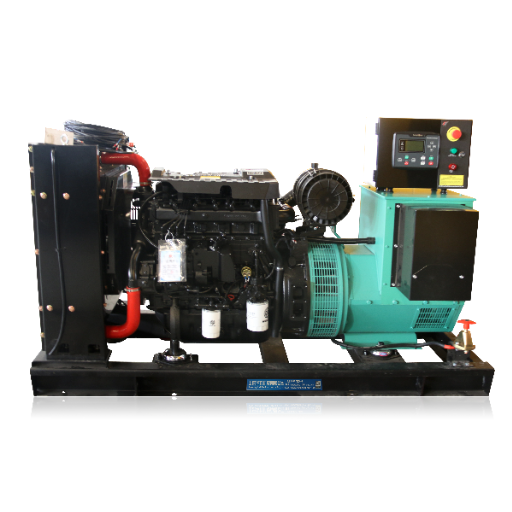
The EU outdoor noise directive for generators takes a different approach. Instead of property-line limits, Directive 2000/14/EC regulates the machine itself. Power generators below 400 kW must meet mandatory sound power level (LWA) limits and carry CE marking plus a noise label showing the guaranteed LWA.
The limit scales with rated power using the formula LWA = 95 + lg P_el. In practice, a small 10 kW unit faces a limit around 95-97 dB LWA, while larger sets get proportionally higher allowances. Conformity assessment involves a Notified Body, so documentation matters as much as the hardware.
The 2026 Amendment
Directive (EU) 2024/2749 amends the framework. Member states must transpose it by 29 May 2026, with application from 30 May 2026. If you sell or install generators in the EU, confirm your documentation reflects the amended requirements this year.
UK, Australia, and Other Markets
Post-Brexit UK retains essentially the same outdoor equipment noise rules under its own regulations. Australia and most Asia-Pacific markets follow the US pattern: state or municipal environmental noise limits with day/night splits, plus workplace exposure rules on site. The practical constants everywhere are the same: quieter equipment, documented noise ratings, and careful siting.
Typical Generator Noise Limits by Application
Exact numbers come from your local code, but these ranges reflect common regulatory patterns:
| Application | Daytime Limit | Nighttime Limit | Typical Measurement Point |
|---|---|---|---|
| Residential areas | 55-65 dBA | 50-55 dBA | Property line |
| Commercial zones | 65-75 dBA | 60-65 dBA | Property line |
| Construction sites | 80-85 dBA | 75-80 dBA | Site boundary |
| Industrial zones | 75-80 dBA | 70-75 dBA | Site boundary |
| Hospitals and data centers | 65-70 dBA | 55-60 dBA | Property line or nearest receiver |
Two cautions. First, an untreated generator above 100 dB(A) misses every one of these rows, which is why attenuation is standard practice. Second, always convert the limit to your measurement geometry before selecting equipment, using the 6 dB per doubling rule from earlier.
How to Comply: Reducing Generator Noise to Legal Levels
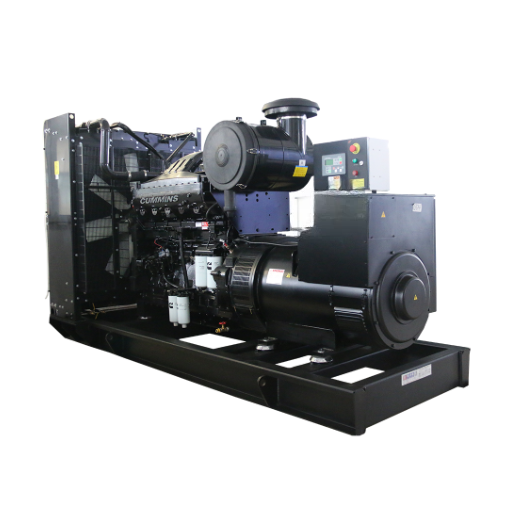
Mitigation follows a hierarchy, from the machine outward:
- Sound-attenuated enclosures. A purpose-built silent canopy brings a diesel set down to roughly 65-75 dB(A) at 1 meter. This is the single biggest reduction available, typically 15-25 dB versus an open frame.
- Exhaust silencers. Reactive and absorptive silencers cut exhaust noise by 10-20 dB. Critical-grade silencers go further for sensitive sites.
- Airflow and cooling design. Much enclosure noise escapes through air intakes and outlets. Labyrinth ducting and acoustic louvers trap it without starving cooling.
- Vibration isolation. Spring mounts and flexible connections stop structure-borne noise, which travels surprisingly far through concrete.
- Placement and barriers. Every doubling of distance buys about 6 dB for free. Acoustic barriers add 5-15 dB more when they break the line of sight between the source and the receiver.
In 2025, a contractor running night roadworks in a residential area faced stop-work complaints at 82 dBA from an open-frame rental. Swapping to a silent canopy set rated 68 dB(A) at 7 meters, plus a simple barrier wall, brought the site boundary reading to 61 dBA. The night permit was reinstated the same week. The fix cost less than one day of the delay it ended.Noise is rarely the only issue a night jobsite has to manage, so our guide to construction site generator safety walks through the placement, cabling, and permitting practices that keep these setups both quiet and compliant.
Specifying Noise Requirements When Buying a Generator
This is where generator noise regulations meet procurement. A buying spec that says “low noise” buys nothing enforceable. Translate your legal limit into equipment language with three values:
- The limit and its measurement point. Example: 60 dBA at the property line.
- The geometry. Example: The unit will sit 15 meters from that line.
- The load condition. Noise ratings should be at full load, not idle.
Now work backward. Fifteen meters is roughly four doublings from 1 meter, worth about 24 dB of free attenuation. To hit 60 dBA at the line, you need a unit at or below about 84 dB(A) at 1 meter, before counting barriers or ground effects. A silent canopy set at 70 dB(A) gives you a comfortable margin. An open unit at 100 dB(A) fails outright.
Ask manufacturers for a guaranteed noise rating: dB(A) at 1 m and 7 m, at 100% load, measured to a stated test standard. “Typical” figures can hide 3-5 dB of optimism. When we quote silent or containerized sets at Huali, the noise rating goes in writing alongside the power rating, and our guide to choosing the right diesel generator covers the other six factors that belong in the same decision.
Generator Noise Compliance Checklist
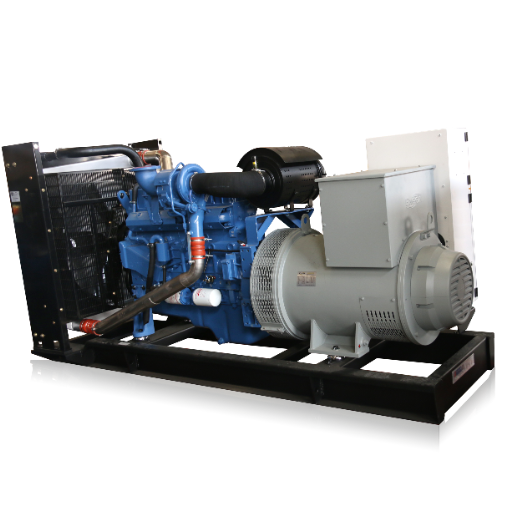
Run this checklist against the generator noise regulations that govern your site, before installation and before your next inspection:For the wider set of pre-start, operation, and inspection checks that belong beside these noise items, use our full generator safety checklist as a companion document.
- Identify the governing limit: municipal code, workplace rule, or EU directive, whichever applies.
- Note the exact measurement point and day/night values in the rule.
- Map your geometry: distance from the generator to the measurement point.
- Convert the limit to a required equipment rating using 6 dB per doubling of distance.
- Specify a guaranteed dB(A) rating at 1 m and 7 m at full load in the purchase documents.
- Confirm testing-time rules and schedule exercise runs inside permitted windows.
- Document emergency-use provisions so outage operation is clearly covered.
- Verify EU documentation (CE marking, noise label, Declaration of Conformity) for European installations.
- Re-measure after installation at the legal measurement point, not beside the unit.
Frequently Asked Questions
How many decibels is a generator allowed?
It depends on where the generator sits and who is listening. Residential property lines typically allow 55-65 dBA by day and 50-55 dBA at night. Workplaces follow OSHA’s 90 dBA exposure limit. In the EU, the machine itself must stay under a calculated sound power limit. A silent generator dB level of 65-75 dB(A) at 1 meter complies with most residential rules once distance is factored in.
How loud can a generator be in a residential area?
Most residential generator noise ordinances allow 55-65 dBA at the property line during the day and around 50-55 dBA at night. The exact number comes from your municipal code. Because sound drops about 6 dB per doubling of distance, siting the generator farther from the line can be as effective as buying a quieter unit.
Are generators exempt from noise rules during power outages?
Usually, yes. Most ordinances exempt emergency operations during genuine outages. Routine testing and prime power operation are not emergencies, and they must meet standard limits. Some cities also restrict generator testing to weekday daytime hours.
What is the difference between dB(A) and LWA?
dB(A) sound pressure level is measured at a specific location and falls with distance. LWA sound power level describes the total noise energy a machine emits and stays constant regardless of where you measure. US ordinances usually regulate sound pressure at a boundary; the EU regulates LWA on the machine itself.
Can I run a generator at night on a construction site?
Only if your permit and local code allow it. Many jurisdictions permit higher construction noise, around 80-85 dBA, during daytime hours but impose much lower night limits or ban night running entirely. A silent canopy set plus barriers is often the difference between a granted and a denied night permit.
How much quieter is a silent generator?
A quality silent canopy set typically achieves 65-75 dB(A) at 1 meter, which is 15-25 dB quieter than an open-frame equivalent. Since 10 dB sounds roughly half as loud to human hearing, that reduction is dramatic. Containerized sets can go lower still.
Conclusion: Quiet Compliance Starts Before You Buy
Generator noise regulations look fragmented, but the logic is consistent everywhere. Find the limit, find the measurement point, do the distance math, and buy equipment with a guaranteed rating that fits. Whether your rule comes from a city ordinance, OSHA, or the EU’s sound power directive, the compliance path is the same.
Key takeaways:
- Residential limits typically run 55-65 dBA at the property line; night limits are stricter
- OSHA caps worker exposure at 90 dBA over 8 hours, with action required at 85 dBA
- The EU regulates the machine itself through Directive 2000/14/EC, with amended rules applying from 30 May 2026
- Distance is free attenuation: about 6 dB per doubling, so siting is a compliance tool
- Emergency exemptions cover outages, not test runs; schedule testing inside permitted windows
- Specify a guaranteed dB(A) rating at a stated distance and load when purchasing
Shandong Huali manufactures silent canopy and containerized diesel generator sets from 8 kVA to 4000 kVA, with documented noise ratings and ISO-certified production. Our engineers can translate your local limit into a compliant configuration before you buy.
