
The five essential generator safety tips are simple: operate outdoors only, at least 20 feet from any opening; install carbon monoxide alarms; never backfeed your wiring; keep the unit dry; and let the engine cool before refueling. Everything else in this guide builds on those five rules.
Here is why they matter. Roughly 85 Americans die every year from carbon monoxide produced by portable generators, according to the US Consumer Product Safety Commission. Most were found in garages with the door open, or beside windows they thought were far enough away. Every one of those deaths was preventable.
If you manage a facility, a construction site, or a hospital, the homeowner rules cover only part of your obligations. OSHA grounding rules, NFPA fuel storage limits, fire-rated room construction, and noise regulations all apply to commercial installations. At Shandong Huali Electromechanical Co., Ltd., we have manufactured diesel generator sets from 8 kVA to 4,000 kVA for over 25 years, shipping to more than 20 countries. This guide covers the complete safety picture, from the first placement decision to ongoing compliance.
Key Takeaways
- Generators must run outdoors, at least 20 feet from doors, windows, and vents, with exhaust pointed away from occupied spaces.
- Carbon monoxide kills within minutes and gives no warning; CO alarms on every level are non-negotiable, and a garage with the door open is still deadly.
- Backfeeding a generator into a wall outlet can electrocute utility workers and your own family. A transfer switch is the only safe connection.
- Industrial sites carry extra obligations: OSHA grounding rules, NFPA 30 fuel limits (660 gallons indoors), 2-hour fire-rated rooms, and lockout/tagout for service work.
- OSHA requires hearing conservation programs at 85 dBA, a level most open-frame industrial generators exceed within a few feet.
The 5 Generator Safety Rules Everyone Must Follow
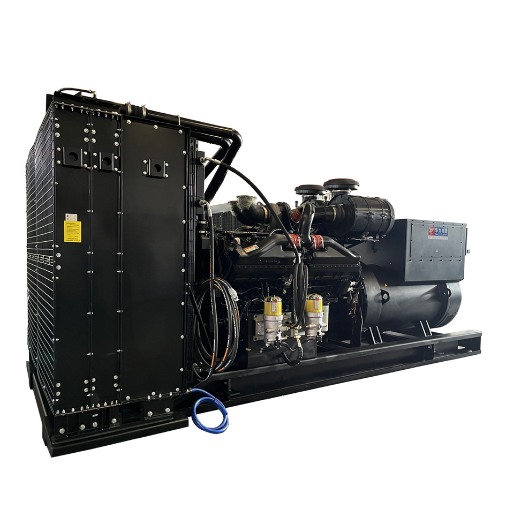
These five rules prevent the majority of generator deaths, fires, and electrocutions. They apply to a 2 kW portable unit and a 2,000 kW industrial genset alike.
Rule 1: Outside Only, 20 Feet From Openings
Never run a generator indoors. Not in a garage, basement, crawl space, carport, or shed. Not even with the doors and windows open.
Place the unit at least 20 feet from all doors, windows, vents, and air intakes. Point the exhaust away from the building and any occupied area. Opening a window is not ventilation. Carbon monoxide drifts, pools, and finds its way inside anyway.
Rule 2: Install Carbon Monoxide Alarms
Install battery-powered or battery-backup CO alarms on every level of the building and outside sleeping areas. Test them monthly. Newer portable generators with ANSI/PGMA G300 auto-shutoff technology add a layer of protection, but they are a backup, not a substitute for safe placement.Because CO is the hazard most likely to be fatal, it is worth understanding exactly how it behaves, and our dedicated guide to generator carbon monoxide safety explains detection, symptoms, and placement in far more depth.
Rule 3: Never Backfeed; Use a Transfer Switch
Never plug a generator into a wall outlet. This practice, called backfeeding, sends power backward through your wiring and out onto utility lines that crews believe are dead. It can kill a lineman blocks away, and it can start a fire in your own walls. A professionally installed transfer switch is the only safe way to connect a generator to building circuits.If you want the full picture of how this failure electrocutes people streets away, our guide to generator backfeeding dangers walks through the mechanism and the safe alternatives.
Rule 4: Keep It Dry
Water and electricity are a fatal combination. Operate the generator on a dry surface under a ventilated canopy or enclosure. Never run it unprotected in rain or standing water, and never touch it with wet hands.For a practical breakdown of covers, elevation, and GFCI use in wet weather, see our guide answering can you run a generator in the rain safely.
Rule 5: Cool Down Before Refueling
Shut the engine off and let it cool before adding fuel. Gasoline spilled on hot engine parts ignites instantly. Diesel is less volatile, but hot refueling still causes burns and fires. Store fuel in approved containers, outside occupied buildings, away from heat sources.Since spilled fuel on a hot exhaust is one of the most common fire patterns on record, our detailed guide to generator refueling safety covers cool-down times, bonding, and spill response step by step.
Carbon Monoxide: The Hazard That Kills First
Carbon monoxide (CO) earns its own section because it causes more generator deaths than every other hazard combined. It is colorless, odorless, and fast. In an enclosed space, a running generator can produce lethal concentrations within minutes.
The early symptoms mimic the flu: headache, dizziness, nausea, fatigue, confusion. People lying down to “sleep it off” during a power outage sometimes never wake up. If anyone shows these symptoms while a generator runs nearby, get them to fresh air immediately and call emergency services.
After Hurricane Ida struck Louisiana in 2021, hospitals treated dozens of carbon monoxide cases in a single week, and several people died. A common pattern emerged in the official reports: generators running in garages with the door open. Families believed the open door made it safe. It did not. CO accumulated faster than it could escape, then seeped into living spaces through shared walls and doorways.
For industrial installations, the same physics apply at larger scale. Generator rooms need engineered ventilation that interlocks with the engine controls, so the unit shuts down if airflow fails. CO detectors should be hardwired into the building alarm system, not left to a battery unit nobody checks. Our guide to generator room ventilation requirements covers airflow calculations in detail.The combustion gases these systems manage also demand careful routing, so our guide to generator exhaust safety explains how to keep exhaust away from intakes and occupied spaces.
Electrical Safety: Grounding, Backfeeding & Transfer Switches
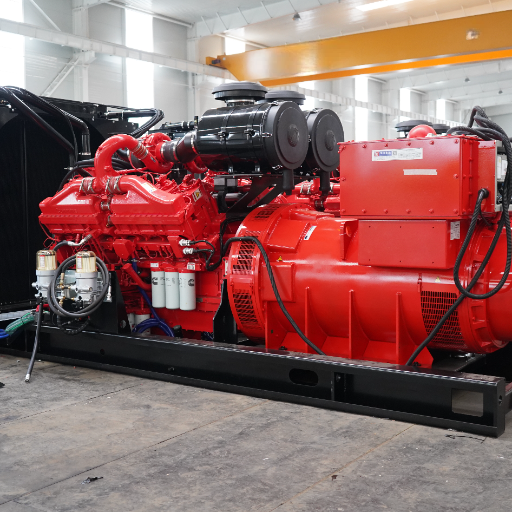
Electrical hazards cause fewer deaths than carbon monoxide, but they injure more people. Three areas matter most.
What Backfeeding Is and Why It Kills
When you plug a generator into a wall outlet, electricity flows backward through your panel, through the service drop, and onto the utility grid. A transformer steps that voltage back up to thousands of volts. A lineman repairing a “dead” line can be electrocuted by your generator without ever knowing it exists.
In 2020, utility crews across the Gulf Coast reported multiple backfeed incidents during hurricane restoration. In one widely cited case, a worker contacted a line energized by a homeowner’s portable generator two streets away. He survived with severe burns. The homeowner faced criminal charges. Utilities treat every line as live for exactly this reason, but no safety margin is perfect.
When OSHA Requires Generator Grounding
Under OSHA 29 CFR 1926.404, a portable generator that powers only cord-and-plug equipment connected directly to receptacles on the generator itself does not require a separate ground rod. The frame bonding inside the unit handles it.
The moment a generator connects to a building’s wiring through a transfer switch, full NEC grounding rules apply. That means a grounding electrode system, correct neutral bonding at exactly one point, and verification by a licensed electrician. Improper neutral bonding is one of the most common industrial installation errors, and it causes circulating currents and false ground-fault trips.Because getting this wrong is both dangerous and easy to do, our guide to generator grounding requirements breaks down the electrode system, neutral bonding, and when each rule applies.
Transfer Switches and Interlocks
A transfer switch isolates your building from the grid before connecting the generator. Automatic transfer switches (ATS) handle this in milliseconds during an outage; manual switches and interlock kits achieve the same isolation at lower cost for smaller systems.
Fuel Safety: Storage, Spills & Refueling
Fuel is the hazard people handle most casually. The rules below come from NFPA 30 and EPA spill prevention requirements, and they apply whether you store 5 gallons or 5,000.
Diesel Storage Limits
Indoor diesel storage above 660 gallons triggers additional fire protection requirements, including a 2-hour fire-rated room. Outdoor tanks need secondary containment sized for 110% of tank volume. Keep fuel tanks at least 5 feet from ignition sources and electrical equipment.If your site holds fuel in bulk, our full guide to diesel fuel storage regulations covers bunding, separation distances, and the SPCC thresholds that decide what containment and paperwork you need.
Diesel also degrades in storage. Plan on a 6 to 12 month shelf life without treatment, and consider a fuel polishing schedule for standby systems that rarely run. Contaminated fuel is a leading cause of failure during actual outages.
Spill Response
Keep absorbent materials near fueling points. Report spills per your local environmental rules, and never hose diesel into storm drains. Sites storing more than 1,320 gallons of oil products aboveground generally fall under EPA’s Spill Prevention, Control, and Countermeasure (SPCC) rule, which requires a written plan.
Safe Refueling Procedure
Shut the engine down. Let it cool for at least 10 to 15 minutes. Remove the cap slowly to release pressure. Use a funnel or listed transfer pump, leave expansion space in the tank, and wipe up drips before restarting. Never smoke within 25 feet of fueling.
Generator Room & Installation Safety
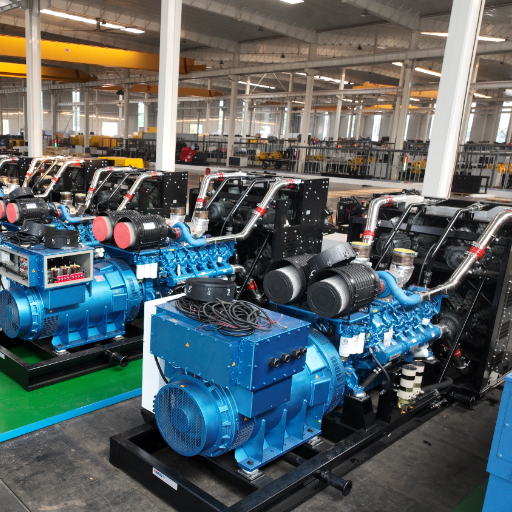
Permanent installations carry building-code obligations that portable units do not. The highlights:
- Clearances: Maintain at least 3 feet on service sides and 5 feet from combustible walls or openings (NFPA 37 and NFPA 110 baselines; local codes may require more).
- Fire-rated construction: Indoor generators typically require a 2-hour fire-rated room, fire dampers in ventilation ductwork, and sprinkler or suppression coverage where indoor tanks are present.
- Ventilation interlocks: Mechanical ventilation must interlock with engine controls so the genset shuts down if airflow fails.
- Remote annunciator: NFPA 110 requires an alarm panel outside the generator room so staff can see faults without entering.
- Exhaust separation: Exhaust outlets must terminate at least 10 feet from air intakes and openings to prevent re-entrainment of combustion gases. See our reference on generator exhaust system design for sizing details.
Permits are not optional. Most jurisdictions require electrical, mechanical, and sometimes environmental permits for standby installations. The AHJ (Authority Having Jurisdiction) will witness acceptance testing before sign-off.The fire-rated construction above is worth planning early, and our guide to generator room fire safety requirements details the wall ratings, dampers, and suppression coverage your AHJ will expect.
Noise & Hearing Safety: The Rule Nobody Publishes
Search ten generator safety articles and you will find almost nothing about noise. That is a strange gap, because noise is the hazard with the broadest daily exposure on industrial sites.
OSHA’s hearing conservation rules kick in at 85 dBA as an 8-hour time-weighted average. An open-frame industrial diesel generator produces 95 to 110 dB at one meter. Workers servicing or working near these units for extended shifts need hearing protection and, at certain exposures, enrollment in a formal hearing conservation program.
| Environment | Typical Limit | Notes |
|---|---|---|
| OSHA workplace (8-hr TWA) | 85 dBA | Hearing conservation program required |
| Property line (many jurisdictions) | 65 to 75 dB | Daytime; lower at night |
| Hospital / urban zones | 55 to 65 dB | Often stricter local ordinances |
The engineering fix is straightforward: acoustic enclosures, lined exhaust ducts, and residential-grade silencers. A silent diesel generator with a sound-attenuated canopy can bring a unit down to 65 to 75 dB at one meter, which changes both compliance math and neighbor relations.To see how workplace limits and property-line rules combine on a real site, our guide to generator noise regulations lays out the dBA thresholds and the enclosure options that meet them.
Facing a noise limit at your site? Our engineers size enclosures and silencers to your dBA target.
Maintenance & Service Safety: Lockout/Tagout
Standby generators create a service hazard most equipment does not: they start by themselves. An ATS senses a utility failure and cranks the engine in seconds, with no warning to anyone inside the enclosure.
A facility manager we will call Daniel learned this during a routine coolant check at a food processing plant in 2023. He had propped the enclosure door and reached toward the fan belt area when the control panel clicked into a utility-failure simulation run by a colleague testing the ATS two rooms away. Daniel was clear of the belts by about a foot. Nobody was hurt, but the plant rewrote its service procedures that afternoon.
The fix is lockout/tagout (LOTO): isolate the ATS control power, disconnect the battery, close the fuel valve, and tag every point so nobody can re-energize the system while hands are inside. Treat every standby genset as equipment that can start at any moment, because it can. Because a self-starting machine holds several energy sources at once, our step-by-step guide to generator lockout tagout procedures shows exactly how to isolate each one before service work begins.
Pair LOTO with a structured diesel generator maintenance program. Poorly maintained generators fail during outages, and emergency repairs under pressure are when shortcuts and injuries happen.
Site-Specific Safety: Construction, Healthcare, Data Centers
Construction sites add temporary-power rules: GFCI protection on all receptacles, daily cord inspection, generators on level ground away from excavation edges, and clear fuel storage segregation. Mud, dust, and constant relocation multiply every baseline risk.For the full set of temporary-power rules and placement precautions, see our dedicated guide to construction site generator safety.
Healthcare facilities fall under NFPA 110 Level 1, the strictest category. Life-safety loads must receive power within 10 seconds, fuel reserves must meet the facility’s Class designation, and testing is witnessed and documented. A failed inspection can jeopardize accreditation, not just uptime.
Data centers concentrate fuel delivery, hot work, and high-amperage electrical work in one footprint. Delivery protocols, bonding during fuel transfer, and redundant emergency stops matter as much as the equipment itself.
Free Industrial Generator Safety Checklist
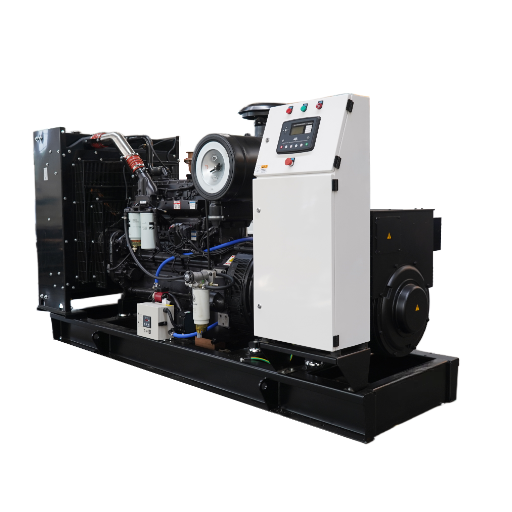
Rules are easy to read and easy to forget. Facilities that stay safe convert rules into inspection routines.
Our industrial generator safety checklist organizes everything in this guide into a daily, weekly, and monthly cadence: visual checks, CO detector tests, fuel system inspections, grounding verification, LOTO points, and housekeeping items like clearance maintenance and signage. It is formatted for printing and posting in the generator room.You can grab the ready-to-use version from our generator safety checklist page and fold it straight into your shift handover.
Frequently Asked Questions
How far should a generator be from the house?
A generator should sit at least 20 feet from your home, with the exhaust pointed away from all doors, windows, and vents. Carbon monoxide is colorless and odorless, and it can reach lethal levels indoors within minutes, even if windows are open. Never operate a generator in a garage, basement, or covered porch.
Can I run a generator in my garage with the door open?
No. An open garage door does not provide enough ventilation to prevent carbon monoxide buildup. CO accumulates faster than it escapes and migrates into living spaces through shared walls. Multiple deaths after Hurricane Ida followed exactly this pattern. Move the generator outside, 20 feet from the building.
Does my generator need a ground rod?
It depends on the connection. A portable generator powering only equipment plugged directly into its own receptacles generally does not need a separate ground rod under OSHA rules. A generator connected to building wiring through a transfer switch must be grounded per the NEC, with neutral bonding at exactly one point.
Can you run a generator in the rain?
Yes, with protection. Use a ventilated canopy, tent, or enclosure designed for generator use, and place the unit on a dry, elevated surface. Never run an unprotected generator in rain or flooding, and use GFCI-protected connections in wet conditions.
How long does diesel fuel last in storage?
Untreated diesel lasts 6 to 12 months before degradation risks engine problems. With stabilizers and good housekeeping (cool, sealed, water-free storage), it can last longer. Standby systems that rarely run should follow a fuel testing and polishing schedule.
What PPE is required for generator maintenance?
At minimum: safety glasses, hearing protection (most industrial units exceed 85 dBA at close range), work gloves, and steel-toed boots. Electrical work requires arc-rated clothing and insulated tools per NFPA 70E. Lockout/tagout equipment is required before any internal service on standby systems.
Do I need a permit for a standby generator?
Almost always yes for permanently installed units. Expect an electrical permit at minimum, plus mechanical and environmental permits in many jurisdictions. Fees typically run 150to150to600, and the AHJ will witness acceptance testing before sign-off.
What is the biggest generator safety mistake?
Running the generator too close to a building. Carbon monoxide from portable generators kills roughly 85 people per year in the United States alone, and most incidents involve indoor or near-building operation. The second biggest mistake is backfeeding, which endangers utility workers and your own wiring.
Conclusion
Generator safety comes down to five rules everyone can memorize and a compliance layer that industrial operators cannot ignore. Keep the unit outside, 20 feet from openings. Install CO alarms. Never backfeed. Keep it dry. Cool it before fueling. Then add the obligations your facility carries: grounding per OSHA, fuel storage per NFPA 30, fire-rated rooms per NFPA 110, hearing protection above 85 dBA, and lockout/tagout before every service.
The pattern behind nearly every generator tragedy is the same: a rule someone knew, skipped once, under time pressure. Checklists and procedures exist to close exactly that gap.
At Shandong Huali Electromechanical Co., Ltd., safety engineering starts at the factory. Our diesel generator sets ship with emergency stops, low-oil and high-temperature shutdowns, and optional sound-attenuated enclosures, and every unit passes full testing at our national standard testing center before delivery.
Contact our engineering team for a safety review of your next generator project, or download the free safety checklist and put it to work today.
