
A complete generator safety checklist covers four moments (pre-start, operation, shutdown, refueling) across five hazard categories (carbon monoxide, electrical, fire, fuel, and mechanical), performed on daily, weekly, monthly, and annual cycles.
This final point is more significant than the list itself. Currently, the average fine for a “serious violation” cited by OSHA (Occupational Safety and Health Administration) is $15,625, while penalties for “willful violations” can reach up to $156,259. Most fines and accidents involving generators stem not from complex equipment failures, but from the neglect of basic operational procedures—such as failing to check grounding or leaks, or failing to assign dedicated personnel to conduct inspections.
At Shandong Huali, we have manufactured and commissioned diesel generator sets from 8kVA to 4000kVA for over 25 years, and every unit we ship leaves with a pre-delivery test report behind it. This checklist is the same discipline, formatted for your site: every check, the standard that requires it, and the frequency it belongs on. This article is the safety layer of our complete generator safety guide; for oil-change intervals and parts schedules, pair it with our diesel generator maintenance schedule.
Key Takeaways
- A generator safety checklist is not a maintenance checklist. Safety checks prevent injuries and citations; maintenance checks prevent breakdowns. You need both documents.
- The pre-start walkaround takes 60 seconds and catches the failures behind most incidents: leaks, loose wiring, blocked clearance, dead CO alarms.
- Every check on this list maps to a standard auditors cite: OSHA 29 CFR 1926.404, NFPA 110, NFPA 37, or NEC Articles 445/700.
- Keep signed inspection logs for at least 3 years. In an OSHA or insurance audit, the log is the proof; memory is not.
- NFPA 110 requires weekly inspection and monthly exercise under load for emergency and standby systems.
The Complete Generator Safety Checklist
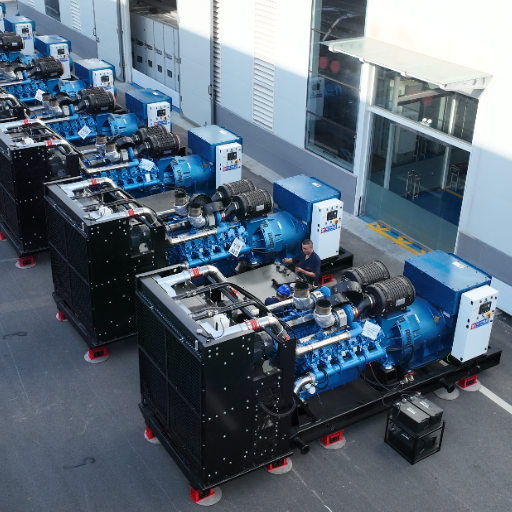
Work through these in order. Each item is phrased so a technician can check a box and initial it.
Before Every Start (60 Seconds)
- Check oil, coolant, and fuel levels
- Inspect for fuel, oil, and coolant leaks
- Check for loose wiring and damaged receptacles
- Verify battery charge and clean terminals
- Confirm all guards and covers are in place
- Clear 3 feet of space around the unit
- Verify the CO detector powers on and tests green
- Confirm the unit is outdoors or in a ventilated room
- Confirm the exhaust points away from buildings Routing exhaust correctly is a hazard of its own, so review our guide to generator exhaust safety for outlet placement and clearance rules.
- Test the emergency stop button
Why this exists: in 2023, a construction crew in Texas skipped the morning oil check on a rented portable unit, and the engine seized on day two of a remote job. The replacement rental cost $4,000, and the site lost a day and a half of power for tools and trailers. A 60-second walkaround was the entire difference.For crews running power on active jobsites, our guide to construction site generator safety covers the grounding, cord, and placement rules OSHA inspectors check most.
During Operation
- Watch gauges: oil pressure, temperature, voltage, frequency
- Listen for knocking, surging, or unusual vibration
- Smell for fuel or hot insulation
- Keep the area clear of bystanders and combustibles
- Never refuel a running or hot engine
- Never operate under load beyond rated capacity
- Keep hands, clothing, and tools clear of moving parts
Shutdown and Refueling
- Remove load and open the breaker before shutdown
- Let the engine cool 10 to 15 minutes before refueling
- Refuel with a grounded funnel or approved can Most fuel fires and static-ignition incidents happen at this moment, so follow the handling steps in our guide to generator refueling safety before you top off any tank.
- Clean up spills immediately
- Log run hours, readings, and any abnormalities
- Store fuel in approved containers away from ignition sources
Monthly Deep Checks
- Run the unit under load for at least 30 minutes
- Test GFCI outlets and the emergency stop
- Exercise the ATS through a full transfer cycle (stationary units)
- Check fuel quality; drain the water separator
- Verify battery cranking voltage under load, not just at rest
- Inspect exhaust piping for soot trails and loose clamps
Annual Deep Checks
- Full load-bank test at rated capacity
- Fuel polishing or replacement; tank and containment inspection
- Torque check on electrical connections and lugs
- Inspect engine mounts, exhaust hangers, and vibration isolators
- Review the checklist itself against any equipment or code changes, then re-issue it
That last item is the one everyone skips. A checklist written for a generator you no longer own, or a code cycle that has since updated, is documentation of the wrong program.
Generator Safety Checks by Hazard Category
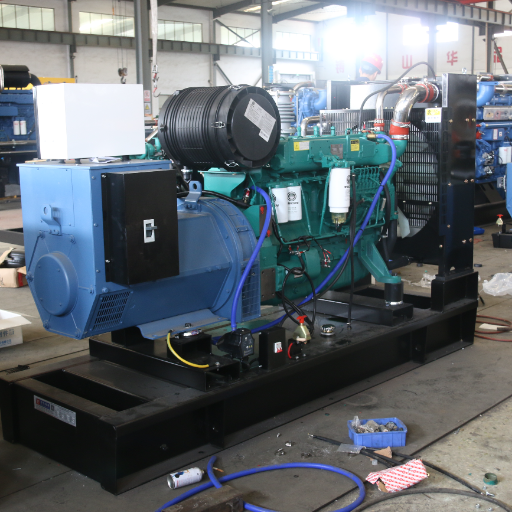
Frequency tells you when to check. Hazard category tells you why.
Carbon Monoxide
Verify the unit sits at least 20 feet from doors, windows, and vents (25 feet per the 2026 federal recommendation), outdoors or in an engineered room, exhaust pointing away. Test CO detectors monthly. Generator CO kills roughly 85 people a year in the US, per CPSC data, and it is the hazard with the least margin for error. Full placement rules and physics are in our carbon monoxide safety guide.
Electrical and Backfeeding
Confirm grounding per manufacturer instructions and OSHA 29 CFR 1926.404. If you are unsure when a ground rod is actually required, our guide to generator grounding requirements breaks down the NEC rules in plain language. Inspect cords for cuts and intact ground pins. Test GFCI outlets. And the rule with no exceptions: never connect a generator to building wiring without a transfer switch or interlock. Backfeeding through a wall outlet can energize utility lines and kill a lineman working blocks away. Our guide to generator backfeeding dangers explains exactly how this fault happens and how to prevent it.
Fire and Fuel Storage
Keep a charged ABC or CO2 fire extinguisher within reach. Maintain clearance from combustible materials. Store diesel in approved containers with secondary containment, away from heat and ignition sources, per NFPA 30 and NFPA 37. For bulk storage, bunding, and spill-prevention thresholds, see our detailed guide to diesel fuel storage regulations.
Noise and PPE
Diesel sets routinely exceed 85 dBA at the enclosure, which puts them in hearing-conservation territory for anyone working nearby. That exposure often crosses legal limits too, so check our guide to generator noise regulations for the site and community sound thresholds that apply. The checklist PPE line: safety glasses, gloves, and hearing protection for operating and servicing, steel-toed boots for installation work.
Mechanical and LOTO
Before any service: shut down, isolate all power sources including the battery, and apply lockout/tagout per OSHA 29 CFR 1910.147. Our step-by-step generator lockout tagout procedures show how to de-energize and lock out a set safely before anyone touches it. Stored energy in a standby system, especially one with an ATS on auto, has killed technicians who assumed the unit was off.
Compliance Mapping: OSHA, NFPA, and NEC
This is where most checklists stop short. They tell you what to check but not which rule requires it, and that mapping is exactly what an EHS manager needs during an audit.
| Checklist Item | Governing Standard |
|---|---|
| Grounding and bonding | OSHA 29 CFR 1926.404; NEC Article 445 |
| Transfer switch / no backfeeding | NEC Articles 700/701/702 |
| CO placement and detection | CDC guidance; local fire code |
| Weekly inspection, monthly exercise | NFPA 110, Chapter 8 |
| Fuel storage and containment | NFPA 30; NFPA 37 |
| Lockout/tagout for service | OSHA 29 CFR 1910.147 |
| Emergency lighting and shutdown | NFPA 110; NFPA 37 |
Documentation carries the same weight as the checks themselves. The PNNL standby generator O&M best practices, built around NFPA 110, treat signed and dated inspection records as part of the compliance requirement, not an administrative extra. Keep logs for a minimum of 3 years.
A facility manager we will call Priya learned what that binder is worth. After a small electrical incident at her plant, the insurance adjuster opened the claim interview by asking for inspection records. She produced two years of signed weekly checklists, every line initialed. The claim was paid in full within six weeks. Her counterpart at a sister facility, same incident type, no logs, spent nine months disputing a denial.
Portable vs. Stationary: What Changes on the Checklist
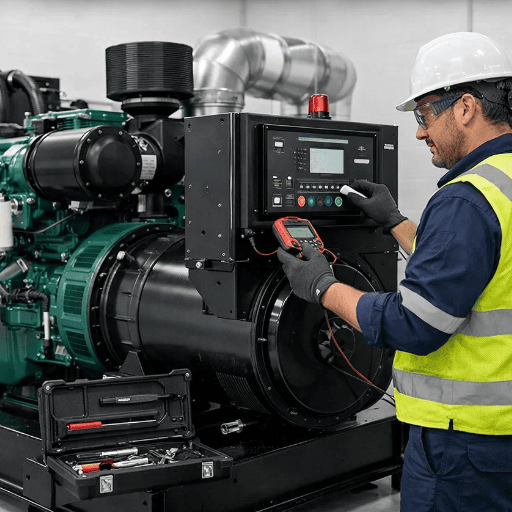
One checklist does not fit both worlds. The core safety checks overlap, but the emphasis shifts.
| Check Area | Portable Generator | Stationary / Standby |
|---|---|---|
| Placement | Re-verify every deployment (20-25 ft, downwind) | Fixed at install; verify clearances quarterly |
| Grounding | Per manufacturer; check each setup | Permanently bonded; inspect connections annually |
| Connections | Inspect cords and GFCI before each use | ATS function test monthly |
| CO protection | Battery detector at each deployment | Hardwired detection tied to building alarm |
| Ventilation | Outdoor only, always | Room airflow and interlock test quarterly |
| Fuel | Approved cans, cool-down refueling | Tank inspection, containment, fuel polishing annually |
| Exercise run | Run under load monthly in season | NFPA 110 weekly inspection, monthly loaded exercise (30 min minimum) |
Portable units stay outdoors in every kind of weather, and wet conditions add their own shock and equipment risks, so it is worth reading whether can you run a generator in the rain safely before your next storm deployment. For stationary units, code-compliant installation and ATS setup determines half this checklist before the unit ever runs, and generator room ventilation checks tie back to our guide on generator room fire safety requirements, which governs the airflow, fire rating, and clearance rules for enclosed installations.
Building a compliance program from scratch? Our commissioning support includes a site-specific safety checklist for every installation. Talk to our engineering team.
Building the Habit: Frequencies and Ownership
A checklist nobody owns is wall decoration. The fix is boring and effective: one named owner per frequency, a signature line per check, and the log stored where an auditor can reach it.
| Frequency | Portable | Stationary |
|---|---|---|
| Daily / each use | Pre-start walkaround, placement, cords, CO detector | Visual check, panel status, alarms |
| Weekly | 30-minute run under load (in season) | NFPA 110 inspection, battery check, fluid levels |
| Monthly | Full checklist review, GFCI test | Loaded exercise, ATS test, fuel level and quality |
| Annual | Full service, spark arrestor, frame inspection | Load-bank test, fuel polishing, torque and connection audit |
The OSHA portable generator quick card and the CDC’s carbon monoxide guidance cover the portable column in detail. The stationary column follows NFPA 110 Chapter 8.
One more scenario, because it repeats: a jobsite got a complaint-driven OSHA visit and walked away with a serious-violation citation for an ungrounded generator and daisy-chained cords. Neither hazard was hidden. Both were on a checklist nobody had been assigned to run.
The 5 Ways Generator Safety Checklists Fail
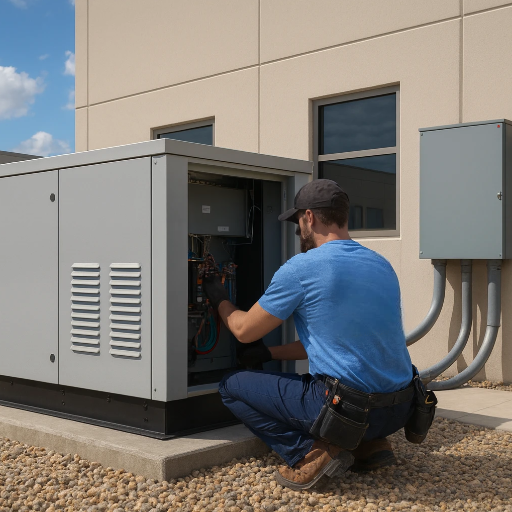
Most facilities have a checklist. Fewer have one that works. These are the failure modes we see most often:
- Pencil-whipping. Every box initialed in 40 seconds, from memory, at the end of the shift. The log says the unit was inspected; the fuel leak says otherwise. The fix is cultural: spot-check one item per week against reality, and treat a falsified log as a serious incident, because it is one.
- No named owner. “The team checks it” means nobody checks it. Every frequency needs one name and one backup, written on the document itself.
- A stale checklist. The form still references the old generator, the old code cycle, or a fuel system that was replaced two years ago. Review the checklist annually against the equipment actually on the pad.
- Logs nobody can find. Inspection records in a drawer, on a clipboard, or in a departed employee’s email are worth nothing in an audit. Keep one binder or one shared folder, and make its location part of onboarding.
- Safety items buried in a maintenance list. Oil-change intervals and CO detector tests do not belong on the same line. When everything is one undifferentiated list, the safety-critical items get the same attention as the cosmetic ones. Keep the two documents separate and cross-referenced.
A rental fleet manager we will call Tomás fixed failure mode one the cheap way. He started picking one random item each week and checking the unit himself against the signed log. The first month, two of four spot-checks did not match the paperwork.
He did not fire anyone; he showed the crew the mismatches at the Friday meeting and explained what a falsified log does to an injury claim. Mismatches stopped. The signature started meaning something again.
Frequently Asked Questions
What is the difference between a generator safety checklist and a maintenance checklist?
A safety checklist prevents injuries and code violations: CO placement, grounding, backfeed protection, fire clearances, LOTO. A maintenance checklist prevents breakdowns: oil changes, filters, belts, fluid intervals. They overlap on inspections but serve different masters. Keep them as separate, cross-referenced documents so safety items never get buried under routine service tasks.
What should a generator safety checklist include?
Check oil, coolant, and fuel levels; inspect for leaks, loose wiring, and damaged guards; verify battery charge and terminals; confirm proper grounding; clear 3 feet around the unit; verify CO detectors work; test GFCI outlets; and confirm the unit is outdoors with exhaust directed away from buildings.
How often should you inspect a generator?
Portable units: a pre-start check before every use and a loaded run monthly in season. Standby systems: NFPA 110 requires a weekly inspection and a monthly exercise under load, typically 30 minutes minimum, with records kept for at least 3 years.
Is a generator safety inspection required by OSHA?
OSHA does not mandate a single “generator inspection” form, but it enforces the underlying rules: grounding (29 CFR 1926.404), lockout/tagout (1910.147), and safe fuel handling. Documented checklists are how you prove compliance during an inspection.
What PPE do you need to operate a generator?
Safety glasses, work gloves, and hearing protection for routine operation near a running diesel set. Add steel-toed boots for installation work, and follow full lockout/tagout PPE requirements, including arc-rated gear where applicable, for electrical service.
Can I use the same checklist for portable and standby generators?
The core hazard checks are the same, but frequencies and emphasis differ. Portable units need placement and cord checks at every deployment; standby units need ATS tests, ventilation interlock checks, and NFPA 110 exercise runs. Use the comparison table above to adapt.
