
Generator backfeeding is when electricity from your generator flows backward through your building’s wiring into the utility power lines, usually because someone plugged the generator directly into a wall outlet. It is illegal under the National Electrical Code, it can destroy your equipment when grid power returns, and it has killed utility lineworkers restoring power after storms.
Here is the part most safety articles skip: why it kills.
Your portable generator makes 120/240 volts. That does not sound like much against a 7,200-volt distribution line, until you follow the path. Backfed power leaves your house through the service drop and reaches the same pole transformer that normally steps 7,200 volts down to 240 for your home. Run it backward, and that transformer does the opposite: it steps your 240 volts back up to thousands of volts, onto a line the repair crew just tested and confirmed was dead.
At Shandong Huali, we have designed and commissioned standby power systems for over 25 years, and every installation we ship includes transfer equipment precisely because of this hazard. This guide explains the physics, the documented toll, the law, and the three safe ways to connect a generator, with honest guidance on each. It expands one rule from our complete generator safety guide.
Key Takeaways
- Backfeeding pushes your generator’s 240V through the pole transformer in reverse, re-energizing “dead” lines at thousands of volts where lineworkers are holding them.
- Plugging a generator into a wall or dryer outlet (a “suicide cord”) is illegal under NEC Article 702 and can void your insurance.
- OSHA’s accident database and NIOSH case files document multiple backfeed electrocutions; the pattern repeats after every major storm.
- The three safe panel options: an interlock kit (
400−400−850 installed), a manual transfer switch (400−400−1,600), or an automatic transfer switch (~1,500−1,500−5,000).- For short outages, plugging appliances directly into the generator with outdoor-rated cords is free and can never backfeed.
- When grid power returns to a backfed house, the collision of two unsynchronized sources can destroy the generator, appliances, and panel.
What Is Generator Backfeeding?
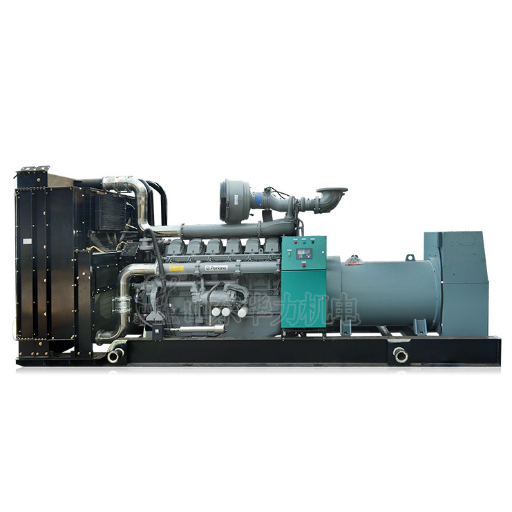
Generator backfeeding is the reverse flow of electricity from a generator into utility power lines. It happens when a generator connects to a building’s wiring without a transfer switch or interlock, most often by plugging into a wall outlet. The building’s circuits become a path out to the grid instead of a path in from it.
The Suicide Cord
The typical backfeed setup is a homemade cord with a male plug on both ends: one into the generator, one into a wall or dryer outlet. Electricians call it a suicide cord, and the name is literal.
Even before anything reaches the grid, that cord is a hazard on its own. Both ends carry live voltage the moment the generator starts, and the exposed prongs of the “spare” male end can shock anyone who touches them or start a fire against anything conductive.
People build these cords because the logic feels sound: the outlet feeds the room, so feeding the outlet should feed the house. The logic is half right. It does feed the house. It also feeds everything the house connects to.
How the Transformer Turns 240V Into a Kill Zone
Transformers are ratio devices with no preferred direction. A 30:1 pole transformer that delivers 7,200V down to 240V will, fed 240V from the secondary side, produce roughly 7,200V on the primary side. Your generator does not care that the line is “off.” It energizes the transformer, the transformer energizes the line, and the line energizes everything it touches for blocks.
Line crews work dead lines barehanded after testing and grounding them. A backfed generator can energize a span downstream of their grounds, or in the interval before grounds go on. That is the entire mechanism behind every backfeed fatality: a worker who did everything right, on a line that was supposed to be dead.
It Is Not Just Lineworkers
The same backfeed reaches your neighbors on the shared transformer, energizing circuits they believe are off. And when the utility restores power, two unsynchronized sources meet inside your panel. The grid wins. The generator, and often the appliances connected to it, loses.
The Documented Toll
This is not a theoretical hazard. OSHA’s accident investigation database is searchable, and the “voltage backfeed” query returns case after case with the same outline: storm, outage, generator, improvised connection, contact.
NIOSH published a dedicated alert on electrocutions from generators plugged into household circuits after investigating fatal cases. The document exists because the pattern kept repeating. ESFI’s workplace data consistently places contact with power lines among the leading mechanisms of electrical death, and linework sits permanently on the list of the most dangerous US occupations.
One NIOSH case reads like this. After a hurricane knocked out power across a Gulf Coast county, a homeowner connected a portable generator through the dryer outlet to keep the refrigerator and a window unit running.
Two streets away, a lineworker making repairs contacted a line that should have been isolated. The investigation traced the voltage back to the house. A man doing his job was dead because a stranger three minutes away wanted cold drinks.
Then there is the financial toll, which survives even when everyone does. A machine shop owner we will call Ray backfed his building during a three-day outage, using a cord a former employee had made. Nobody was hurt.
However, when power was restored to the grid, a voltage surge destroyed the generator’s alternator and two CNC compressors; the insurance company rejected the claim—amounting to approximately $18,000—on the grounds that the connection method violated electrical codes. Yet, a $600 interlocking device could have prevented the entire incident.
The legal exposure runs in both directions. Backfeeding violates NEC Article 702, which requires listed transfer equipment that makes simultaneous connection of utility and generator power impossible. If your backfeed injures a utility worker, you face personal civil liability and, in some jurisdictions, criminal charges. Your insurer’s position will be that an intentional code violation is not a covered accident.
Outside the United States, the rule is the same under different names. Installations under IEC 60364 wiring rules, the UK’s BS 7671, Australia’s AS/NZS 3000, and equivalent national codes all require switching that prevents parallel connection of a generator with the grid. Wherever you operate, the physics of the transformer do not change with the regulation book.
How to Connect a Generator Safely
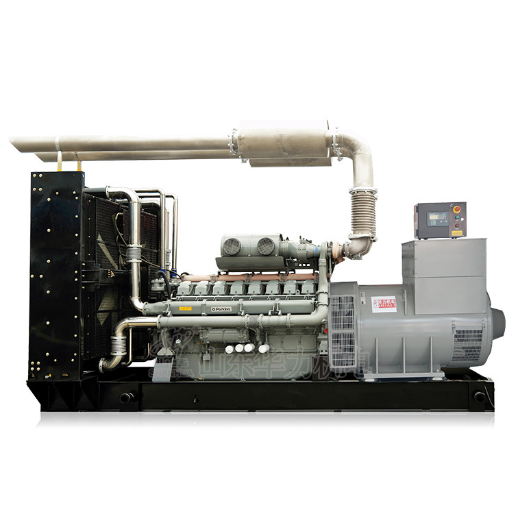
Every safe method shares one principle: utility power and generator power can never be connected at the same time. The difference between the options is how that principle gets enforced.
The Free Option: Heavy-Duty Extension Cords
The simplest safe connection costs nothing extra: skip the house wiring entirely and plug appliances directly into the generator’s own outlets. A refrigerator, a few lights, a phone charger, and a fan can all run on outdoor-rated extension cords routed through a cracked door or window.
Follow three rules and this method is fully safe:
- Use cords rated for outdoor use and sized for the load (12-gauge for anything near 15 amps)
- Never run cords through standing water, and keep connections off the ground
- Total up your appliance wattage before you start; a typical 5,000-watt portable unit handles a fridge, a sump pump, and lights comfortably, but not a central air conditioner
You give up hardwired circuits like the furnace blower and well pump, which is exactly the limitation transfer equipment exists to solve. But a direct cord connection never touches your panel, so it can never backfeed. For many homeowners, it is the right answer for short outages while they price permanent equipment.
Automatic Transfer Switch (ATS)
The gold standard for standby systems. An ATS monitors utility power, starts the generator when it fails, and transfers the building load automatically, breaking the utility connection before making the generator one. Quality units are listed to UL 1008 and use break-before-make switching, so backfeed is mechanically impossible.
Best for: permanently installed standby generators, businesses, and anyone who cannot be on-site to flip switches. Typical installed cost in 2026: 1,500 to 1,500 to 5,000 or more depending on amperage.
Manual Transfer Switch
A smaller panel of 6 to 16 pre-selected circuits with a physical switch you flip by hand. Same break-before-make protection, lower cost, no automation.
Best for: portable generator owners who want to power chosen circuits (fridge, furnace blower, some lights) without extension cords through windows. Typical installed cost: 400to400to1,600.
Interlock Kits: The Honest Version
An interlock is a metal plate on your existing panel that mechanically prevents the main breaker and the generator back-fed breaker from being on together. Vendors oversell them and some electricians dismiss them; the truth is a checklist:
- The kit must be listed (UL 67) for your exact panel model
- The back-fed breaker must have a mechanical retainer per NEC 408.36(D)
- Your local inspector (AHJ) must accept it; OEM panel kits have the best acceptance record
- You must manage loads manually, since an interlock lets you energize any circuit, including more than the generator can carry
Done right, an interlock is code-legal and safe. Done casually, it is a suicide cord with better marketing. Typical installed cost: 400to400to850.
Whichever connection method you choose, correct bonding and grounding is what makes it safe under fault conditions, so review our guide to generator grounding requirements before you finalize any panel setup.
| Option | Installed Cost (2026) | Backfeed Protection | Best For |
|---|---|---|---|
| Interlock kit | 400−400−850 | Mechanical, if listed and installed per code | Budget portable setups, handy owners with AHJ approval |
| Manual transfer switch | 400−400−1,600 | Break-before-make, circuit-limited | Portable generators, selected circuits |
| Automatic transfer switch | 1,500−1,500−5,000+ | Automatic break-before-make, UL 1008 | Standby systems, businesses, unattended sites |
The Never List
- Never plug a generator into a wall outlet or dryer outlet
- Never make or use a male-to-male cord
- Never connect through a panel without a listed interlock or transfer equipment
- Never assume “just this once” is safe; storm-night improvisation is exactly when fatalities happen
If you already own a cord with two male ends, cut it in half and throw it away. Today.
Interlock Kit vs Transfer Switch: How to Choose
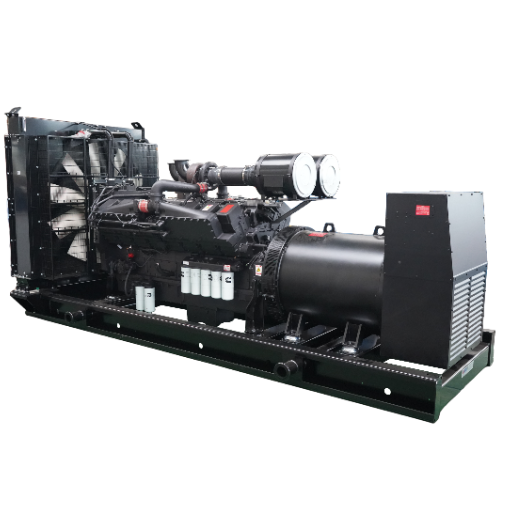
The interlock kit vs transfer switch decision comes down to four questions:
- Do you need power when nobody is there? If the building can sit dark until someone arrives to flip switches, manual equipment works. If downtime costs money by the minute (a clinic, a cold-storage warehouse, a server room), only an ATS is acceptable.
- How many circuits do you actually need? List what must run during an outage and add up the watts. Six to ten essential circuits points to a manual transfer switch. Whole-building coverage points to an ATS sized to the service.
- What will your inspector accept? Call your local permitting office before buying an interlock. Some jurisdictions approve only OEM panel kits; a few do not accept interlocks at all. A five-minute phone call beats a failed inspection.
- Who manages the load? An interlock or manual switch makes a human responsible for not overloading the generator. If the person flipping breakers at 2 a.m. might be a spouse, a tenant, or a night-shift employee, automation removes that failure point.
Budgetary considerations rank below the four factors mentioned above. Whether it is a 400-amp interlock or a 3,000-amp automatic transfer switch (ATS), both effectively prevent back-feeding; the additional investment buys more comprehensive coverage, greater operational convenience, and the ability to operate autonomously during storms without relying on manual judgment.
What to Do If You Have Been Backfeeding
If reading this article felt uncomfortably familiar, here is the honest recovery path:
- Stop now, not after the next outage. Shut down the generator, disconnect the cord, and destroy it so nobody reuses it in a hurry.
- Inspect what the backfeed may have damaged. Look for tripped or warm breakers, scorched outlets, and appliances that behave oddly since the last outage.
- Call a licensed electrician. Tell them exactly what was connected and how. There is no judgment in it for them; they have seen it before, and a panel inspection is cheap.
- Price your permanent fix. Get quotes for an interlock and a manual transfer switch at the same visit. Either installs in a few hours.
- Tell your household. Everyone who might start the generator during the next outage needs to know the old method is retired, and why.
Doing this in calm weather is the whole point. Nobody makes good wiring decisions in the dark, in the rain, with a freezer full of food warming up.
Backfeeding Prevention in Industrial and Standby Systems
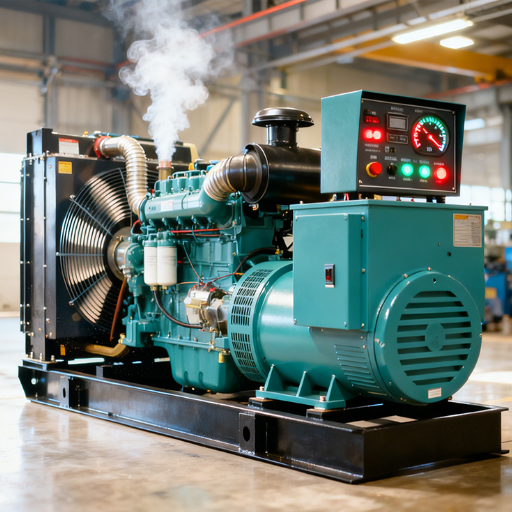
At facility scale, backfeed prevention is not an accessory decision; it is a design requirement. Three principles govern it:
- UL 1008 listed transfer equipment. Commercial and industrial standby systems use ATS gear tested for the full fault current of the service, not just the running load. Break-before-make (open transition) is the default; closed-transition momentary paralleling requires utility approval and protective relaying.
- Anti-islanding. Any equipment that can operate in parallel with the grid must detect a utility outage and disconnect, a requirement utilities enforce on everything from rooftop solar to prime-power generator plants. An unsynchronized reconnect can damage utility equipment and the generator itself.
- Commissioning and testing. Transfer operation gets verified under load before handover, then exercised on schedule (monthly under NFPA 110 for emergency systems). Transfer equipment that is never tested is transfer equipment you are trusting blind.
A facility we supplied in 2025 failed its first commissioning inspection for exactly this reason. The installing contractor had proposed a “temporary” cord-and-plug tie-in for a 200kVA standby unit to save a week of lead time on the ATS. The inspector red-tagged the project on sight.
The ATS arrived, the system passed, and the contractor learned the cheapest week in the project was the one they almost saved. The rules apply at every scale; the voltage just gets bigger.
Specifying a standby system? Every Huali installation includes ATS options sized to your service, with transfer testing built into commissioning. Talk to our engineering team.
Frequently Asked Questions
What is backfeeding a generator?
Backfeeding is electricity flowing from a generator backward into utility power lines, usually through an illegal wall-outlet connection. The backfed power passes through the pole transformer in reverse and re-energizes distribution lines at thousands of volts, endangering utility workers, neighbors, and your own equipment.
What is a suicide cord?
A suicide cord is a homemade extension cord with a male plug on both ends, used to connect a generator to a wall or dryer outlet. Both ends become live the moment the generator starts, the exposed prongs can shock anyone or ignite anything conductive they touch, and the connection backfeeds the utility grid. If you find one, cut it up and discard it.
Can I plug my generator into a wall outlet?
No. Never. A wall-outlet connection backfeeds the grid, violates NEC Article 702, risks fire and equipment destruction, and creates personal liability if anyone is hurt. Use a transfer switch, an interlock kit, or plug appliances directly into the generator’s own outlets with outdoor-rated cords.
Is backfeeding a generator illegal?
Yes, in every jurisdiction that adopts the NEC, which is effectively all of the US. NEC 702.5 requires listed transfer equipment that prevents utility and generator sources from ever being connected simultaneously. Violations can mean fines, failed inspections, denied insurance claims, and liability for injuries.
Is an interlock kit as safe as a transfer switch?
When the kit is UL 67 listed for your specific panel, the back-fed breaker is mechanically secured per NEC 408.36(D), and your local inspector approves the installation, an interlock provides equivalent backfeed protection. It does not limit circuits or automate anything, so you must manage generator load yourself.
How much does it cost to install a transfer switch?
In 2026: interlock kits run 400 to 400 to 850 installed, manual transfer switches 400 to 400 to 1,600, and automatic transfer switches 1,500 to 1,500 to 5,000 or more depending on service size. Every option costs less than one denied insurance claim or one liability suit.
Will my insurance cover damage caused by backfeeding?
Assume no. Insurers routinely deny generator-related claims when the connection method violated electrical code, treating it as an intentional act rather than an accident. That denial covers the destroyed generator and appliances, and it leaves you personally exposed if a worker or neighbor is injured. A listed interlock or transfer switch keeps both your equipment and your coverage intact.
What happens to my generator when utility power comes back on?
If the generator is backfeeding when the grid returns, two unsynchronized sources collide in your panel. The likely results are a destroyed alternator, damaged appliances, tripped or failed breakers, and potential fire. With proper transfer equipment, the question never arises because both sources are never connected at once.
One Rule, No Exceptions
Generator backfeeding dangers reduce to a single sentence: your generator can put thousands of volts onto a line a worker is holding, and the only thing that reliably prevents it is transfer equipment that makes the mistake physically impossible. The physics are unforgiving, the law is unambiguous, and the fix costs between 400 and 400 and 5,000, once.
If you are running a portable unit, price an interlock or manual transfer switch before the next storm season, and use our generator safety checklist to keep the rest of your setup honest. If cords through windows are your current plan, at minimum review the carbon monoxide placement rules so the second-biggest generator killer does not get you either.
And if you are specifying a permanent standby system, contact Huali’s engineering team. We will make sure the safe connection is designed in from day one, not improvised during an outage.
