
Generator lockout tagout procedures follow OSHA’s six-step hazardous energy sequence, prepare, shut down, isolate, lock and tag, release stored energy, verify, adapted for a machine that holds five or more energy sources and can start itself without warning. The generator-specific version runs eight steps. The two additions exist because of one fact: a standby generator is the only machine in your facility designed to energize itself while someone’s hands are inside it.
The stakes are well-documented. OSHA estimates that compliance with “Lockout/Tagout” regulations prevents approximately 120 fatalities and 50,000 injuries annually, thereby protecting around 3 million workers engaged in equipment maintenance. Workers injured by exposure to hazardous energy require an average of 24 days away from work to recover. Yet, the “Control of Hazardous Energy” standard ranks fourth among OSHA violations for the 2025 fiscal year, with 2,177 citations issued; fines for serious violations reach up to $16,550, while penalties for willful or repeated violations can climb as high as $165,514.
If you maintain generators or manage the people who do, you already know generic LOTO guides stop where generator questions start. This guide keeps going: the full energy-source map, the auto-start and transfer switch trap, an 8-step procedure you can adapt, vendor coordination, and safe restoration.Lockout tagout is only one part of running a safe machine, so if you are building a broader safety program, our overview of generator safety tips covers the everyday practices that surround every service task.
At Shandong Huali Electromechanical, we support generator maintenance programs for industrial clients in more than 20 countries, and lockout tagout is the entry procedure for every service task we train on.
Key Takeaways
- Generator lockout tagout follows OSHA 29 CFR 1910.147: prepare, shut down, isolate, lock/tag, release stored energy, verify, with two generator-specific additions for auto-start and the transfer switch.
- A generator holds at least five energy sources: electrical output, utility backfeed through the ATS, battery/starter circuits, fuel pressure, and the start signal itself. Lock the breaker alone and four hazards remain live.
- Standby sets start automatically on utility loss. Servicing without disabling auto-start and locking both sides of the ATS is the generator-specific fatality pattern.
- Verification means a try-start test after isolation, exactly because the machine is designed to start itself.
- LOTO prevents about 120 deaths and 50,000 injuries a year, and violations cost up to 16,550each,16,550each,165,514 if willful.
Why Generator Lockout Tagout Is Different for Standby Sets
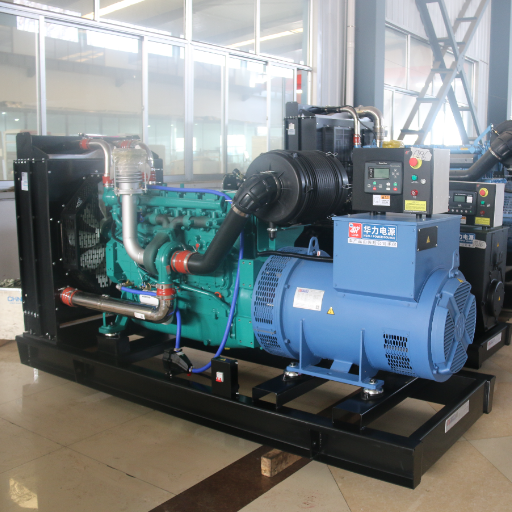
Most machines have one or two energy sources. A generator set concentrates almost every category OSHA lists: electrical, mechanical, chemical (fuel), stored electrical (batteries), and kinetic (rotating mass). Miss one and the procedure fails.
Three generator behaviors make this worse than a typical machine:
- It starts itself. An automatic standby set cranks within seconds of a utility disturbance. No button, no operator, no warning to the technician with the enclosure open.
- It can energize the building. Through the automatic transfer switch, a generator can backfeed the facility side, and in a failed or miswired system, the utility side, endangering people far from the generator room.
- It stores energy after shutdown. Batteries hold cranking power, fuel lines hold pressure, and a hot engine holds thermal energy for hours.
A composite case drawn from incident patterns our service teams encounter shows how this plays out. A maintenance lead, call him Tomas, locks the generator breaker and the ATS, by the book, for an oil change at his facility. Mid-service, the engine cranks: the site’s telemetry provider has issued a routine remote test command over a network connection nobody thought to isolate. Nobody is hurt, but the procedure gains an energy source that day, and the story now opens every LOTO briefing on that site.
The Rules: OSHA 1910.147 and Related Standards
The core standard is OSHA 29 CFR 1910.147, The Control of Hazardous Energy. It requires written, equipment-specific energy control procedures, trained authorized and affected employees, and periodic inspections of each procedure at least annually.
Three companion rules matter for generators:
- OSHA’s electric power generation eTool (1910.269(d)) covers coordination between operations and maintenance in generating facilities.
- 29 CFR 1926.417 applies to lockout and tagging of circuits on construction sites, relevant for trailer-mounted and temporary sets covered in our construction site generator safety guide.
- NFPA 70E governs the electrical safe work practices, including arc flash PPE, that apply while verifying the absence of voltage.
One scope note: 1910.147 applies to servicing and maintenance. Normal operations, like a weekly exercise run, are not LOTO work. The moment a guard comes off or a body part crosses into a hazard zone, it is.
Generator Stored Energy Hazards and Isolation Points
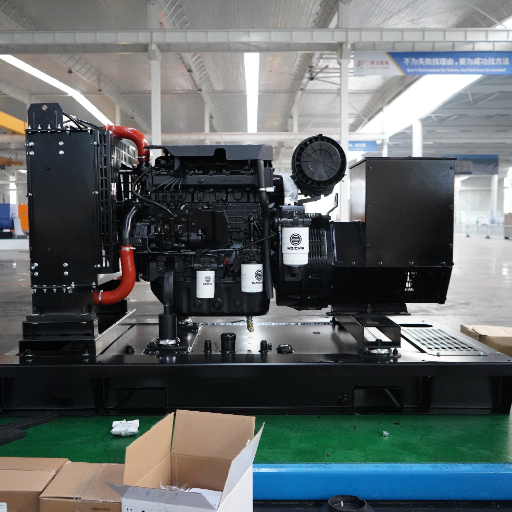
Every generic LOTO guide says “identify all energy sources.” Here is what that actually means for a generator set:
| Energy Source | Isolation Device | Stored Energy to Release |
|---|---|---|
| Electrical output | Generator output breaker, open and locked | Confirm zero voltage at terminals |
| Utility power via ATS | ATS normal-side breaker and generator-side breaker, both locked | Verify absence of voltage on both sides |
| Auto-start / start signal | Controller mode switch to OFF/RESET, not AUTO; remote start disabled | Disconnect remote start circuit or telemetry link |
| Battery / starter circuit | Battery disconnect or negative terminal first | Cranking power isolated from starter motor |
| Fuel system | Supply valve closed and locked | Relieve line pressure; plug open lines |
| Rotating mass / thermal | None (time and guards) | Allow flywheel to stop; let engine cool before contact work |
Print this table into your written procedure. OSHA requires equipment-specific documentation, and this map is the section where most generator procedures are missing.
Confirming zero voltage safely also depends on the set being correctly grounded, so before you rely on any terminal reading, review our guide to generator grounding requirements to make sure the electrical isolation you verify is trustworthy.
Generator Lockout Tagout Procedure: 8 Steps
These lockout tagout procedure steps adapt the OSHA sequence, with the generator-specific actions made explicit:
- Prepare. Review the written procedure, identify every energy source from the map above, and gather locks, tags, hasps, and a rated voltage tester.
- Notify. Tell all affected employees and the utility monitoring provider if one exists, that the set is entering service and must not start.
- Shut down. Stop the generator through the normal control sequence and let rotating parts come to rest.
- Isolate. Open and lock the generator output breaker, both ATS breakers, the fuel supply valve, and the battery disconnect. Switch the controller from AUTO to OFF.
- Apply locks and tags. Each authorized worker applies a personal lock at every isolation point, using a hasp where several people share one device. Tags identify who locked it, when, and why.
- Release stored energy. Verify zero voltage at the terminals, relieve fuel line pressure, and confirm the remote start circuit is dead.
- Verify. Test your meter on a known live source, test the generator terminals, then re-test the meter. Finally, attempt a start from the controller: the try-start must fail. Return controls to OFF.
- Service. Only now does the actual maintenance begin.
Step 7 deserves emphasis. On ordinary machines, verification is a voltage check. On a standby generator, the try-start is the real test, because starting is the machine’s whole design purpose. If the engine cranks during verification, your isolation map has a hole, and you found it the safe way.
Lockout Tagout Procedure Template for Standby Generators
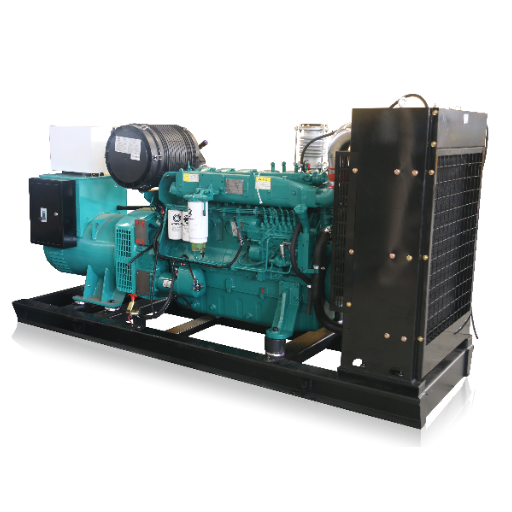
OSHA requires a written, equipment-specific procedure for each machine. Copy this skeleton and fill in your site’s specifics:
Generator LOTO Procedure — [Unit ID / Location]
- Isolation points: 1. [Generator output breaker: location] 2. [ATS normal-side breaker: location] 3. [ATS generator-side breaker: location] 4. [Fuel supply valve: location] 5. [Battery disconnect: location] 6. [Controller: AUTO to OFF] 7. [Remote start / telemetry: disable method]
- Stored energy release: [zero-voltage check points]; [fuel pressure relief point]
- Verification: meter tested on known source, then terminals, then re-tested; try-start from the controller must fail
- Authorized employees: [names]; Last annual inspection: [date and inspector]
- Restoration order: leak check, personnel clear, locks removed by their owners, battery positive terminal first, controller back to AUTO, supervised test start
Review this document annually, after every incident or near-miss, and whenever the equipment or its control system changes.
The Auto-Start Trap: ATS Lockout Tagout for Standby Generators
Does a standby generator need lockout tagout? Yes, more than almost any other equipment, because its automatic start function defeats partial lockout. A technician can lock the output breaker, open the enclosure, and have the engine crank anyway when the utility flickers or a scheduled self-test fires. Facilities running data center standby generators face this weekly, since programmed self-tests are the norm there.
The complete isolation always includes four actions:
- Controller to OFF/RESET, not AUTO. This alone is not sufficient, but it is required.
- Both ATS breakers locked: the normal (utility) side and the generator side. A UL 1008 transfer switch prevents paralleling during operation, but during maintenance both sources must be proven dead independently.
- Remote start and telemetry disabled, physically where possible. Tomas’s story is the reason.
- The battery circuit is isolated, so no start command can reach the starter motor regardless of what the controller does.
Treat any missing element as a failed lockout. The pattern in incident reports is consistent: the breaker was locked, the start path was not.
Building or updating a maintenance program for your generator fleet? Talk to our service team about maintenance training that includes site-specific LOTO procedures.
Group Lockout and Service Vendor Coordination
Generator service often involves more than one person, and frequently an outside vendor. The rules tighten accordingly:
- One personal lock per worker, at every isolation point or through a group lockbox. No shared keys, no exceptions.
- Shift changes need a documented handover: outgoing workers remove locks only as incoming workers apply theirs, with continuity of lockout at all times.
- Outside technicians work under your written procedure, not theirs alone. The facility owns the equipment, so the facility owns the energy control plan. Walk the vendor through the isolation map before work starts, and have their lead apply a personal lock alongside yours.
This owner-vendor interface is where many programs quietly fail: the facility assumes the contractor has a procedure, the contractor assumes the facility isolated everything. Written handover closes that gap, and it slots directly into the inspection rhythm of a generator maintenance checklist.
Restoration: Bringing the Generator Back Safely
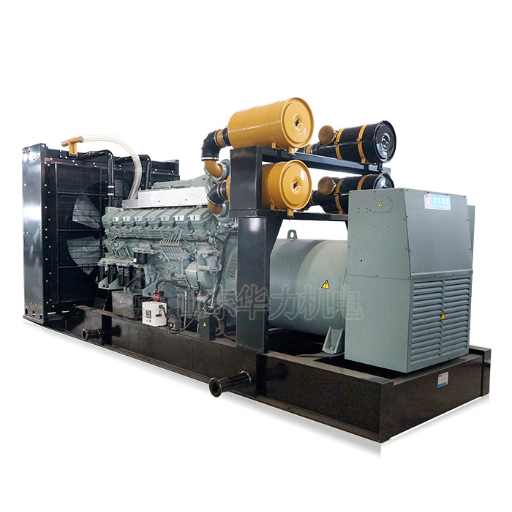
Restoration is the reverse of isolation, with its own discipline:
- Inspect the work area: tools and rags out, guards back on, all fittings tight.
- Check the fuel system for leaks before re-pressurizing; a sprayed mist over a hot manifold is a fire, as our guide to generator room fire safety requirements details. Bulk storage feeding the day tank brings its own rules, covered in our diesel fuel storage regulations guide.
- Confirm everyone is clear and accounted for; notify affected employees that re-energization is next.
- Remove locks and tags, each by the person who applied it, in reverse order of application.
- Reconnect the battery, positive terminal first, then close the negative. (Removal was negative first; restoration is the reverse.)
- Re-enable systems deliberately: fuel valve open, controller back to AUTO, remote start restored, ATS breakers closed.
- Run a supervised test start and watch the full start-transfer-run sequence before calling the job done.
The only person who may remove a lock is the person who applied it. Emergency removal of an absent employee’s lock requires a documented process with management verification that the employee is off site, and it should be the rarest event in your safety program.
Because these restoration steps are easy to rush at the end of a long job, it helps to run them against a written generator safety checklist so nothing, from the leak check to the supervised test start, gets skipped under time pressure.
Frequently Asked Questions
What are the steps of lockout tagout for a generator?
The OSHA sequence is prepare, shut down, isolate, lock and tag, release stored energy, and verify. Generator procedures add two specifics: disabling auto-start and remote signals during isolation, and a try-start test during verification, making eight practical steps for a standby set.
Does a standby generator need lockout tagout?
Yes. A standby generator starts automatically on utility loss or a scheduled self-test, so servicing one without full lockout exposes technicians to unexpected startup, the exact hazard OSHA 1910.147 exists to prevent. Auto-start makes standby sets more dependent on LOTO, not less.
Who is allowed to remove a lockout tag?
Only the authorized employee who applied it. If that person is unavailable, removal requires a documented emergency procedure: verification that the employee is not on site, attempts to contact them, and management authorization, with the employee informed before they return to work.
How often does lockout tagout training expire?
Lockout tagout training does not expire on a fixed schedule. OSHA requires retraining whenever procedures change, equipment changes, or inspections reveal gaps, and a periodic inspection of each energy control procedure at least annually. An authorized employee must perform the annual inspection other than the one using the procedure being reviewed.
Is tagout alone ever acceptable for a generator?
Only where an isolation device physically cannot accept a lock, and then the tagout program must provide equivalent protection, which typically means an additional measure like removing a valve handle or blocking a control circuit. The lockout versus tagout difference is simple: a lock physically prevents operation, while a tag only warns. In practice, lockable breakers and lockout hardware are inexpensive, and lockout is always the preferred method.
Do portable generators need LOTO?
Formal 1910.147 lockout applies to workplace servicing, and a job-site generator being repaired needs the same energy control: shut down, spark plug or ignition disabled, battery disconnected, fuel isolated, and a tag on the controls. On construction sites, 29 CFR 1926.417 requires circuits to be locked out and tagged before work.
Conclusion: The Procedure Is the Product
Generator lockout tagout procedures work when they are specific. The generic six steps are the skeleton; the generator adds the energy-source map, the auto-start disable, the both-sides ATS lockout, and the try-start verification that proves the machine cannot do the one thing it was built to do.
Key takeaways:
- Map all five-plus energy sources before you touch a lock: output, ATS both sides, battery, fuel, start signal
- Auto-start defeats partial lockout; controller OFF, remote signals cut, battery isolated
- Verify with a try-start: on a self-starting machine, that is the only meaningful test
- One personal lock per worker, vendor technicians included, and only the owner removes it
- Restoration is a procedure too: positive terminal first, leak check, supervised test start
- Write it down, train it, and inspect it annually; 1910.147 requires all three
Shandong Huali manufactures diesel generator sets from 8 kVA to 4000 kVA with lockable breakers, lockable fuel valves, and controllers designed for safe service isolation, and our after-sales team supports maintenance training and site-specific procedure development worldwide. Our guide to choosing the right diesel generator covers what to specify at purchase so lockout hardware is built in from day one.
Request maintenance training and service support → Tell us about your fleet and service setup, and our team will help you build generator-specific LOTO procedures your technicians can actually follow. For the exhaust-side hazards that also demand locked-out equipment, see our guide to generator exhaust safety.
