
A stationary generator is a generator set permanently installed at a fixed location, hardwired into a building or facility and normally paired with an automatic transfer switch so it starts on its own when grid power fails. Unlike a portable unit, it isn’t designed to move. It sits on a concrete pad, in a generator room, or inside an enclosure, and it becomes part of the building’s electrical infrastructure for its entire service life.
That definition matters more than it might appear, because the term is genuinely unsettled. Ask five suppliers what “stationary” means and you’ll get three different answers. Some use it as a synonym for “standby.” Others use it to mean prime power. The confusion costs buyers real money. The wrong framing leads to the wrong fuel, the wrong rating, and a generator specified for a duty cycle it was never built to survive.
What you’ll get from this guide: a complete walkthrough of the fixed-installation decision, from definition and fuel choice through sizing, siting, codes, cost, and service life. It is written from a manufacturer’s side of the table, which means it includes the numbers that product pages tend to leave out.
Key Takeaways
- “Stationary” describes the physical form factor; “standby” describes the duty rating. They’re different axes, and most fixed generator installations are both at once.
- Fuel choice is the decision that constrains everything else. Diesel offers the highest power density and on-site fuel autonomy; natural gas removes fuel storage but ties you to a pipeline.
- Size for the starting load, not the running load, and don’t oversize. Motor inrush reaches 2 to 3 times running current, and up to roughly 12 times for some loads, so the healthy operating band is 60 to 80% of rated capacity. Below about 30% load, wet stacking fouls the exhaust and shortens engine life, which is why oversizing isn’t a safety margin.
- N+1 redundancy is standard practice for hospitals and data centers, where a single generator failure isn’t an acceptable outcome.
- Budget for the installed system, not the unit. Transfer switch, pad, electrical labour, fuel infrastructure, and commissioning commonly add 40 to 60% to the generator’s own price.
What Is a Stationary Generator?
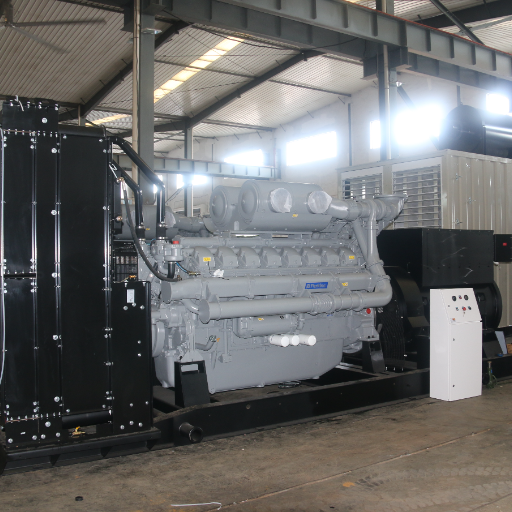
A stationary generator is a permanently installed generator set that provides electrical power from a fixed location, typically connected to the facility’s distribution panel through a transfer switch. It is designed for long-term service at one site rather than mobility between sites.
The distinction is structural, not cosmetic. A stationary unit is anchored to a foundation, its exhaust and fuel systems are permanently routed, and its control system is integrated with the building. Portable and mobile generators trade that permanence for flexibility. A stationary generator trades flexibility for capacity, automation, and service life.
Why “Stationary” and “Standby” aren’t Synonyms
This is the single most common point of confusion in the category, and it is worth settling early.
Stationary answers the question: where does it live? The answer is one place, permanently.
Standby answers the question: how is it rated and used? The answer is as backup, running when the primary source fails.
A fixed generator that backs up a hospital is stationary and standby rated. A fixed generator running a remote mine as the primary power source is stationary but prime rated, not standby. A towable trailer unit at a construction site is neither.
Suppliers that treat the terms interchangeable usually simplify. Suppliers that treat them as mutually exclusive are usually wrong. Getting this right determines which rating class you specify, and specifying a standby-rated machine for continuous duty is one of the most common and most expensive mistakes in the category.
The stationary vs standby generator distinction, and what it costs to get wrong. In 2024, a facilities manager named Rafael tendered a stationary generator for a cold-storage site at the end of a weak rural feeder. The site actually ran on generator most weekdays, which made it a prime power application.
Two of the five bids specified standby-rated machines anyway, and the cheapest bid won on price.
The engine failed at 6,800 hours, fourteen months after commissioning. The warranty claim was declined because the unit had been run outside its rating envelope, and the replacement cost roughly five times what the wrong specification had saved. The tender documents never asked the question that mattered: how many hours a year will this run?
How This Differs From Portable and Mobile Power
A portable generator is carried or wheeled to where it is needed and typically powers individual appliances through extension cords or a temporary connection. Rated output commonly falls in the 1 to 12 kW range, and a person must be present to start it and to refuel it.
A stationary generator powers a building’s circuits through a permanent transfer switch, starts automatically, and draws from a fixed fuel supply. Capacity ranges from roughly 10 kW for light commercial standby duty up to several megawatts for industrial and infrastructure applications.
In practice, the consequence is automation. A portable unit is useless during an outage if nobody is on site to start it. A stationary unit responds whether or not anyone is present, which is precisely why it is the default choice for facilities that can’t tolerate an interruption.
How a Stationary Generator Works
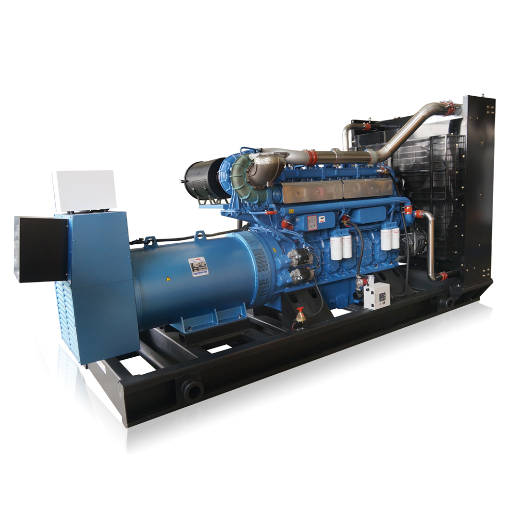
The generating principle is the same across every configuration: an engine turns an alternator, and the alternator converts mechanical energy into electrical energy. What distinguishes a stationary installation is the automation wrapped around that core.
Power-Loss Detection and Automatic Start
The automatic transfer switch monitors the incoming utility supply continuously. When voltage drops below a threshold, or disappears entirely, the transfer switch signals the generator controller to start. This happens in milliseconds, though the generator itself needs several seconds to reach rated speed and voltage.
Under NFPA 110, the standard governing emergency and standby power systems, a system classified as Type 10 must be capable of accepting the full load within 10 seconds. That requirement drives the specification of starting batteries, fuel priming, and pre-heating on cold-climate installations.
Transfer and Retransfer
Once the generator reaches rated voltage and frequency, the transfer switch opens the utility connection and closes the generator connection. Load transfers either in an open transition (break-before-make, with a brief interruption) or a closed transition (make-before-break, which is used where even a momentary interruption is unacceptable).
When utility power returns and remains stable for a set delay, the switch returns the load to the grid. The delay exists deliberately: it prevents the system from cycling back and forth during unstable restoration.
Cooldown and Shutdown
After retransfer, the generator continues to run unloaded for a cooldown period, typically one to five minutes, to gradually shed engine heat. Only then does it shut down. This step is frequently skipped on manually operated systems and is one reason manual changeover tends to shorten engine life.
Stationary vs Portable vs Standby: Clearing Up the Terminology
The table below resolves the comparison that generates most of the confusion in this category.
| Dimension | Stationary | Portable | Standby (rating) |
|---|---|---|---|
| What it describes | Physical form factor | Physical form factor | Duty rating |
| Location | Fixed, permanent | Moved by hand or wheel | Can be either |
| Typical capacity | 10 kW to several MW | 1 to 12 kW | Varies by application |
| Installation | Concrete pad, hardwired, permit required | None, plug-in | Depends on form factor |
| Starting | Automatic via ATS | Manual pull or key start | Automatic |
| Fuel supply | Fixed line or bulk tank | Small integral tank | Depends on form factor |
| Runtime | Unlimited with adequate fuel | Hours per tank | Sized for outage duration |
| Typical use | Facilities, infrastructure, prime power | Job sites, camping, short outages | Backup for critical loads |
Stationary vs Portable
Choose stationary when the load is a building, the outage risk is recurring, and automation matters. Choose portable when the requirement is temporary, the load is small, and someone will always be present to operate it.
The cost comparison isn’t close in absolute terms, but neither is the capability. A portable unit that fails to start because nobody was on site has saved nothing at all.
Stationary vs Standby
These aren’t alternatives to each other. The correct question isn’t “stationary or standby” but “which form factor, and which duty rating.” A facility can absolutely have a stationary, standby-rated generator, and most hospitals do.
If you’re comparing the two terms in a specification, you’re comparing a location with a duty cycle, and the specification needs both answers.
Choosing the Right Fuel for a Fixed Installation
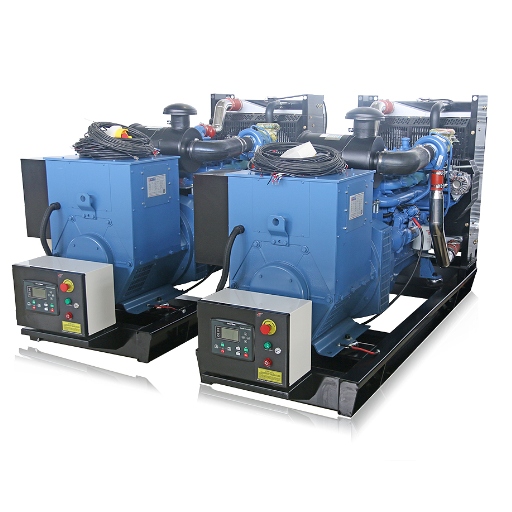
Fuel choice is the decision that constrains everything downstream: emissions compliance, refuelling logistics, enclosure design, cold-weather starting, and long-run cost. It is worth more deliberation than it usually receives.
Diesel
Diesel remains the default for industrial stationary installations, and for good reason. It offers the highest power density of the common fuels, which means a smaller footprint for a given output. The fuel can be stored on site, so the installation doesn’t depend on an external supply network during a regional emergency. Cold-start performance is well understood, and engine service life is typically long.
The trade-offs are real. Diesel requires on-site storage with containment, periodic fuel polishing to prevent degradation and microbial growth, and on modern emissions tiers, exhaust aftertreatment using diesel particulate filters and selective catalytic reduction with DEF. On-site storage brings its own diesel fuel storage regulations, from containment through leak detection.
Natural Gas
By contrast, natural gas removes fuel storage entirely. A stationary natural gas generator draws from the pipeline instead of a tank. Where a utility gas main exists, the supply is effectively unlimited for the duration of an outage, and the fuel doesn’t degrade.
Emissions are lower, particularly for nitrogen oxides and particulate matter, which can simplify permitting. Engines run quieter and typically require less frequent oil service.
The fundamental vulnerability, however, is the pipeline itself. In a regional event that interrupts gas distribution, a natural gas generator is as powerless as the grid. That single point of failure is why facilities with absolute continuity requirements usually specify diesel for the deepest layer of backup, even where gas is available.
Propane and Bi-Fuel
Propane, meanwhile, is typically chosen where a gas main is unavailable but on-site fuel autonomy is still wanted. It stores indefinitely without degradation, which is a genuine advantage over diesel for installations that run infrequently. The trade-off is a larger storage footprint for equivalent energy and a supply chain that depends on delivery during an outage.
Bi-fuel and dual-fuel systems allow a diesel engine to substitute a proportion of its diesel with natural gas. Substitution ratios and derating vary by engine and by control strategy, and the economics depend heavily on the local price relationship between the two fuels.
Fuel Comparison
| Factor | Diesel | Natural Gas | Propane | Bi-Fuel |
|---|---|---|---|---|
| On-site autonomy | Yes | No, pipeline dependent | Yes | Partial (diesel retained) |
| Power density | Highest | Lower | Lower | Comparable to diesel |
| Fuel degradation | Yes, requires polishing | Not applicable | Negligible | Yes |
| Emissions | Needs Tier 4 Final / Stage V aftertreatment | Lowest NOx and PM | Low | Moderate |
| Cold-weather start | Gelling risk, mitigated by treatment and heating | Good | Good | Good |
| Noise | Higher | Quieter | Quieter | Higher |
| Fuel storage required | Yes, with containment | No | Yes, large footprint | Yes |
| Best suited to | Critical backup, prime power, remote sites | Facilities with firm gas supply and low annual hours | Sites without a gas main | Operators with both fuels available |
Many larger facilities deliberately run more than one fuel type, using gas for routine standby duty and diesel for the deepest tier of protection.
How to Size a Stationary Generator for Your Facility
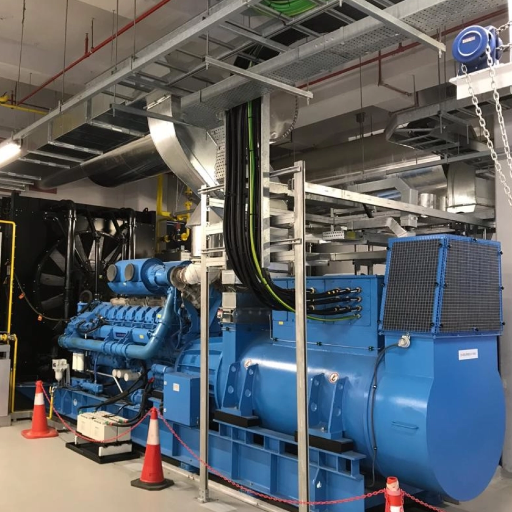
Sizing is where most projects go wrong, and the errors run in both directions. An undersized generator trips on motor starting. An oversized one runs wet.
Running Load vs Starting Load
Start by building a generator load schedule: every load you intend to carry, its running power, and its starting power. These aren’t the same number.
Lighting, resistive heating, and electronic loads draw roughly what their nameplate says. Motors are different. An induction motor draws 2 to 3 times its running current during starting, and some load types reach roughly 12 times. A generator sized on running load alone will trip the moment a large motor starts. Motor starting kVA is the number that prevents it.
For a facility with significant motor load, this is the dominant sizing constraint.
The 60 to 80 Percent Loading Band
Generators are most efficient and healthiest in the 60 to 80 percent band of rated capacity. This isn’t a marketing preference; it reflects how the engine and alternator behave.
Sustained operation below roughly 30 percent of rating causes incomplete combustion, which produces unburned fuel that accumulates as carbon in the exhaust system. The condition is known as wet stacking. It clogs the exhaust, degrades performance, and shortens engine life. Wet stacking prevention covers the correction.
This is why oversizing isn’t a safety margin. A generator bought “one size up” for comfort may spend its life below the threshold where it burns cleanly.
Motor Starting and Voltage Dip
When a large motor starts, the resulting current surge causes a voltage dip across the system. Some dip is unavoidable; too much causes contactors to drop out and equipment to reset.
Motor starting method matters enormously here. A direct-online start produces the full inrush. Star-delta starting reduces it substantially, and a variable frequency drive reduces it further still. In some cases, changing the starting method is cheaper than buying a larger generator to absorb an inrush that better starting control would have avoided.
Sequencing is the other lever. Staging motor starts through controlled time delays lets one generator carry loads that would be impossible to start simultaneously.
The kVA trap in generator sizing. Amara, an electrical engineer commissioning a hotel project in Lagos, inherited a load schedule that listed a single figure: 800 kVA. Nobody had recorded a power factor.
When the set was loaded for the first time, measured demand came in at 720 kW at 0.8 power factor, which on a three-phase machine is 900 kVA against an 800 kVA rating. The generator was over its ceiling before the kitchen and laundry had even come online.
Fitting soft starters to the two largest motors cost a small fraction of replacing the alternator. It cut the starting current enough for the existing set to carry the full load.
A Note on Derating
Rated output assumes reference conditions, typically around 25 °C ambient and low altitude, as defined in ISO 3046. Above those conditions, output must be derated. The derating for altitude and temperature tables give the correction factors.
A generator specified at sea level in a temperate climate won’t deliver its nameplate rating at 2,000 metres in 45 °C heat. For installations in extreme environments, the derated figure is the real specification, and sizing must start from that number rather than the nameplate.
Installation, Siting, and Permitting
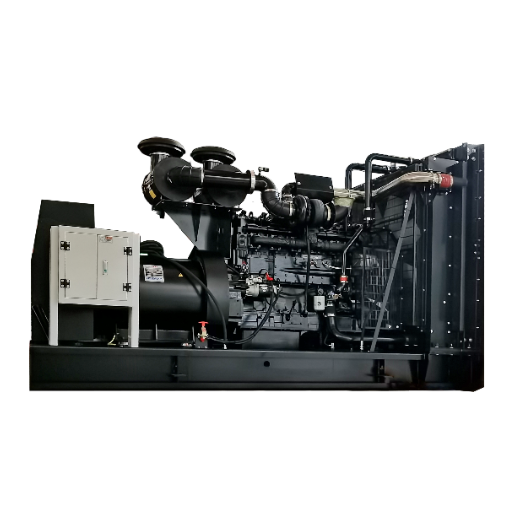
A stationary generator is a permanent addition to a site, and it is regulated as one. However, the electrical connection is only part of the work.
Clearances and Setbacks
The governing reference for siting in most North American jurisdictions is NFPA 37, which requires a minimum separation of 5 feet (1.5 m) from building openings and combustible walls. That distance can be reduced to 18 inches where a 1-hour rated wall or a listed noncombustible enclosure is used.
Clearance requirements exist for two reasons. The first is fire separation. The second is carbon monoxide, which is why a generator should never be installed beneath a deck, porch, or any structure where exhaust can accumulate. Additional separation from gas meters, propane tanks, and property lines applies depending on local code.
Plan for service access as well. Radiator airflow, filter changes, and oil service all need working room, typically 3 to 5 feet per accessible side.
Foundation and Concrete Pad
A stationary generator needs a reinforced concrete pad, not gravel or compacted earth. An undersized or uneven pad causes vibration, misalignment, and in the worst case, structural cracking of the base frame, none of which is covered by warranty.
As a working starting point, pads are commonly 6 to 12 inches thick and extend 6 to 18 inches beyond the generator base frame on each side. They should sit raised above grade to keep the unit clear of standing water, and be level to within a tight tolerance. The pad must be engineered for the unit’s operating weight including fuel and coolant.
Permits and Signage
Most jurisdictions require an electrical permit for a permanently connected generator and an inspection on completion. Mechanical, fuel, and gas permits may also apply.
Signage is a detail that gets missed. NEC 702.7 requires a permanent sign at the service entrance indicating the type and location of on-site standby power sources, so that utility personnel and emergency responders know a second source is present.
Site Acceptance and Commissioning
Commissioning isn’t a formality. A proper commissioning sequence includes a load bank test at rated capacity, verification of transfer and retransfer timing, and confirmation that protection settings are coordinated with the facility’s distribution.
We provide a commissioning checklist covering the full sequence, and our engineers will review site acceptance results against the specification before handover.
Codes and Standards That Govern a Fixed Installation
Several distinct standards govern a stationary installation, and confusing them is a common source of compliance gaps. Generator certifications and compliance maps which certificate proves what. Each governs a different part of the system.
| Standard | What it governs |
|---|---|
| NFPA 37 | Installation and siting; fire separation and clearances |
| NFPA 70 (NEC), incl. 702.7 | Electrical installation; signage at the service entrance |
| NFPA 110 | Emergency and standby power systems; Classes and Types, response time, testing |
| NFPA 30 | Flammable and combustible liquids; diesel fuel storage |
| NFPA 54 / 58 | Gas piping (natural gas) and liquefied petroleum gas installations |
| UL 2200 | Packaged generator assemblies |
| UL 1008 | Transfer switch equipment |
| ISO 8528 | Reciprocating engine driven generating sets; ratings and performance classes |
| EPA Tier 3 / Tier 4 Final | US emissions limits for non-road and stationary engines |
| EU Stage V | European emissions limits |
NFPA 110 is the one most often misunderstood by buyers. It classifies emergency power systems by the time required to accept load (Types) and by the duration for which the system must sustain the load (Classes). A hospital and a data center may both require emergency power, but they won’t necessarily specify the same Type and Class.
Getting the Class wrong means the fuel supply is undersized for the required run duration, which isn’t a defect you discover during commissioning.
Power Ratings: Standby, Prime, and Continuous
Rating classes follow ISO 8528-1, and the distinctions are commercially significant because they affect warranty coverage as well as performance.
| Rating | Typical definition | Annual hours | Overload capability | Typical use |
|---|---|---|---|---|
| Emergency Standby Power (ESP) | Backup to a reliable utility supply | Limited | No sustained overload | Hospitals, data centers, facilities with reliable grid |
| Prime Power (PRP) | Primary source with varying load | Unlimited | 10% for 1 hour in 12 | Remote sites, unreliable grids, mining |
| Continuous Power (COP) | Constant base load | Unlimited | None | Base-load generation, cogeneration |
The practical warning is straightforward. A standby-rated generator used as a prime power source will void its warranty, and it won’t last. The prime vs standby ratings explained detail is worth reading before you sign the specification. Standby ratings assume the unit runs only during outages, with long idle periods between. A remote mine running a standby-rated machine 24 hours a day is operating outside the rating envelope it was sold under.
If your site has no reliable grid, specify prime power from the start. The price difference is far smaller than the cost of an engine failure at a remote location.
Enclosures and Environmental Protection
A stationary generator can be installed in several generator enclosure configurations, and the choice affects noise, weather protection, service access, and cost.
Open set installations place the bare generator inside a purpose-built generator room. This suits indoor or covered locations and gives excellent service access, but requires the building to provide ventilation and acoustic containment.
Sound-attenuated canopy enclosures are the most common choice for outdoor installations at ground level. They provide weather protection and reduce noise to a defined dB(A) level measured at a stated distance. The degree of attenuation is a specification point, not a given, so it must be stated explicitly.
Containerized installations house the generator in a modified ISO container. They suit remote, harsh, and rapidly deployable sites, and they offer good physical security. We manufacture containerized generators for exactly these applications.
Generator room installations offer the best acoustic performance and service access when properly designed, but they require engineered ventilation and, in many jurisdictions, fire separation.
If noise is the binding constraint, local ordinance governs acoustic performance, and we cover the limits in our guide to generator noise regulations. Where a silent set is required, see our silent diesel generator range.
Ventilation and Exhaust for Fixed Installations
Enclosed installations live or die on airflow. Two separate air requirements must both be satisfied.
Combustion air is the air the engine consumes. Radiator air is the much larger volume needed to reject engine and alternator heat. These are calculated separately, and undersizing either one produces overheating under load.
The failure mode is characteristic. A generator with marginal ventilation performs adequately at light load, then derates or shuts down on high coolant temperature as soon as it approaches rated output. Because the symptom appears only at high load, it is often misdiagnosed as an engine fault.
Exhaust routing matters for the same reason. Exhaust must discharge away from air intakes, windows, and occupied spaces, at a height and direction that prevents re-entrainment into the building’s own ventilation. We cover the design detail in our guides to generator room ventilation and generator exhaust system design.
Maintenance and Service Life
A stationary generator is a long-life asset, and its service life is determined more by how it is operated and maintained than by its purchase price. The full generator maintenance schedule sits behind the matrix below.
The Maintenance Interval Matrix
| Interval | Tasks |
|---|---|
| Weekly | Visual inspection; check coolant, oil, and fuel levels; inspect for leaks; verify controller in AUTO |
| Monthly | Run under load for at least 30 minutes; inspect batteries and terminals; test the ATS transfer |
| Every 100 hours or annually | Change engine oil and oil filter; inspect belts and hoses |
| Every 250 hours or annually | Replace fuel filters; inspect air intake system |
| Every 500 hours or 12 months | Replace air filter; cooling system pressure test; check belt tensioner |
| Every 1,000 hours | Major service; inspect turbocharger and injectors where fitted |
| Every 2,000 hours or 24 months | Valve clearance adjustment; cooling system flush and thermostat replacement |
| Every 3,000 hours or 36 months | Replace belts and air cleaner assembly; cooling system inspection |
| Annually | Load bank test at rated capacity; full protection and control verification |
| Every 3 to 5 years | Replace ATS relays and timers; battery replacement typically every 24 months |
Why Load Bank Testing Matters
Exercise running at no load keeps the starting system exercised, but it doesn’t prove the generator can carry its rated load. Only a load bank test does that, and it is the single most informative maintenance activity available. The load bank testing procedure covers how it is run.
A load bank applies a controlled, resistive or reactive load, allowing the engine to reach operating temperature and the alternator to prove its output. It reveals fuel delivery problems, cooling deficiencies, and governor faults that a no-load run will never surface.
A note on a genuine industry disagreement: some maintenance literature recommends running a generator unloaded for 30 minutes weekly, while engine manufacturers warn that prolonged no-load running causes carbon build-up and wet stacking. Both concerns are real. The resolution is to exercise weekly for readiness, but to include periodic loaded running so the engine regularly reaches proper combustion temperature. Unloaded exercise alone isn’t sufficient.
What Determines Service Life
Engine hours matter far more than calendar age. A generator run 200 hours a year and one run 4,000 hours a year aren’t the same asset at the same age.
The factors that most shorten life are consistent:
- Chronic light loading and wet stacking
- Inadequate ventilation causing sustained high temperatures
- Infrequent oil service
- Contaminated or degraded fuel
- A battery that fails during the one outage it needed to cover
What a Stationary Generator Costs
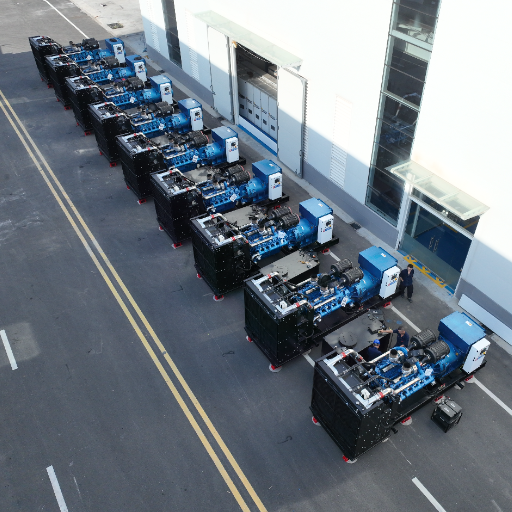
Cost is where most published guidance stops, and it is the question buyers actually need answered. Pricing varies by configuration, market, and specification, so the useful output isn’t a single number but an understanding of what drives it.
Where the Money Goes
The generator set itself, comprising the engine, alternator, control panel, and base frame. The engine and alternator together account for roughly 60 to 70 percent of the set’s cost. Aftertreatment equipment adds materially on Tier 4 Final and Stage V machines.
The transfer switch, scaled to the facility’s service rating. Open transition switches are simpler and cheaper; closed transition and bypass-isolation configurations cost considerably more.
Civil works, including the engineered concrete pad, containment, and any structural work.
Electrical installation, covering conductors, conduit, protection, and the connection to the distribution board.
Fuel infrastructure, which ranges from a small day tank to bulk storage with containment, monitoring, and leak detection.
Permits and professional fees, including engineering review and inspection.
Commissioning and load bank testing, which should never be treated as optional.
Why the Installed Cost Exceeds the Unit Price
As a general planning figure, the balance of system beyond the generator itself commonly adds 40 to 60 percent to the unit price for a straightforward installation. Complex sites, long cable runs, difficult access, and extensive fuel infrastructure push that higher.
| Cost element | Typical share of installed cost |
|---|---|
| Generator set | 40 to 55% |
| Transfer switch and controls | 8 to 15% |
| Civil works and foundation | 5 to 12% |
| Electrical installation | 10 to 20% |
| Fuel infrastructure | 5 to 15% |
| Permits, engineering, commissioning | 3 to 8% |
These ranges are planning guidance, not quotations. Site conditions move them substantially.
The Cost Drivers You Can Actually Influence
Fuel type changes the whole cost structure, because it determines whether you’re building fuel infrastructure at all. Rating class affects the machine specification and the warranty terms. Enclosure choice trades capital cost against acoustic and weather performance. Motor starting method can reduce the required generator size, which is often the single largest available saving.
The most reliable way to control cost is to specify accurately. We will review your load schedule and site conditions and give you a tailored quotation built on real numbers rather than a generic price band.
Redundancy and Parallel Operation
For facilities where a generator failure is itself an outage, a single unit isn’t an acceptable design. Redundancy is the answer, and it is expressed in N notation.
N is the capacity required to carry the load. N+1 adds one additional unit beyond that requirement, so the system survives the failure of any single generator. It is the standard pattern for data center backup power. 2N provides two complete, independent systems, and is used where even a planned maintenance outage on one path is unacceptable.
Redundancy therefore requires paralleling, which means synchronising multiple generators onto a common bus. Modern controllers handle synchronisation automatically, matching voltage, frequency, and phase before closing the breaker, and managing load sharing once paralleled.
The practical benefit isn’t only redundancy. Paralleled sets can also be operated as a group to match capacity to load, which avoids the light-loading problem that damages a single oversized machine.
The trade-offs are complexity, cost, and the requirement for proper protection coordination. Our comparison of one large generator versus several smaller units works through that decision in detail.
What N+1 actually buys. A regional hospital group ran a single 1,250 kVA stationary diesel generator as its only backup power for eleven years without a failure. When the group expanded, the board questioned why the new specification called for N+1 at roughly 1.7 times the cost of simply upsizing the existing unit.
The answer arrived eighteen months later, when a coolant hose failed during a scheduled load test. The second set picked up the critical load in under nine seconds, and the wards never noticed.
The group now treats the second unit as the cheapest insurance it owns.
Choosing a Stationary Generator Supplier
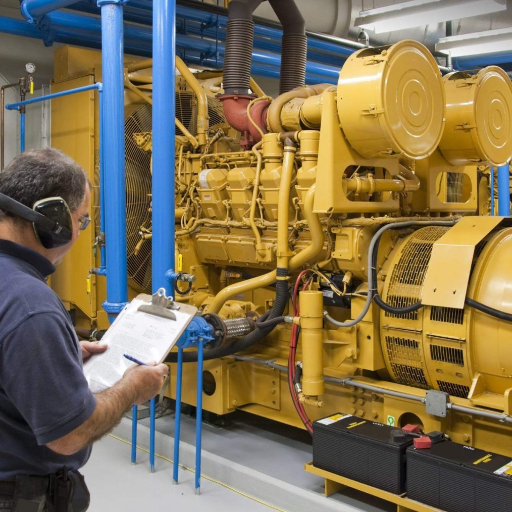
In practice, the supplier decision determines what happens after the equipment arrives, which is when most of the risk actually materialises. A verification checklist:
Confirm factory ownership. Ask for a live video walkthrough of the production line, with a current date visible. Trading companies routinely present other manufacturers’ facilities as their own.
Demand a transparent bill of materials. You should know the engine brand, the alternator brand, and the controller brand before you sign, not after delivery.
Specify 100 percent copper windings in writing. Aluminium windings are a known substitution in this market, and the difference shows up as heat and shortened alternator life.
Ask for serial-numbered test reports. A load bank report that corresponds to your specific unit is evidence. A generic datasheet isn’t.
Check lead time and spare parts availability against your project schedule, and confirm what the warranty actually covers and for how long.
Verify certifications independently rather than accepting scanned certificates at face value.
We address the full evaluation process in our guides to choosing a diesel generator manufacturer and to reading a generator specification sheet. As a manufacturer with over 25 years in power generation, exporting to more than 20 countries, we welcome the scrutiny; it is the same standard we apply to our own supply chain.
Frequently Asked Questions
What is a stationary generator?
A stationary generator is a generator set permanently installed at a fixed location and hardwired into a facility, usually through an automatic transfer switch. It is designed for long-term service at one site and isn’t intended to be moved between locations.
Is a stationary generator the same as a standby generator?
No, though they often overlap. Stationary describes the physical form factor; standby describes the duty rating. A fixed generator backing up a building is both stationary and standby rated. A fixed generator serving as a remote site’s primary power source is stationary but prime rated, not standby.
How long can a stationary generator run continuously?
It depends on the rating class. A prime power rated unit can run continuously with varying load, subject to fuel supply. A standby rated unit isn’t intended for continuous duty and should not be used that way, as doing so voids the warranty.
What size stationary generator do I need?
Size on starting load, not running load. Build a full load schedule, apply motor starting multipliers, and size so normal operation sits in the 60 to 80 percent band of rated capacity. Avoid oversizing; sustained operation below about 30 percent load causes wet stacking.
How far should a stationary generator be from a building?
NFPA 37 requires a minimum of 5 feet from building openings and combustible walls, reducible to 18 inches with a 1-hour rated wall or a listed noncombustible enclosure. Local codes may be stricter, and additional separation applies to gas meters and property lines.
Can a stationary generator run on natural gas?
Yes. Natural gas generators are common where a firm gas main exists, and they avoid on-site fuel storage entirely. The key limitation is dependence on the pipeline, which can fail in the same regional event that takes out the grid.
How much does a stationary generator cost?
Installed cost depends on capacity, fuel type, enclosure, transfer switch, and site works. As planning guidance, the balance of system beyond the generator itself commonly adds 40 to 60 percent to the unit price. Accurate pricing requires a load schedule and site review.
How often should a stationary generator be serviced?
Exercise weekly, test the transfer switch monthly, and change oil and filters at 100 hours or annually, whichever comes first, with progressively deeper service at 500, 1,000, 2,000, and 3,000 hours. Include an annual load bank test at rated capacity.
What is wet stacking?
Wet stacking is the accumulation of unburned fuel as carbon deposits in the exhaust system, caused by sustained operation below roughly 30 percent of rated load. It restricts exhaust flow, degrades performance, and shortens engine life. It is a direct consequence of oversizing.
Do I need a permit for a stationary generator?
In most jurisdictions, yes. A permanently connected generator normally requires an electrical permit and inspection, and mechanical, fuel, or gas permits may also apply. NEC 702.7 also requires signage at the service entrance identifying the on-site power source.
Conclusion
A stationary generator is a twenty-year infrastructure decision made in the space of a single specification. The choices that matter most are the ones that are hardest to change later: the fuel, the rating class, and the physical size of the machine.
The pattern that separates successful installations from expensive ones is consistent:
- Define the load honestly, including starting loads.
- Choose the fuel based on what will still be available during the event you’re protecting against.
- Specify the rating class that matches actual duty, not the cheapest one on the quote.
- Size for the 60 to 80 percent band rather than adding a comfort margin that causes wet stacking.
- Budget for the installed system, not just the generator.
Do those things, and the installation will do quietly what it was bought to do, which is to start when it is needed and run for as long as the outage lasts.
Next step: our engineers will review your load schedule and site conditions and confirm the right capacity, fuel, and rating class for your application. Request a sizing review and get a specification built on your actual requirements rather than a generic datasheet.
