
A bi-fuel generator runs on diesel and a second fuel at the same time, and the diesel never stops mattering. A dual-fuel generator, in the sense most buyers meet the term, runs on gasoline or propane, one at a time. Both names count two fuels. They describe different machines.
That single distinction causes a lot of wasted procurement time.
Search for a dual-fuel generator and you land on retail listings for portable units: Champion, Westinghouse, Firman, machines on wheels. Search for a bi-fuel generator and you land somewhere else entirely: industrial energy pages, marine dual-fuel engines, and kit suppliers talking about substitution rates.
Those two result sets describe two industries. Google has not fully separated them, and neither have a lot of buyers.
This article separates them. It explains what each term actually means, why the confusion exists, and how to tell which machine you are actually being quoted. We will also be blunt about when bi-fuel is the wrong answer, because that question gets skipped far too often.
Shandong Huali has built diesel generator sets from 8kVA to 4000kVA for industrial clients for over 25 years. We build diesel platforms. We do not sell conversion kits, and that independence is exactly why this page can be straight with you.
Key Takeaways
- The name does not define the machine. The fuels do. “Dual fuel” describes both a few-hundred-dollar portable and a marine engine, so always ask which two fuels are involved.
- Bi-fuel means simultaneous. Diesel stays in the combustion cycle to ignite the gas and carry load. A portable dual fuel unit switches fuels; it does not blend them.
- “Dual fuel” is the more overloaded term. In consumer retail it means gasoline or propane. In heavy engine engineering it usually means the same thing as bi-fuel.
- Kit availability, not fuel price, kills most bi-fuel projects. Conversion kits are engine-specific, and unsupported platforms simply have no product to buy.
- Two questions decide feasibility: is there a pipeline, and is there a supported kit for your engine? If either answer is no, the economics never get a chance to matter.
Bi-Fuel Generator vs Dual Fuel: At a Glance
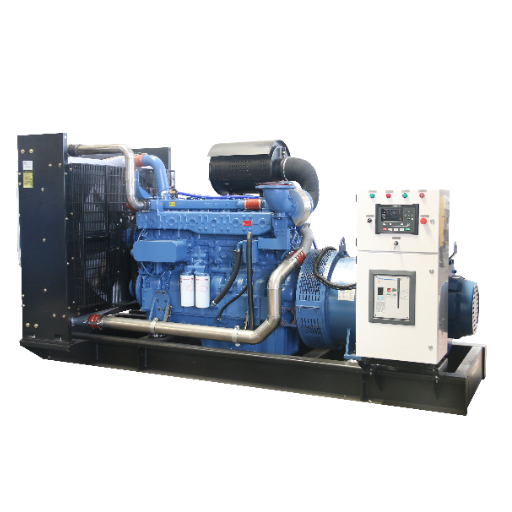
A bi-fuel generator runs diesel and a second fuel at the same time, using diesel for ignition and load response. A dual-fuel generator runs on two fuels one at a time, switching rather than blending them. The table below sorts every term by the fuels involved.
| Term | What it means | Fuels involved | Where you meet it | Both at once? |
|---|---|---|---|---|
| Bi-fuel | Diesel engine substituting a gas, with diesel retained for ignition and load response | Diesel + natural gas (or another gas) | Industrial gensets, marine, heavy trucks | Yes |
| Dual fuel (retail) | Portable generator that accepts either of two fuels | Gasoline or propane | Home centers, e-commerce | No, one at a time |
| Dual fuel (engine) | Engine designed to burn two fuels; in marine work, gas with a diesel pilot | Varies by design | Marine, large stationary engines | Usually yes |
| Tri-fuel | Portable generator accepting three fuels | Gasoline, propane, natural gas | Consumer retail | No, one at a time |
Read the “both at once” column twice. That column is the whole argument.
A bi-fuel unit blends two fuels in the cylinder. A retail dual fuel unit offers you a choice at the fuel valve. Those are not variations on one idea. They are different engineering categories that happen to share a word.
If you are comparing industrial options rather than portable ones, our guide to stationary generators and fixed generator sets covers the fixed-installation side before you get to fuel selection.
Why the Two Terms Get Confused
The confusion is not a buyer failure. It is a naming failure, and it has three sources.
First, “dual fuel” is genuinely overloaded. The phrase has been used for portable propane units long before industrial bi-fuel conversions reached the market. When two industries adopt the same plain-English words for different products, the words stop carrying information.
Second, the hyphen is not a reliable signal. You will see “bi-fuel” and “bifuel,” and you will see “dual fuel,” “dual-fuel,” and “dualfuel.” No standard governs this, and suppliers use them inconsistently.
Third, some manufacturers use both terms for the same product. In marine and large-engine work, “dual-fuel engine” often means exactly what others call bi-fuel: a gas-burning engine that keeps diesel injection for ignition. The related searches bear this out. People searching for bi-fuel generators are also searching for MAN dual-fuel engines and dual-fuel engines in ships.
Marta Reyes ran into all three at once. She is a facilities engineer at a bottling plant in Guadalajara, and she was specifying standby power for a new filling line.
She searched for a dual-fuel generator because the plant had a natural gas connection and her manager had asked for gas capability. She passed the phrase to procurement, who passed it to three suppliers.
All three quotes came back for portable propane units. One was rated at 12 kW. Her line needed 600 kW.
The plant lost five weeks to a specification that was never going to work, and the fix was a single clarification about which two fuels mattered. The words were the problem. Not the suppliers.
What Each Term Actually Means
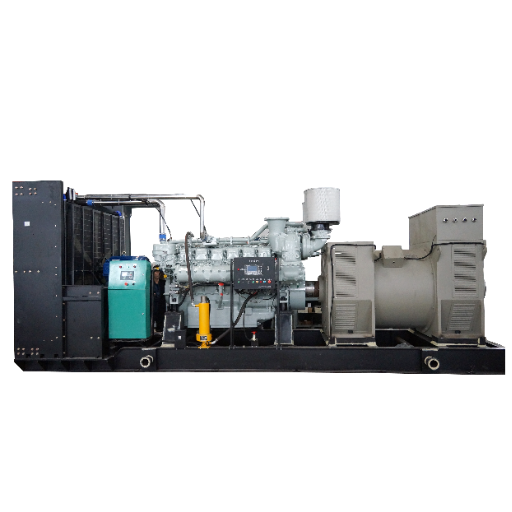
Bi-fuel: diesel stays in the picture
A bi-fuel generator starts as a diesel engine. A dual fuel conversion kit introduces a gaseous fuel into the intake air, and the existing diesel injection ignites it.
The diesel does two jobs that gas alone cannot do as readily. It provides the ignition source, because a diesel engine has no spark plug. And it carries load response, because diesel injection can be modulated faster than a gas supply can.
That is why substitution is partial rather than total. The engine runs mostly on gas and always on some diesel.
This is what people mean by a natural gas diesel generator: a diesel unit running largely on gas while keeping its diesel system intact. Suppliers also market the same machine as a dual-fuel diesel generator, or plainly as a gas diesel engine. Different label, same engineering.
How much gas you can substitute depends on the kit, the engine platform, the load profile, and the ambient conditions. Published rates vary widely. Get the figure for your specific engine in writing, from the kit supplier, before you budget anything. We cover the economics of that decision, including running cost and payback, in our diesel versus natural gas generator comparison.
Dual fuel: two meanings, one name
In the retail sense, a dual fuel generator is a portable or home standby unit that accepts gasoline or propane. You connect one fuel, run the machine, and switch later if you want. The engine itself is usually a spark-ignition design.
In the engine engineering sense, dual fuel means an engine that burns two fuels, often simultaneously. Marine dual-fuel engines are the clearest example: they burn gas as the primary fuel with a small diesel pilot for ignition, which is functionally the same principle as bi-fuel.
So when a supplier sends you a “dual fuel generator” specification, the useful question is not what it is called. It is which two fuels are named, and whether they burn together or in turn.
Tri-fuel: the third term, briefly
Tri-fuel generators accept gasoline, propane, and natural gas. They exist almost entirely in the small portable market. For an industrial fixed installation, the term is not relevant, and it appears here only so you recognize it when a search result mixes it in.
When a Bi-Fuel Generator Is the Right Answer
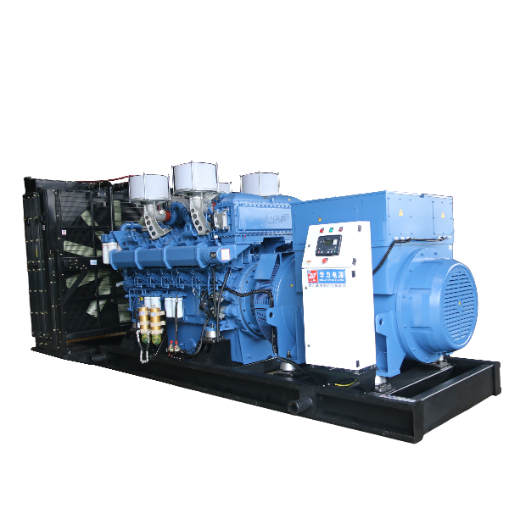
Bi-fuel is a strong fit when several conditions line up. Missing one usually sinks the project.
- You have a gas supply you can actually connect to. A pipeline, or a gas source with a service line you can afford. Gas piping carries its own code requirements, set out in NFPA 54, the National Fuel Gas Code. Everything else depends on this.
- Your annual run hours are high. Fuel cost dominates lifecycle cost only when the engine runs often. A standby unit that starts twice a year will not repay a conversion.Before you model the payback, confirm the duty the set actually performs: our stationary vs standby generator comparison explains why a fixed set can be standby or prime rated, and why that rating, not the installation, decides how many hours it runs.
- Your engine platform has a supported kit. This is a hard gate, not a preference.
- You can resolve certification and warranty. Both need checking before you order, not after.
- You keep the diesel tank. This is the quiet benefit of bi-fuel over straight gas. If the gas supply stops, you still have fuel on site and a machine that runs on it.On a fixed installation, that fallback usually starts with a generator day tank beside the engine, fed from bulk storage, so the diesel side is ready the moment gas pressure drops.
That last point matters more than the fuel bill in some projects. We built this argument out in the same diesel versus natural gas comparison, along with what happens when the pipeline you assumed exists does not.
When a Bi-Fuel Generator Is the Wrong Answer
This section is the reason to trust the rest of the page. Bi-fuel is not a default improvement.
There is no gas supply within practical reach. Remote sites, weak-grid regions, and most export markets have no main to connect to. Gas infrastructure is geographically concentrated, and US pipeline data shows how much of a landmass a network can leave uncovered. A service line to a distant site is not a budgeting problem. It is a physical one. Diesel wins there absolutely rather than relatively, and our guide to diesel fuel storage regulations covers how to size that autonomy.
The engine platform has no supported kit. Conversion kits are engineered for specific engine families. A common platform with a large installed base attracts kit development. An uncommon one may have nothing available at any price.
Ingrid Solberg learned that the direct way. She is a project director for a fish-processing plant on the Norwegian coast, and she had two 800 kW diesel sets and an existing gas connection.
The site profile looked ideal for bi-fuel. High run hours, gas on site, a credible payback case. Her team spent six weeks building the business case before anyone called the kit suppliers.
Her engine platform had no supported conversion. Two suppliers confirmed it independently. The gas connection went unused, and the plant runs straight diesel.
Certification and warranty cannot be resolved. A stationary engine is certified in a specific configuration. Changing the fuel system can move it outside that configuration, which affects your air permit. The EPA regulates emissions from these engines, and that regulatory category does not treat fuel-system modifications casually. Separately, an aftermarket conversion may affect your engine warranty, because the OEM warrantied an engine it built, not one a third party modified.
Neither issue is automatically fatal. Both need written answers before purchase, and our guide to diesel generator certification requirements covers the documentary evidence normally involved.
Annual run hours are low. A standby generator that runs for a few hours of testing each year has almost no fuel cost to offset. A conversion adds capital cost against savings that never arrive.
Priya Venkatesh, a maintenance superintendent at a cold-storage facility in Pune, priced a conversion on a 400 kW standby set. The quoted kit cost landed against roughly 90 hours of annual running. The simple payback ran past the end of the equipment’s service life. She kept the set as built, and put the budget into a second fuel tank for longer autonomy instead.
What to Ask Before You Commit
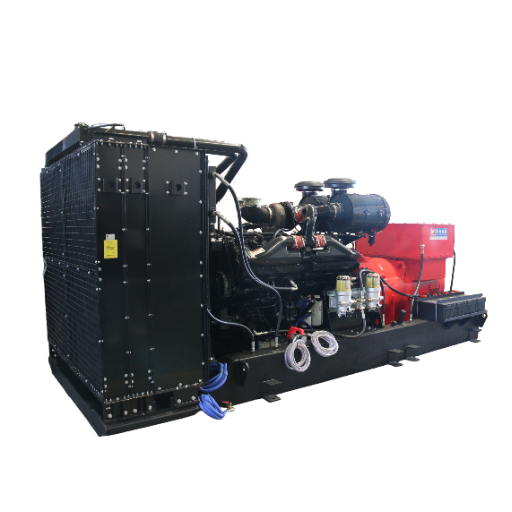
Take these questions to the kit supplier and the engine OEM in writing before you commit to a bi-fuel generator. Verbal answers are not sufficient for a capital decision.
- What substitution rate do you guarantee for my exact engine model and rating? Not a range from a brochure. A figure for your platform.
- Is the load acceptance still fast enough for my application? Gas substitution affects how quickly the engine picks up load. For standby duty on critical loads, this is often the binding constraint.
- What happens at low load and high substitution? Some combinations cause knock or unstable combustion. Ask how the system manages them.
- Does this affect my engine warranty, and in writing, how? Get the OEM position, not the kit supplier’s interpretation of it.
- What is the emission certification position? Ask whether the conversion keeps the engine in its certified configuration, and what your air authority will require.
- What is the derating at my site altitude and ambient temperature? Gas substitution and site conditions both cost capacity, and the effects compound.
- Who services it, and where do the parts come from? A conversion adds components that need their own support path.
- What is the methane slip figure? Unburned methane is a potent greenhouse gas, and it is a real environmental trade-off in gas engines, not a formality.
- What is the fuel consumption per kWh on each fuel? You need both numbers to model running cost honestly.
- What happens when the gas supply stops? Confirm the engine runs on diesel alone, at full rating, without intervention.
Rajesh Menon asked all ten. He manages utilities for a pharmaceutical plant in Gujarat, and he was replacing two ageing diesel sets.
His site had a gas connection and high run hours, so bi-fuel was a genuine candidate. He asked the questions before committing rather than after, and three of them changed his specification.
The guaranteed substitution rate came in lower than the marketing material suggested. The load acceptance needed a control change. And the air permit needed modifying before installation, not after.
The project was commissioned on schedule. Nothing about it was easy. It was simply decided in the right order, and none of the answers were surprises.
Want these questions answered for your site? Send us your engine platform, load profile, and fuel supply details, and our engineering team will walk through feasibility with you before you commit capital. Talk to an engineer →
Frequently Asked Questions
Is a bi-fuel generator the same as a dual fuel generator?
Not usually, though the industry uses the terms loosely. A bi-fuel generator runs a diesel engine on diesel plus a substituted gas, both at once. A dual fuel generator, in retail use, runs on gasoline or propane, one at a time.
In heavy engine work, though, “dual fuel” often means the same thing as bi-fuel. Ask which fuels are named, and whether they burn simultaneously.
Can a dual fuel generator run on natural gas?
Some can, and many cannot. Portable dual fuel units typically accept gasoline and propane only. Natural gas requires a third fuel option, which makes the unit tri-fuel. Industrial dual fuel and bi-fuel engines connected to a pipeline run on natural gas routinely, and our guide to natural gas generator advantages covers that configuration.
What are the downsides of dual fuel engines?
The real ones are substitution limits, load response, certification, and warranty. A bi-fuel engine cannot fully replace diesel, because diesel still ignites the charge and carries transient load. Conversion can affect the engine’s certified configuration and its warranty. And gas engines produce some methane slip, which is an environmental cost that fuel savings partly offset.
Is bi-fuel worth it for an industrial site?
It depends on three things: whether you can connect to gas, whether your engine platform has a supported kit, and whether your run hours are high enough to repay the capital. If any of the three fails, bi-fuel is usually the wrong answer regardless of the fuel price gap. Sites with a pipeline and continuous duty are the strongest candidates.
What is a tri-fuel generator?
A portable generator that accepts gasoline, propane, and natural gas, selected one at a time. The term belongs to the consumer market. For a fixed industrial installation, it is not the relevant category.
Conclusion
Bi-fuel and dual fuel are not competing names for one product. A bi-fuel generator blends diesel and gas simultaneously, keeping diesel for ignition and load response. A dual fuel generator, as most buyers encounter the term, lets you choose between two fuels one at a time. Read the fuels, not the label.
Three habits separate good decisions from expensive ones here. Ask which two fuels are named and whether they burn together. Treat kit availability and gas supply as hard gates, because no fuel price advantage survives a platform with no conversion or a site with no pipeline. And settle certification and warranty in writing before you commit capital, not after the equipment lands.
Sizing follows the same logic. Get the duty cycle and the load profile right, and the fuel question often answers itself. Our guide to how many hours an industrial generator can run continuously covers the runtime limits that shape that calculation. If you decide to stay on diesel, our diesel generator range covers the platform options.
Not sure which configuration fits your site? Send us your load profile, run hours, and fuel supply situation. Our engineers will tell you whether diesel, natural gas, or a bi-fuel conversion is the right answer, including when the answer is to keep it simple.
