
Stationary vs standby generator isn’t a choice between two competing options. “Stationary” classifies where a generator is installed and which installation and emissions rules apply to it. “Standby” classifies how that generator is rated to run and how many hours a year it’s expected to operate. Most fixed backup generators are both at the same time, which is exactly why the comparison keeps producing confusion in specifications and tender documents.
If your specification uses both terms, you don’t have a contradiction to resolve. You have two independent questions to answer, and a generator set only makes sense once both have been answered.
A 500 kW set on a concrete pad outside a hospital is stationary and standby rated. The same 500 kW set on the same pad at a remote mine with no grid connection is still stationary, but it can’t be standby rated, because it isn’t backing anything up. It’s the primary source.
That distinction costs real money when it’s missed, and it’s missed often.
Key Takeaways
- “Stationary” and “standby” describe two different things: installation and duty. They aren’t alternatives.
- A generator can be stationary and standby rated, stationary and prime rated, or neither. Most hospital and data center sets are stationary and standby rated.
- Different standards govern the two terms. Stationary installations follow codes such as NFPA 37 and EPA stationary engine rules; standby power systems follow NFPA 110 and the ISO 8528 rating classes.
- A standby-rated set run as a primary power source voids its warranty. If your site has no reliable grid, specify prime power from the start.
- In a tender, the phrase “stationary standby generator” is legitimate and common. Treating it redundant is what causes mismatched bids.
The Short Answer: Two Questions, Not Two Options
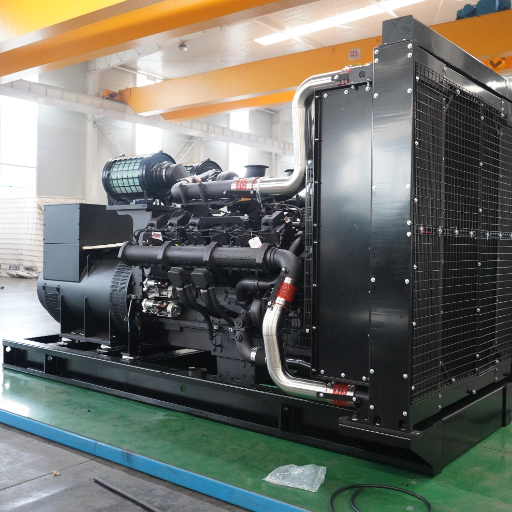
Ask yourself two separate questions. First: will this generator stay in one place? That answer decides whether it’s stationary or portable.
Second: what job will it do, and for how many hours a year? That answer determines whether it’s rated standby, prime, or continuous.
The two answers don’t constrain each other. A generator can be stationary and standby-rated, stationary and prime-rated, or portable and standby-rated. Trailer-mounted sets are routinely built with standby ratings for temporary backup at events and construction sites, and they aren’t stationary in any sense.
Nadia found out why this matters during a hospital expansion tender in 2024. Her team wrote “standby generator, 800 kW” in the equipment schedule and left the installation clause to the contractor. Three bids came back with three different machines: two correctly sized standby sets with automatic transfer switches, and one prime-rated industrial set with no transfer switch at all, priced 18 percent higher.
The supplier had read “standby” as a description of the building’s power strategy rather than as a rating class. The tender had to be reissued with the rating class and the installation scope stated separately.
That reissue cost six weeks. The fix takes two sentences.
Want the full picture on fixed installations? Our complete guide to stationary generator sets covers siting, sizing, permitting, and service life in one place.
What “Stationary” Actually Classifies
A stationary generator is a set that is permanently installed at a fixed location and hardwired into a facility, normally through an automatic transfer switch (ATS). It sits on a concrete pad or a structural floor, draws from a fixed fuel supply, and isn’t designed to be moved between sites.
The word describes installation and location. It says nothing about how hard the machine works or how many hours a year it runs.
Stationary Is an Installation Category
Stationary installation brings a specific set of engineering obligations that a portable set doesn’t carry. These include structural support, exhaust routing away from air intakes and operable windows, ventilation sized for both combustion air and radiator heat rejection, fuel storage and containment, and separation distances from buildings and property lines.If you’re still deciding whether a fixed installation is right for your site at all, our stationary vs portable generator comparison sets out when a relocatable set is the better answer.
In North America, NFPA 37 addresses the installation and use of stationary combustion engines, and it’s the reference most site engineers work from when placing a set. That code applies to the stationary generator regardless of whether the machine is rated standby, prime, or continuous.
Stationary Is Also a Regulatory Category
Emissions regulation adds a second layer. The US EPA regulates stationary engines as a distinct category from mobile and nonroad engines, and the EPA stationary engines programme sets requirements that depend on the engine’s application and its annual operating profile.
This is where the two terms first touch. The regulatory treatment of a stationary engine depends partly on whether it’s an emergency engine or a non-emergency engine, which is a question about duty, not about location. The same physical installation can fall into a different regulatory category if the operating hours change.
What “Standby” Actually Classifies
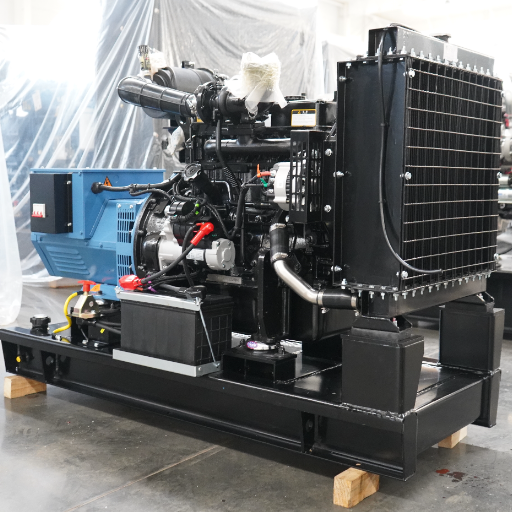
A standby generator is a set rated to run as a backup to a reliable utility supply. It starts when the grid fails, carries the load for the duration of the outage, and shuts down when utility power returns.
The word describes duty. It says nothing about where the machine is bolted down.
Standby Is a Duty Rating, Not a Location
The rating classes come from ISO 8528, and the distinction between them is commercially significant because it affects warranty coverage as well as performance. Emergency Standby Power (ESP) assumes backup duty with limited annual hours and no sustained overload. Prime Power (PRP) assumes the set is the primary source, running unlimited hours at varying load with a 10 percent overload allowance for one hour in twelve. Continuous Power (COP) assumes a constant base load with no overload capability.
The practical warning is simple and it appears in every manufacturer’s documentation. A standby-rated generator used as a prime power source will void its warranty, and it won’t last. Standby ratings assume long idle periods between events. A remote mine running a standby-rated machine 24 hours a day is operating far outside the envelope it was sold under.
Standby Is Also a System-Level Requirement
Standby power isn’t only a rating stamped on a nameplate. It’s also a system classification. NFPA 110 defines emergency and standby power systems as complete assemblies covering the generator, the transfer equipment, the controls, and the supporting systems around them.
This matters because a standby-rated generator that is installed without a compliant transfer switch and control system isn’t a standby power system. It’s a generator with a rating. The distinction between a set and a system is one of the most common gaps in projects that treat the generator as the whole scope. Our guide to standby power system design covers the transfer equipment, controls, and supporting systems that sit around the set.
Standby Is Also a Legal Classification
The word “standby” carries legal weight in the United States, quite separate from any manufacturer’s rating. The National Electrical Code sorts backup power into three classes in NFPA 70, and the class your installation falls into changes the transfer time, the testing regime, and the wiring rules that apply.
Article 700 covers emergency systems, which a governing authority classifies as essential to human life. Article 701 covers legally required standby systems, which code mandates for loads such as ventilation, sewage disposal, and communications. Article 702 covers optional standby systems, installed at the owner’s discretion where life safety doesn’t depend on them.
The consequence is worth sitting with. Two buildings with identical generator sets can face completely different compliance obligations, because the class follows the loads the set serves rather than the machine itself. This is the standby side of the same pattern you saw with stationary installations, and neither layer is visible on a nameplate.
Why the Stationary vs Standby Generator Distinction Gets Blurred
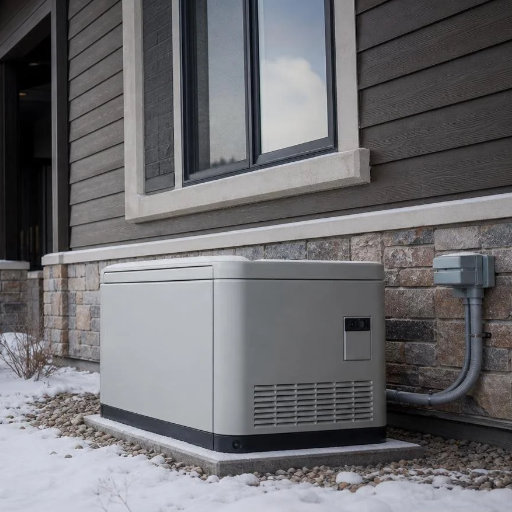
The confusion is understandable. It comes from three sources, and each one is worth naming.
Reason One: Most Fixed Backup Sets Are Genuinely Both
The single most common configuration in industrial and institutional power is a stationary, standby-rated generator. Hospitals, data centers, water treatment plants, and office towers all rely on it.
When almost every machine you see in a category carries both labels, it’s natural to assume the labels mean the same thing. They don’t. They simply co-occur most of the time.
Ravi, a facilities engineer at a 400-bed hospital, put it neatly. His site runs two stationary, standby-rated sets with weekly exercise tests and monthly transfer switch checks. Both terms are on his nameplate, and neither one is optional.
Take away “stationary” and the sets aren’t installed correctly. Take away “standby” and they’re being operated outside the rating they were purchased under.Running two sets instead of one is a third decision again, separate from both labels, and our guide to N+1 generator redundancy explains how hospitals and data centers size the extra unit.
Reason Two: “Home Standby Generator” Names a Product, Not a Rating
The residential market uses “standby generator” to mean a permanently installed unit in a homeowner’s yard. That machine is stationary by definition. This is the standby generator meaning most buyers meet first, and it names a product category rather than an operating profile.
This is the single largest source of the synonym claim. In residential marketing the two words genuinely describe the same object, and that usage has leaked into commercial writing where it’s wrong.
Reason Three: The Counterexample Is Rarely Stated
Almost no article in this category gives the example that breaks the synonym claim, so the claim survives.
A fixed generator at a remote mine site with no reliable grid connection is stationary. It’s installed on a foundation, hardwired, and permitted as a fixed installation. It isn’t standby rated, because there’s no utility supply for it to stand by.
It’s prime rated. If the mine specified a standby set, the warranty is void and the engine life will fall far short of the rated design life.
One sentence fixes the confusion for good: stationary tells you where the machine is, standby tells you what it does.
Stationary vs Standby Generator, Compared by Decision Factor
The table below separates the two terms dimension by dimension. The final column is the one that matters most, because it shows where the two overlap and where they can’t.
| Dimension | Stationary | Standby | Can both apply? |
|---|---|---|---|
| What it describes | Installation and location | Duty rating and annual hours | Yes |
| Determined by | Fixed foundation, hardwired, permit | Role (backup vs primary) and hours per year | Yes |
| Governing reference | NFPA 37, EPA stationary engine rules | NFPA 110, ISO 8528 rating classes | Different standards, same set |
| Typical capacity | 10 kW to several MW | Sized to the backed-up load | Yes |
| Fuel supply | Fixed line or bulk tank with containment | Sized for outage duration | Yes |
| Starting | Automatic via transfer switch | Automatic, and expected to start cold | Yes |
| Portability | Not intended to move | Independent of portability | Yes |
| Counterexample | Remote mine set, grid-independent | Trailer-mounted temporary backup | Neither is both |
Read the last two rows together. A stationary set can fail to be standby rated, and a standby-rated set can fail to be stationary. The two terms cross in the middle, which is where most real projects sit, but the crossing point isn’t the whole category.
How Each Term Ends Up in Your Specification
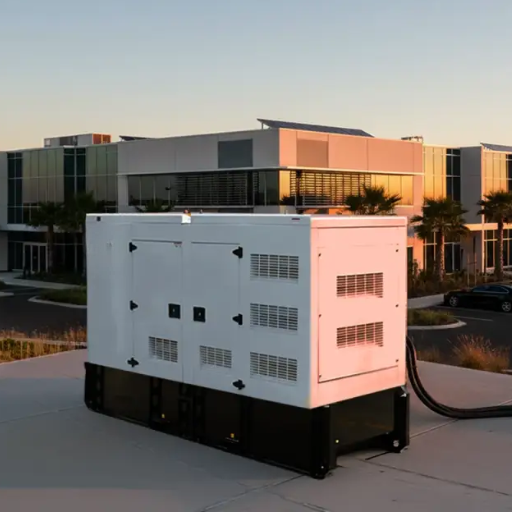
The two terms belong in different clauses of the same document. Putting them in the same clause produces ambiguous bids.
Where “Stationary” Belongs
State the installation scope. Foundation and mounting, exhaust routing, ventilation for combustion air and heat rejection, fuel storage and containment, separation distances, and the permits required for a fixed installation all belong here.The fuel you choose decides how much of that clause applies: a pipeline-fed gas set needs no bulk storage at all, and our diesel vs natural gas generator guide compares the two on runtime, resilience, and cost.
Where “Standby” Belongs
State the duty. The rating class (ESP, PRP, or COP), the expected annual operating hours, the load profile, and the transfer and control requirements all belong here. If your site has no reliable grid, this clause should say prime power, not standby, regardless of how the machine is installed.
The Tender Wording That Avoids Mismatched Bids
A clause that reads “supply and install a stationary, standby-rated diesel generator set, ESP class, 800 kW at 0.8 power factor, complete with automatic transfer switch and NFPA 110 compliant controls” leaves no room for interpretation. Every bidder quotes the same class of machine.
Drafting that clause is the hard part. Our guide to generator set specification for tender walks through the whole document structure, clause by clause.
Nadia’s reissued tender used wording close to that, and the second round returned three comparable bids within a 4 percent band.
If you are writing a specification now and want it reviewed before it goes out, our engineering team can check the rating class and installation scope against your actual load profile.
Frequently Asked Questions
Is a stationary generator the same as a standby generator?
No, though they often overlap. Stationary describes the physical form factor; standby describes the duty rating. A fixed generator backing up a building is both stationary and standby rated. A fixed generator serving as a remote site’s primary power source is stationary but prime rated, not standby.
Can a generator be stationary but not standby?
Yes. Any fixed generator whose job is to be the primary power source, rather than a backup, falls into this group. Remote mines, island grids, and off-grid industrial sites commonly run stationary, prime-rated sets.
The installation is identical to a standby installation in most respects. The rating and the engine build aren’t.Because these sets run long hours, fuel cost becomes a major line item, and some operators replace part of the diesel with natural gas; our bi-fuel vs dual fuel generator guide explains how each system works and where each one fits.
Is a standby generator always stationary?
No. Trailer-mounted sets are frequently built with standby ratings for temporary backup at events, construction sites, and seasonal operations. The rating describes the duty, so it travels with the machine regardless of how the machine arrives.
Which term should I use in a tender document?
Use both, in separate clauses. State the installation requirements under the installation scope and the rating class, annual hours, and load profile under the duty scope. A single clause that says “stationary standby generator” without a rating class invites bidders to interpret the wording differently, and they will.
How do I know which rating class I need?
Start with the grid. If the site has a reliable utility supply and the generator only runs during outages, you need ESP. If there’s no reliable grid or the set carries day-to-day load, you need PRP. If the load is constant and the set runs continuously, you need COP.
Confirming this against actual annual hours matters more than the label on the datasheet, because the warranty follows the rating class, not the intent.
Does a standby rating limit how long the generator can run?
It limits how the generator is expected to be used, and using it outside that expectation is what voids coverage. Standby ratings assume a reliable utility supply, limited annual hours, and long idle periods between events. Continuous operation at high load is outside that envelope. If your operating profile is closer to continuous than to standby, specify the rating class that matches it.
Conclusion
A stationary vs standby generator question is really two questions. Stationary tells you where the machine is installed and which installation and emissions requirements apply. Standby tells you what the machine is rated to do and how many hours a year it’s expected to run. They aren’t alternatives, and treating them as alternatives is what produces mismatched bids, voided warranties, and premature overhauls.
Three things are worth carrying into your next specification. First, answer both questions separately before you write anything down. Second, state the installation scope and the rating class in different clauses, because suppliers read them differently. Third, check the rating class against your actual grid reliability and annual hours, not against the label your contractor used.
Getting this right isn’t complicated. It takes one extra sentence in the specification, and it prevents the six-week reissue that follows when a bidder reads the wording the other way.
