
To choose a diesel generator manufacturer, verify the certifications, confirm the company is a real OEM rather than a trader, name the component brands in writing, and require load-bank test reports. Price comes last, not first.
Here’s the trap most buyers fall into. A trading company can rent a load bank for the day of your video call, borrow a warehouse for a walkthrough, and hand you a certificate that belongs to someone else. None of it proves the generator will be built right.
The cheapest manufacturer is usually the most expensive supplier once you account for aluminum windings, uncertified engines, and no spare parts. This guide gives you a verification framework, the red flags that expose a fake factory, and a checklist you can actually enforce.
Key Takeaways
- Choose a manufacturer by verifying certifications, OEM status, component brands, copper windings, and load-bank testing, never by price alone.
- A genuine OEM answers verification questions instantly; a trader dodges them, rents equipment for show, or hides behind “confidentiality.”
- Demand the engine, alternator, and controller brands in writing, and confirm the alternator is 100% copper wound, not aluminum.
- Require unit-specific load-bank test reports with serial numbers, and let a third party like SGS inspect before shipment.
- Shandong Huali is a 25+ year manufacturer that integrates Cummins, Perkins, Weichai, and Yuchai engines with Stamford alternators, so this guide shows exactly how to verify us, too.
Start With What You Actually Need
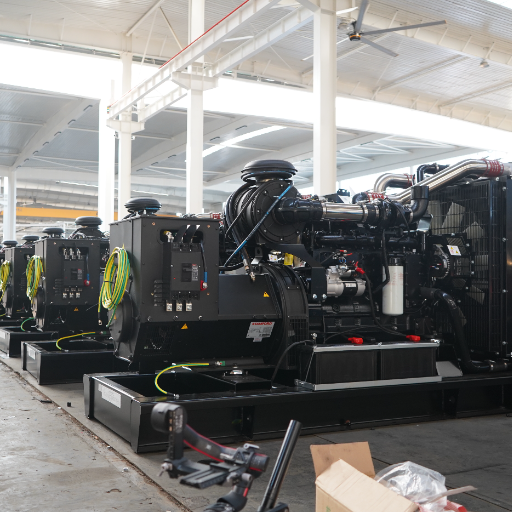
You cannot choose a manufacturer well before you know what you are asking them to build. Vetting suppliers first, then figuring out the generator, is the wrong order.
Define the Spec Before You Vet the Supplier
Write down the requirements first. What is the power rating in kVA, the voltage and frequency, the fuel type, and whether the site needs standby, prime, or continuous power? Those answers decide which manufacturers are even in the running.
If you haven’t written this down yet, start with our how to write a diesel generator specification guide. A clear specification is also the tool you will use later to hold the chosen manufacturer to their word.
Prime, Standby, and Site Conditions
The operating mode and site conditions change the build. Prime power runs unlimited hours and needs a heavier-duty rating than standby. Altitude, temperature, and humidity force derating. A manufacturer who asks these questions up front is doing you a favor; one who quotes before asking is not.
Separate the machine decision from the maker decision. If you are still choosing the generator type and size, our how to choose a diesel generator guide covers that step. This article assumes you know the spec and now need the manufacturer.
Is It a Manufacturer or a Trader?
The single biggest risk in generator sourcing is not a bad product. It’s a trading company presenting itself as a factory.
OEM vs Assembler vs Trading Company
A true OEM designs, engineers, and tests generators in its own facility. An assembler bolts engines to alternators it bought. A trading company owns neither the design nor the line; it buys finished sets from a factory and adds a logo and a margin.
Each can deliver a working generator. The difference shows up when you need customization, when a part fails, and when something must be fixed under warranty. Only the OEM controls the whole build.
The Rented-Factory and Portable-Load-Bank Tells
Traders are good at staging evidence. A rented warehouse with borrowed machinery looks fine in photos. A portable load bank wheeled in for a one-day video call proves nothing, because a real manufacturer tests every day as a matter of routine.
Ask for a live video walkthrough with a visible, current date, like a newspaper or a phone showing the day’s news. A real factory has no reason to refuse. A trader has every reason to stall.
Fatima, an import manager in Dubai, was about to wire a deposit to a supplier whose catalog and photos looked professional. She asked for one live video tour with that day’s newspaper on screen. The “production line” was a rented warehouse with equipment still wrapped in dust covers. She walked away, and the deposit she would have lost covered the cost of three factory audits with a legitimate manufacturer instead.
Check the Certifications and Paperwork
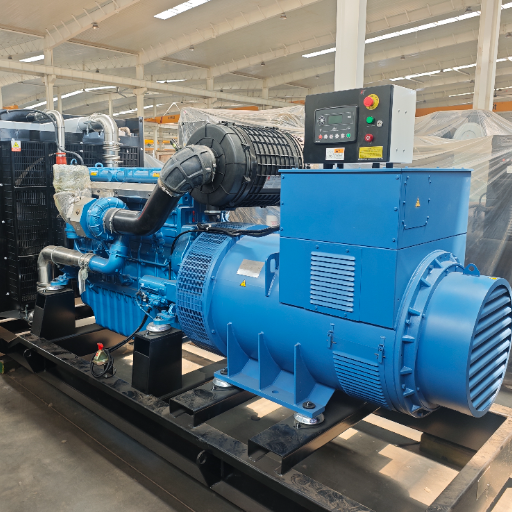
Certifications are the fastest first filter, but only if you verify them. A certificate is only as good as the body that issued it and the company named on it.
The Baseline and Market Certifications
At minimum, look for ISO 9001 quality management. On the product side, expect the set to meet ISO 8528 for genset performance, with the alternator built to IEC 60034 or NEMA MG-1. Market access adds specific certificates: CE for Europe, EPA Tier certification for the United States, and regional marks like SONCAP, SASO, or GOST depending on the destination.
| Certification | What it proves | Why it matters |
|---|---|---|
| ISO 9001 | Quality management system | Baseline for any credible maker |
| ISO 8528 | Genset performance standard | The set is tested to a real load |
| CE | EU safety and compliance | Legal access to Europe |
| EPA Tier | US emissions compliance | Legal access to North America |
| CCC | China compulsory certification | Domestic manufacturing legitimacy |
Verify Certificates Independently
Do not accept a scan. Look up the certificate number with the issuing body to confirm it is current and issued to the exact company name you are dealing with. Traders reuse certificates, Photoshop dates, and claim “confidentiality” when they cannot produce the real document.
Elena, a project manager in Manila, received an ISO 9001 certificate that looked legitimate. She checked the number with the certification body and found it had been issued to a different company and expired two years earlier. The supplier insisted the scan was “simplified for privacy.” She disqualified them the same afternoon.
Demand a Transparent Bill of Materials
A trustworthy manufacturer will hand you a bill of materials (BOM) that names every major component by brand and model. A vague one is where the corners get cut.
Name the Engine, Alternator, and Controller Brands
Insist on exact brands. The engine might be Cummins, Perkins, Weichai, or Yuchai. The alternator should be a named brand like Stamford. The controller is commonly a Deepsea, ComAp, or Smartgen. Vague phrases like “famous Chinese brand” or “OEM quality” are warning signs.
This is also where you verify the engine is genuine and new, not a rebuilt or cloned unit. Reputable manufacturers publish their engine brand integrations. A real Cummins generator or a Stamford alternator carries a serial number you can trace back to the brand.
Copper vs Aluminum Windings
This is the quietest, costliest substitution in the industry. Copper alternator windings cost 20 to 30 percent more than aluminum, so a supplier can cut price by swapping them and hide it inside the casing. Aluminum windings run hotter, carry less continuous load, and fail sooner.
Demand “100 percent copper windings” in writing, in the specification itself. If the supplier hedges, treat it as a red flag. Our copper vs aluminum wire guide explains exactly how the material difference shows up in generator performance and lifespan.
Viktor, a distributor in Warsaw, put “100 percent copper windings” into his purchase contract after losing a customer to an alternator that burned out in a year. A supplier he almost chose pushed back on the clause, offering a 12 percent lower price “for equivalent quality.” Viktor’s independent inspector later confirmed that the supplier’s sets were aluminum-wound. The clause had done its job before a single unit shipped.
Verify the Testing, Not the Brochure
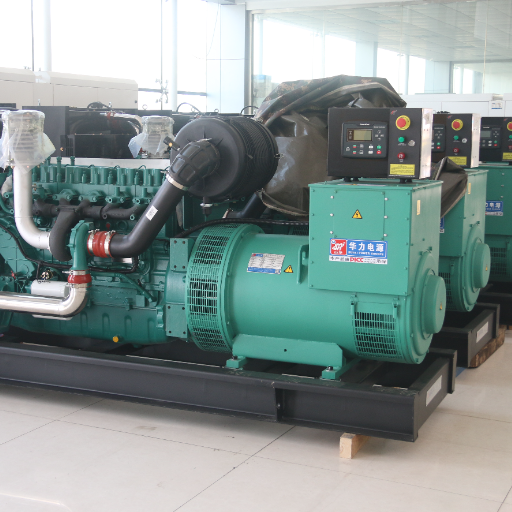
Every manufacturer claims quality. Testing is where the claim is either proven or quietly dropped.
Load Bank Testing and Unit-Specific Reports
A load bank applies a real electrical load to the set, proving it can carry its rating rather than just idle in the shop. Require testing at 50, 75, and 100 percent load, with a report that carries the unit’s serial number and actual readings for voltage, frequency, and harmonic distortion.
A generic template with blank fields is not a test report. It is a placeholder. Ask for the specific report for your specific unit.
Third-Party Inspection
Before shipment, an independent inspector from a firm like SGS or Bureau Veritas can confirm the engine brand, the copper windings, the noise level under load, and the packaging. This costs a fraction of one generator and removes the gap between what the supplier promised and what was actually shipped.
| Red flag | What a real manufacturer shows you instead |
|---|---|
| Portable load bank wheeled in for a video call | Permanent load bank tested daily as routine |
| Certificate scan with “confidentiality” excuses | Certificate number you can verify independently |
| Vague BOM with “famous brand” phrases | Exact engine, alternator, and controller models |
| Generic test report with blank fields | Unit-specific report with serial number and readings |
| Refuses a third-party inspection | Welcomes SGS or Bureau Veritas before shipment |
Shandong Huali tests every generator set before dispatch in its own testing center, which is one reason the red flags above do not apply. If you want to verify us the same way you would any other manufacturer, we will walk you through it live, because a real factory wants the inspection.
Check the After-Sales and Track Record
A generator is a long-term asset. The manufacturer that disappears after delivery costs you more than any upfront discount saved.
Warranty, Parts, and Service Network
Confirm the warranty terms in writing, commonly one year or 1,000 running hours, and check what it actually covers. Ask how long spare parts take to reach your country and whether the manufacturer supports your region directly or through a local partner.
A manufacturer that holds parts inventory and answers technical questions directly is worth a premium over one that routes everything through an intermediary.
Delivery, Reorder Rate, and Response Time
Track record is measurable. Look for an on-time delivery rate at or above 90 percent, and ask about the reorder rate, which signals whether existing customers come back. Response time matters too; a manufacturer that answers a technical question in hours, not weeks, is one you can rely on after the sale.
A manufacturer with a real export history will show it openly, with the countries it ships to and the certifications it holds for each market. Vague claims with no names, dates, or references are another tell.
How to Choose a Diesel Generator Manufacturer: The Checklist
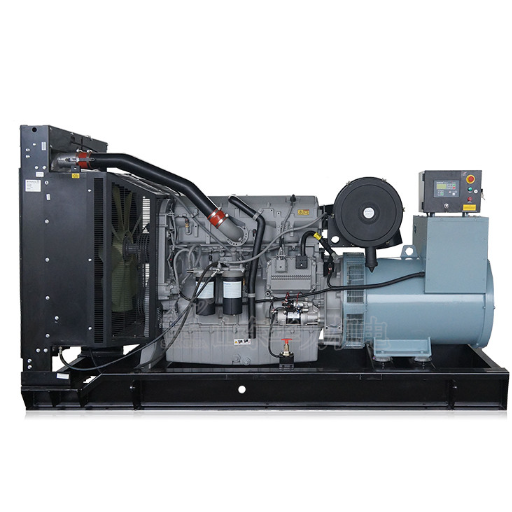
Work through these ten checks in order, and the decision usually makes itself.
- Write the spec first. Rating, voltage, frequency, fuel, and site conditions.
- Confirm OEM status. A real factory, not a rented warehouse or a trading company.
- Do a live video tour with a dated newspaper. A real factory never refuses.
- Verify the certificates independently. Check the number with the issuing body.
- Demand a transparent BOM. Exact engine, alternator, and controller brands.
- Require 100 percent copper windings in writing.
- Ask for unit-specific load-bank test reports. With serial numbers and real readings.
- Book a third-party inspection. SGS or Bureau Veritas before shipment.
- Check warranty, parts, and delivery record. One year or 1,000 hours, on-time rate above 90 percent.
- Compare total lifecycle cost, not price. Cheap materials and no parts cost more later.
The manufacturer you choose turns your specification into a physical machine. If you want to see what a properly specified, honestly built set looks like, our custom diesel generator: 9 specs guide walks through the decisions behind a real build.
Frequently Asked Questions
How do I verify a diesel generator manufacturer?
Confirm they are a genuine OEM, verify their certifications with the issuing body, demand a transparent bill of materials, and book a third-party inspection before shipment.
What certifications should a generator manufacturer have?
ISO 9001 for quality, ISO 8528 for genset performance, and market-specific marks like CE, EPA Tier, or CCC depending on where the set will be used.
How do I know if a generator supplier is an OEM or a trader?
Ask for a live factory video with a dated newspaper, a detailed bill of materials, and unit-specific test reports. Traders rent equipment for show and struggle to produce any of these.
Is it safe to buy diesel generators from China?
Yes, if you verify the manufacturer independently. Confirm the OEM status, certificates, component brands, and copper windings, and inspect before shipment rather than trusting a catalog.
What is the difference between copper and aluminum generator windings?
Copper windings cost 20 to 30 percent more but run cooler, carry continuous load better, and last longer. Aluminum windings are cheaper, run hotter, and fail sooner, which is why suppliers swap them quietly.
How do I check if a generator engine is genuine?
Ask for the engine brand, model, and serial number, then trace it with the engine manufacturer. Genuine Cummins, Perkins, Weichai, and Yuchai engines carry serial numbers the brand can verify.
Conclusion
Choosing a diesel generator manufacturer is not a paper exercise. It’s a verification process, and the price tag is the last thing you check, not the first.
Here is what to remember:
- Write the specification before you vet anyone.
- Prove the company is a real OEM, not a trader staging a warehouse.
- Verify the certifications independently and demand a transparent bill of materials.
- Require 100 percent copper windings and unit-specific load-bank test reports.
- Inspect before shipment and judge the supplier on total lifecycle cost, not price.
Shandong Huali Electromechanical Co., Ltd. has manufactured diesel generator sets from 8 kVA to 4,000 kVA for more than 25 years, integrating Cummins, Perkins, Weichai, and Yuchai engines with Stamford alternators and holding ISO 9001, CE, and CCC certifications. We built this guide on the belief that a real manufacturer should welcome your verification, so if you are choosing a supplier, we will walk you through our certifications, our factory, and our testing, and help you apply this same checklist to anyone you are considering.
