
A custom diesel generator is a power unit built to your exact site conditions by combining an OEM engine (Cummins, Perkins, Weichai, Yuchai, Volvo, or Doosan) with a chosen alternator, controller, fuel system, and enclosure rather than buying an off-the-shelf diesel generator set. The build is defined by 9 procurement decisions, and getting any one of them wrong is the difference between a 20-year asset and a $28,000 overhaul at month 18.
Most buyers come to us already knowing they need “custom.” Very few arrive knowing which 9 decisions actually drive the build. That gap is where money quietly leaks out of the project, sometimes in the form of late-stage redesign fees, sometimes as derating that no one warned them about, and sometimes as a fuel bill that comes in 22% higher than the proposal forecast.
If you are responsible for specifying, sourcing, or signing off on a custom genset in 2026, this guide gives you the exact framework our engineers use on the factory floor. We’ll walk through each of the 9 decisions, the trade-offs that matter, and a copy-paste specification template you can drop straight into an RFP.For a complete checklist of supplier credibility assessment criteria—covering all metrics beyond delivery lead times—please refer to our Complete Buyer’s Guide to Diesel Generator Manufacturers.
Key Takeaways
- A custom diesel generator is defined by 9 procurement decisions; the four most-overlooked are alternator excitation, enclosure noise class, fuel tank runtime, and altitude/temperature derating.
- Custom unit lead times range from 12 weeks (25–400 kW) to 70 weeks (1,250–3,250 kW); roughly 70% of slippage is caused by late specification of enclosure, noise, or controls.
- China-factory custom builds using genuine OEM engines and Stamford/Leroy Somer alternators typically run 30–50% below Western OEM direct pricing, with engine warranty passing through.
- Oversizing beyond 20% causes wet stacking and cylinder glazing; one Frankfurt data center paid $28,000 to fix it after sizing a 2,000 kVA unit for an 1,100 kVA load.
- PMG-excited alternators recover voltage 30–40% faster than self-excited units during motor starts, which usually decides the alternator brand more than the nameplate.
The 9 Decisions That Define a Custom Diesel Generator
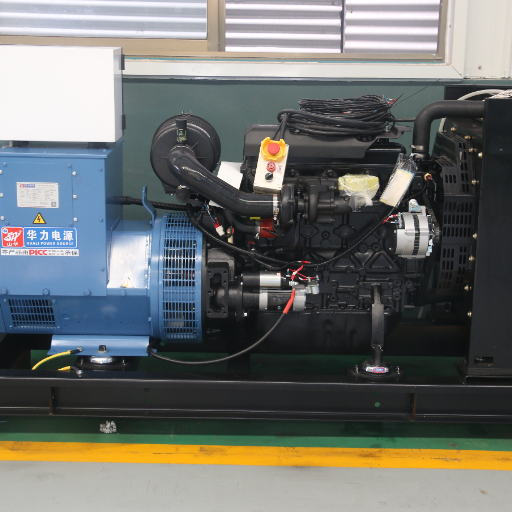
Every custom diesel generator specifications sheet maps back to these 9 procurement decisions:
- Power Rating — Prime, standby, or continuous duty + future expansion margin
- Engine Selection — OEM brand (Cummins, Perkins, Weichai, Yuchai, Volvo, Doosan) and emissions tier
- Alternator Selection — Stamford, Leroy Somer, or Marathon with PMG excitation
- Voltage, Frequency, Phase — 50/60 Hz, low or medium voltage, dual-frequency option
- Enclosure Type — Open frame, canopy, sound-attenuated, super-silent, or containerized
- Fuel System — Base tank, external bulk tank, bunded containment, runtime target
- Control System — Deepsea, ComAp, Smartgen, or PowerCommand + AMF/ATS
- Compliance — CE, EPA Tier 4 Final, ISO, marine classification (CCS, DNV, BV)
- Lead Time — Frame size, BOM freeze date, parallel-pathing strategy
Each decision unlocks a layer of diesel generator customization options. Get them in sequence and the build runs on schedule; get them out of sequence and the redesign loop starts.
What Makes a Diesel Generator “Custom”?
A standard genset comes off the production line in a fixed configuration: a specific engine, a matching alternator, a default enclosure, and a baseline controller. A custom diesel generator lets you change any of those four layers independently.
Standard vs Custom: Where the Line Is Drawn
If you only need a different paint color and a 24V battery upgrade, you are buying a standard unit with options. If you need a Cummins QSK60 paired with a Stamford HCI634K alternator inside an IP54 container with a Deepsea DSE8610 MK II for parallel operation, you are buying a custom build. The line is drawn at the bill of materials: anything that changes the BOM beyond accessory-level items pushes the unit into the custom queue.
The Four Customization Layers
Every custom diesel generator is assembled from four layers, and you can specify each one independently:
- Engine, Cummins, Perkins, Weichai, Yuchai, Volvo, or Doosan, sized 8 kVA to 4,000 kVA
- Alternator, Stamford, Leroy Somer, Marathon, or domestic equivalents
- Controller, Deepsea, ComAp, Smartgen, or factory-integrated PLC
- Enclosure, Open frame, weatherproof canopy, sound-attenuated, super-silent, containerized, or trailer-mounted
The decisions below tell you how to specify each layer correctly.
Decision 1: Power Rating, Prime, Standby, or Continuous?
Before you ask for a quote, you need a real load profile. The most common procurement mistake we see is buyers specifying nameplate kVA without analyzing starting kVA, harmonic content, or future expansion margin.
How to Calculate Real Load vs Starting kVA
Running load tells you what the engine needs to sustain. Starting kVA tells you what the alternator needs to survive. Induction motors typically draw 5–7 times their running current at start, and elevators or chillers can spike higher. If your largest motor is 75 kW running, expect to size the alternator for around 450 kVA of inrush even if total running load is only 280 kW.
A useful field rule: total kVA = (running kW / 0.8) + (largest motor starting kVA × 0.4). Run that calculation before you write the RFP, not after. For the full sizing methodology, see our industrial generator sizing guide.
The 20% Future Expansion Rule
Engineering best practice is to add 20% headroom for future expansion. That extra margin protects you from wet stacking (incomplete combustion at low load) while leaving room for a second production line, a new HVAC chiller, or future data-hall buildout. Anything beyond 30% headroom starts costing you in fuel efficiency, and beyond 40% you risk long-term engine damage from chronic underloading.
Derating for Altitude and Temperature
A 500 kW generator at sea level and 25°C ambient is not a 500 kW generator at 1,500 meters and 45°C. Standard derating factors are roughly 3% per 300 meters above 1,000m and 2% per 5°C above 40°C ambient. A poorly-specified unit in a Bolivian mining camp can lose 20% of its nameplate output before it even reaches site.
Decision 2: Engine Selection, OEM Brand and Configuration
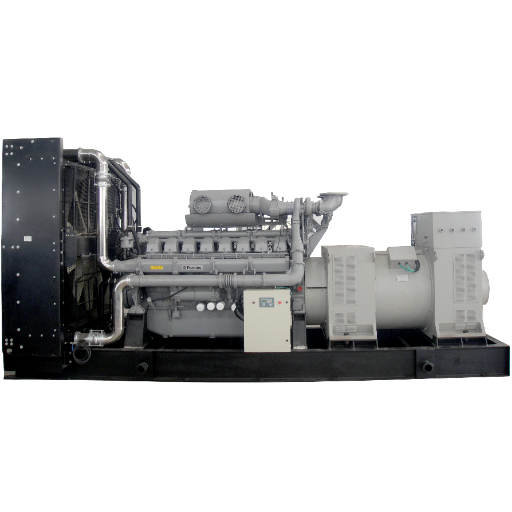
The engine is the single largest cost driver of a custom genset, and OEM diesel generator configuration determines warranty terms, fuel economy, and emissions tier.
Cummins vs Perkins vs Weichai vs Yuchai for Custom Builds
Cummins industrial engines (especially the QSK and KTA series) dominate large-frame industrial builds where Tier 4 Final emissions and 25,000-hour overhaul intervals matter. Perkins 4000-series engines are the workhorse of European-spec installations and offer strong parts availability across Africa and the Middle East. Weichai and Yuchai are the value end of the spectrum, genuine OEM engines built in China with stronger price-performance for prime power in mining, agriculture, and construction.
For most of our customers, the brand decision comes down to three questions: Where will the unit be serviced? Which emissions tier does the site require? What is the available fuel quality? A genuine Cummins or Perkins is the safer answer in a regulated Western market; a Weichai or Yuchai delivers 30–40% cost savings in unregulated industrial environments where on-site service teams already know the platform.
Why the Engine Warranty Passes Through on Custom Gensets
A common misconception: buyers assume that because the genset is “assembled” at a China factory, the engine warranty is voided or downgraded. It is not. When you buy a custom unit from a reputable factory, the engine is shipped with original Cummins, Perkins, or Volvo documentation, and the OEM warranty registers in your name on commissioning. We cover this in detail in our diesel generator warranty guide.
Decision 3: Alternator Selection, Stamford, Leroy Somer, or Marathon?
Diesel generator alternator selection is the second-most-important specification on a custom build, and it is the one most buyers underspecify. The alternator determines voltage regulation, motor-starting performance, and harmonic distortion (the electrical “noise” that disturbs sensitive downstream equipment).
Brushless vs PMG Excitation
Brushless self-excited alternators are reliable and cheap, but they recover voltage slowly under motor-starting loads. Permanent Magnet Generator (PMG) excitation maintains field strength even when the main alternator output collapses during inrush, restoring voltage 30–40% faster. If your load profile includes large motors, variable frequency drives, or fire pumps, PMG is not a luxury, it is a requirement. Stamford alternators are the global benchmark for PMG-excited industrial gensets.
2/3 Pitch Windings and Harmonic Content
A 2/3 pitch winding cancels the third harmonic, which is critical for non-linear loads (VFDs, UPS rectifiers, LED lighting). If your downstream load includes data center equipment or motor drives, specify a 2/3 pitch alternator from Stamford or Leroy Somer to keep total harmonic distortion below 5%.
12-Lead Reconnectable vs Fixed Voltage
A 12-lead reconnectable winding lets you change voltage on site by re-terminating the alternator (e.g., from 400V to 480V) without ordering a new unit. Buyers exporting gensets to multiple countries should default to 12-lead reconnectable. The cost premium is small; the flexibility is enormous.
Decision 4: Voltage, Frequency, and Phase Configuration
This decision is shaped by your local grid and the loads you are running.
50 Hz vs 60 Hz and Dual-Frequency Options
Most of Europe, Africa, and Asia runs 50 Hz. North America and parts of Latin America run 60 Hz. If you are deploying internationally or running test loads from different markets, a dual-frequency genset (switchable on the controller) is worth the 8–12% cost premium.
Low Voltage (230/400V) vs Medium Voltage (6.6kV–13.2kV)
Low voltage works up to roughly 1,500 kVA. Above that, cable and switchgear costs make medium voltage (6.6 kV or 11 kV) significantly cheaper to install over distance. If you are powering a mine, a port, or a data center campus with feeders longer than 200 meters, specify medium voltage at the genset.
Single-Phase vs Three-Phase
Three-phase is the default for industrial loads. Single-phase only makes sense below 30 kVA for residential or small commercial backup. Almost every custom unit we build is three-phase.
Decision 5: Enclosure Type and Environmental Protection
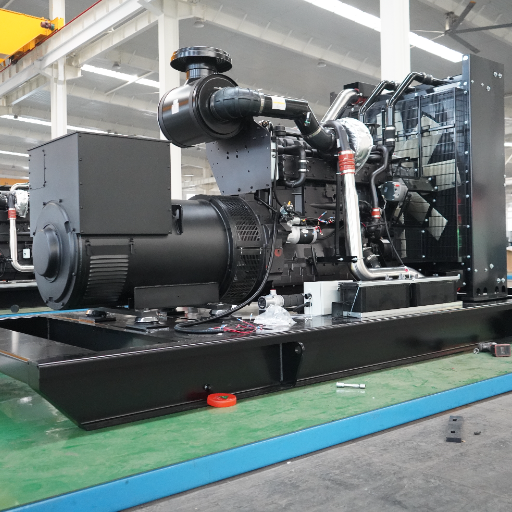
The enclosure decision drives noise compliance, weather resistance, transportability, and a large portion of the unit cost. Custom generator enclosure types fall on a spectrum from open-frame industrial to fully containerized for remote deployment.
Open Frame vs Canopy vs Sound-Attenuated vs Super-Silent vs Containerized
| Enclosure Type | Noise at 7m | Best For | Relative Cost |
|---|---|---|---|
| Open frame | 95–105 dB(A) | Indoor plant rooms | Baseline |
| Standard canopy | 85–90 dB(A) | Outdoor industrial sites | +15–20% |
| Sound-attenuated | 75–80 dB(A) | Commercial/light residential | +25–35% |
| Super-silent | 65–70 dB(A) | Hospitals, hotels, urban sites | +40–55% |
| 20ft/40ft container | 70–85 dB(A) | Remote sites, transportable builds | +30–50% |
IP Ratings and What They Actually Mean on Site
IP54 means dust-protected and protected against splashing water. IP55 adds protection against water jets. IP56 handles heavy seas (literally). Specify IP55 minimum for any outdoor installation; IP56 for coastal or marine environments.
Noise Targets: Industrial, Residential, Hospital, and Critical Grades
Match the enclosure to local ordinance, not just to site preference. Many European municipalities cap nighttime outdoor noise at 45 dB(A) at the property boundary. A 75 dB(A) sound-attenuated unit at 7 meters can still violate that ordinance at 25 meters if the boundary is close. Run the math before you order.
Corrosion Protection for Coastal and Marine Applications
In Dalian, a seafood processing plant ordered standard powder-coated steel enclosures for three 800 kVA units installed 200 meters from the coast. Salt spray destroyed the canopy joints in 14 months, and condensation reached the control panel. Replacing the enclosures with 316 stainless steel and epoxy-coated steel frames cost the customer 24,000onthreeunits.Thesameupgradeatbuildtimewouldhaveaddedroughly24,000onthreeunits.Thesameupgradeatbuildtimewouldhaveaddedroughly3,600 total. Specify marine-grade construction for any site within 5 km of saltwater.
Decision 6: Fuel System and Tank Integration
Runtime is a function of tank capacity and fuel consumption rate, not engine rating.
Base Tank vs External Bulk Tank
A base tank (built into the genset skid) typically delivers 8–12 hours runtime at full load. For 24-hour or 72-hour autonomy, you need an external bulk tank with automatic fuel transfer. Most data centers, hospitals, and mission-critical sites specify a base tank for immediate runtime plus a day tank fed from a bulk farm.
Runtime Calculation and Tank Sizing
Diesel fuel consumption at 100% load runs approximately 0.22–0.25 L/kWh on modern Cummins or Perkins engines. A 1,000 kW unit consuming 220 L/h needs a 5,280 L base tank for 24 hours. Always size for 80% usable tank volume (the bottom 10% is sediment, the top 10% is ullage).
Double-Wall/Bunded Tanks for Environmental Compliance
EU sites, US EPA SPCC sites, and most data centers require bunded (double-wall) tanks with leak detection. Specify this up front; retrofitting bunded containment to an existing skid is expensive and almost never neat.
Decision 7: Control System and Automation
The controller is the brain of the genset and where most operational features live.
Deepsea DSE vs ComAp vs Smartgen vs PowerCommand
Deepsea (DSE7320, DSE8610) is the industry default for single-unit and parallel applications, with strong global support. ComAp (InteliLite, InteliGen) offers deeper SCADA integration and is preferred in European industrial sites. Smartgen is the value option, common in Asian and African deployments. PowerCommand is Cummins’ proprietary controller, which makes sense if you are running a Cummins-only fleet with PowerCommand cloud monitoring.
AMF, ATS, and Remote Monitoring
Automatic Mains Failure (AMF) lets the genset auto-start when utility power drops; an Automatic Transfer Switch (ATS) physically transfers the load. Together they give you unattended operation. Add GSM, Ethernet, or SCADA monitoring if you operate multiple sites or run the genset as part of a microgrid. Modern controllers can push runtime, fuel level, and fault codes to a cloud dashboard in real time.
Decision 8: Compliance and Certification
Certifications protect you legally and operationally.
CE, EPA, ISO9001, and Regional Grid Codes
CE marking is mandatory for EU deployment. EPA Tier 4 Final is required for most US off-road applications. ISO 9001 covers the factory; ISO 14001 covers environmental management. Check your local grid code (G99 in the UK, VDE-AR-N 4105 in Germany, IEEE 1547 in the US) for grid-paralleling requirements before specifying. For the full certification matrix, see our diesel generator certifications guide.
Marine Certifications (CCS, DNV, BV)
Marine and offshore deployments require classification society approval, CCS (China), DNV (Norway), BV (France), or ABS (US). Marine certification adds 8–15 weeks to the build and roughly 12–18% to the cost. Specify the classification society up front.
Decision 9: Lead Time and Procurement Timeline
Custom diesel generator lead time is where procurement most often fails. See our diesel generator lead time guide for the full frame-size breakdown.
Standard vs Custom Lead Times
Standard units in stock ship in 2–4 weeks. Custom units run on a sliding scale by frame size:
- 25–400 kW: 12–18 weeks
- 500–1,000 kW: 22–30 weeks
- 1,250–3,250 kW: 52–70 weeks
Roughly 70% of slippage we see on custom orders is caused by late specification of enclosure, noise class, or controls, not engine or alternator delivery. Make those decisions before you place the order, not after.
What Runs in Parallel vs Serial
Engine procurement, alternator procurement, enclosure fabrication, and controller programming all run in parallel if specified up front. They run in serial if the buyer changes the spec midway. The single most powerful schedule-compression tool is freezing the BOM at week one.
How to Compress the Timeline by 4–6 Weeks
A copper mine in Zambia ordered eight 1,500 kVA gensets in 2024 with a 26-week quoted lead time. Their procurement team ordered the engines and alternators against an in-progress enclosure design, parallel-pathing the long-lead items. The first four units shipped in 14 weeks; the remaining four shipped at week 18. Parallel-pathing engines and alternators against enclosure engineering saves 4–8 weeks on any large frame order.
Second contextual CTA: Compressing a custom build timeline is a procurement decision, not a manufacturing decision. Talk to our scheduling team about parallel-pathing your order.
Custom Diesel Generator from a China Factory: What Changes?
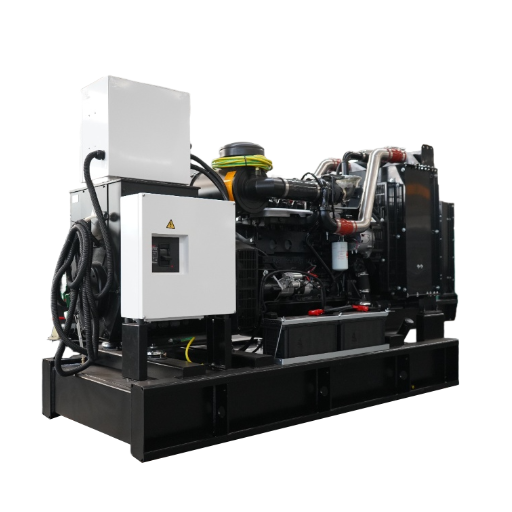
For most international buyers in 2026, the realistic question is not “Cummins vs Chinese” but “Cummins (Western OEM direct) vs Cummins (China factory assembly).”
The OEM Engine + Custom Assembly Model
A China-factory custom genset uses the same genuine Cummins, Perkins, Volvo, or Doosan engine you would get directly from the OEM. The factory adds a Stamford or Leroy Somer alternator, integrates a Deepsea or ComAp controller, and fabricates the enclosure to your spec. Engine warranty passes through. Alternator warranty passes through. The only piece manufactured by the factory itself is the enclosure and the integration.
Cost Benchmark: China Factory vs Western OEM Direct
Across the configurations we quote weekly, China-factory custom builds with genuine OEM components run 30–50% below Western OEM direct list pricing. The savings come from lower assembly labor, lower factory overhead, and the absence of distributor margin. Quality differences exist (and Western OEM has stronger after-sales density in some regions), but on a like-for-like BOM, the engine, alternator, and controller are identical. For the full custom diesel generator cost analysis across acquisition, fuel, and 10-year ownership, see our diesel generator total cost of ownership guide.
Quality Assurance on Custom Builds
A serious China factory will run every unit on a load bank before shipment: 25%, 50%, 75%, 100%, 110% steps for 4–6 hours total. Witness load-bank testing is available, where your engineer (or a third-party inspector like SGS or TÜV) signs off the test report at the factory. Always request witness testing on units above 500 kVA; it costs little and catches integration problems that paperwork can’t. Our diesel generator factory evaluation guide walks through what to inspect before placing an order.
In 2024, we worked with a Frankfurt colocation facility that required a 2,000 kVA genset because their facilities team expected to reach a 1,200 kVA peak load. The actual running load measured approximately 1,100 kVA. The unit developed wet stacking and cylinder glazing after 18 months of operation because it operated below its required load; the cleanup required 28,000 plus four weeks of downtime on a redundant unit. To correct the problem, a load study needed to be conducted before the specification process, which resulted in 28,000 plus four weeks of downtime on a redundant unit. The procurement team overlooked the 1,500 engineering cost which needed to be done before procurement.
Frequently Asked Questions About Custom Diesel Generators
What is a custom diesel generator?
A custom diesel generator functions as a power unit which you create by selecting an OEM engine and an alternator and a controller and an enclosure to your specifications instead of buying a standard product. The build is defined by 9 procurement decisions covering power rating, engine, alternator, voltage, enclosure, fuel system, controls, compliance, and lead time.
How long does it take to build a custom diesel generator?
The facility requires 12 weeks to deliver 25–400 kW units while it needs 70 weeks to produce its large-frame units which operate at 1,250–3,250 kW. The procurement process experiences delays because 70% of the delays result from late specifications of enclosure or control systems while manufacturing capacity remains unaffected.
How much more does a custom generator cost than a standard unit?
A custom configuration with PMG alternator, sound-attenuated enclosure, and AMF controller typically adds 25–40% to a baseline open-frame standard unit. Custom builds from a China factory still run 30–50% below equivalent Western OEM direct pricing.
Can I get a Cummins or Perkins engine in a custom genset built in China?
Yes. Genuine Cummins, Perkins, Volvo, and Doosan engines are shipped with original OEM documentation and full warranty pass-through. The factory integrates the engine with the alternator, controller, and enclosure of your choice.
What is the difference between brushless and PMG alternator excitation?
Brushless self-excited alternators collapse field strength during heavy motor starting; PMG (Permanent Magnet Generator) excitation maintains field independently and recovers voltage 30–40% faster. PMG is strongly recommended for loads with large motors, VFDs, or fire pumps.
Do I need a sound-attenuated enclosure?
You need one if local noise ordinance requires it at the property boundary. Sound-attenuated enclosures (75–80 dB(A) at 7m) handle most commercial sites; super-silent (65–70 dB(A) at 7m) is required for hospitals, hotels, and dense urban installations.
What certifications should I require?
CE for EU deployment, EPA Tier 4 Final for US off-road, ISO 9001 for factory quality, and the relevant marine classification (CCS, DNV, BV) for offshore. Always require a 100% load-bank test report.
How do I size a generator for my application?
Add running kW plus 40% of largest motor starting kVA, divide by 0.8 power factor, then add a 20% expansion margin. Apply altitude and temperature derating factors for the site. Don’t oversize beyond 30%, or you’ll cause wet stacking.
What does the engine warranty cover on a custom build?
The OEM engine warranty (typical duration 2 years and 2000 operating hours) transfers to the end user when they start using the equipment. The alternator has its own warranty which lasts between 1 to 2 years from Stamford and Leroy Somer. The integrator warranty protects the enclosure and controller integration system and all installed work.
Can I monitor my generator remotely?
Yes. Modern Deepsea (DSE8610), ComAp (InteliGen NTC), and Smartgen controllers support GSM, Ethernet, and SCADA integration with cloud dashboards for runtime, fuel level, and fault alerts.
Conclusion
A custom diesel generator, sometimes specified as a “bespoke diesel generator” in EU and Commonwealth procurement, is not a single product; it is a 9-decision specification framework. If you make correct decisions then the asset will operate successfully for 20 years while meeting local regulations and delivering on time. The unit will either underperform or break noise rules or derate on site or deliver 12 weeks late because you made incorrect decisions.
The five rules that summarize everything above:
- Calculate real load and starting kVA before you write the RFP.
- Specify PMG excitation for any load profile with motors, VFDs, or pumps.
- Match enclosure noise class to the property boundary, not to the genset specification sheet.
- Freeze the BOM at week one to keep custom lead time on track.
- Always require a witness load-bank test on units above 500 kVA.
Shandong Huali has 25 years of experience integrating Cummins, Perkins, Weichai, Yuchai, Volvo, and Doosan engines with Stamford, Leroy Somer, and Marathon alternators into custom gensets from 8 kVA to 4,000 kVA. Every unit is 100% load-bank tested at our factory before shipment, and our engineers can run a derating, sizing, or lead-time assessment against your site conditions on request.
Ready to specify your custom build? Send us your site conditions and load profile, our engineering team will return a fully specified quotation and lead-time forecast within five working days. Request a custom specification review →
For targeted tips on screening and selecting reliable diesel generator suppliers in 2026, see our How to Choose a Diesel Generator Supplier Guide.
