
Generac vs Cummins comes down to what you are powering. Generac is the better fit for most homeowners who want an affordable, easy-to-install standby generator for whole-house backup. Cummins is the stronger choice for commercial and industrial sites that need heavy-duty reliability, larger power outputs, and longer service intervals.
Both brands are well established, but they serve different buyers. This guide compares Generac and Cummins on cost, power range, fuel type, noise, maintenance, warranty, and real-world use cases. If you are sizing a generator for a project or comparing global alternatives, Shandong Huali manufactures diesel and gas generator sets from 8 kVA to 4,000 kVA. If you need a quote, contact Huali’s engineering team.
Quick Comparison: Generac vs Cummins
| Factor | Generac | Cummins |
|---|---|---|
| Best for | Residential standby, small commercial | Commercial, industrial, critical infrastructure |
| Power range | 7.5 kW to 2 MW+ | 25 kW to 3,500 kW+ |
| Typical home standby | 10–26 kW Guardian series | 20–100 kW QuietConnect series |
| Fuel options | Natural gas, liquid propane, diesel, gasoline | Diesel, natural gas, propane, bi-fuel |
| Noise level | 60–70 dB(A) typical for home units | 55–75 dB(A); very quiet residential options |
| Warranty | Up to 5-year limited residential | 2-year standard; extended options available |
| Standout feature | Mobile Link Wi-Fi monitoring | PowerCommand digital control platform |
| Price positioning | Lower upfront cost | Higher upfront cost, longer lifecycle |
Use this table as a starting point. The sections below explain each factor in more detail so you can match the brand to your load, runtime, and budget.
Generac at a Glance
Brand Positioning
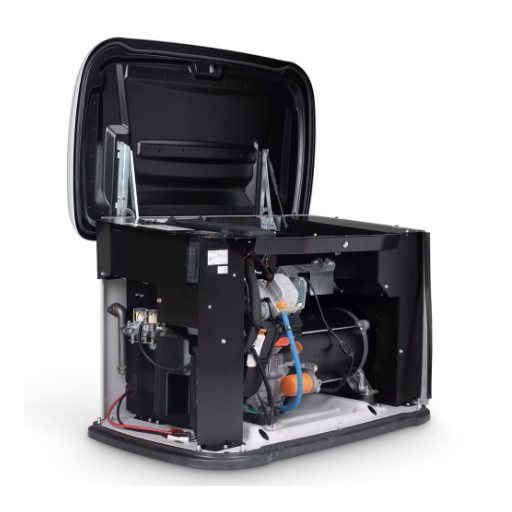
Generac is the largest manufacturer of home standby generators in North America. The company specializes in residential and light commercial units that are easy to install, connect to existing natural-gas or propane lines, and monitor through a mobile app. Generac’s core strength is convenience at a competitive price.
Common Generac Models
| Series | Power Range | Typical Use |
|---|---|---|
| Guardian | 10–26 kW | Residential whole-house backup |
| Protector | 22–150 kW | Large homes, small businesses |
| XT Series Portable | 3,000–12,000 W | Outdoor events, job sites, RVs |
| Industrial Power | 50 kW to 2 MW+ | Factories, hospitals, data centers |
| iQ Series | 2,000–3,500 W | Recreational, camping, tailgating |
The Guardian series is the most common choice for homeowners. It runs on natural gas or propane, includes an automatic transfer switch, and supports Wi-Fi monitoring through the Mobile Link app. True Power Technology keeps total harmonic distortion below 5%, which is safe for sensitive electronics.
Strengths
- Lower purchase price than comparable Cummins units.
- Wide residential dealer network and fast parts availability in North America.
- Simple automatic operation with automatic transfer switches.
- Wi-Fi monitoring and maintenance alerts via Mobile Link.
Limitations
- Smaller industrial portfolio than Cummins.
- Some models need more frequent maintenance intervals.
- Warranty is strong for residential but can be shorter for commercial applications.
Cummins at a Glance
Brand Positioning
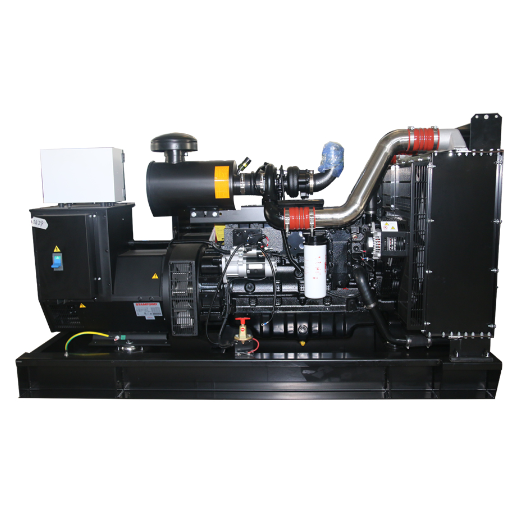
Cummins builds engines and power systems for heavy-duty trucks, marine, rail, and industrial markets. Its generator division brings that same engineering focus to standby and prime power sets. Cummins generators are known for long service life, robust enclosures, and advanced digital controls.
Common Cummins Models
| Model | Power Range | Typical Use |
|---|---|---|
| C50D6 | 50 kW | Small business, large home |
| C100N6 | 100 kW | Commercial facilities, schools |
| QuietConnect RS | 20–100 kW | Residential and light commercial |
| QSK95 Series | Up to 3,500 kW | Data centers, hospitals, utilities |
| C350D5 | 350 kVA | Construction, mining, remote sites |
The QuietConnect RS series is Cummins’ answer to the Generac Guardian. It is designed for low noise, a compact footprint, and natural gas or propane operation in residential neighborhoods. For large commercial loads, the QSK95 and PowerCommand platforms offer high efficiency and the ability to be paralleled.
Strengths
- Longer design life and heavier-duty construction.
- Lower fuel consumption on many diesel models.
- PowerCommand controls provide remote monitoring, diagnostics, and load management.
- Strong global service network, including industrial and marine markets.
Limitations
- Higher upfront cost.
- Residential models have a shorter base warranty than Generac.
- Smaller residential installer footprint in some regions.
Performance Comparison
Power Output and Efficiency
Generac covers 7.5 kW to more than 2 MW, with most residential buyers choosing between 10 kW and 26 kW. Cummins starts at 25 kW for many standard product lines and scales to 3,500 kW or more for industrial sets.
For a typical 2,000-square-foot home, a 20–22 kW standby generator is usually enough to run the HVAC, refrigerator, lights, and small appliances. Generac and Cummins both make units in this range. Cummins diesel models often consume less fuel per kWh at continuous load, which matters for sites that run the generator for long hours.
Noise Levels
Noise is measured in dB(A) at a set distance, usually 23 feet (7 meters).
| Typical Range | Generac | Cummins |
|---|---|---|
| Home standby | 60–70 dB(A) | 55–68 dB(A) |
| Light commercial | 65–75 dB(A) | 60–72 dB(A) |
| Industrial | Enclosure dependent | Enclosure dependent |
Cummins QuietConnect models are among the quietest in their class, often comparable to a normal conversation at 50% load. Generac home units are also quiet enough for most residential zoning rules, but exact ratings depend on the model and enclosure.
Maintenance Requirements
Both brands require oil and filter changes, coolant checks, battery inspection, and exercise cycles. The exact interval depends on fuel type, run hours, and environment.
| Task | Typical Interval |
|---|---|
| Oil and filter change | Every 100–200 running hours or annually |
| Air filter inspection | Every 100–200 hours |
| Spark plug replacement | Every 200–300 hours (gas/propane) |
| Coolant change | Every 2–3 years |
| Battery test | Every 6–12 months |
Cummins engines are often designed for longer service intervals in continuous-duty applications. Generac home standby units are straightforward to service but may need attention more often if they run heavily.
For a detailed maintenance budget, see our generator maintenance cost per year guide. For voltage and phase guidance, read our single-phase generator voltage guide.
Cost Analysis
Initial Investment
Generac home standby systems typically start around 2,000–2,000–3,000 for the unit and 3,000–3,000–6,000 installed, depending on electrical and gas-line work. Cummins residential QuietConnect systems usually start higher, often 4,000–4,000–7,000 for the unit and 4,000–4,000–8,000 installed.
Portable generators follow a similar pattern. A small Generac portable can cost 500–500–1,500, while a comparable Cummins portable often starts above $2,000.
| Category | Generac | Cummins |
|---|---|---|
| Home standby unit | 2,000–2,000–5,000 | 4,000–4,000–8,000 |
| Typical installed cost | 5,000–5,000–10,000 | 7,000–7,000–14,000 |
| Portable generator | 500–500–2,000 | 2,000–2,000–5,000 |
| Commercial standby | 10,000–10,000–100,000+ | 15,000–15,000–500,000+ |
For official product specifications and the latest model updates, see the Generac home standby generator page and the Cummins residential generator page. Prices vary by region, fuel type, transfer switch size, and installation complexity. Always get multiple quotes and confirm that the installer is certified by the manufacturer.
Long-Term Operating Costs
Fuel and maintenance dominate long-term costs. A 20 kW natural-gas generator running at 50% load may consume 2–3 therms per hour. A diesel unit of similar size may use 1–2 gallons per hour. Over years of ownership, higher fuel efficiency can offset a higher purchase price.
Cummins diesel engines are generally more fuel-efficient under continuous load. Generac gas units are competitive for occasional outage backup where annual run hours are low.
Warranty Comparison
| Brand | Residential Warranty | Commercial Warranty |
|---|---|---|
| Generac | Up to 5-year limited | Varies; often 2–3 years |
| Cummins | 2-year standard | 2-year standard; extended available |
Generac’s longer residential warranty is a selling point for homeowners. Cummins relies on build quality and extended-service options. For industrial buyers, both brands offer extended warranty and service contracts.
Which Brand Should You Choose?
Choose Generac If
- You need a residential standby generator at a competitive price.
- You want a wide dealer network and fast North American parts availability.
- You prefer Wi-Fi monitoring and automatic maintenance alerts.
- Your run hours are low to moderate, mainly during outages.
Choose Cummins If
- You need commercial or industrial reliability.
- You want lower fuel consumption and longer service intervals.
- Your site runs the generator for extended periods or as prime power.
- You need advanced load management, paralleling, or remote diagnostics.
Consider Huali As a Global Alternative
If you are comparing Generac and Cummins for a project outside North America, or if you need a custom diesel or gas generator set, Shandong Huali offers an alternative manufacturing path. Huali builds generator sets from 8 kVA to 4,000 kVA with engines from Cummins, Perkins, Volvo, Weichai, and other tier-one suppliers. Units can be configured for 50 Hz or 60 Hz, single-phase or three-phase output, and optional sound-attenuated canopies.
For buyers who need a balance of cost, customization, and global support, Huali provides a direct factory option with application-based sizing and engineering support.
Buyer’s Checklist
Use this checklist before requesting quotes from Generac, Cummins, or Huali.
| Question | Why It Matters |
|---|---|
| What is your total running load in kW or kVA? | Determines minimum generator capacity. |
| What is the largest motor you need to start? | Starting current can be 3–7 times running current. |
| Which fuel is available on site? | Natural gas, propane, or diesel affects unit selection. |
| How many hours per year will the generator run? | Continuous duty requires heavier-duty ratings. |
| What noise limit does your site require? | Choose enclosure and muffler accordingly. |
| Do you need single-phase or three-phase output? | Must match your main panel. |
| Is the generator for standby, prime, or continuous duty? | Affects warranty, cooling, and maintenance schedule. |
| What is your total budget including installation? | Prevents selecting a unit you cannot afford to install. |
A proper load study is the most reliable way to size any generator. Huali’s engineering team can review your electrical panel, motor list, and runtime requirements before recommending a configuration.
Common Mistakes When Comparing Generac and Cummins
Mistake 1: Comparing Only the Sticker Price
The lowest-priced unit can become the most expensive if fuel, maintenance, and downtime costs are high. Calculate total cost of ownership over 10 years, not just the purchase price.
Mistake 2: Ignoring Installation Costs
Installation can equal or exceed the unit cost. Gas-line work, electrical upgrades, permits, and concrete pads add thousands of dollars. Always budget for the full installed system.
Mistake 3: Choosing the Wrong Fuel Type
Natural gas is convenient for homes with a gas meter. Propane works where natural gas is unavailable. Diesel is best for high-reliability commercial sites and long runtimes. Match the fuel to your infrastructure.
Mistake 4: Undersizing the Generator
A generator that is too small will overload, trip breakers, and damage connected equipment. Add at least 20% capacity margin above your calculated load.
Mistake 5: Overlooking Service Availability
A generator is only reliable if qualified technicians and parts are nearby. Verify local dealer and service coverage before choosing a brand.
Frequently Asked Questions
Which is better, Generac or Cummins?
Generac is generally better for residential standby power because of lower cost and a strong dealer network. Cummins is generally better for commercial and industrial applications because of heavier construction, longer life, and advanced controls.
Is Generac cheaper than Cummins?
Yes, Generac home standby units usually have a lower upfront price than comparable Cummins models. Installation costs vary by site and can narrow the gap, but Cummins typically remains the higher-investment option.
How long do Generac and Cummins generators last?
With proper maintenance, a Generac home standby generator can last 10–15 years. Cummins generators are often rated for 20–25 years or more, especially in commercial installations.
What fuel types do Generac and Cummins offer?
Generac offers natural gas, liquid propane, diesel, and gasoline models. Cummins offers diesel, natural gas, propane, and bi-fuel configurations. Both brands focus on natural gas and propane for residential standby units.
Are Cummins generators quieter than Generac?
Cummins QuietConnect residential models are among the quietest available, often below 60 dB(A). Generac home units are also quiet and meet most residential noise rules. Always check the specific model rating.
What warranty does Generac offer compared to Cummins?
Generac offers up to a 5-year limited warranty on many residential standby generators. Cummins offers a 2-year standard warranty on most generator sets, with extended options available.
Can I install a Generac or Cummins generator myself?
Manufacturer warranties usually require professional installation by a certified dealer. Electrical and gas connections must meet local codes. Self-installation can void warranty and create safety hazards.
Conclusion
The Generac vs Cummins decision depends on your application, budget, and long-term expectations. Generac wins on upfront cost, residential convenience, and warranty length. Cummins wins on industrial durability, fuel efficiency, and advanced control systems. For homeowners who need reliable outage backup, Generac is usually the practical choice. For commercial and mission-critical sites, Cummins is often worth the higher investment.
If you are evaluating generators for a project outside North America, or if you need a customized diesel or gas generator set, Shandong Huali manufactures units from 8 kVA to 4,000 kVA with engines from Cummins, Perkins, Volvo, Weichai, and other leading suppliers. Explore our three-phase generator options for industrial applications, or contact Huali’s engineering team for a load assessment, sizing recommendation, and competitive quote.
