
A marine diesel generator is a purpose-built power system engineered to withstand salt spray, hull vibration, and continuous operation in confined engine rooms. Unlike land-based units, it requires classification society certification, marine-grade cooling, and anti-corrosion protection to operate safely at sea.
In this guide, we cover everything from 3 kW yacht units to 3,000 kW offshore rigs. You will learn how to size a marine generator by operating mode, navigate CCS and ABS certification, select the right engine brand, and source factory-direct from a China OEM with CCS-certified production lines.
Key Takeaways
- Marine generators require anti-corrosion coatings, double resilient mounts, and marine cooling systems that land units lack.
- Proper sizing requires load analysis by operating mode (at sea, maneuvering, in-port) plus 20-30% safety margin.
- Classification society certification (CCS, ABS, DNV) must be specified at order time and integrated into manufacturing.
- IMO Tier III compliance requires SCR technology for vessels operating in Emission Control Areas.
- Factory-direct procurement from a China CCS-certified manufacturer can reduce cost by 25-40% versus distributor pricing.
What Is a Marine Diesel Generator?
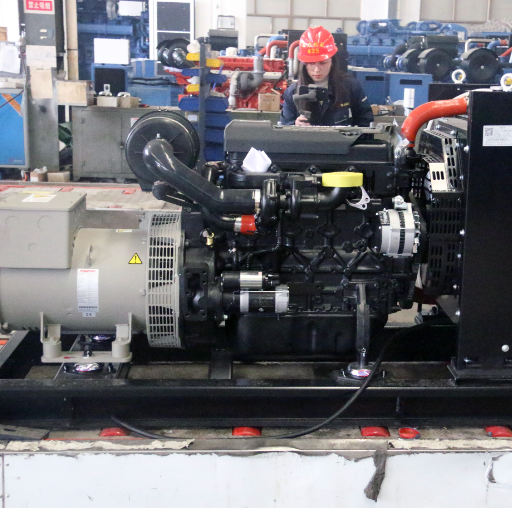
A marine diesel generator (also called a ship diesel generator or ship generator) is a diesel engine-driven alternator set designed specifically for shipboard installation. It provides electrical power for propulsion auxiliaries, navigation systems, cargo handling, lighting, and hotel loads when the main engine is not running or when shaft generation is insufficient.
The defining characteristic of a marine diesel generator is not the engine itself, but the environment it must survive. Salt-laden air, constant hull flexing, limited engine room space, and vibration from propulsion machinery all demand design features that land-based generators do not need. For the complete fundamentals of generator set design, ratings, and applications, start with our diesel generator set buyer’s guide.
Marine vs. Land Generator: Key Differences
| Feature | Marine Generator | Land-Based Generator |
|---|---|---|
| Corrosion protection | Anti-corrosion paint, tropicalisation, salt-spray resistant materials | Standard enamel paint |
| Cooling system | Heat exchanger, keel cooling, or direct seawater | Radiator (air/water cooled) |
| Vibration isolation | Double resilient anti-vibration mounts | Standard rubber mounts |
| Enclosure | Compact for confined engine rooms; acoustic canopies for deck | Larger footprint, less constrained |
| Exhaust system | Wet exhaust or dry with flexible bellows | Standard dry exhaust |
| Certification | CCS, ABS, DNV, BV, LR mandatory for commercial vessels | Not required |
| Fuel system | Day tank with return, leak-proof fittings | Standard bulk tank |
| Control panel | Marine-grade, IP-rated, shock-resistant | Standard IP rating |
Land-based generators fail at sea because their cooling systems cannot handle seawater, their enclosures corrode within months, and their mounts transfer vibration directly into the hull. A marine diesel generator is engineered from the foundation up for the marine environment. For heavy-duty land-based power solutions, explore our industrial diesel generator guide.
Mini-story: The $18,000 Lesson
In 2023, a Tanzanian fishing cooperative installed three standard 100 kVA land generators on their fleet of purse seiners to save on upfront cost. Within eight months, salt corrosion had destroyed the radiator cores on all three units. One generator experienced catastrophic failure when a cracked exhaust manifold leaked carbon monoxide into the engine room, forcing an emergency shutdown 80 nautical miles off Dar es Salaam. The cooperative spent $18,000 on repairs and lost three weeks of fishing season. They replaced the units with purpose-built marine diesel generators with heat exchanger cooling and CCS certification. Two years later, those generators have logged 4,200 hours each with zero corrosion-related failures.
Marine Diesel Generator Sizing: Load Analysis by Operating Mode
Sizing a marine diesel generator correctly is the single most critical step in the procurement process. An undersized generator cannot start motor loads and risks blackout. An oversized generator runs chronically underloaded, leading to wet stacking, carbon buildup, and shortened life.
Step 1 — Inventory All Loads by Operating Mode
Ships operate in distinct electrical load profiles. You must calculate power demand for each mode:
| Operating Mode | Typical Loads | Example Vessel |
|---|---|---|
| At sea (cruising) | Navigation, communication, autopilot, pumps, ventilation, hotel | 45m yacht: 35-50 kW |
| Maneuvering | Bow thruster, winches, steering gear, extra pumps | Cargo ship: 400-600 kW |
| In-port (cargo) | Cranes, conveyors, mooring winches, cargo pumps | Bulk carrier: 1,200-1,800 kW |
| Anchor/standby | Minimal: navigation lights, communication, refrigeration | Fishing vessel: 15-25 kW |
| Emergency | Fire pumps, emergency lighting, steering, bilge pumps | All vessels: 20-40% of normal |
Start by listing every electrical load in kilowatts. Identify which are motors (inductive loads), as they require 2-3 times their running power at startup. Some large winch motors draw up to 10 times running current for 2-3 seconds.
Step 2 — Apply Diversity Factors and Motor Starting Surge
Not all equipment runs simultaneously. Apply a diversity factor based on operational profile:
| Vessel Type | Diversity Factor | Rationale |
|---|---|---|
| Yacht / passenger | 0.85-0.95 | Most hotel loads run continuously |
| Cargo ship (sea) | 0.70-0.80 | Cargo equipment offline |
| Cargo ship (in-port) | 0.80-0.90 | Peak cargo handling |
| Fishing vessel | 0.75-0.85 | Winches and pumps intermittent |
| Offshore platform | 0.85-0.95 | Critical systems always on |
Add the starting surge of the largest motor to your continuous load. If your continuous load is 200 kW and your largest motor draws 150 kW starting surge, your peak demand is 350 kW.
Step 3 — Convert kW to kVA and Add Safety Margin
Marine generators are rated in kVA at a standard 0.8 lagging power factor.
Formula: kVA = kW / Power Factor
Example: 350 kW peak demand / 0.8 PF = 437.5 kVA
Add a 20-30% safety margin for future expansion, load uncertainty, and to keep the generator in its optimal efficiency band (70-80% load):
437.5 kVA x 1.25 = 546 kVA minimum rating
Round up to the nearest standard size: 550 kVA
Step 4 — Apply Environmental Deratings
| Condition | Derating Rule |
|---|---|
| Altitude above 1,000m | 1% per 100m |
| Ambient above 40°C | 3% per 10°C (marine standard max: 50°C) |
| Coolant inlet above 38°C | 3% per 10°C |
| High humidity (>95%) | Negligible for diesel; check alternator insulation |
If your engine room routinely reaches 50°C, derate by 3%. If your vessel operates at 2,000m elevation, derate by 10%. Apply these sequentially.
Mini-story: M/V Pacific Trader Load Analysis
The M/V Pacific Trader, a 12,000 DWT general cargo vessel operating between Shanghai and Jakarta, needed new auxiliary generators. The chief engineer compiled load data across all operating modes. At sea, the vessel drew 420 kW continuously. During cargo unloading in Tanjung Priok Port, peak demand hit 1,150 kW when three deck cranes and two cargo pumps ran simultaneously. The largest crane motor produced a 380 kW starting surge. Applying a 0.85 diversity factor for in-port operations and converting to kVA at 0.8 PF: (1,150 x 0.85 + 380) / 0.8 = 1,696 kVA. With 25% margin: 2,120 kVA. The vessel selected two 1,125 kVA Cummins marine generators in an N+1 configuration, giving full redundancy with one unit out of service.
Want to see the complete sizing methodology for your vessel type? Our diesel generator sizing guide covers kW-to-kVA conversion, load factor tables, and motor starting surge calculations in detail. For a marine-specific walkthrough of every step above, including load tables by vessel class and worked examples, see our dedicated marine generator sizing guide.
Marine Diesel Generator Classification Society Standards: CCS, ABS, DNV Explained
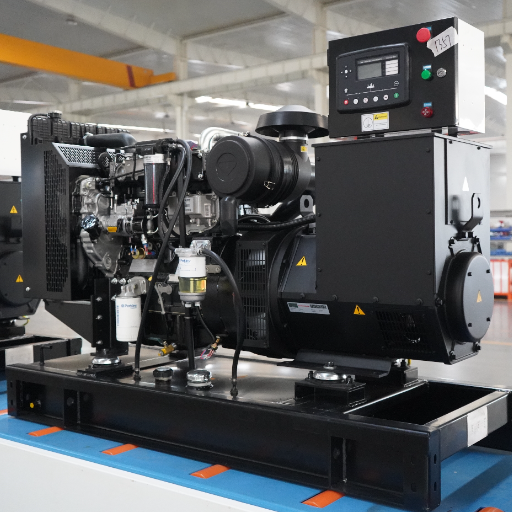
For commercial vessels, every marine diesel generator and ship generator must carry type approval from a classification society member of the International Association of Classification Societies (IACS). The required classification depends on your vessel’s flag state, trade route, and charterer requirements.
What Gets Certified
Classification society certificates can cover:
- The diesel engine (type approval + works certificate)
- The alternator (type approval)
- The control panel / switchgear
- The complete genset (as a system)
Most buyers specify complete genset certification. This means the classification society witness tests the engine, alternator, and control system together, verifying they meet the society’s rules for electrical installations.
Major Classification Societies
| Society | Abbreviation | Origin | Common Markets |
|---|---|---|---|
| China Classification Society | CCS | China | Chinese-flag vessels, Belt and Road projects |
| American Bureau of Shipping | ABS | USA | Americas, Middle East, offshore |
| DNV (Det Norske Veritas) | DNV | Norway | Europe, offshore, LNG |
| Bureau Veritas | BV | France | Europe, Africa, Middle East |
| Lloyd’s Register | LR | UK | UK, Commonwealth, global shipping |
| Registro Italiano Navale | RINA | Italy | Mediterranean, yacht |
| Korean Register | KR | South Korea | Korean shipyards |
| Nippon Kaiji Kyokai | NK / ClassNK | Japan | Japanese vessels |
| Russian Maritime Register | RS | Russia | Russian-flag vessels |
Core Standards Framework
Marine generators must comply with the following regulatory hierarchy:
| Standard | Scope |
|---|---|
| IEC 60092 | Electrical installations in ships (design, equipment, testing) |
| ISO 8528 | Reciprocating engine driven AC generating sets (rating, performance) |
| SOLAS Chapter II-1 | Safety of Life at Sea — emergency power, redundancy, testing |
| MARPOL Annex VI | Air pollution from ships — NOx limits, EIAPP certificates |
| IMO Resolution A.694(17) | General requirements for shipborne radio equipment |
How to Specify Certification at Order Time
This is where most buyers make mistakes. Classification society certification is not a sticker you add after manufacturing. It must be designed into the production process.
- Specify required society at quotation stage. Chinese manufacturers typically hold CCS as base certification. ABS, BV, DNV, and LR require additional engineering review and witness testing.
- Multi-class approval adds 4-6 weeks to the production schedule. Each society has slightly different requirements for insulation class, temperature rise limits, and testing protocols.
- Engine certification is separate from alternator certification. The complete genset certificate only covers the system as installed. If you replace the engine later, you may invalidate the certificate.
- IMO Tier II/III compliance requires EIAPP certificates for the engine. These are issued by the flag state administration or a recognized organization, not the classification society directly.
If you are sourcing primarily for Chinese-flag or Belt and Road projects, our overview of what a CCS certified marine generator involves explains how base certification is built into the production line and what documentation to request.
Mini-story: Zhousan Shipyard Multi-Class Certification
In 2024, Zhousan Huahai Shipyard in Zhejiang Province contracted Shandong Huali for 12 marine diesel generator sets for a series of 8,000 DWT bulk carriers. The buyer required CCS base certification plus ABS and DNV optional approvals for vessels destined for Southeast Asian and European charter markets. Our engineering team prepared three sets of test protocols: CCS followed GB/T 13032 and IEC 60092-301; ABS required additional torsional vibration analysis and fuel injection timing verification; DNV mandated stricter alternator insulation resistance testing (minimum 100 MΩ at 500 V DC). All three societies witnessed the factory acceptance tests in our Qingdao testing center. The multi-class approval added five weeks to production but eliminated the need for re-certification when vessels changed charter routes. Total cost for triple certification: 8,400perunit,versusanestimated8,400perunit,versusanestimated35,000 per unit if done post-delivery through a third-party service.
Engine & Alternator Brand Selection for Marine Use
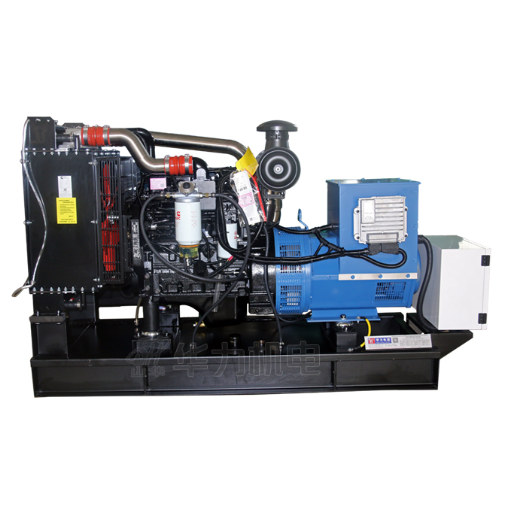
The engine is the heart of every marine diesel generator set. Marine applications demand specific features: salt-resistant materials, marine-grade heat exchangers, and governor systems tuned for load acceptance in rolling seas.
Cummins Marine Generators
Cummins dominates the mid-range marine market with models from 20 kVA to 2,000 kVA. Key marine-specific engines include:
| Model Series | Power Range | Application |
|---|---|---|
| 4BTA / 6BTA | 40-150 kVA | Small workboats, fishing vessels |
| 6CTA / QSL | 150-400 kVA | Coastal cargo, tugboats |
| QSM / KTA19 | 400-750 kVA | Offshore supply, ferries |
| KTA38 / KTA50 | 750-1,500 kVA | Large cargo ships, dredgers |
| QSK60 | 1,500-2,500 kVA | Offshore platforms, cruise ships |
Cummins offers the strongest global service network (7,000+ dealers) and lowest source noise levels (82-85 dB at 1m). IMO Tier III compliance is available on select models via SCR.
Perkins Marine Generators
Perkins provides a cost-effective alternative with power ranges from 10 kVA to 2,500 kVA. Marine-specific features include tropicalised radiators, marine-grade air filters, and extended sump capacity for inclined operation. Perkins is particularly strong in Commonwealth markets (UK, Australia, India, Africa) where parts availability is excellent.
Baudouin (Weichai) Marine Generators
Since Weichai acquired Baudouin in 2009, the M-series marine engines have become serious competitors in the commercial marine segment. The 12M33 and 16M33 series cover 600-2,000 kVA with mechanical high-pressure injection and overhaul life up to 25,000 hours. Pricing is 20-30% below Cummins equivalents. CCS certification is standard; ABS and DNV available as options.
Volvo Penta Marine Gensets
Volvo Penta specializes in the yacht and passenger vessel market. Their D8 and D13 engines feature IMO Tier III compliance via SCR and meet EU Stage V Marine requirements. Noise levels are among the lowest in class. The global dealer network is strongest in Europe and North America.
Wartsila & MAN
For vessels requiring 2,000+ kVA, Wartsila and MAN dominate. These are premium-tier engines with advanced common rail injection, dual-fuel capability, and integrated automation. Pricing reflects the engineering: expect 2-3x the cost of a Cummins equivalent.
Alternator Brands
| Brand | Key Feature | Best For |
|---|---|---|
| Stamford | Brushless, self-excited, wide AVR range | All commercial marine |
| Leroy-Somer | High efficiency, compact design | Space-constrained installations |
| Mecc Alte | Cost-effective, reliable | Budget-conscious projects |
| Marathon | USA-built, ABS/DNV friendly | North American-flag vessels |
| ABB / INDAR | Large-frame, high voltage | Offshore and industrial marine |
For a detailed comparison of Cummins, Perkins, and other brands for land-based applications, see our industrial diesel generator guide. If you want a head-to-head breakdown focused specifically on the water, our marine generator brands comparison weighs Cummins, Perkins, Baudouin, Volvo Penta, and the premium tier across price, support, and certification.
Cooling System Design: Heat Exchanger vs. Keel Cooling
Marine generators cannot use standard air-cooled radiators because engine rooms lack sufficient airflow. Three cooling architectures dominate:
Keel Cooling
Keel coolers are hull-mounted heat exchangers that transfer engine heat directly to seawater without any seawater entering the engine system. Engine coolant circulates through titanium or cupronickel pipes welded to the hull exterior.
Advantages: No raw seawater pump to fail; lowest corrosion risk; minimal maintenance; works in shallow or debris-filled water.
Disadvantages: Hull penetrations required; cooling capacity limited by hull surface area; difficult to retrofit.
Heat Exchanger Cooling
A heat exchanger uses an intermediate coolant loop. Engine coolant passes through a shell-and-tube or plate heat exchanger where raw seawater removes the heat. The two fluids never mix.
Advantages: Flexible installation; high cooling capacity; standard on most commercial gensets.
Disadvantages: Raw water pump and heat exchanger require regular maintenance; zinc anodes must be replaced every 6-12 months.
Direct Seawater Cooling
Raw seawater circulates directly through the engine block and exhaust manifold. This is the simplest and cheapest approach.
Advantages: Lowest cost; fewest components.
Disadvantages: High corrosion risk; internal salt buildup reduces cooling efficiency; generally avoided for engines over 100 kVA.
| Criteria | Keel Cooling | Heat Exchanger | Direct Seawater |
|---|---|---|---|
| Initial cost | High | Medium | Low |
| Maintenance | Very low | Medium | High |
| Corrosion risk | Very low | Low | High |
| Cooling capacity | Medium-High | High | Medium |
| Best for | Yachts, small craft | Commercial vessels | Emergency backup only |
| Retrofit difficulty | High | Medium | Low |
Still deciding which architecture fits your hull and trade route? Our detailed guide to the marine generator cooling system compares keel, heat exchanger, and direct seawater designs with maintenance schedules and anode-replacement intervals.
Parallel Operation, Load Sharing & Power Management Systems
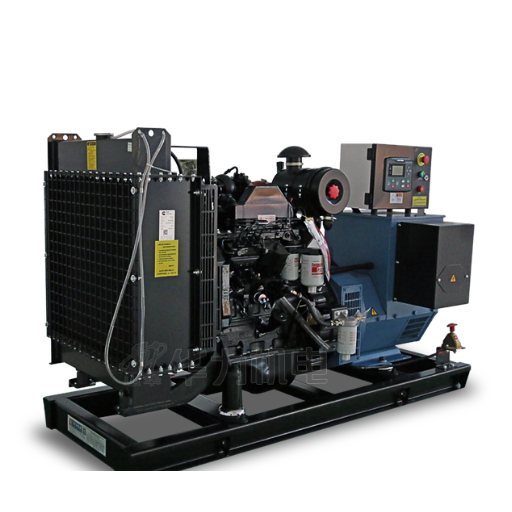
Commercial vessels and offshore platforms rarely rely on a single marine diesel generator. Multiple units operate in parallel to provide redundancy, fuel efficiency, and load flexibility.
Synchronization Basics
Before connecting a generator to a live busbar, three conditions must match:
- Voltage — adjusted via the AVR (Automatic Voltage Regulator)
- Frequency — adjusted via the engine governor
- Phase angle — aligned using a synchroscope or automatic synchronizing relay
Modern PMS (Power Management System) controllers from ComAp, DEIF, and SELCO automate this process. They adjust voltage and frequency and issue breaker close commands at the optimal phase angle, typically within ±10 degrees.
Active and Reactive Power Sharing
Once paralleled, load divides according to two independent control loops:
| Parameter | Control Method | Principle |
|---|---|---|
| Active Power (kW) | Governor speed droop | 2-4% speed droop ensures proportional sharing |
| Reactive Power (kVAr) | AVR voltage droop | Matched excitation prevents circulating currents |
Mismatched governors cause one generator to overload while the other underloads. Mismatched AVR settings create circulating reactive currents that waste fuel and overheat alternators.
PMS Functions
A modern marine PMS automates:
- Load-dependent start/stop: Automatically starts additional gensets when demand rises; stops them when demand falls.
- Running hours equalization: Distributes operating time evenly across the fleet.
- Blackout prevention: Starts standby units before overload occurs; sheds non-essential loads if necessary.
- Heavy consumer management: Blocks large loads (bow thrusters, deck cranes) until sufficient reserve capacity is available.
- Fuel optimization: Selects the combination of units that minimizes specific fuel oil consumption (SFOC) for the current load.
Studies by ComAp and marine engineering firms show PMS optimization can reduce fuel consumption by 10-15% compared to manual operation.
For more on generator control and remote monitoring systems, see our smart control panel guide. If your vessel runs two or more units on a shared bus, our step-by-step guide to marine generator parallel operation explains synchronization, droop settings, and PMS configuration in practical detail.
Emissions Compliance: IMO Tier II/III & EIAPP Certificates
Since 2005, MARPOL Annex VI has regulated NOx emissions from all marine diesel generators and marine diesel engines above 130 kW. The regulations apply to engines over 130 kW installed on vessels built on or after specific dates.
IMO NOx Limits by Tier
| Tier | Application Date | NOx Limit (g/kWh) at n < 130 rpm | NOx Limit (g/kWh) at n ≥ 2,000 rpm |
|---|---|---|---|
| Tier I | 2000 | 17.0 | 9.8 |
| Tier II | 2011 | 14.4 | 7.7 |
| Tier III | 2016 (ECAs only) | 3.4 | 2.0 |
Tier III applies only in Emission Control Areas (ECAs): North America, the Caribbean, the North Sea, the Baltic Sea, and the Mediterranean (from 2025).
SCR Technology for IMO Tier III Marine Generators
Selective Catalytic Reduction (SCR) is the primary technology for achieving IMO Tier III marine generator compliance. It injects urea (aqueous solution of 32.5% urea, known as AUS 40 or AdBlue) into the exhaust stream before a catalytic converter. The urea decomposes into ammonia, which reacts with NOx to form nitrogen and water.
Key considerations for SCR on marine generators:
- Space: SCR units add 15-25% to the engine room footprint.
- Urea storage: A 500 kW generator operating 2,000 hours/year consumes approximately 8,000-12,000 liters of urea.
- Temperature window: SCR requires exhaust temperatures above 300°C for the catalyst to function. This is not a problem for diesel engines at normal load but may fail during low-load operation.
- Retrofit complexity: Adding SCR to an existing Tier II engine requires re-certification of the engine family. This often costs more than replacing the engine with a Tier III-compliant unit.
Before you commit to a trade route through an ECA, our guide to the IMO Tier III marine generator explains SCR sizing, urea logistics, and the certification path in plain terms.
EIAPP Certification
The Engine International Air Pollution Prevention (EIAPP) certificate is issued by the flag state administration or a recognized organization (RO). It certifies that the engine meets MARPOL Annex VI NOx limits. The certificate stays with the engine for its lifetime. If you replace an engine, the new engine needs its own EIAPP certificate.
Small Boat & Yacht Generators (3-15 kW)
Not every vessel needs a megawatt-class marine diesel generator. For yachts, sailboats, and small commercial craft, a compact boat generator, boat diesel generator, or marine generator set in the 3-15 kW range offers reliable power in a fraction of the space and weight.
Compact Unit Comparison
| Model | Power | Weight | Noise @ 7m | Best For |
|---|---|---|---|---|
| Yanmar Paguro 4000 | 3.2 kW | 46 kg | 62 dBA | Small sailboats |
| Fischer Panda AC Mini 9 | 9 kW | 185 kg | 52 dBA | Mid-size yachts |
| WhisperPower Piccolo 10 | 10 kVA | 220 kg | 55 dBA | Cruisers |
| Cummins Onan QD 5 | 5 kW | 180 kg | 68 dBA | Sportfish boats |
| Factory-direct (Huali) | 5-15 kW | 160-280 kg | 58-65 dBA | Cost-conscious buyers |
Noise and Weight Constraints
On a sailboat, every kilogram affects performance and stability. A 250 kg generator installation (including base plate, exhaust, and fuel tank) represents significant displacement. Premium compact units use freshwater-cooled asynchronous alternators and dedicated sound enclosures to achieve noise levels as low as 52 dBA at 7 meters.
DC vs. AC Generation
For smaller craft with battery-based house systems, DC generators (12V, 24V, or 48V) can recharge battery banks directly. This allows the generator to run at optimal load while an inverter handles variable AC demands. The trade-off is lower charging efficiency and the need for a larger battery bank.
If low noise is your priority, our silent diesel generator guide covers acoustic canopy design and decibel benchmarks in detail. For yacht and sailboat owners weighing compact options, our guide to choosing a small marine diesel generator breaks down power-to-weight trade-offs, noise targets, and DC-versus-AC generation.
Commercial Vessel & Offshore Platform Power Solutions
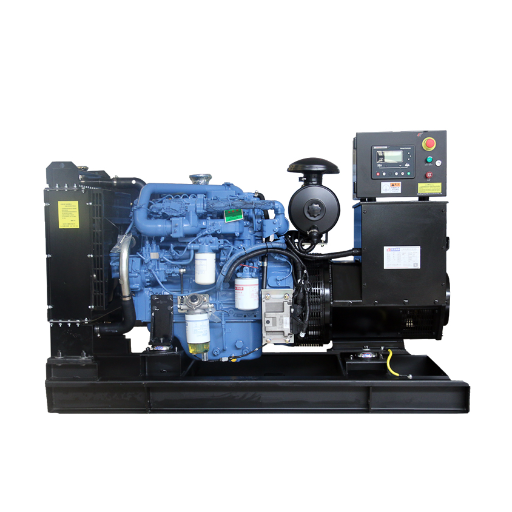
As vessels grow larger and offshore operations push into deeper water, power demands increase proportionally.
Workboats and Fishing Vessels
Commercial fishing vessels typically run 100-500 kVA generators. Trawlers need high power for winches and refrigeration. Longliners prioritize fuel efficiency for extended trips. Factory-freezer vessels may require 1,000+ kVA to run blast freezers, ice makers, and processing equipment simultaneously.
Cargo Ships and Ferries
General cargo vessels typically install two to four generators totaling 1,000-3,000 kVA. Container ships need more power for reefer containers — each reefer plug draws 3-5 kW, and a large container ship may have 1,000+ reefer plugs. Ferries require rapid load acceptance for maneuvering and berthing.
Offshore Platforms and Drill Rigs
Offshore installations operate in some of the most demanding electrical environments for any marine diesel generator or offshore generator. Generators must comply with:
- DNV-OS-D201: Electrical installations for offshore units
- Zone classification: Hazardous area ratings for explosive atmospheres
- NORSOK standards: Norwegian offshore requirements
Containerized marine generators are common offshore because they can be craned onto the platform as modular units, complete with acoustic enclosures, fuel tanks, and control systems. A typical North Sea platform runs 4-6 x 2,000 kVA generators in a closed-bus PMS configuration. This architecture of redundant, paralleled generators with automated load management is also foundational to data center backup power design.
Maintenance, Wet Stacking Prevention & Reliability
A well-maintained marine diesel generator or CCS certified generator can operate 20,000-40,000 hours before major overhaul. Neglected units fail in 3,000-5,000 hours. The difference is disciplined maintenance.
Hour-Based Maintenance Schedule
| Interval | Key Tasks |
|---|---|
| Daily | Check oil, coolant, fuel levels; drain water from settling tanks; monitor pressures and temperatures |
| 50 hours | First (break-in) oil change; inspect V-belts |
| 100-250 hours | Change engine oil and filters; clean air filters; check battery electrolyte |
| 600 hours | Replace secondary fuel filter; inspect injectors; check turbocharger boost; clean cooling system and zinc anodes |
| 1,000 hours | Crankcase inspection; test and re-pressure fuel injectors; check tappet clearances; take performance readings |
| 2,000 hours | Check crankshaft deflection against baseline |
| 4,000 hours | Half decarbonization: remove cylinder heads, inspect valves, pistons, liners; renew gaskets |
| 8,000+ hours | Major overhaul (top-end and bottom-end as required) |
For more detailed maintenance intervals and checklists, see our marine generator maintenance guide.
Wet Stacking in Marine Standby Duty
Wet stacking is the accumulation of unburned fuel, carbon, and oil in the exhaust system. It occurs when a diesel generator operates below 30% of rated load for extended periods — a common scenario for standby generators on vessels with shore power or light hotel loads.
Symptoms: Black smoke, fuel dripping from exhaust, fouled injectors, reduced power, fuel dilution of engine oil.
Prevention:
- Run generators at 60-80% of rated load whenever possible.
- Conduct monthly load bank testing at ≥50% load for 2+ hours.
- If wet stacking symptoms appear, run at 75-100% load for 30-60 minutes to burn off deposits.
SOLAS Testing Requirements
SOLAS Chapter II-1 mandates strict testing for emergency generators:
- Weekly: Verify automatic starting system. The generator must start and assume full load within 45 seconds of main power failure.
- Monthly: Run on-load for 3-4 hours. Record frequency, voltage, current, and kW every 30 minutes.
- Starting energy: Stored energy (usually batteries) must support at least 3 consecutive start attempts. A second energy source must provide 3 additional starts within 30 minutes.
Buying from a China Marine Diesel Generator Manufacturer
Most marine generator buyers purchase through distributors or trading companies. Factory-direct procurement from a China OEM offers significant advantages — if you select the right manufacturer. Before committing, review what diesel generator warranty and after-sales support coverage should include — from spare parts guarantees to field service response times.
Factory Capabilities to Verify
| Capability | What to Ask For |
|---|---|
| CCS-certified production line | CCS factory audit certificate |
| National standard testing center | ISO 17025 accreditation or equivalent |
| Engine OEM authorization | Cummins / Perkins / Weichai distributor certificate |
| In-house alternator testing | No-load and load test report format |
| Welding and fabrication QC | Welder certification records (ISO 9606) |
| Painting and surface prep | Salt spray test results (ASTM B117, 500+ hours) |
Lead Times and Logistics
Standard marine generator sets from a China OEM typically require:
- Quotation and engineering review: 1-2 weeks
- Production: 4-6 weeks for standard models; 8-10 weeks for custom builds
- Multi-class certification: Additional 4-6 weeks
- Shipping: 2-4 weeks by sea to most global ports
Total door-to-door time: 10-16 weeks for standard units; 14-20 weeks for multi-class certified custom builds.
Cost Advantage
Factory-direct pricing from a China CCS-certified manufacturer typically runs 25-40% below European or North American distributor pricing for equivalent specifications. This gap widens for larger units (500+ kVA) where transport cost as a percentage of total cost is lower.
Mini-story: Southeast Asian Shipyard Fleet Procurement
In early 2024, a Southeast Asian shipbuilding group procured 47 marine diesel generator sets for a newly constructed fleet of coastal cargo vessels. Previously, they had received an initial quotation of $4.7 million (inclusive of CCS and ABS certification fees) from a European distributor for 250 kVA units powered by Cummins engines. Subsequently, the shipyard contacted Shandong Huali directly. We recommended our own 250 kVA units—also powered by Cummins 6CTA engines, featuring identical CCS and ABS certifications, and manufactured at our facility in Qingdao. Our direct-from-factory quotation was $3.1 million. The entire order was delivered in three batches over a period of 14 weeks. Independent third-party inspections conducted by Bureau Veritas confirmed that all generator sets fully met the required technical specifications. Ultimately, the shipyard realized savings of $1.6 million—representing a 34% reduction compared to the distributor’s quote—while securing an identical product with the same certifications.
Frequently Asked Questions
What is the difference between a marine and land diesel generator?
A marine diesel generator is engineered for the marine environment with anti-corrosion coatings, double resilient anti-vibration mounts, marine cooling systems (heat exchanger or keel cooling), and classification society certification. Land-based generators lack these features and will corrode, overheat, or fail prematurely when installed on a vessel.
How do I calculate the right size marine generator for my vessel?
List all electrical loads in kW by operating mode (at sea, maneuvering, in-port, standby). Apply a diversity factor of 0.70-0.95. Add the starting surge of your largest motor. Convert to kVA using kW / 0.8 power factor. Add 20-30% safety margin. Apply environmental deratings for altitude and temperature. The result is your minimum generator rating.
What classification society certification do I need?
The required certification depends on your vessel’s flag state and trade route. Chinese-flag vessels typically require CCS. Vessels trading to the US need ABS. European routes often require DNV or BV. Most Chinese manufacturers hold CCS as base certification; ABS, DNV, BV, and LR are available as optional upgrades.
Which engine brand is best for marine generators?
Cummins offers the best global support network and widest power range (20-2,500 kVA). Perkins is cost-effective for Commonwealth markets. Baudouin (Weichai) provides competitive pricing with growing marine certification. Volvo Penta leads in low-noise yacht applications. Wartsila and MAN dominate the megawatt-scale offshore segment.
What is wet stacking and how do I prevent it?
Wet stacking is carbon and unburned fuel buildup in the exhaust system caused by chronic underloading below 30% of rated capacity. Prevent it by running generators at 60-80% load, conducting monthly load bank tests at ≥50% for 2+ hours, and addressing symptoms immediately with a high-load run at 75-100%.
How often should a marine generator be serviced?
Daily checks of oil, coolant, and fuel levels. Oil and filter changes every 100-250 hours or annually. Major inspections at 1,000 and 4,000 hours. Overhaul at 8,000+ hours depending on operating conditions. Engines running at light loads require more frequent exhaust system cleaning.
What is IMO Tier III compliance and do I need it?
IMO Tier III is the strictest NOx emission standard under MARPOL Annex VI. It applies to engines over 130 kW installed on vessels built on or after 2016 operating in Emission Control Areas (North America, Caribbean, North Sea, Baltic Sea, Mediterranean). Compliance requires SCR technology or equivalent. If your vessel does not trade in ECAs, Tier II compliance is sufficient.
Can I buy a CCS-certified marine generator directly from a Chinese factory?
Yes. Leading Chinese manufacturers such as Shandong Huali hold CCS factory certification and can produce CCS-certified marine generators with optional ABS, DNV, BV, and LR approvals. Factory-direct procurement typically reduces cost by 25-40% compared to distributor pricing while maintaining identical certification and quality standards.
Conclusion
Selecting the right marine diesel generator requires more than matching a power rating to a price list. It demands careful load analysis by operating mode, understanding of classification society requirements, and selection of cooling and control systems matched to your vessel’s operational profile.
The five key principles every buyer should remember:
- Size by operating mode, not by peak load alone. A generator sized only for in-port cargo handling will be chronically oversized at sea.
- Specify certification at order time. Multi-class approval cannot be added after manufacturing without costly re-engineering.
- Match the cooling system to your environment. Keel cooling for yachts and small craft; heat exchanger for commercial vessels.
- Plan for emissions compliance. If your vessel trades in ECAs, IMO Tier III with SCR is mandatory.
- Consider factory-direct procurement. A CCS-certified China OEM delivers identical quality at 25-40% below distributor pricing.
At Shandong Huali Electromechanical Co., Ltd., we have manufactured marine diesel generator sets from 8 kVA to 3,000 kVA for over 25 years. Our CCS-certified production lines and national standard testing center ensure every unit meets the classification society standards your vessel requires.
