
A shipyard in Vietnam thought it had done everything right. It ordered generators with CCS certificates for a new fleet of coastal cargo vessels. But when the first ship reached Rotterdam, port state control flagged the paperwork. The charterer required ABS or DNV approval, not just CCS. The yard faced 14 weeks of delays, $12,000 per vessel in retroactive fees, and a renegotiated charter contract at 15% lower rates.
The mistake was simple. The buyer treated CCS certification as a universal stamp. It is not. A CCS certified marine generator meets strict standards from the China Classification Society, but acceptance varies by flag state, charterer, and trade route. Choosing the right classification society or combination of societies at the quotation stage is one of the most consequential decisions in marine procurement.
This guide explains what a CCS certified marine generator is, how the CCS process works, how it compares to ABS and DNV, and how to choose the right certification strategy for your vessel. For a broader view of marine power systems, see our marine diesel generator buying guide.
What Is a CCS Certified Marine Generator?
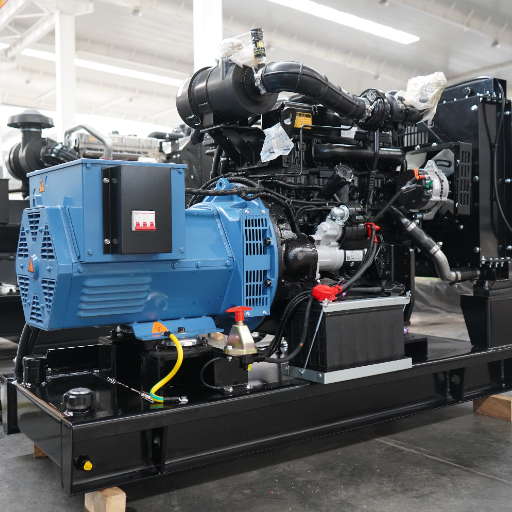
A CCS marine generator is a diesel generator set that has passed design review, prototype inspection, factory audit, witnessed factory acceptance testing, and certificate issuance by the China Classification Society (CCS). In other words, a CCS certified marine generator is verified at every stage from design to final test. CCS is a member of the International Association of Classification Societies (IACS) and is the largest classification society in the world by vessel count.
The certification covers the complete genset as an integrated system, including the engine, alternator, control panel, cooling system, and protective enclosure. Upon approval, CCS grants the MG Class Notation, which confirms the CCS certified marine generator meets maritime electrical installation standards such as IEC 60092 and ISO 8528.
CCS certification is mandatory for Chinese-flag vessels and widely accepted across Asia and ASEAN coastal routes. However, a CCS certified marine generator is not automatically recognized by every global flag state or charterer. That is why marine generator certification strategy must match your actual trading pattern, not just your build location.
Why Classification Society Approval Matters
Classification societies are independent organizations that set and enforce technical standards for ships and marine equipment. Major societies include:
- CCS (China Classification Society)
- ABS (American Bureau of Shipping)
- DNV (Det Norske Veritas)
- LR (Lloyd’s Register)
- BV (Bureau Veritas)
- RINA (Registro Italiano Navale)
Class certification affects four areas that directly impact vessel economics:
- Insurance coverage: underwriters usually require class-certified equipment for hull and machinery policies
- Port state control: inspectors in Rotterdam, Singapore, Houston, and Los Angeles check certificates against flag state rules
- Resale value: class-certified generators command higher prices in the second-hand market
- Charter eligibility: many charterers specify class society requirements in their vetting criteria
CCS Certified Marine Generator Process
A CCS certified marine generator is built through five clear stages. Certification cannot be added after production. It must be built into design, procurement, and manufacturing from the first quotation.
| Stage | Activity | Timeline | Deliverable |
|---|---|---|---|
| 1. Design Review | Submit drawings, material specs, insulation class | 2-3 weeks | Design approval letter |
| 2. Prototype Inspection | CCS inspects prototype for IEC 60092 and ISO 8528 compliance | 1-2 weeks | Prototype inspection report |
| 3. Factory Audit | Audit quality control systems and production processes | 1 week | Factory audit certificate |
| 4. Witnessed FAT | Load runs, insulation resistance, vibration, noise tests | 2-3 weeks | FAT witness report |
| 5. Certificate Issuance | CCS issues Type Approval Certificate and MG Class Notation | 2-3 weeks | Product certificate |
Total timeline for CCS-only certification: 8-12 weeks.
CCS Technical Requirements for Marine Generators
| Requirement | CCS Specification |
|---|---|
| Enclosure | IP56+ (dust-tight, protected against powerful water jets) |
| Alternator insulation | Minimum Class H (180°C thermal endurance) |
| Emissions | IMO Tier II or Tier III NOx compliance |
| Vibration | ISO 10816 compliance |
| Noise | ≤ 75 dB(A) at 1 meter per ISO 8528-9 |
| Cooling | Marine-grade heat exchanger, keel cooling, or direct seawater |
| Mounting | Double resilient anti-vibration mounts |
| Corrosion protection | Anti-corrosion paint, salt-spray resistant materials |
CCS offers a cost advantage over EU-notified bodies. Its domestic lab-centric model typically runs 15-20% lower. For Chinese-flag vessels and ASEAN coastal shipping, CCS-only certification is usually sufficient for a CCS-certified marine generator.
CCS Cost Example: Chinese Fishing Fleet
A Chinese fishing vessel cooperative ordered 80 CCS-certified marine generator sets from Shandong Huali for fleet modernization. Because the annual volume exceeded 2,000 units, we absorbed 50% of the initial CCS certification costs. Per-unit certification cost dropped from 800 to 800 to 400. Total savings across the fleet: $32,000. The vessels now operate with full MG Class Notation under CCS, accepted at every Chinese and ASEAN port without issue.
ABS vs CCS Certified Marine Generator Certification
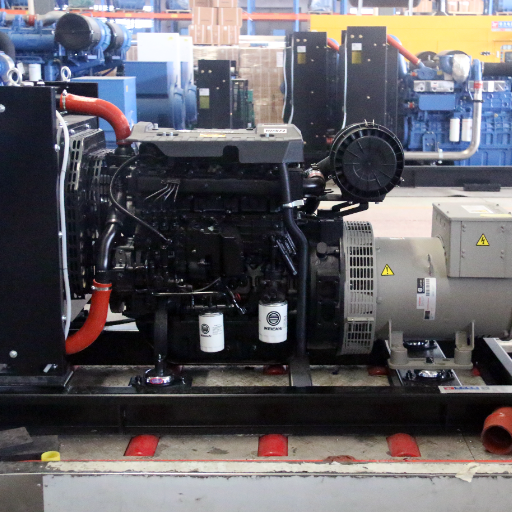
ABS marine generator certification is widely required for vessels trading in the Americas, Asia-Pacific, and the Middle East. Many buyers who need a CCS-certified marine generator also add ABS approval when the vessel will trade globally. ABS is the largest classification society by gross tonnage globally. If your vessel calls at Houston, Singapore, or Dubai, ABS certification is often specified.
Key ABS Technical Requirements
| Requirement | ABS Specification |
|---|---|
| Minimum rating requiring certification | 100 kW |
| Enclosure | IP22 minimum |
| Temperature rise | 110°C at 45°C ambient |
| Sustained short-circuit current | 300% rated full-load current for 2 seconds |
| RTDs (embedded temperature detectors) | Required for units 1 kV and above |
| Torsional vibration analysis | Required for propulsion generators |
| Witness testing | May not be required for units below 100 kW |
ABS allows two certification paths for a CCS certified marine generator when both societies are specified:
- Type Approval: certifies a product family or design
- Unit Certification: certifies each individual generator
For essential services, ABS requires Unit Certification for each generator of 100 kW and over. Below 100 kW, Type Approval of the design is still necessary, but individual unit certification may be simplified.
ABS methodology for an ABS marine generator is prescriptive and standardized, with heavy reference to ASTM standards and ABS Marine Vessel Rules. The focus is on safety, reliability, and durability under diverse operating conditions.
DNV Approval for CCS Certified Marine Generators
DNV generator approval is frequently specified for offshore vessels, LNG carriers, and high-technology applications in Europe. Adding DNV to a CCS-certified marine generator is common when the vessel trades in Northern Europe or operates offshore. DNV is strongest in Northern Europe, where its risk-based methodology encourages design optimization.
Key DNV Technical Requirements
| Requirement | DNV Specification |
|---|---|
| Minimum rating requiring certification | 100 kW |
| Enclosure | IP23 minimum |
| Temperature rise | 110°C at 45°C ambient |
| Sustained short-circuit current | 300% rated full-load current for 2 seconds |
| RTDs | Required on all units, regardless of voltage |
| Shaft material testing | Required for all certified generators |
| Fixed termination of load leads | Required (bus bar, link board, or insulated stand-off) |
| Space heaters | Required |
DNV’s stricter RTD and shaft-testing requirements make a DNV generator slightly more demanding than ABS for auxiliary generators. However, DNV’s risk-based approach can reduce redundant testing for designs with proven track records, potentially saving time on repeat orders.
For offshore applications, DNV references DNV-OS-D201 and DNV-ST-E273. These standards add requirements for zone classification, hazardous area compliance, and dynamic positioning system integration.
CCS vs ABS vs DNV: Side-by-Side Comparison
This table summarizes the key differences buyers need to understand when choosing classification society approval for a CCS-certified marine generator.
| Criterion | CCS | ABS | DNV |
|---|---|---|---|
| Regional strength | China, ASEAN | Americas, Asia-Pacific, Middle East | Europe, offshore, LNG |
| Minimum enclosure | IP56+ | IP22 | IP23 |
| RTDs required | Per design review | 1 kV and above | All units |
| Shaft material test | Per design review | Propulsion only | All units |
| Space heaters | Recommended | Strongly advised | Required |
| Fixed load termination | Per design review | Not specified | Required |
| Typical timeline | 8-12 weeks | 10-14 weeks | 10-14 weeks |
| Relative cost | Lowest | Medium | Medium-High |
| Global acceptance | 13 bilateral agreements | IACS global | IACS global |
| Core methodology | Prescriptive | Prescriptive | Risk-based |
Use this decision framework to choose your certification path for a CCS certified marine generator:
- CCS only: Chinese-flag vessels, coastal shipping, ASEAN markets, domestic fishing fleets
- CCS + ABS: Global trading vessels with routes through Americas and Asia-Pacific
- CCS + DNV: European trade, offshore platforms, LNG carriers, North Sea operations
- CCS + ABS + DNV: Maximum global market flexibility, premium vessel positioning
The Vietnamese shipyard example at the start of this guide illustrates the cost of getting CCS certified marine generator strategy wrong. Always verify flag state and charterer requirements before specifying certification.
SOLAS Emergency Generator Requirements and IMO Tier III
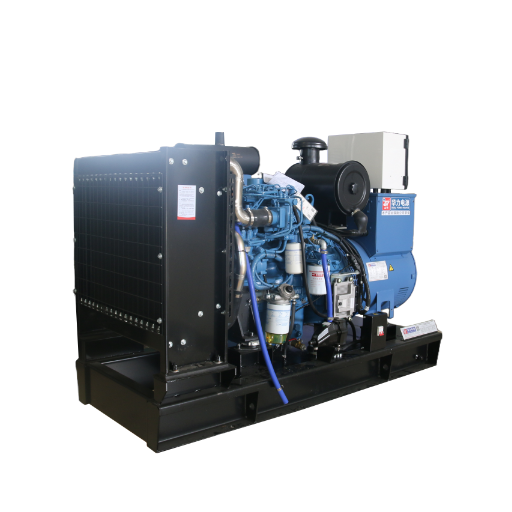
Classification society rules do not exist in isolation. They reference international standards that form the technical foundation of CCS certified marine generator approval.
IEC 60092: Electrical Installations in Ships
IEC 60092 governs the design, equipment selection, and testing of electrical systems on board ships. Key sections for generators include:
- IEC 60092-301: general requirements for electrical installations
- IEC 60092-302: system design, including voltage and frequency standards
- IEC 60092-201: equipment selection for electrical generation and distribution
CCS follows GB/T 13032, which is harmonized with IEC 60092. ABS and DNV reference IEC 60092 directly in their rules.
SOLAS Chapter II-1: Emergency Power Requirements
SOLAS emergency generator requirements are defined in SOLAS 1974 (as amended), Chapter II-1, Part D.
| Requirement | SOLAS Regulation | Specification |
|---|---|---|
| Auto-start time | Reg 42/43.3.1.2 | Within 45 seconds of main power failure |
| Fuel capacity | Reg 42/43.2 | 18 hours for cargo ships; 36 hours for passenger ships |
| Cold start temperature | Reg 44.1 | Must start at 0°C; heating required below |
| Location | Reg 42/43.1 | Outside main machinery space, above uppermost continuous deck |
| Inclination tolerance | Reg 42/43.6 | Full power at 22.5° list or 10° trim |
| Dead ship recovery | Reg 42/43.3.4 | Restore propulsion within 30 minutes from blackout |
The IACS 2025 Concentrated Inspection Campaign found that 2.32% of inspected ships (853 of 36,723) had emergency power deficiencies. The most common failures were quick-closing fuel valves, control unit defects, and crew unfamiliarity with starting procedures.
IMO Tier II/III: Emissions Compliance
MARPOL Annex VI regulates air pollution from ships. NOx limits apply to diesel engines over 130 kW:
| Tier | NOx Limit (g/kWh) | Applicability |
|---|---|---|
| Tier I | 7.7-17.0 | Engines installed 2000-2010 |
| Tier II | 5.8-14.4 | Engines installed 2011+ (global) |
| Tier III | 3.4-9.7 | Engines in Emission Control Areas (ECA) 2016+ |
IMO Tier III compliance requires Selective Catalytic Reduction (SCR) or equivalent for engines over 130 kW operating in ECAs. These areas include North America, the Caribbean, the North Sea, the Baltic Sea, and the Mediterranean. For a deeper look, read our IMO Tier III marine generator guide.
Engines receive separate EIAPP certificates (Engine International Air Pollution Prevention) for IMO compliance. The EIAPP certificate is distinct from the class society product certificate but is required for full approval.
Once your certified generator is installed, proper diesel generator maintenance is essential to keep certificates valid and ensure reliable operation at sea.
Multi-Class Certification Strategy
CCS holds bilateral agreements with 13 other classification societies, including RINA and KR. However, for markets outside China and ASEAN, retesting is often required if you only hold CCS certification. Global IACS members like DNV, ABS, and Lloyd’s Register generally accept each other’s certifications across 150+ jurisdictions. This is why a CCS certified marine generator often ships with multi-class approval for global trade.
Cost and Timeline Impact
| Certification | Added Cost per Unit | Added Timeline |
|---|---|---|
| CCS only | Baseline | 8-12 weeks |
| CCS + ABS | +1,600−1,600−2,400 | +3-4 weeks |
| CCS + DNV | +1,600−1,600−2,400 | +3-4 weeks |
| CCS + ABS + DNV | +3,200−3,200−4,800 | +4-6 weeks |
For volumes above 3,000 units annually, certification costs are negotiable. Some manufacturers absorb up to 50% of initial certification costs as part of volume agreements.
Specify at Order Time
Multi-class approval cannot be added after delivery without costly re-engineering. Each society requires separate engineering reviews, separate witness testing protocols, and separate documentation packages. If you discover you need ABS certification after a CCS certified marine generator is already installed, you face:
- Disassembly for prototype-level inspection
- Potential design modifications to meet society-specific requirements
- Full re-test cycle with class surveyor present
- 12-16 weeks of additional delay
The rule is simple: specify every class society you need at the quotation stage.
Unsure what size generator your vessel needs? Our generator sizing guide walks through kW, kVA, and power factor calculations for marine applications.
Common Certification Mistakes Buyers Make
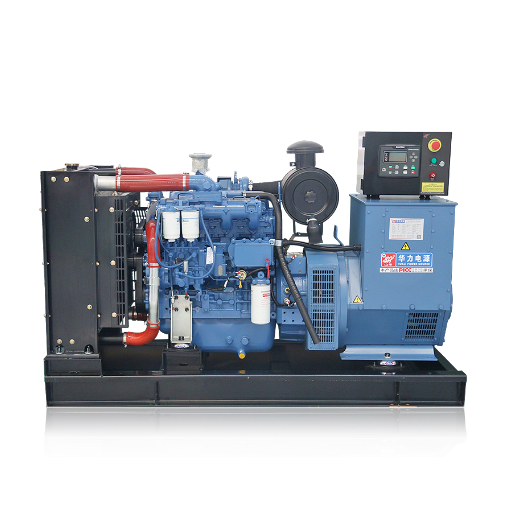
Even experienced ship operators make these errors during marine generator procurement.
Mistake 1: Assuming CCS Equals Globally Accepted
CCS is the world’s largest class society by vessel count, but it has limited bilateral recognition outside Asia. For vessels trading to Europe or North America, a CCS certified marine generator with only CCS approval may trigger port state control questions. Always verify flag state and charterer requirements before specifying certification.
Mistake 2: Adding Certification After Production
Certification is integrated into manufacturing. Design reviews happen before prototypes are built. Factory audits examine quality control systems, not finished products. Witnessed FAT requires the class surveyor to observe tests in real time. Adding certification to a CCS certified marine generator after production is technically impossible without starting the process from stage one.
Mistake 3: Confusing Engine Certificate with Genset Certificate
A Cummins engine may carry its own type approval certificate. A Stamford alternator may carry its own. But the complete genset certificate covers the system as installed. If you replace the engine later, you may invalidate the certificate. Ensure your procurement specifies complete genset certification, not just component certificates.
Mistake 4: Ignoring IMO Tier III for ECA Routes
Vessels trading in Emission Control Areas must carry IMO Tier III-compliant engines. This requires SCR systems, urea tanks, and additional control logic. Tier II is insufficient for these routes. If your vessel will ever enter an ECA, specify Tier III at order time. Retrofitting SCR is significantly more expensive than factory integration.
Mistake 5: Not Planning for Certificate Renewal
Classification society certificates have validity periods. Type Approval Certificates for a CCS certified marine generator typically require renewal every 4-5 years. Factory audits may be required annually or biennially. Ensure your supplier maintains current certificates and can support renewal without production interruption. Long-term diesel generator warranty and after-sales support are just as important as the initial certification.
CCS Certified Marine Generator FAQs
What is MG Class Notation on a CCS marine generator?
A CCS marine generator carries the MG Class Notation. It appears on the product certificate and confirms compliance with IEC 60092, ISO 8528, and CCS rules for electrical installations.
How long does CCS-certified marine generator approval take?
CCS-only certification typically takes 8-12 weeks from design review to certificate issuance. Multi-class certification (CCS + ABS or DNV) adds 4-6 weeks. Timeline depends on design complexity, factory readiness, and surveyor scheduling.
Can I add ABS certification after a CCS-certified marine generator is delivered?
No. Adding class society certification after delivery requires disassembly, prototype-level inspection, potential design modifications, and full re-testing with the class surveyor present. This process takes 12-16 weeks and costs significantly more than factory-integrated certification. Always specify all required class societies at the quotation stage.
What is the difference between Type Approval and Unit Certification?
Type Approval certifies a product family or design. It means the design meets class society rules. Unit Certification certifies each individual generator. ABS requires Unit Certification for each generator of 100 kW and over intended for essential services. CCS typically grants Type Approval for the product family, with factory audits ensuring ongoing compliance.
Does CCS certification include SOLAS compliance?
CCS certification verifies that the generator meets the technical standards referenced in SOLAS, including IEC 60092. However, SOLAS also contains operational requirements (45-second auto-start, 18-hour fuel, weekly testing) that are enforced through the vessel’s Safety Management System, not the product certificate. The generator must be capable of meeting SOLAS requirements, but the ship operator is responsible for operational compliance.
What invalidates a marine generator certificate?
Major modifications to the certified design can invalidate a certificate. Common triggers include replacing the engine with a different model, changing the alternator insulation class, modifying the control system software, or altering the cooling system configuration. Minor repairs using OEM parts typically do not affect certificate validity. Always consult your class surveyor before making modifications.
Is IMO Tier III included in class society certification?
IMO Tier III compliance is verified through a separate EIAPP certificate issued by the flag state or an authorized body. However, class societies require Tier III compliance as a condition of granting product certification for engines over 130 kW intended for ECA operation. The EIAPP certificate and class society certificate are separate documents, but both are required for full approval.
Conclusion
CCS certified marine generator approval is not a checkbox. It is a front-loaded, factory-integrated process that shapes every stage of design, procurement, and manufacturing. The certification path you choose for a CCS certified marine generator (CCS only, CCS + ABS, CCS + DNV, or all three) determines where your vessel can trade, what charterers will accept, and how port state control inspectors will treat your documentation.
The five-stage CCS process (design review, prototype inspection, factory audit, witnessed FAT, certificate issuance) takes 8-12 weeks and costs 15-20% less than EU alternatives. ABS and DNV add requirements for specific markets. SOLAS and IMO Tier III layer additional operational and emissions compliance on top of class society rules.
At Shandong Huali Electromechanical Co., Ltd., we manufacture CCS-certified marine generator sets with CCS, ABS, and DNV certification options. Our ISO-certified testing facilities and CCS-compliant production line support complete genset certification from 8 kVA to 4,000 kVA. We integrate Cummins, Perkins, and Weichai engines with marine-grade alternators, heat exchanger cooling, and Smartgen or ComAp control systems.
Request a certified marine generator quotation today. Send us your vessel type, required class societies, power rating, and operating profile. We will confirm certification feasibility, provide a timeline, and deliver a factory-direct price including all class society costs. Our marine engineering team is ready to guide your project from specification through certificate delivery.