
Diesel generator lead times range from 2–4 weeks for in-stock distributor units to 40–100+ weeks for large Western OEM orders. In 2026, data center demand has pushed Caterpillar’s backlog to $63 billion and Cummins’ generator allocation into 2028, making lead time one of the most critical variables in any power project.
A contractor in Texas ordered a 2 MW generator in January. It arrived in November. The 10-month wait had nothing to do with the factory. Permitting and engineering submittals consumed seven of those months. His liquidated damages: $180,000.
If you think generator procurement is a simple product purchase, you are planning for failure. Generators are engineered to order, not pulled from a warehouse shelf. Every unit integrates an engine, alternator, controller, cooling system, and enclosure — each sourced from a different supplier with its own backlog.
This guide breaks down the complete diesel generator lead time picture. You will learn realistic timelines by source, why build-to-order manufacturing creates delays, how the 2026 data center boom is reshaping supply chains, and specific tactics to compress your schedule without cutting corners.
For help selecting a supplier who delivers realistic timelines, see our diesel generator supplier selection guide.
Key Takeaways
- Western OEM lead times now stretch 40–100+ weeks; Chinese factories deliver in 4–16 weeks for manufacturing
- Caterpillar’s Q1 2026 backlog hit $63 billion, up 79% year-over-year
- Cummins data center generator backlog extends into 2028
- Build-to-order manufacturing means engines and alternators are procured AFTER your order is confirmed
- Permitting, not manufacturing, is often the true schedule bottleneck
- Used/surplus generators can cut delivery time by more than half
What Is a Realistic Diesel Generator Lead Time in 2026?
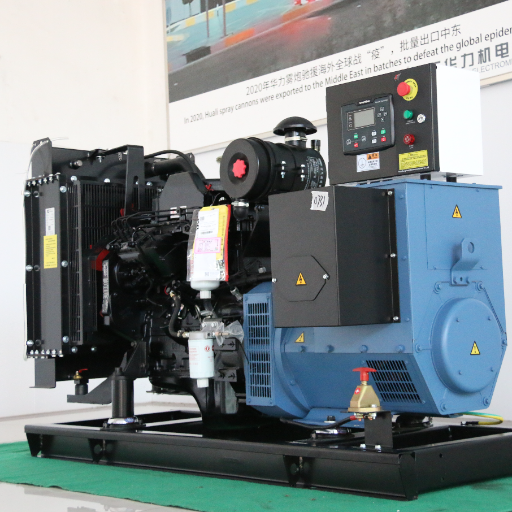
The answer to “what is a realistic generator delivery time?” depends entirely on where you buy, what you buy, and how customized it needs to be. Here is the current landscape by procurement channel.
| Source / Channel | Manufacturing Lead Time | Total Delivery to Site |
|---|---|---|
| In-stock distributor inventory | Immediate | 2–4 weeks |
| Chinese factory (standard) | 4–8 weeks | 18–30 weeks |
| Chinese factory (custom/large) | 8–16 weeks | 22–36 weeks |
| Western OEM (standard industrial) | 20–40 weeks | 28–52 weeks |
| Western OEM (large/data center) | 40–100+ weeks | 52–110+ weeks |
| Used/surplus (inspected) | Immediate | 2–6 weeks |
Standard industrial generators from 100 kW to 1,000 kW typically require 8–28 weeks of manufacturing. That is a typical diesel generator lead time for mid-size units. Add engineering submittals, permitting, shipping, and commissioning, and the total elapsed time from decision to energization is 8–12 months.
Large units over 1 MW, especially with custom enclosures or base fuel tanks, can push manufacturing to 36 weeks. Western OEM direct orders for data center-class units are now routinely quoted at 72–110 weeks — more than two years from purchase order to delivery.
Need to calculate the right generator capacity before you start procurement? Our guide on how to choose diesel generator size helps you lock specifications fast — the first step to shortening lead time.
Why Generator Lead Times Are So Long: The Generator Build to Order Reality
Here is the fact most buyers miss when they ask how long to manufacture a generator: generators are not mass-produced. They are configured to order. The sheer variety of possible combinations makes stocking finished inventory impractical.
A single generator set might combine a Cummins engine, a Stamford alternator, a Deep Sea controller, a custom sound-attenuating enclosure, and a 1,000-liter base fuel tank. Change any one of those components and you have a different SKU. A factory cannot stock every permutation.
Add evolving emissions regulations — EPA Tier 4 Final, EU Stage V, India BS-V — and the obsolescence risk becomes severe. A Tier 3 generator sitting in inventory becomes unsellable in markets with updated standards.
The build-to-order model means manufacturing begins only after your specifications are finalized. The factory then orders the engine from the engine OEM, the alternator from the alternator manufacturer, and the controller from the electronics supplier. Each of those components has its own lead time. Factory assembly — mounting the engine, wiring the controls, installing the canopy — is often the shortest phase.
Maria, a procurement manager at a GOEM in Jiangsu, learned this the hard way. A client demanded 30-day delivery on a 500 kW Perkins generator. She accepted the order to win the contract, knowing the Perkins engine had a 12-week allocation from the regional distributor.
When week 4 arrived with no engine, she had two choices. Breach the contract. Or air-freight the engine from the UK at a $15,000 loss. She chose the air freight. The factory assembly took 10 days. The engine procurement took 90.
This is why the most common buyer mistake is treating generator procurement like ordering a standard product. It is an engineering project with a supply chain attached.
Understanding how the factory actually works helps you set realistic expectations. Read our diesel generator factory guide for an inside look at manufacturing processes.
The Complete Generator Procurement Timeline: Quotation to Energization
Manufacturing is only one phase. The complete diesel generator lead time spans seven distinct stages in the full generator procurement timeline. Understanding each helps you identify where delays actually happen.
Phase 1: Quotation and Specification (1–4 weeks)
You submit your requirements. The supplier creates a technical proposal with pricing, specifications, and delivery terms. Delays here are almost always buyer-side: incomplete load data, unclear voltage requirements, or internal approval processes.
Phase 2: Purchase Order and Engineering Submittals (2–4 weeks)
After PO issuance, the supplier generates engineering submittals — technical drawings, single-line diagrams, and datasheets for your review. Your engineering team reviews them. Each round of revisions adds 1–2 weeks. This phase is invisible in most factory lead time quotes, but it consumes real calendar time.
Phase 3: Component Procurement (3–10 weeks — The Critical Path)
The factory orders the engine, alternator, controller, and raw materials. This is where the schedule lives or dies. A Cummins engine might have a 6-week allocation. A custom Stamford alternator with special windings might need 8 weeks. If any component is backordered, the entire production line waits.
Phase 4: Assembly and Fabrication (1–3 weeks)
The factory builds the base frame, mounts the engine and alternator, installs the cooling system, wires the control panel, and assembles the enclosure. For a standard SKD (semi-knocked down) build, this takes 1–2 weeks. For a fully customized CKD build with local assembly, it can take 3+ weeks.
Phase 5: Factory Acceptance Testing (3–7 days)
Every unit should undergo load testing before shipment. Standard FAT includes sustained operation at 80% load for 60 minutes, voltage regulation verification, and frequency stability checks. Some buyers skip FAT to save time. That is a mistake that costs far more than it saves.
Phase 6: Shipping and Customs (2–8 weeks)
Ocean freight from China to Africa, the Middle East, or South America typically takes 3–6 weeks. Add customs clearance, port handling, and inland transport. For urgent projects, air freight cuts this to days but costs 5–10x more.
Phase 7: Installation and Commissioning (4–12 weeks)
Site preparation, foundation work, fuel tank installation, electrical connection, and final commissioning. For large industrial projects with paralleling switchgear and complex integration, this phase can exceed 12 weeks.
Total elapsed time: 8–12 months for a typical large industrial project. The factory lead time quoted by your supplier is usually only Phases 3–5. Everything else is your responsibility to plan.
China Factory vs Western OEM: An Honest Lead Time Comparison
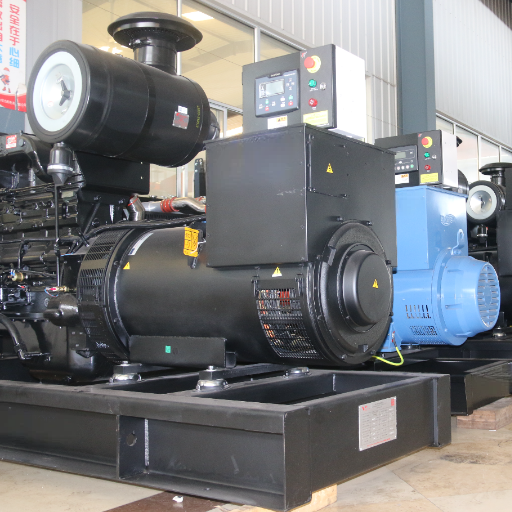
Buyers often assume Western brands deliver faster because they are “local.” In 2026, that assumption is dangerously wrong.
Chinese Manufacturer Lead Times
Chinese GOEMs (generator original equipment manufacturers) operate with a different supply chain model. Most engines — Cummins, Perkins, Weichai, Yuchai — are manufactured in Asia or have regional distribution hubs in China. Alternators from Stamford, Leroy Somer, and Marathon are similarly sourced within the region.
| Assembly Model | Manufacturing Time | Notes |
|---|---|---|
| SKD (semi-knocked down) | 4–8 weeks | Engine and alternator arrive complete; factory mounts, wires, tests |
| CKD (completely knocked down) | 8–16 weeks | More disassembly for local assembly or tariff optimization |
| Full vertical integration | 6–12 weeks | Engine manufactured in-house (Weichai, Yuchai, SDEC) |
Total delivery from China factory to international site: typically 18–30 weeks.
Western OEM Lead Times
Caterpillar, Cummins, and other Western OEMs face the same component backlogs as everyone else — except their engines are also in severe shortage due to data center demand.
| Unit Type | Lead Time | Notes |
|---|---|---|
| Standard industrial (new) | 20–40 weeks | Limited by engine allocation |
| Large/data center class | 40–100+ weeks | Cummins backlog into 2028; Caterpillar $63B backlog |
| Custom enclosures/tanks | Add 8+ weeks | Third-party fabrication |
The Trade-Offs
Understanding the diesel generator lead time difference between China and Western OEMs helps you make the right sourcing decision. Chinese factories offer speed and cost — typically 30–50% less than equivalent Western units. Western OEMs offer brand recognition, established service networks, and perceived reliability. For buyers in markets without strong local service requirements, the Chinese route is often the faster and more economical choice.
Lead time is part of your total cost of ownership. A delayed project costs more than the price difference between suppliers. See our diesel generator TCO guide for a full breakdown.
The 2026 Backlog Crisis: What Data Center Demand Did to Generator Supply
The diesel generator lead time problem is not abstract. It is structural, driven by the largest infrastructure buildout in modern history.
Caterpillar reported a record $63 billion backlog in Q1 2026, up 79% year-over-year. The company is tripling its large reciprocating engine capacity, adding approximately 15 GW of annual output. That expansion will not be fully online until 2027–2029. Today’s orders are being filled from existing capacity.
Cummins, meanwhile, has sold out its data center generator allocation through 2028. The company doubled its 95-liter high-speed diesel engine capacity in 2025 and still cannot meet demand. Data center-related revenue hit approximately $3.5 billion in 2025 and is projected to grow 10–20% in 2026.
The ripple effects extend far beyond data centers. Construction contractors, hospital projects, and mining operations are competing for the same pool of engines and alternators. A contractor ordering a 500 kW standby generator is now in the same queue as a hyperscaler ordering 50 MW of backup power.
Industry analysts tracking 12 GW of announced US data center capacity for 2026 found that only 5 GW is actually under construction. The remaining 7 GW sits in planning, blocked by equipment shortages. Power constraints are extending data center construction timelines by 24–72 months.
For buyers, the diesel generator lead time reality is clear: if you need a large generator in 2026 and have not already placed your order, you are likely looking at 2027 or 2028 delivery from a Western OEM.
Component Bottlenecks: Where the Time Actually Goes
Buyers blame the generator factory for diesel generator lead time delays. More often, the factory is waiting on components it cannot control.
Engine Procurement
The engine is the longest-lead component and the most constrained. Engine OEMs — Cummins, Perkins, MTU, Caterpillar — allocate production slots months in advance. A factory cannot start building your generator until the engine arrives. In 2026, engine allocation is the single biggest driver of diesel generator lead time in the supply chain.
Alternator Sourcing
Copper prices and core steel shortages have extended alternator lead times. Standard alternators from Stamford or Leroy Somer typically deliver in 3–6 weeks. Custom windings, special bearings, or non-standard voltages can push this to 10–12 weeks.
Control Systems
Modern generator controllers rely on semiconductors and microprocessors. The same chip shortage that affected automotive and consumer electronics has hit industrial controls. Digital governor systems, paralleling controllers, and remote monitoring modules all face extended procurement timelines.
Emissions Aftertreatment
EPA Tier 4 Final and EU Stage V compliance requires diesel particulate filters (DPF), selective catalytic reduction (SCR) systems, and diesel oxidation catalysts (DOC). These aftertreatment systems add cost, complexity, and procurement time. Some engine OEMs bundle aftertreatment with the engine. Others require separate sourcing.
Raw Materials
Steel, copper, and aluminum price volatility affects enclosure fabrication, base tank construction, and radiator manufacturing. Factories typically quote lead times based on current material availability. A sudden price spike or supply disruption can delay production.
How to Avoid Generator Lead Times: Tactics to Compress Your Diesel Generator Lead Time
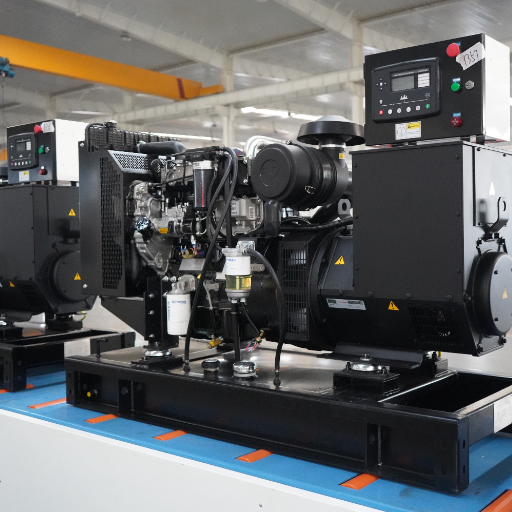
Long lead times are not inevitable. Here are specific tactics to avoid generator lead times and shorten your diesel generator lead time at each phase.
Engage Early
Contact suppliers during your project’s conceptual design phase, not when construction is already underway. Early engagement lets you lock component allocation before the factory queue fills. Suppliers prioritize buyers who commit early.
Lock Specifications Fast
Every day you delay approving technical drawings pushes the production start date back. Assign one decision-maker with authority to approve submittals immediately. Eliminate internal review loops that add weeks without adding value.
Choose Stock Configurations Over Custom
Standard voltage, standard frequency, standard enclosure color — every customization adds procurement and fabrication time. If your application allows a stock configuration, take it. You can always retrofit accessories after delivery.
Verify Component Availability Before PO
Ask your supplier to confirm engine and alternator allocation before you issue the purchase order. A credible supplier will check real-time availability and quote accordingly. If they cannot show you current stock or allocation dates, they are guessing.
Consider Chinese Integrated Manufacturers
Chinese factories with vertical integration — manufacturers who produce their own engines, like Weichai and Yuchai — control their own supply chain. They are not dependent on third-party engine allocation. This eliminates the longest variable from the timeline.
Evaluate Used/Surplus for Non-Critical Applications
Inspected used generators can deploy in less than half the time of new factory orders. For construction sites, temporary installations, or non-life-safety applications, a quality used unit from a reputable supplier is a viable fast-track option.
Plan Permitting Parallel to Manufacturing
Start permit applications the same week you issue the PO. In many regions, air quality permits, noise permits, and fuel storage approvals take longer than manufacturing. Running permitting and production in parallel instead of in series can shave months off your total timeline.
Red Flags: When a Supplier’s Lead Time Promise Is Unrealistic
Not every quoted diesel generator lead time is honest. Here is how to spot a supplier who is either uninformed or deliberately misleading.
They promise delivery faster than engine allocation allows. If Cummins is quoting 20 weeks for that engine model, no factory on earth can deliver the complete generator in 8 weeks. The math does not work.
They provide no phase-by-phase breakdown. A credible quote breaks down engineering, procurement, assembly, testing, and shipping separately. A single number with no detail is a guess.
They are vague about component sourcing. Ask specifically: Is the engine in stock? When is the alternator arriving? A supplier who cannot answer these questions does not control their supply chain.
They quote the same lead time for every configuration. A 50 kW open skid and a 2 MW containerized generator with paralleling controls do not take the same time to build. Identical quotes mean the supplier is not actually planning production.
They cannot show current engine or alternator availability. Ask for written confirmation from the engine distributor. If the factory relies on a local trading company for engines, they have no visibility into actual allocation.
For a complete checklist of supplier credibility assessment criteria—covering all metrics beyond delivery lead times—please refer to our Complete Buyer’s Guide to Diesel Generator Manufacturers.
Lead Time Cost: What Delays Actually Cost You
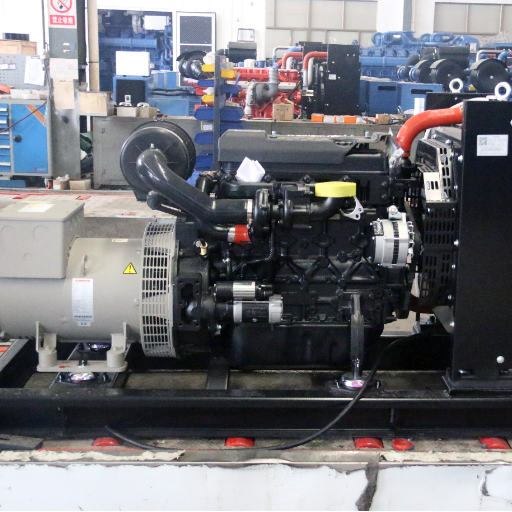
A delayed generator is not just an inconvenience. It is a direct cost that compounds weekly and extends your diesel generator lead time into dangerous territory.
| Project Type | Delay Cost per Week | Primary Cost Driver |
|---|---|---|
| Commercial construction | 10,000−−10,000−−25,000 | Site overhead, labor idle time, liquidated damages |
| Data center buildout | 50,000−−50,000−−200,000 | Lost SLA revenue, extended temporary power rental |
| Hospital upgrade | 15,000−−15,000−−40,000 | Regulatory compliance extensions, temporary life safety measures |
| Mining operation | 20,000−−20,000−−60,000 | Production loss, rental generator fuel costs |
| Industrial manufacturing | 10,000−−10,000−−30,000 | Downtime, overtime to compensate for outage risk |
David, a data center developer in Virginia, waited 14 months for Cummins generators for a 10 MW facility. During the delay, a competitor opened a competing colocation facility two miles away and signed three of David’s target clients. The generator delay did not just cost him rental power expenses. It cost him millions in lost contract revenue that went to a competitor who secured power equipment six months earlier.
The cost of delay almost always exceeds the cost of paying a premium for faster delivery. A buyer who saves 5,000bychoosingaslowersupplierandthenpays5,000bychoosingaslowersupplierandthenpays50,000 in delay costs has made an expensive mistake.
For help building a complete procurement budget that includes delay risk, see our diesel generator set buyer’s guide.
Conclusion
Diesel generator lead time is not a fixed constant. It is a strategic variable.
In 2026, the data center boom has created an unprecedented equipment shortage. Western OEM backlogs stretch into 2028. Engine allocation, not factory assembly, is the bottleneck. Buyers who understand the build-to-order model will avoid the delays that are derailing projects worldwide.
The tactics are simple. Engage early. Lock specifications fast. Verify component availability. Consider Chinese integrated manufacturers for speed. Run permitting parallel to production. The 30 minutes you spend validating a supplier’s timeline can save you months of delay and tens of thousands in costs.
At Shandong Huali Electromechanical Co., Ltd., we provide realistic lead time quotes with full component transparency. We confirm engine and alternator availability before we quote. Our vertical integration with Weichai and Yuchai engines gives us direct control over the longest variable in the supply chain. We do not promise what we cannot deliver.
Need a realistic delivery timeline for your next project? Contact our engineering team for a diesel generator lead time assessment with verified component availability. We will tell you exactly when your generator can ship — and back it with a production schedule you can track.
Frequently Asked Questions
How long does it take to manufacture a diesel generator?
Manufacturing time alone ranges from 4–8 weeks for standard SKD assembly at a Chinese factory to 40–100+ weeks for large Western OEM units. The total elapsed time from purchase order to energization, including engineering, shipping, and commissioning, is typically 8–12 months for industrial projects.
Why are generator lead times so long in 2026?
Data center construction demand has created a global shortage of large diesel engines. Caterpillar’s backlog hit $63 billion in Q1 2026. Cummins is sold out through 2028. Generators are also built to order, meaning engines and alternators are procured after your order is confirmed, not pulled from inventory.
Are Chinese generators really faster to deliver?
Yes, for manufacturing. Chinese factories typically complete assembly in 4–16 weeks because engines and alternators are sourced within the region with shorter allocation queues. Total delivery including shipping is 18–30 weeks. Western OEM manufacturing alone often takes 20–40+ weeks before shipping.
Can I get a generator in less than a month?
Only from in-stock distributor inventory or used/surplus suppliers. New factory orders cannot be completed in less than a month because engines and alternators must be procured and assembled. Be skeptical of any factory promising 30-day delivery on a new custom unit.
What is the longest phase in generator procurement?
Component procurement — specifically engine allocation — is the longest phase driving diesel generator lead time for new builds. For the total project timeline, permitting is often the true bottleneck, especially for large installations requiring air quality, noise, and fuel storage approvals.
How do I know if a supplier’s lead time is realistic?
Ask for a phase-by-phase breakdown. Request written confirmation of engine and alternator availability. Cross-check the engine model’s current allocation with the engine OEM or regional distributor. If the quoted delivery is faster than the engine allocation, the promise is not credible.
Does customization add to lead time?
Yes. Every customization — non-standard voltage, custom enclosure color, special control logic, additional fuel tanks — adds procurement and fabrication time. Standard configurations move through production fastest. Choose stock options whenever your application allows.
What is factory acceptance testing and how long does it take?
Factory Acceptance Testing (FAT) is pre-shipment load testing conducted at the manufacturing facility. Standard FAT includes sustained operation at 80% load for 60 minutes, plus voltage and frequency verification. It typically takes 3–7 days. Skipping FAT to save time is a mistake that risks receiving a defective unit.
How much does a delayed generator cost my project?
Delay costs vary by project type but typically range from 10,000−−10,000−−25,000 per week for commercial construction to 50,000−−50,000−−200,000 per week for data center projects. These costs include site overhead, rental power, liquidated damages, and lost revenue from delayed facility openings.
Should I buy used to avoid lead times?
For non-critical applications — construction sites, temporary installations, standby power where redundancy exists — a quality inspected used generator can cut delivery time by more than half. For life-safety applications like hospitals or data centers with strict uptime requirements, new equipment with full warranty and certification is the safer choice.
