
Small marine diesel generators range from 3 kW to 15 kW and serve boats from 20 ft sailboats to 60 ft cruising yachts. The right unit depends on accurate load calculation, available installation space, and your typical operating profile.
In 2024, a cruiser owner in Florida installed a 12 kW generator on his 42 ft Bertram to power air conditioning, refrigeration, and electronics. His actual peak load was only 6 kW. The generator spent most of its time below 25% capacity.
Within 18 months, wet stacking had coated the exhaust elbow with carbon, the turbocharger showed excessive wear, and the repair bill topped $3,200. He could have bought an 8 kW unit for less upfront cost and avoided the problem entirely.
At Shandong Huali Electromechanical Co., Ltd., we manufacture marine diesel generator sets from 8 kVA to 4,000 kVA with Cummins, Perkins, and Weichai engines. Our engineers have sized and specified small marine generators for fishing boats, patrol craft, charter vessels, and private yachts worldwide. This guide gives you a complete selection framework with real specifications, sizing methods, and the most common buying mistakes to avoid.
Key Takeaways
- Small marine diesel generators cover 3-15 kW for boats 20-60 ft; oversizing causes wet stacking and premature failure.
- Fixed marine generators are safer and more reliable than portable units; they cost more upfront but last 2-3x longer.
- 1500 RPM units last longer and run quieter than 3000 RPM units; choose based on operating hours and noise tolerance.
- True marine generators use freshwater cooling with heat exchangers, not raw seawater through the engine block.
- Always size for 50-70% of rated capacity at peak load, never below 25% at minimum load.
What Is a Small Marine Diesel Generator?
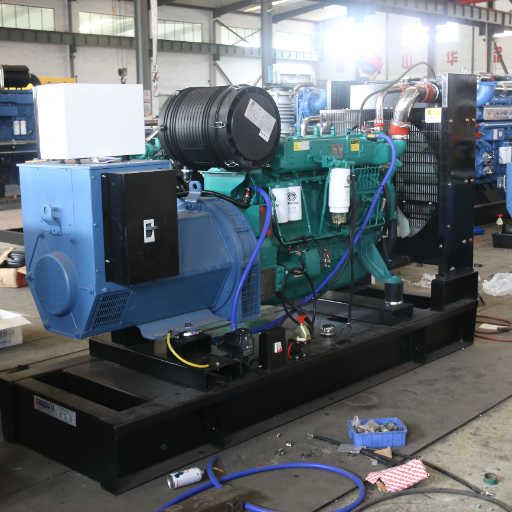
A small marine diesel generator is a fixed-installation diesel generator set from 3 kW to 15 kW, designed specifically for marine environments. These units differ from portable generators in construction, cooling, exhaust, and corrosion protection.
True marine generators use a freshwater cooling circuit with a seawater heat exchanger. The engine block never sees raw seawater directly. This protects internal passages from salt corrosion and scale buildup. They also feature marine-grade paint, tin-plated or bronze heat exchangers, and wet exhaust systems that discharge cooling water with exhaust gases to suppress noise and temperature.
Typical applications include sailboat diesel generator installations on vessels 25-50 ft, cruising yachts 30-60 ft, sportfishing vessels, small commercial fishing boats, patrol craft, and charter vessels. For a complete overview of marine generator types across all power ranges, see our complete marine diesel generator guide.
Sizing Guide: Matching Generator kW to Your Boat
Sizing is the single most important decision when buying a small marine diesel generator. An oversized unit wastes fuel, develops wet stacking, and fails prematurely. An undersized unit cannot start motor loads and will overload under peak demand.
The Load Calculation Method
List every electrical device on your boat. Record running watts and startup watts for each. Motors such as air conditioners, refrigerators, water makers, and windlasses draw 3-5x their running current at startup.
Add all running watts together. This is your continuous load. Add the highest single startup surge to your continuous load.
This gives your peak load. Your generator rated capacity should be 1.25 to 1.5x your peak load.
Boat Size to Generator Matching Table
| Boat Length | Typical Continuous Load | Recommended Generator | kW Range |
|---|---|---|---|
| 20-30 ft | 2-4 kW | 5 kW | 3.5-5 |
| 30-40 ft | 4-6 kW | 6-8 kW | 5-8 |
| 40-50 ft | 6-10 kW | 8-12 kW | 8-12 |
| 50-60 ft | 8-12 kW | 12-15 kW | 12-15 |
The 25% Minimum Load Rule
Never run a diesel generator below 25% of its rated capacity for extended periods. At light load, the engine does not reach optimal combustion temperature. Unburned fuel and carbon deposits build up in the exhaust system, valves, and cylinders. This condition is called wet stacking.
The optimal operating range is 50-70% of rated capacity. At this load, the engine runs at proper temperature, combustion is complete, and fuel efficiency is highest. For detailed guidance on preventing wet stacking, see our marine generator maintenance guide.
When Two Smaller Generators Beat One Large Unit
If your load profile is highly variable, consider two smaller generators on a split-bus panel. Run one generator for light loads such as battery charging and refrigeration. Bring the second online only when air conditioning or water making is needed. This strategy keeps each unit in its optimal load range and provides redundancy.
For a step-by-step walkthrough of marine generator sizing calculations, see our marine generator sizing guide.
RPM, Cooling, and Noise: Three Critical Specifications
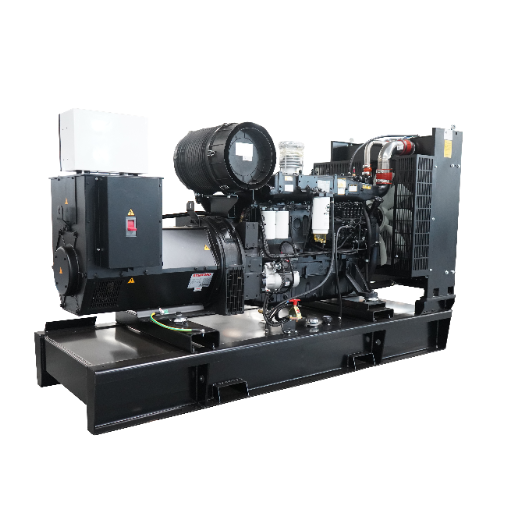
1500 RPM vs 1800 RPM vs 3000 RPM
Operating speed directly affects the performance of any small marine diesel generator. Speed choice impacts lifespan, noise, weight, and fuel consumption.
| RPM | Engine Speed | Typical Lifespan | Noise Level | Weight | Best For |
|---|---|---|---|---|---|
| 1500 | Low | 12,000-15,000 hrs | Lowest | Heaviest | Liveaboards, continuous use |
| 1800 | Medium | 8,000-12,000 hrs | Low-Medium | Medium | North American 60 Hz systems |
| 3000 | High | 6,000-8,000 hrs | Higher | Lightest | Space-constrained installations |
1500 RPM engines turn at half the speed of 3000 RPM units. Slower piston speeds mean less wear, lower noise, and longer service life. The tradeoff is size and weight. A 1500 RPM 8 kW generator may weigh 280 kg, while a 3000 RPM unit of the same output weighs 180 kg.
Cooling Systems
Freshwater cooling with heat exchanger is the standard for true marine generators. A closed freshwater loop circulates through the engine block and cylinder head. A separate raw seawater pump draws seawater through a heat exchanger, where it cools the freshwater without entering the engine.
Keel cooling eliminates the raw water pump and heat exchanger. A grid of copper or bronze pipes is mounted on the hull bottom below the waterline. Seawater cools the pipes directly. This system is common on sailboats because it has no seawater pump to fail and no raw water strainer to clog.
Raw water cooling pumps seawater directly through the engine block. This is cheaper to manufacture but risky for long-term reliability. Salt deposits, corrosion, and scale gradually restrict cooling passages. We do not recommend raw water cooling for permanent installations.
Noise and Vibration
Noise is measured in dBA at a specified distance, usually 7 meters. For reference, normal conversation is approximately 60 dBA.
A super-silent marine generator produces 54-58 dBA at 7 meters. A standard enclosed unit produces 62-68 dBA. An open generator without enclosure may exceed 75 dBA.
Vibration isolation mounts are essential. Standard rubber mounts reduce vibration transfer to the hull. Hydrolastic mounts, used on larger sets, provide superior isolation but add cost and height.
Three-cylinder and six-cylinder engines are naturally balanced. Four-cylinder engines should have counter-rotating balancing shafts to reduce vibration.
Small Marine Diesel Generator vs Portable Generator
A charter operator in the Caribbean ran portable gasoline generators aboard his 38 ft catamaran for three seasons. Each morning he carried the unit from the dock to the cockpit, started it with a pull cord, and ran a shore-power cable through a hatch. The gasoline degraded in the tropical heat. The carburetor clogged repeatedly.
In 2023, a guest woke to headaches and nausea. Carbon monoxide had seeped into the forward cabin overnight. The operator switched to a fixed 8 kW marine diesel with a proper wet exhaust. His fuel costs dropped 35%. He no longer carries a generator up and down the dock. And his insurance premium decreased because the vessel now meets ABYC standards for onboard power generation.
| Factor | Fixed Marine Diesel | Portable Generator |
|---|---|---|
| Safety | High (marine exhaust, diesel fuel) | Low-Medium (CO risk, gasoline vapor) |
| Noise at 7m | 54-68 dBA | 65-75 dBA |
| Continuous duty | Yes, unlimited | 4-6 hours maximum |
| Typical lifespan | 8,000-15,000 hours | 2,000-4,000 hours |
| Fuel stability | Excellent (diesel stores 12+ months) | Poor (gasoline degrades in 3-6 months) |
| Installation | Permanent, requires space | Temporary, plug-and-play |
| Upfront cost | Higher | Lower |
| Lifetime cost | Lower (fuel efficiency, longevity) | Higher (replacement, fuel waste) |
Choose a fixed marine diesel generator if you run more than 100 hours per year, sleep aboard overnight, or operate in enclosed waters where noise and emissions affect other vessels. Choose a portable unit only for occasional weekend use on open boats with excellent ventilation.
Top Specifications to Compare When Buying
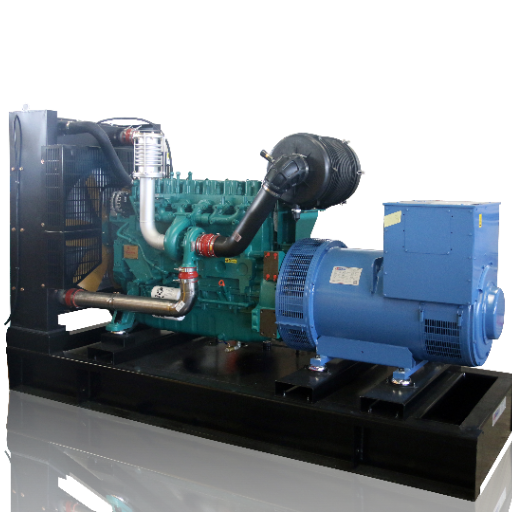
Power Output and Voltage
Small marine generators are typically single-phase, producing 120V or 120/240V at 60 Hz in North America, or 230V at 50 Hz in most other regions. Verify that the voltage and frequency match your onboard electrical system. Some units offer dual-voltage output selectable at the terminal block.
Understand the difference between maximum and continuous ratings. Maximum rating is the peak output the generator can sustain for short periods. Continuous rating is the output it can run at indefinitely. Size your load against the continuous rating, not the maximum.
Power factor matters for motor loads. Most marine generators have a power factor of 0.8. This means a generator rated at 10 kVA produces 8 kW of real power. If your air conditioner draws 6 kW at 0.8 power factor, it requires 7.5 kVA of generator capacity.
Engine Brand and Parts Availability
The engine is the heart of any marine diesel generator for boat applications. Common small marine engine platforms include:
- Kubota: Used in Phasor, Fischer Panda entry models, and Nanni generators. Excellent global parts availability through agricultural and industrial dealer networks.
- Cummins: Industrial engines adapted for marine use. Extensive service network, especially in North America and Asia.
- Perkins: Widely supported in Europe, Africa, and the Middle East. Known for smooth operation and good fuel efficiency.
- Weichai: Cost-effective Chinese industrial engines with growing global support. Common in Asian-built vessels and budget-conscious projects.
- Proprietary engines: Some brands use their own engine designs. Verify parts availability and lead times before buying.
One owner in the South Pacific discovered that a replacement alternator for his premium-brand generator cost 12,000withasix−monthleadtime.Acomparablelocallysupportedindustrial−engine−basedunithadalternatorsavailablefor12,000withasix−monthleadtime.Acomparablelocallysupportedindustrial−engine−basedunithadalternatorsavailablefor3,800 with three-day delivery. Parts availability can matter more than brand prestige in remote cruising areas.
Weight and Dimensions
Installation space is often the limiting factor when selecting a compact marine generator for sailboats and compact motor yachts. Measure your engine room carefully before selecting a unit. Allow clearance for service access on at least three sides.
| Specification Range | Ultra-Compact | Standard Marine | Heavy-Duty |
|---|---|---|---|
| 5 kW weight | 120-150 kg | 180-220 kg | 250+ kg |
| 8 kW weight | 180-250 kg | 280-350 kg | 400+ kg |
| 10 kW weight | 250-300 kg | 350-450 kg | 500+ kg |
Sound shields add 30-50 kg and 100-150 mm to each dimension. Always request the dimensions with the enclosure if you plan to use one.
Voltage Regulation
An automatic voltage regulator (AVR) is essential for stable power. Without an AVR, voltage fluctuates with load changes. This can damage sensitive navigation electronics, battery chargers, and inverter systems.
Inverter-type generators, such as the Sleeper HC-MG series, use a variable-speed engine and digital inverter to produce clean sine-wave power. This is ideal for boats with sensitive electronics, lithium battery systems, and variable load profiles.
Certifications
For recreational vessels, CE marking and EPA compliance may be sufficient. For commercial vessels, classification society approval is often required. CCS (China Classification Society), BV (Bureau Veritas), ABS (American Bureau of Shipping), and DNV (Det Norske Veritas) each have specific testing and documentation requirements for generators under 15 kW.
For more on classification society certification for marine generators, see our guide to CCS certified marine generators.
Manufacturer Comparison: 5 kW, 8 kW, and 10 kW Models
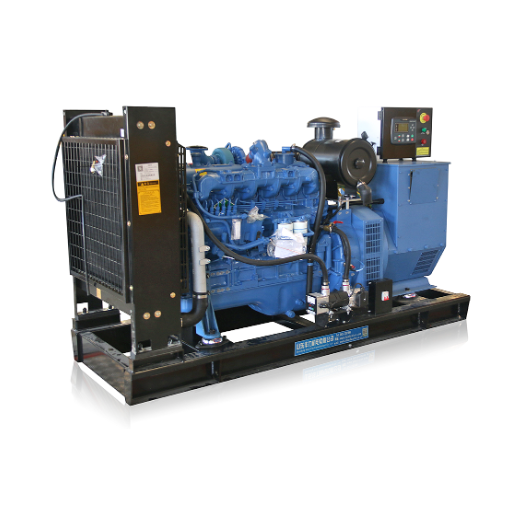
The table below compares representative marine generator 5kW 8kW 10kW models in the most popular power ranges. Specifications are manufacturer-published and may vary by configuration.
| Model | Power | Weight | Dimensions (LxWxH) | RPM | Noise (7m) | Engine | Cooling |
|---|---|---|---|---|---|---|---|
| Fischer Panda 5000 | 5 kW | 122 kg | 540x445x556 mm | 3000 | 54 dBA | Kubota Z482 | Freshwater HX |
| Phasor K2-4.5 | 4.5 kW | ~150 kg | ~520x420x480 mm | 1800 | ~58 dBA | Kubota | Freshwater HX |
| Nanni Q1500 | 10 kW | 279 kg | 945x465x595 mm | 1500 | ~62 dBA | Kubota | Freshwater HX |
| Hosem A-RW11HMS | 8.5 kW | 350 kg | 900x700x800 mm | 3000 | 68 dBA | 3-cyl diesel | Freshwater HX |
| EPTechnologies UC8 DC | 8 kW | 80 kg | 690x510x420 mm | Variable | <60 dBA | Integrated | Shared circuit |
| Shandong Huali 8kVA | 6.4 kW | ~280 kg | ~950x500x600 mm | 1500 | ~58 dBA | Cummins/Perkins/Weichai | Freshwater HX |
Fischer Panda 5000: The benchmark for compactness. At 122 kg and 540 mm length, it fits where few other 5 kW diesels can. The tradeoff is 3000 RPM operation and a shorter service life than 1500 RPM alternatives. Best for sailboats under 40 ft, where space is the primary constraint.
Nanni Q1500: A robust 1500 RPM unit built on Kubota power. The 279 kg weight is substantial, but the low-speed engine delivers long service intervals and quiet operation. Best for cruisers and liveaboards who run their generator daily.
EPTechnologies UC8 DC: Designed for hybrid and electric boats. At 80 kg, it is dramatically lighter than AC alternatives. It produces DC power at variable voltage for direct battery charging. Best for vessels with large lithium battery banks and inverter-based AC systems.
Shandong Huali 8kVA: Built with Cummins, Perkins, or Weichai industrial engines and full freshwater cooling. CCS certification is available for commercial applications. Factory-direct pricing without distributor markup. Best for fishing boats, workboats, and charter operators who need industrial reliability at competitive cost.
Installation and Space Planning
Successful installation starts with accurate measurements. Record the length, width, and height of your available space. Add 150 mm clearance on all sides for airflow and service access. The exhaust outlet must have a straight run of at least 600 mm before any bend to prevent water backflow.
The wet exhaust system requires a water lift muffler or separator. Raw cooling water mixes with exhaust gases in the manifold and exits through a single outlet above the waterline. An anti-siphon loop prevents seawater from flooding the engine when the generator is off.
Fuel lines must meet marine standards. Use USCG Type A1 or ISO 7840 hose. Install a primary fuel filter and water separator between the tank and the generator. A separate fuel shutoff valve is required by ABYC standards.
The starting battery should be dedicated to the generator. Do not share the starting battery with house loads or engine starting. A fully charged 12V battery should read 12.6V or higher at rest. Test the battery monthly and replace every 3-4 years.
Sound enclosures reduce noise by 5-10 dBA but add weight and restrict airflow. If you install an enclosure, ensure the cooling air intake and exhaust are ducted separately. Overheating from inadequate ventilation is a common cause of premature failure in enclosed installations.
Maintenance for Small Marine Generators
A small marine diesel generator requires the same fundamental maintenance as larger units, just at shorter intervals because the engines hold less oil and coolant.
Change engine oil and filter every 150-250 hours of operation. Use marine-grade, high-detergent diesel oil with the viscosity grade specified by the engine manufacturer. Automotive oil lacks the additives needed for marine conditions.
Replace the raw water pump impeller annually. Carry at least one spare impeller onboard. Inspect the heat exchanger for scale and zinc anodes for depletion every six months. Replace zincs when they are 50% consumed.
Perform a load test monthly. Run the generator at 50% or more of rated capacity for at least 30 minutes. This burns off carbon deposits and prevents wet stacking.
For seasonal boats in cold climates, winterize the cooling system before storage. Drain the raw water side completely. Add marine-grade antifreeze to the freshwater circuit. Fog the cylinders with storage oil to prevent internal corrosion.
Small Marine Diesel Generator FAQs
What size generator do I need for a 35 ft sailboat?
A 35 ft sailboat typically has a continuous load of 3-5 kW including refrigeration, lighting, navigation electronics, and battery charging. Add air conditioning or a water maker and peak load rises to 6-8 kW. A 5-6 kW generator is usually adequate for basic loads. An 8 kW unit provides comfortable reserve capacity for air conditioning.
Is a portable generator safe on a boat?
Portable gasoline generators are not designed for marine use. They lack proper exhaust systems, corrosion protection, and secure mounting. Carbon monoxide poisoning, fuel spills, and fire risk are well-documented hazards.
Fixed marine diesel generators meet ABYC and ISO standards for onboard installation. They are the only safe choice for routine or overnight use.
How long does a small marine diesel generator last?
With proper maintenance, a 1500 RPM marine diesel generator lasts 12,000-15,000 hours. A 3000 RPM unit lasts 6,000-8,000 hours. At 500 hours per year, that is 24-30 years for a low-speed unit and 12-16 years for a high-speed unit. Neglected generators may require major overhaul in half that time.
Can I install a marine generator myself?
Mechanically competent owners can install a marine generator if they understand diesel engines, electrical systems, and exhaust routing. However, the exhaust system design is critical. An improper wet exhaust installation can allow seawater backflow into the engine, causing hydro-lock and catastrophic damage. We recommend professional installation or at minimum a surveyor inspection before first use.
What is the quietest small marine diesel generator?
The Fischer Panda 5000 produces 54 dBA at 7 meters, which is among the quietest fixed marine diesel generators available. Inverter-type units such as the Sleeper HC-MG5i are even quieter because the engine speed varies with load rather than running at fixed RPM. Sound enclosures can reduce any generator by an additional 5-10 dBA.
Do small marine generators need classification society approval?
Recreational yachts generally do not require classification society approval. Commercial vessels including fishing boats, charter vessels, and workboats may need CCS, BV, ABS, or DNV approval depending on flag state requirements and vessel size. Approval involves type testing, factory inspection, and documentation review.
Conclusion
Choosing the right small marine diesel generator is a balance of load calculation, space constraints, operating profile, and budget. The most expensive mistake is oversizing. A generator that runs below 25% load will carbon up, waste fuel, and fail years before its time.
Start with an accurate load inventory. Size for 50-70% of rated capacity at peak demand. Choose 1500 RPM for longevity and quiet operation if space and weight allow.
Select 3000 RPM only when installation space is severely limited. Always choose true marine construction with freshwater cooling and a wet exhaust system.
At Shandong Huali Electromechanical Co., Ltd., we manufacture marine diesel generator sets from 8 kVA to 4,000 kVA with Cummins, Perkins, and Weichai engines. Our small marine generators from 8 kVA upward are built with industrial-grade components, freshwater cooling, and optional CCS classification for commercial vessels. We provide load analysis, sizing recommendations, and installation guidance for boat owners, shipyards, and fleet operators worldwide.
Ready to specify a generator for your vessel? Send us your boat length, electrical load list, preferred engine brand, and installation space dimensions. Our marine engineering team will recommend the right model, RPM, and cooling configuration for your specific application.
Contact our marine generator specialists for specifications, pricing, and technical consultation.