
A complete diesel generator maintenance checklist covers eight systems across five frequencies: fuel, lubrication, cooling, battery and starting, air intake, exhaust, electrical and control, and the automatic transfer switch, checked daily, weekly, monthly, semiannually, and annually.
That is the short answer. The longer one is more useful, because a checklist only protects you when every line has a pass/fail target and someone actually signs it off.
Tom, the facilities manager at a 220-room hotel, learned this during a summer storm. His 350 kVA standby generator had a logbook full of checkmarks, but the weekly battery test had been pencil-whipped for months.
When the grid dropped at 2 a.m., the generator cranked once and died. The batteries read 11.8 V. A ten-minute weekly check would have caught the decline. Instead, the hotel ran on emergency lighting for nine hours and comped 140 rooms.
This guide gives you a diesel generator maintenance checklist you can print, hand to a technician, and audit. Each section pairs the task with the spec that tells you whether the system passed. If you want the schedule that tells you how often to run each task, see our diesel generator maintenance schedule. For the full strategy behind the schedule and the checklist, read the complete diesel generator maintenance guide.
Shandong Huali builds and supports diesel generator sets from 8 kVA to 4,000 kVA across 20+ countries. Want a printable, site-specific version? Request a maintenance assessment and our engineers will tailor this checklist to your engine, runtime, and environment.
Key Takeaways
- A complete checklist covers eight systems at five frequencies: daily, weekly, monthly, semiannual, and annual.
- Every check needs a pass/fail target. A healthy 12 V battery reads 12.6–12.8 V at rest and 13.5–14.5 V while charging.
- Monthly loaded exercise (30 minutes at 30% load or more) and annual load bank testing are NFPA 110 requirements for Level 1 systems.
- Batteries, fuel, and oil cause more than 60% of no-start events, so those three systems deserve the most attention.
- Harsh environments add checks: weekly air-filter inspections in dust, quarterly corrosion checks in humidity, and fuel polishing where fuel quality is poor.
The 8 Systems Every Diesel Generator Maintenance Checklist Covers
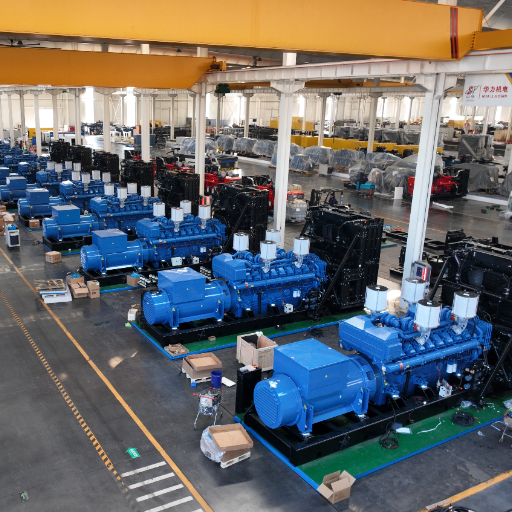
Before the cadence, know the systems. A solid generator maintenance checklist is organized by what can fail, not just by the calendar.
- Fuel system: level, water separation, filter condition, fuel quality.
- Lubrication (oil): level, condition, filter, oil-analysis trend.
- Cooling: level, concentration, hoses, radiator, block heater.
- Battery and starting: voltage, terminals, charger, electrolyte.
- Air intake: filter restriction, piping, turbo.
- Exhaust: leaks, soot, smoke color, aftertreatment.
- Electrical and control: panel alarms, connections, sensors, remote monitoring.
- Automatic transfer switch (ATS): transfer function, contacts, exercise cycle.
Every daily, weekly, and annual task maps back to one of these eight. When something fails, the symptom usually points to the same system. Our diesel generator troubleshooting guide explains what each warning sign means.
Daily and Pre-Start Inspection Checklist
Daily checks take five to ten minutes and catch the problems that cause most no-start events. Run them before the first start of the day or after each use.
- Walk the unit and look for oil, coolant, or fuel leaks on the pad and drip tray.
- Check engine oil level with the set off and cold; keep it between the dipstick marks.
- Check coolant level in the recovery bottle.
- Confirm fuel level in the day tank and main tank.
- Verify the control panel is in AUTO with no active alarms.
- Confirm the battery charger is online and ventilation openings are clear.
Pass/fail targets: no visible leaks, fluids within range, panel in AUTO with zero faults, charger float voltage present. Any active alarm stops the start sequence and needs investigation before the unit is trusted for backup duty.
For standby power system installations that sit idle for long stretches, this daily walkaround is the single highest-value habit on the list.
Weekly Maintenance Checklist
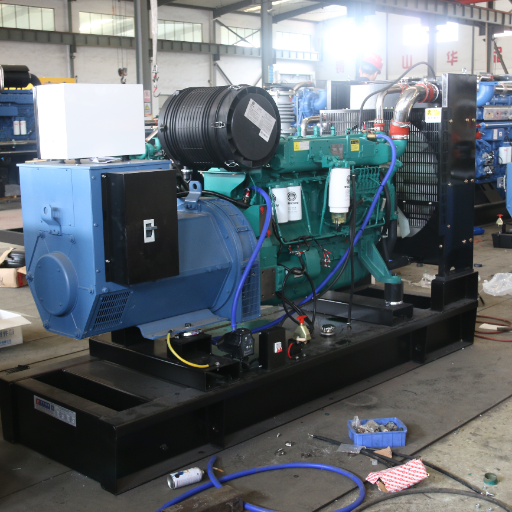
Weekly tasks confirm the generator will actually start and run. Schedule a fixed day and time so the habit sticks.
- Start the set and run it for 10–15 minutes; listen for abnormal noise or vibration.
- Watch exhaust smoke during the run; note black, white, or blue smoke.
- Inspect the air filter restriction indicator; clean or flag for replacement.
- Test battery voltage: 12.6–12.8 V resting, 13.5–14.5 V while charging.
- Clean and inspect battery terminals for corrosion.
- Drain water and sediment from the fuel-water separator.
- Verify the block heater or jacket-water heater is warm to the touch.
- Confirm louvers, dampers, and ventilation paths move and clear freely.
Pass/fail targets: clean start within normal crank time, no unusual vibration, clear or light smoke that clears as the engine warms, battery voltage in spec, and no water in the separator bowl.
Monthly Maintenance Checklist
Monthly checks add load and deeper inspection. This is where NFPA 110 enters the picture for emergency systems.
- Exercise under load for at least 30 minutes at 30% of nameplate kW or more.
- Inspect belts and hoses for cracks, glazing, fraying, and correct tension.
- Check coolant color and clarity; top up with the correct premix.
- Inspect oil and coolant for fuel dilution or cross-contamination.
- Tighten electrical connections at the alternator, panel, and battery.
- Clean radiator fins and intake screens.
- Review control-panel event logs and clear any nuisance alarms after diagnosis.
Pass/fail targets: the engine reaches full operating temperature during the loaded run, holds stable voltage and frequency, and shows no leaks or abnormal exhaust. The NFPA 110 detail page specifies the loaded-run requirement for emergency power generator systems.
Semiannual (Every 6 Months) Checklist
Twice a year, move beyond inspection into sampling and component checks. These tasks catch slow-developing problems that monthly checks miss.
- Replace air and fuel filters if restriction or hours indicate.
- Inspect the exhaust system for leaks, rust, and loose clamps.
- Exercise and function-test the ATS under load.
- Inspect and tighten ATS and alternator connections; look for arcing or discoloration.
- Sample engine oil and diesel fuel for lab analysis.
- Inspect the enclosure, louvers, and pest intrusion.
- Test safety-shutdown and emergency-stop circuits.
Pass/fail targets: ATS transfers cleanly and re-transfers on utility return, oil analysis shows no coolant or fuel dilution and stable wear metals, and fuel meets water and microbial limits.
Annual Maintenance Checklist
The annual service is the full reset. Treat it as the backbone of the year.
- Change engine oil and oil filter.
- Replace fuel and air filters.
- Test coolant concentration with a refractometer; flush and replace every 2,000 hours or 24 months.
- Perform a load bank test at or near rated capacity.
- Inspect alternator windings, brushes (where fitted), and the automatic voltage regulator.
- Run a full control-system diagnostic and safety-shutdown test.
- Load-test batteries and plan replacement around 30–36 months in standby service.
- Test fuel quality and polish or replace if out of spec.
Pass/fail targets: the load bank test holds rated kW at stable voltage and frequency for the full duration, coolant freeze point matches climate, and batteries pass a load test with margin.
Aisha, the maintenance lead at a copper mine, runs this annual service on a fleet of six 1,000 kVA prime-power units. In 2025 her oil-analysis step flagged rising copper and sodium on one unit two months before the scheduled overhaul. The early catch let her team replace a failing oil cooler during a planned shutdown instead of losing the unit mid-production. That single line on the checklist saved an estimated $40,000 in downtime and expedited freight.
Want Huali to build this annual plan and supply the parts kit for your Cummins diesel generator or other engine brand? Talk to our engineering team for a service plan matched to your fleet.
Master Checklist Matrix

Use this one-page matrix as the printable core of your diesel generator maintenance checklist. It crosses every system with every frequency.
| System | Daily | Weekly | Monthly | Semiannual | Annual |
|---|---|---|---|---|---|
| Fuel | Level, leaks | Drain separator | Inspect lines | Sample fuel | Replace filters, polish |
| Oil | Level | – | Contamination check | Oil analysis | Change oil and filter |
| Cooling | Level | – | Color, hoses | – | Refractometer, flush |
| Battery | Charger online | Voltage, terminals | Connections | – | Load test, replace 30–36 mo |
| Air intake | – | Restriction indicator | – | Replace if indicated | Replace filter |
| Exhaust | – | Smoke color | – | Leaks, rust | Inspect aftertreatment |
| Electrical/control | AUTO, no alarms | – | Logs, tighten | ATS exercise | Full diagnostic |
| ATS | – | – | – | Transfer test | Contact and mechanism check |
Pass/Fail Specs and Warning Signs
A checklist without thresholds is just a list of chores. These are the numbers and cues that tell you a system passed or that trouble is starting.
- Battery voltage: 12.6–12.8 V resting, 13.5–14.5 V charging. Below 12.4 V resting means a weak or sulfated battery.
- Coolant freeze point: set to the coldest expected ambient, verified with a refractometer.
- Oil analysis flags: rising wear metals (iron, copper, lead), fuel dilution above 5%, or any coolant in the oil.
- Exhaust smoke: black means overload or wet stacking, white can mean coolant or unburned fuel, blue indicates oil burn.
- Loaded exercise: the engine should reach operating temperature and hold voltage and frequency within nameplate tolerance.
- Fuel quality: clear and bright, with no free water and microbial growth within spec.
When a check fails, the warning sign usually names the system. Black smoke points to air intake or load, low voltage points to the battery or charger, and white smoke points to cooling or fuel. Log the failure and the corrective action on the same line.
Harsh-Environment Add-Ons
A standard checklist assumes a clean, climate-controlled plant room. Add these tasks for tougher sites.
- High dust (desert, mining, construction): inspect air filters weekly, clean radiator fins more often, and double the air-filter replacement frequency.
- High humidity and coastal: inspect control panels and terminals for corrosion every quarter, and treat fuel with biocide and a water dispersant.
- Extreme cold: verify the block heater and battery warmer before winter, test cranking amps monthly in cold months, and confirm cold-weather oil viscosity.
- Poor fuel quality regions: add filtration, polish fuel before it reaches the engine, and test fuel quality every 3–6 months.
How to Use the Checklist and Keep a Maintenance Log
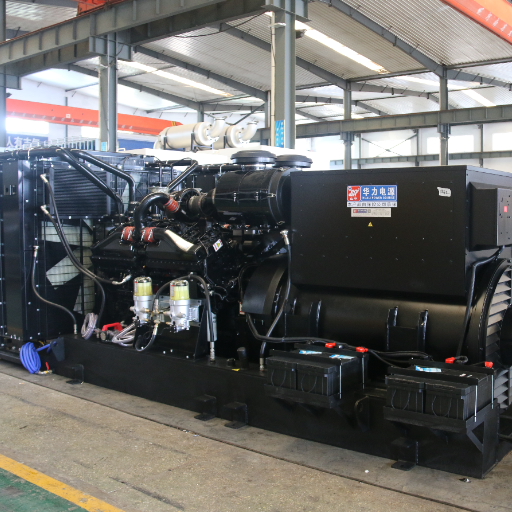
A checklist works only when it is signed, dated, and stored. Keep one log per generator, either at the unit or in a digital maintenance platform.
- Record the date, hour-meter reading, technician name, and tasks completed.
- Note measured values: battery voltage, coolant freeze point, oil-analysis results.
- Log any failure, the suspected cause, and the corrective action.
- Write the next service due by both date and hour count.
- Sign off and file the record for warranty claims and AHJ inspections.
A clean log turns troubleshooting from guesswork into pattern reading. It also proves compliance during insurance and regulatory inspections.
Huali Maintenance Support and Parts Kits
Shandong Huali Electromechanical has more than 25 years of experience manufacturing and supporting diesel generator sets from 8 kVA to 4,000 kVA. Our engines include Cummins, Perkins, Weichai, and Yuchai, paired with Stamford alternators and custom control systems, all built under ISO9001, CE, and CCC certification.
We support clients in 20+ countries with scheduled maintenance, spare parts kits, remote monitoring, and engineer-led service plans. Whether you run one standby unit or a fleet of prime-power sets, we can turn this diesel generator maintenance checklist into a site-specific program with the right parts on hand.
Frequently Asked Questions
What should be on a diesel generator maintenance checklist?
Eight systems across five frequencies: fuel, oil, cooling, battery and starting, air intake, exhaust, electrical and control, and the ATS, checked daily, weekly, monthly, semiannually, and annually. Each line should have a pass/fail target.
How often should I inspect my diesel generator?
Walk around daily or before each use, run a weekly test, complete a monthly loaded exercise, do a semiannual sampling and ATS check, and perform a full annual service. Match the cadence to your duty cycle and OEM manual.
What voltage should a generator battery read?
A healthy 12 V battery reads 12.6–12.8 V at rest and 13.5–14.5 V while charging. Readings below 12.4 V at rest suggest a weak or sulfated battery that needs charging or replacement.
What is included in annual generator service?
Oil and filter change, fuel and air filter replacement, coolant test or flush, load bank test, alternator and AVR inspection, control-system diagnostic, safety-shutdown test, battery load test, and fuel-quality test.
Do I need a load bank test every year?
For Level 1 emergency power systems, yes. NFPA 110 requires annual load bank testing when monthly exercise cannot reach 30% load, plus a full-duration test every 36 months. Load bank testing also prevents wet stacking on lightly loaded units.
Can I use one checklist for any generator brand?
The structure works for any brand, but the intervals and some specs differ by engine. A Cummins diesel generator, a Perkins unit, and a Weichai or Yuchai set each have model-specific details, so confirm against the operation and maintenance manual. OEM references such as Cummins generator maintenance and Perkins preventive maintenance give the brand-specific numbers to plug into this checklist.
Conclusion
A reliable diesel generator maintenance checklist is eight systems, five frequencies, and a pass/fail target on every line. Daily walkarounds catch leaks and low fluids, weekly run tests prove the unit starts, monthly loaded exercise meets NFPA 110, and the annual service resets the whole machine.
The checklist works only when someone signs it, dates it, and records the numbers. Batteries, fuel, and oil cause most no-start events, so give those three systems the most attention, and add harsh-environment tasks for dust, humidity, cold, and poor fuel.
Shandong Huali designs, builds, and supports diesel generator sets for industrial buyers worldwide. A clear diesel generator maintenance checklist is the cheapest insurance you can buy for your backup power. Request a maintenance assessment or spare parts quote to put a proven checklist to work on your site today.