
Most diesel generator troubleshooting comes down to eight systems: fuel, oil, cooling, battery and starting, air intake, exhaust, electrical and control, and the automatic transfer switch. Read the control-panel fault code first, then check battery, fuel, air, and fluids in that order.
That sequence catches most faults before you touch a wrench. The code tells you which system tripped, and the four checks cover the failures that cause the majority of no-start and shutdown events.
Daniel, the night-shift engineer at a 40-rack data center in Lagos, proved it at 2:17 a.m. during a grid drop. His 500 kVA standby set cranked, cranked again, then threw an “overcrank” alarm and locked out.
He read the code, checked the battery (12.7 V at rest, healthy), then opened the fuel-water separator and saw air bubbles in the clear bowl. A technician had changed the fuel filter that afternoon and left air in the line. Three minutes of bleeding at the pump and the set started on the next crank. The battery was never the problem.
This guide gives you symptom-to-cause matrices with the pass/fail numbers to act on, not guesswork. For the preventive side, pair it with our diesel generator maintenance checklist, which shows the line that would have caught each fault early, and the diesel generator maintenance schedule, which sets how often to run it. Staring at a fault code right now? Request remote diagnostics support and our engineers will help you read it.
Key Takeaways
- Most diesel generator faults trace to eight systems; read the fault code first, then check battery, fuel, air, and fluids.
- Batteries and charging cause roughly 43 to 60 percent of no-start events, fuel about 23 percent, and cooling about 15 percent.
- A healthy 12 V battery reads 12.6 to 12.8 V at rest; a drop below about 9.6 to 10 V during cranking signals a weak battery or bad connection.
- Smoke color is a fast diagnostic: black is over-fueling or air restriction, persistent white is coolant, blue is oil burn, and gray is unburned fuel.
- Running below 30 percent load causes wet stacking; correct it with loaded exercise and a load bank run at 75 to 100 percent for 2 to 4 hours.
Start Here: The First 5 Checks When a Diesel Generator Won’t Start
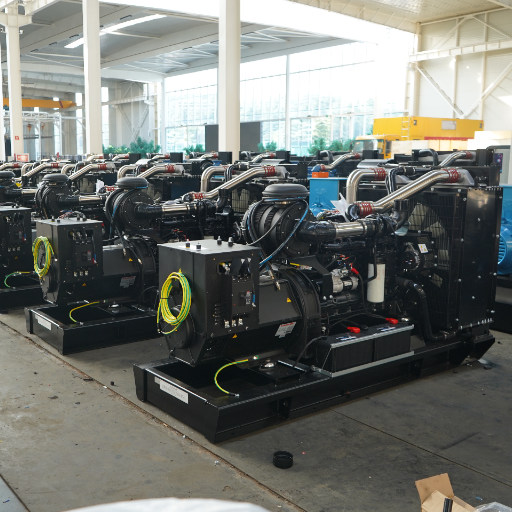
When a set fails at 2 a.m., don’t start swapping parts. Run these five checks in order. They take under ten minutes and solve the large majority of no-start calls.
- Read the fault code. Overcrank, low oil pressure, high coolant temperature, overspeed, and emergency stop each point to a different system.
- Test the battery. Measure rest voltage, then watch it during cranking. A collapse below roughly 9.6 to 10 V means a weak battery or a corroded terminal.
- Check the fuel. Confirm tank level, drain the water separator, and look for air in the line after a recent filter change.
- Confirm the controls. The panel must be in AUTO with no active shutdown, and the emergency stop button must be released.
- Verify fluids and shutdowns. Low oil, low coolant, or a tripped safety switch will block a start by design.
If all five pass and the set still won’t run, the problem is mechanical or electrical and needs a technician. That boundary matters, and we return to it later in this guide.
The 8 Systems Behind Every Diesel Generator Fault
A fault is a symptom. The system is where you look. Mapping symptoms to systems is what turns generator troubleshooting from guessing into a repeatable process, and these are the most common diesel generator faults operators see in the field, organized by where to look first.
- Fuel system: no-start, hard start, power loss, smoke.
- Lubrication (oil): low-pressure shutdown, bearing noise, dilution.
- Cooling: overheat shutdown, coolant loss, white smoke.
- Battery and starting: no crank, slow crank, charge faults.
- Air intake: low power, black smoke, high restriction.
- Exhaust: back-pressure, leaks, smoke, aftertreatment alarms.
- Electrical and control: voltage and frequency drift, false alarms.
- Automatic transfer switch (ATS): no transfer, no re-transfer, arcing.
Every row in the matrices below maps back to one of these eight. The same eight organize the checklist and the schedule, so the three articles work as one system.
No-Start and Crank Problems
No-start is the most common call and the most fixable. Split it into three: no crank, slow crank, and cranks but won’t start.
| Symptom | Likely cause | First check | Fix |
|---|---|---|---|
| No crank, no click | Dead battery or open circuit | Rest voltage below 12.4 V | Charge or replace battery; clean and tighten terminals |
| Single click, no crank | Failed solenoid or starter | Voltage present at starter, motor won’t turn | Replace solenoid or starter; voltage-drop test the cables |
| Slow crank | Weak battery or thick oil | Cranking voltage collapse; cold oil viscosity | Load-test battery; confirm cold-weather oil grade |
| Cranks, won’t start | Air in fuel or no fuel | Bubbles in separator; empty tank | Bleed system at filter, pump, and injectors; refill |
| Cranks, won’t start (cold) | Failed intake or glow heater | No preheat cycle; white smoke on crank | Repair block heater or intake heater |
| Cranks, won’t start | Clogged fuel filter | Low fuel pressure at rail | Replace filter; check lift pump output |
A standby power system that sits idle for months is especially prone to the first two rows. The weekly run test exists to catch a dying battery before the outage does.
Cold starts deserve a note of their own. Below about 5 °C, a diesel needs preheat to light off, and a failed block heater or intake heater shows up as a crank with white smoke and no fire. Confirm the preheat cycle runs before you suspect the fuel system.
Starts, Then Shuts Down
A set that starts and dies within seconds is almost always a safety shutdown doing its job. The fault is whatever tripped it.
Low oil pressure, high coolant temperature, overspeed, and overcrank are the four shutdowns the NFPA 110 detail page defines for emergency power systems, and each one names the system to inspect. An emergency power generator depends on these protections, so never bypass a shutdown to force a run.
- Low oil pressure shutdown: check level first, then oil condition. Milky oil means coolant; thin, fuel-smelling oil means diesel dilution.
- High coolant temperature shutdown: check level, then airflow. A blocked radiator or failed fan belt is more common than a bad thermostat.
- Overspeed trip: usually a governor or actuator fault, or a sudden large load drop. Inspect the linkage and actuator.
- Fuel starvation: a partly clogged filter or blocked tank vent that passes at idle but starves under load.
If pressure or temperature stays abnormal after you correct the obvious cause, stop and call an engineer. A worn oil pump or a head gasket won’t fix itself, and running through it multiplies the damage.
Overheating and Low Oil Pressure
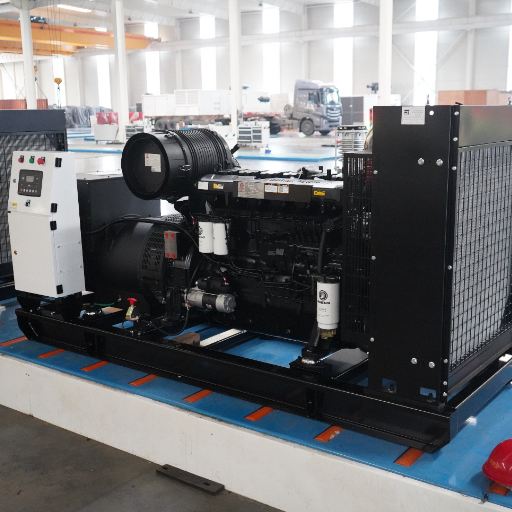
These two shutdowns cause the most expensive failures, so they earn their own section.
Sustained coolant temperature above about 95 °C typically triggers an alarm and then a shutdown. The usual causes are low coolant from a leak, a stuck thermostat, a radiator blocked by dust or scale, a failed water-pump impeller, or simply running above rated load.
Priya, the plant engineer at a cement plant in Rajasthan, chased intermittent high-temp shutdowns on a 1,250 kVA prime-power unit for two weeks. Coolant was full and the thermostat tested fine.
The cause was the radiator: cement dust had packed the fins to a solid mat, cutting airflow by more than half. A chemical clean and a weekly fin-blow schedule ended the shutdowns. That single check now sits on her monthly list.
Low oil pressure follows the same logic. Confirm the level, then read the oil: coolant turns it milky, fuel thins it and raises the level, and the wrong viscosity drops pressure when hot. If pressure stays low after an oil and filter change, suspect the pump or bearings and stop the set.
Unstable Voltage or Frequency
When the engine runs steady but the power wavers, the fault is in the alternator or its controls, not the engine.
Voltage that drifts or oscillates while speed holds steady points to the automatic voltage regulator. Check the sensing leads first, because a loose sensing wire mimics a failed AVR, then replace the AVR if the leads are sound.
Frequency that hunts up and down points to the governor. Clean and lubricate the linkage, check the actuator, and confirm gain settings before replacing parts.
No voltage at all on a set that has been sitting usually means lost residual magnetism in the exciter. Flashing the field with a 12 V source for a few seconds restores it in most cases; if it doesn’t, test the rotating diodes and exciter.
Phase currents more than about 10 percent apart indicate a load imbalance, not a generator fault. Redistribute single-phase loads across the three phases before you chase the alternator.
Exhaust Smoke Color Diagnosis
Diesel generator smoke diagnosis is the fastest field diagnostic you have. Read the color, note when it appears, and you narrow the cause to one or two systems.
| Color | What it means | Common causes | What to do |
|---|---|---|---|
| Black | Over-fueling or air restriction | Clogged air filter, overload, bad injectors, high back-pressure | Replace filter, reduce load, test injectors, check exhaust |
| White (persistent) | Coolant in combustion | Blown head gasket, cracked head or block | Shut down and pressure-test the cooling system |
| White (brief, cold start) | Normal condensation | Cold engine warming up | No action; clears as the engine heats |
| Blue | Oil burning | Worn rings or valve guides, turbo seals, overfilled crankcase | Run a compression test; inspect turbo and seals |
| Gray | Unburned fuel | Worn injectors, low compression, wrong timing | Test injector spray pattern; check timing and compression |
The cold-start white-smoke caveat prevents a common misdiagnosis. A puff of white for the first minute on a cold morning is water vapor, not a blown head gasket. Persistent white smoke once the engine is hot is the warning sign.
Low Power Under Load, Vibration, and Noise
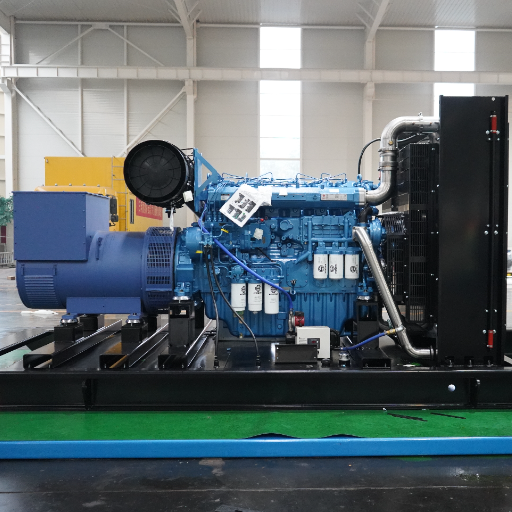
A set that runs fine at idle but falls short under load is almost always starved for air or fuel.
Intake restriction above about 25 inches of water or exhaust back-pressure above about 27 kPa will rob power and add smoke. Replace clogged air and fuel filters, test injector spray patterns, check turbo boost pressure and shaft play, and clear any exhaust restriction before you suspect the engine itself.
Vibration and noise are alignment and mounting problems more often than internal failures. Check the engine mounts and the coupling between engine and alternator with a dial indicator. Worn mounts, a damaged fan, or a bent pulley are cheaper fixes than a bearing, and they are checked first.
A new knock or a sudden change in sound is a stop-and-investigate signal, not a “run it and see” situation. Catching a bearing early is the difference between a service and a rebuild.
Wet Stacking and Under-Loaded Sets
Running a diesel below about 30 percent load for long periods drops combustion temperature. Unburned fuel and oil then coat the valves, turbo, and exhaust, a condition called wet stacking.
Marco, the maintenance supervisor at a coastal resort in the Philippines, inherited a 300 kVA standby set that had run its weekly test at almost no load for three years. The exhaust wept oily black residue, the turbo was carboned, and the unit lost roughly 15 percent of its rated output. A load bank run at 75 to 100 percent for three hours burned off the deposits and restored power. His weekly test now runs at 50 percent load or higher.
Prevention is simple: exercise under real load, not just a no-load spin. When deposits are already heavy, a corrective load bank test clears them, and forthcoming deep-dives on load bank testing and wet stacking prevention cover the procedure in detail.
Modern Aftertreatment and Chinese-Engine Faults
Post-2015 engines add emissions hardware that older troubleshooting guides ignore. Three faults dominate.
Diesel exhaust fluid must meet ISO 22241, which is 32.5 percent urea. Contaminated or low DEF and a crystallized dosing valve trigger derate and eventually a no-start, so treat DEF quality like fuel quality.
A blocked diesel particulate filter shows up as rising back-pressure and falling power. Most units clear it with a sustained run at about 60 percent load or higher for 30 minutes; stubborn cases need a service regeneration at an authorized center.
SCR catalyst and NOx-sensor faults and outdated engine-control software produce codes that look random until you read them. Reading the fault code first, the same step that opens this whole guide, is what separates a sensor swap from a software update.
On Weichai and Yuchai common-rail engines, pull the ECU fault codes through the diagnostic port before touching hardware, and record injector correction values where the tool supports them. OEM references such as Cummins generator maintenance and Perkins preventive maintenance give the brand-specific limits to compare against your readings. A Cummins diesel generator, a Perkins unit, and a Weichai or Yuchai set each carry model-specific fault maps.
When to Troubleshoot Yourself and When to Call an Engineer
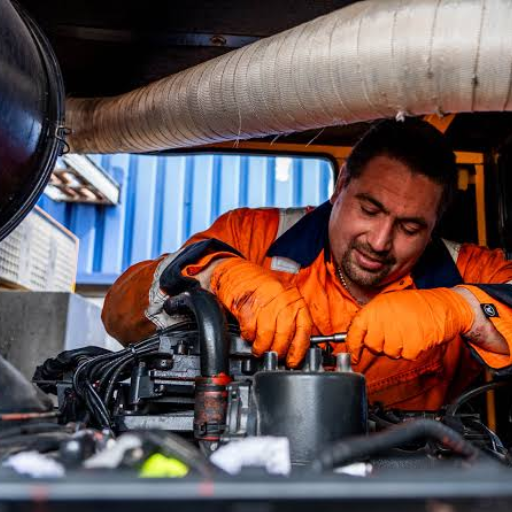
Good troubleshooting includes knowing where to stop. Operators can safely handle reading codes, checking fluids and the battery, replacing filters, bleeding fuel, and cleaning a radiator.
Call an engineer for anything involving high-pressure fuel, high voltage at the alternator, recurring shutdowns after the obvious fix, internal noise, or oil-pressure and overheating faults that survive an oil or coolant service. Those are the boundary where a DIY attempt risks safety, warranty, and the engine itself.
Want the preventive version of every check in this guide? Our complete diesel generator maintenance guide ties the schedule, checklist, and troubleshooting together so most of these faults never happen.
Huali Remote Diagnostics and Field Support
Shandong Huali Electromechanical has more than 25 years of experience manufacturing and supporting diesel generator sets from 8 kVA to 4,000 kVA across 20+ countries. Our engineers read fault codes remotely, ship matched spare parts kits, and dispatch for the faults that cross the DIY boundary.
Whether you run one standby unit or a fleet of prime-power sets, we can turn this diesel generator troubleshooting guide into a site-specific support plan with the right spares on hand. Request a diagnostics call or parts quote and get your power back on a solid footing.
Frequently Asked Questions
Why does my diesel generator fail to start?
The most common cause is the battery or charging system, which accounts for roughly 43 to 60 percent of no-start events. After the battery, check fuel level and water separation, air in the fuel line, the control-panel mode and emergency stop, and any active safety shutdown.
Why does my generator crank but not start?
Cranking without firing usually means a fuel or cold-start problem: air in the fuel lines, a clogged filter, a failed lift pump, or a failed intake or block heater in cold weather. Bleed the fuel system and confirm the preheat cycle before suspecting injectors or compression.
What does black, white, or blue smoke mean?
Black smoke means over-fueling or restricted air, often a clogged filter or overload. Persistent white smoke means coolant in the combustion chamber, while a brief puff on a cold start is normal. Blue smoke means oil is burning, from worn rings, valve guides, turbo seals, or an overfilled crankcase.
Why does my generator keep shutting down?
A repeated shutdown is a safety trip. Low oil pressure, high coolant temperature, overspeed, and fuel starvation are the usual causes, and the control panel logs which one tripped. Correct the root cause rather than bypassing the shutdown.
What causes unstable voltage or frequency?
Voltage drift with steady engine speed points to the AVR or its sensing leads. Frequency hunting points to the governor, linkage, or actuator. Lost excitation on a stored set is fixed by flashing the field, and phase currents more than about 10 percent apart mean a load imbalance.
When should I call a technician?
Call for high-pressure fuel work, high-voltage alternator faults, internal noise, recurring shutdowns after the basic fix, and oil-pressure or overheating faults that survive a service. Those faults risk safety, warranty, and the engine if handled without the right tools.
Conclusion
Effective diesel generator troubleshooting is a sequence, not a guess: read the fault code, check battery and fuel and air and fluids, then trace the symptom to one of eight systems. Batteries, fuel, and cooling cause the large majority of failures, and smoke color gives you a fast read on the rest.
The numbers matter as much as the names. A battery that holds 12.7 V at rest but collapses under crank, coolant above 95 °C, intake restriction past 25 inches of water, and load below 30 percent are the thresholds that turn a symptom into a decision.
Shandong Huali designs, builds, and supports diesel generator sets for industrial buyers worldwide, and our engineers troubleshoot them every day. Request a diagnostics call or spare parts quote to put a proven diagnostic process to work on your site today.