
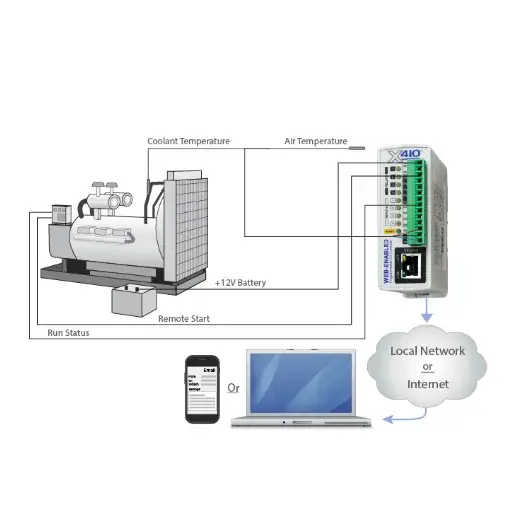
Throughout many different working fields, more and more new technology is being developed to...
Monitoring grid stability in the Southwest requires a specialized understanding of how extreme desert environments affect electrical infrastructure. As Arizona’s population and industrial footprint expand, the Arizona power outage map has become a vital tool for maintaining operational continuity. This resource provides live county updates across the service territories of the state’s major utilities, including Arizona Public Service (APS), Salt River Project (SRP), and Tucson Electric Power (TEP).
Power reliability in the Grand Canyon State is uniquely tied to the thermometer. While Arizona historically boasts one of the most resilient grids in the nation, the convergence of record-breaking heatwaves and the rapid growth of high-demand data centers in the Phoenix and Tucson corridors has placed unprecedented stress on the system. In 2025 and early 2026, the state witnessed multiple peak demand records, driven by the dual pressures of residential cooling and industrial electrification. Beyond the heat, the annual North American Monsoon brings violent microbursts, haboobs, and lightning strikes that can compromise local distribution lines in seconds.
For many Arizonans, relying solely on the utility provider to restore service is no longer a sufficient risk mitigation strategy. Integrating a robust backup power solution is essential to protect against the physical dangers of a cooling failure during 110 temperatures. This page offers the real-time data and technical context needed to track grid fluctuations and secure your home or business with professional-grade energy resilience.
The frequency of power outages in Arizona is intricately tied to the state’s extreme thermal environment and its rapidly evolving role as a global hub for high-intensity data centers. While the electric grid in Arizona—managed by major utilities like APS and SRP—is historically one of the most reliable in the nation, new pressures in 2026 are testing its structural limits.
In the Arizona desert, backup power is a critical safety requirement rather than a luxury. High-ambient temperatures and seasonal storm volatility mean that your power system must be engineered to perform under thermal stress that would cause standard equipment to fail.
In the Southwest, it is vital to select models specifically rated for high-ambient operation. These systems feature reinforced cooling fans and high-limit thermal switches designed to keep the engine running even when outdoor temperatures exceed 115 Fahrenheit. By automatically restoring power to central air conditioning units, these generators ensure your home remains a safe, livable environment during prolonged regional blackouts.
Portable generators offer a versatile solution for Arizonans who need a mobile or budget-friendly backup. We strongly recommend dual-fuel models capable of running on liquid propane. Propane is an ideal fuel for the desert because it does not degrade or gum up carburetors in the high heat, unlike gasoline. While these units require manual setup, a high-wattage portable can sustain critical loads like a refrigerator, a localized room cooler, and medical devices.
Generator should be equipped with heavy-duty, multi-stage air filtration to protect internal components from the abrasive "haboob" dust storms common during the monsoon. Modern Tier 4 Final diesel engines provide the clean, stable voltage necessary for sensitive server racks and diagnostic equipment, ensuring that a utility failure does not result in catastrophic data loss or equipment damage.
In the Arizona desert, generator sizing is almost entirely dictated by thermal management. Because cooling is a life-safety requirement when temperatures exceed 110 Fahrenheit, your system must be sized to handle the massive electrical “inrush” current required to start high-efficiency air conditioning compressors in extreme heat.
This range is suitable for a small townhome or condo. It can power one 3-ton A/C unit, a refrigerator, security systems, and LED lighting.
This is the standard for a 2,500 sq. ft. home. It typically supports two central A/C units, a pool pump (critical for preventing algae during summer outages), and a full kitchen.
Necessary for properties with multiple HVAC zones, guest houses, or electric vehicle (EV) charging stations.
For those with home medical needs, such as oxygen concentrators or refrigerated medication, we recommend a 20% safety buffer in your kW calculations. Most medical devices draw only 300–600 watts, but they require “clean” power with low Total Harmonic Distortion (THD) to protect sensitive digital controllers.
Small businesses, such as retail shops or medical clinics, generally require 50–100 kW. This capacity supports rooftop package units, server racks, and commercial refrigeration.
Our team of energy experts is ready to perform a comprehensive load analysis to ensure your property is protected by a cooling-ready backup system. Contact us today for a professional site assessment and a detailed quote on a high-performance power solution built to beat the Arizona heat.
Maintain Inventiveness by Following The Blog for the Latest Best Practices, Techniques, Innovations, and Insights in the Field.
Throughout many different working fields, more and more new technology is being developed to...
A generator is a vital piece of equipment that needs to provide power during...
Generator room ventilation requirements exist to keep a generator set safe, reliable, and ready to...
Can emergency power be in the same room as normal power? Imagine the events...
In the Grand Canyon State, power outages in Arizona are primarily driven by the intense monsoon season and extreme thermal stress. Between June and September, powerful “microbursts” and “haboobs” (massive dust storms) generate straight-line winds that can topple utility poles and snap transmission lines. Lightning strikes during these desert storms are also a leading cause of transformer failures. Furthermore, the electric grid faces immense pressure during record-breaking heatwaves. When temperatures exceed 110°F, the simultaneous demand for air conditioning across the Phoenix and Tucson metros can overload local substations. In the high-country regions like Flagstaff, winter snow loading and forest fire mitigation shutoffs also contribute to seasonal grid instability.
Restoration times vary based on the severity of the weather event. Minor outages caused by a localized transformer “pop” during a heatwave are typically resolved within 2 to 4 hours. However, damage from a severe monsoon storm—which may involve downed high-voltage lines and blocked roads—can result in blackouts lasting 12 to 24 hours or longer. Because extreme heat poses a significant life-safety risk in Arizona, utilities like APS and SRP prioritize restoration for critical infrastructure and high-density residential areas. For those in rural desert communities, restoration can be delayed by the sheer distance crews must travel, making a reliable backup power source a vital safety net for maintaining climate control.
Preparation in Arizona is centered on “heat resilience.” If the power fails during the day, keep all blinds closed and doors shut to trap cool air as long as possible. Your emergency kit should prioritize hydration; store at least one gallon of water per person per day. Since cellular networks can become congested during major storms, maintain a battery-powered radio for live county updates. If you have a rooftop solar system, remember that it will automatically shut down during a grid failure for safety unless you have an integrated battery or a specialized transfer switch. To monitor restoration progress in real-time, keep a bookmark for the local Arizona power outage map on your mobile device.
For many Arizona residents, a standby generator is a critical investment in home safety. When outdoor temperatures reach lethal levels, losing air conditioning for even a few hours can cause indoor temperatures to spike dangerously, especially for seniors, children, or those with medical conditions. A permanently installed unit provides the high-wattage capacity required to start and run large 5-ton AC compressors, which most portable units struggle to handle. Beyond comfort, a generator prevents food spoilage and maintains home security systems during the chaotic weather associated with the monsoon season. In the 2026 real estate market, homes equipped with “grid-independent” power solutions are seeing higher buyer demand due to increasing concerns over long-term grid reliability.
Installing a backup generator in Arizona requires compliance with the National Electrical Code (NEC) and local municipal ordinances. You must obtain an electrical permit from your city or county (such as Maricopa or Pima County) to ensure the system is safely integrated with your home’s main panel. A professional installation involves a dedicated concrete mounting pad and an automatic transfer switch (ATS). The ATS is essential because it prevents “backfeeding,” a dangerous situation where your generator sends electricity back into the utility lines, risking the lives of line workers. For Arizona installations, we strictly recommend “high-ambient” cooling kits to ensure the generator engine can operate efficiently in 115°F+ temperatures without overheating.