
A diesel generator overheats when the heat it produces exceeds what its cooling circuit can reject. Generator overheating has four possible origins: the environment around the set, the cooling circuit itself, the electrical load, or the fuel and air system. Finding which one is the whole job.
The temperature alarm tells you the coolant is hot. It does not tell you why, and that gap is where money gets spent. Parts get replaced on a guess, the fault survives, and the machine fails again.
Elena ran a packaging plant where an 800 kW standby set tripped on high water temperature three times in one summer. Her team replaced the thermostat twice and flushed the system once.
The actual cause was a radiator core that had been partially blocked for two years by airborne dust from the plant’s own extraction system. The thermostat was never the problem. Nobody had looked at the radiator.
This guide covers what the temperature readings mean, the causes grouped by where they live, and an ordered sequence that finds the fault without replacing parts at random. If you already know it is a room problem rather than an engine problem, our guide to generator room overheating handles that side.
Dealing with a repeated overheat on a critical set? Send us the fault history and your controller model and our engineers will work through the likely causes with you.
Key Takeaways
- A diesel generator overheats when heat production exceeds the cooling circuit’s ability to reject it. The cause is environmental, circuit-side, load-side, or fuel-side.
- On a Kohler Decision-Maker 8000 controller, the high coolant temperature warning sits at 197.6 °F (92 °C) and the shutdown default at 204.8 °F (96 °C), with a 5-second delay. Other makers set these differently.
- The alarm threshold is not a universal number. Kohler defaults to 96 °C for shutdown, SmartGen to 98 °C, and Cummins gensets shut down between 104 and 108 °C. Your controller configuration and engine manual govern.
- Most overheating faults are cooling-circuit faults, and the commonest real cause is a radiator that cannot pass air, not a failed thermostat.
- A second overheat on already-damaged components costs far more than the first. Diagnose before you restart.
What Generator Overheating Actually Means
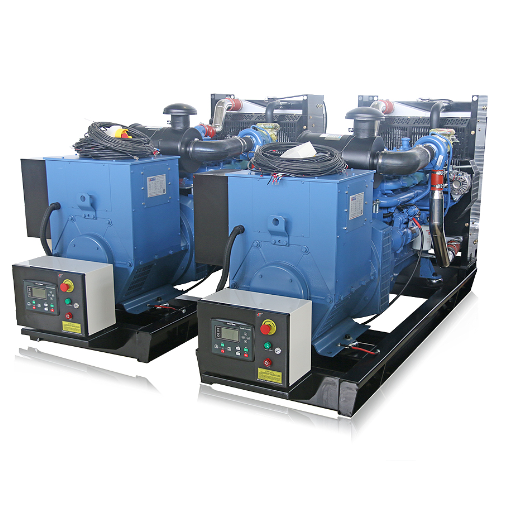
Coolant temperature is the engine’s own report on a heat balance. When production outruns rejection, the coolant temperature climbs, and the controller responds in stages.
The Temperature Ladder
A generator controller does not react to one threshold. It reacts to a ladder of them, and knowing where your set sits on that ladder tells you how urgently to act.
| Stage | Setpoint (one controller’s defaults) | Controller action |
|---|---|---|
| Normal operating band | roughly 80–95 °C | Thermostat regulates flow to hold temperature |
| High coolant temperature warning | 197.6 °F (92 °C) | Alarm only; the set keeps running |
| High coolant temperature shutdown | 204.8 °F (96 °C) | Shutdown alarm; the set stops |
| Signal delay before action | 5 seconds | Prevents a transient spike from tripping the set |
These values come from the Kohler TP-6990 operation manual for industrial generator sets running the Decision-Maker 8000 controller.
What the controller does when a limit is crossed is also configurable. Many controllers offer a choice between warning only, a controlled stop that cools the engine before shutting down, and an immediate stop. The Woodward easYgen-1400 manual, for example, defaults its high-temperature reaction to an immediate stop. On a standby set protecting a critical load, that setting decides whether a brief spike takes the site down.
Why the Threshold Is Not a Universal Number
This is the single most misunderstood point in generator overheating, and it is worth stating plainly.
Different manufacturers ship different defaults. Kohler’s shutdown default is 96 °C. One widely used generator controller, the SmartGen HGM8140, defaults to a 95 °C warning and a 98 °C shutdown. Cummins NT, KT and VT series gensets switch on an early warning light between 100 and 103 °C and shut down between 104 and 108 °C.
None of those is wrong. They reflect different engines, different thermostat ratings and different operating bands. The value that matters is the one configured in your controller and specified in your engine manual, not a figure copied from an article, including this one.
A Hot Engine Is Not a Hot Room
One distinction is worth making before the causes, because it routes everything that follows.
Coolant temperature above normal means the engine is not rejecting its heat. That can happen because the circuit is failing, or because the environment has removed the circuit’s ability to work. The two are diagnosed differently, and the room side is covered in the generator room overheating guide. Everything below assumes the fault is in the machine.
Cooling-Circuit Causes
Circuit faults are the most common cause of generator overheating, and they are also the cheapest to rule out. Four components account for nearly all of them.
Low Coolant and the Slow Leak
A cooling system that needs regular topping up has a leak, and a leak is a fault in its own right. As coolant is lost, the remaining volume has to absorb the same heat, so temperature climbs even though nothing else has changed.
Look at the pump weep hole, the hose joints, the radiator core and the pressure cap. A failed cap is easy to miss: it will not hold system pressure, so the coolant boils at a lower temperature than the system was designed for.
A Thermostat Stuck Closed
A thermostat stuck closed blocks flow to the radiator entirely, and the engine overheats within minutes regardless of load. A thermostat stuck open causes the opposite problem, and the article on preventing wet stacking covers what running cold does to a diesel.
The test is straightforward. Run the engine from cold and feel the radiator top hose. It should stay cool until the thermostat opens, then warm quickly. A hose that stays cold while the gauge climbs means the thermostat is not opening.
Controller documentation from several makers, including MeccAlte, disables the coolant-temperature protection for a short arming period after start-up. That is sensible on a cold engine, but it means a fault that appears immediately on start will not raise an alarm until the arming window has passed. Keep it in mind when a set trips only under load.
A Failing Water Pump or Slipping Belt
The water pump is belt- or gear-driven, and both the drive and the pump itself fail in service.
A slipping belt is audible: it squeals under load and may glaze. Check deflection against the manufacturer’s figure.
Inside the pump, an eroded impeller is the quiet failure. The pump turns, the belt is tight, and flow is simply too low to carry the heat away. A pump seal failure shows as coolant loss at the weep hole.
Hassan found this on a hospital set in a different way. The generator ran cool at 30% load and overheated at 80%. Because it behaved perfectly at light load, the site had assumed a load problem for months.
The real cause was an impeller eroded to roughly half its original blade height. At light load the reduced flow was enough. At full load it was not.
A Clogged or Scaled Radiator
The radiator rejects heat to air, and anything that reduces either airflow or coolant flow through the core reduces its capacity.
Externally, fins pack with dust, pollen and insects. Internally, hard water leaves scale that insulates the coolant from the metal. Both failures are gradual, which is why they are so often missed. This is the fault that cost Elena two thermostats.
A Heat Exchanger Losing Performance
Sets with a remote radiator or a raw-water circuit use a heat exchanger instead of, or in addition to, a radiator. Fouled tubes or failed seals reduce its capacity in exactly the way scale reduces a radiator’s.
Heat exchangers add a second fluid and a second set of seals, so they add failure modes. If your set has one, it belongs on the diagnosis list.
Matching the Symptom to the Component
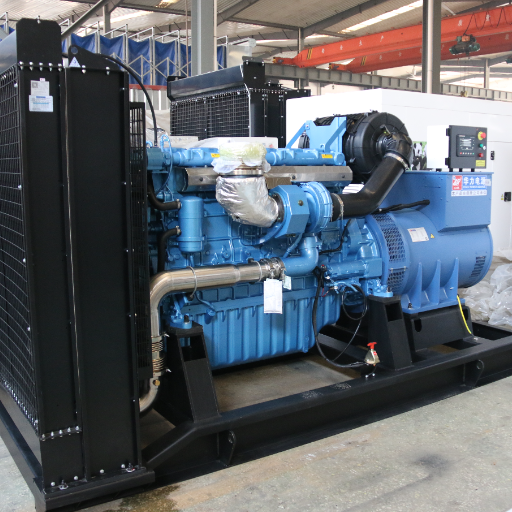
How a set overheats is itself a clue. These patterns narrow the list before you open a panel.
| Symptom pattern | Likely component | First check |
|---|---|---|
| Overheats within minutes at any load | Thermostat stuck closed | Feel the top hose running from cold |
| Fine at light load, hot under load | Water pump impeller or belt | Belt tension; compare flow at load |
| Gradual rise over weeks or months | Radiator core blocked or scaled | Inspect fins in daylight; coolant condition |
| Coolant loss, no visible puddle | Pressure cap or internal leak | Pressure-test the system |
| Hot at the inlet, cool at the outlet | Heat exchanger fouled | Tube-side flow and temperature drop |
Load-Side Causes
A generator can be perfectly healthy and still overheat because it is being asked to produce more heat than it was sized for.
Sustained Overload
Every generator has a continuous rating, and running above it raises heat production faster than the cooling system can scale. A set that holds normal temperature at 80% load and climbs at 105% is not faulty. It is overloaded.
Check the load history, not the instantaneous reading. Many controllers log maximum demand, and a peak that only appears at shift change or during a motor start is easy to miss on a spot check.
Poor Load Balance Across Phases
On a three-phase set, an unbalanced load pushes current through one phase beyond its share. Total kW can look acceptable while one phase is heavily loaded and generating local heat.
A clamp meter on each phase under normal operating load will settle it quickly. If one phase reads far above the others, rebalance the distribution before touching the cooling system.
Running Oversized Equipment at Light Load
This is the inverse problem, and it matters in the other direction. A set that only ever runs at very light load never reaches proper operating temperature, which causes incomplete combustion and carbon build-up. It is not overheating in the coolant sense, but it produces its own damage. Our guide to preventing wet stacking explains the mechanism.
Fuel and Air-Side Causes
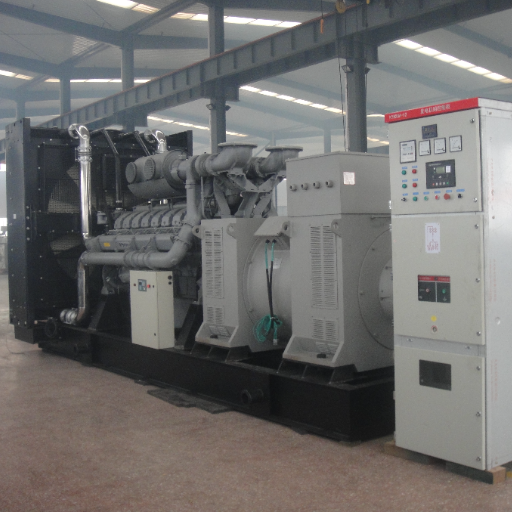
These causes raise heat production without changing the load, so they are missed when diagnosis stops at the electrical side.
Injection Timing and Delivery
Incorrect injection timing or over-delivery of fuel raises combustion temperature and heat rejection to the coolant. The usual companion symptom is black smoke under load, which our guide to black smoke under load covers in detail.
Injection faults need an engine technician with the right tooling. They are not a field diagnosis.
A Restricted Air Filter
A clogged air filter richens the air-fuel ratio, and a rich mixture burns hotter. It is a cheap part with an expensive symptom, and it is frequently overlooked because the engine still starts and runs.
Exhaust Restriction
A partially blocked silencer or collapsed exhaust pipe raises back pressure and combustion temperature. Our exhaust system design guide covers sizing and installation.
Environmental Causes
The environment reduces the cooling system’s capacity without changing the machine. It is the group people blame first, and the least common cause of generator overheating on a well-installed set.
Ambient temperature is the main one. A radiator sized for a 25 °C design day has less margin at 45 °C, and the difference shows up first under full load. Altitude compounds it: thinner air carries less heat away and also reduces what the engine can produce.
The room matters too, but it is a separate system. If the space around the set cannot get hot air away, the radiator is recycling its own discharge. That is a room fault, not an engine fault, and generator room ventilation covers the fix.
A Diagnostic Sequence That Finds the Cause
This is the part most guides skip. Working in this order costs nothing and prevents the part-swapping that Elena’s team went through. It also handles the one cause most guides never mention at all: a temperature reading that is simply wrong.
Step 1: Confirm the reading is real. Before opening anything, check whether the engine is genuinely hot or the sensor is lying. Compare the controller reading against a contact thermometer or infrared reading at the thermostat housing. A drifted sender produces a perfect imitation of an overheating fault and is far cheaper to fix than the engine damage a real one causes. False readings are absent from almost every guide on this topic, and they are a real and regular cause.
Step 2: Check the environment. Is the ambient temperature higher than usual? Has anything changed around the set? New equipment, stored materials, a failed fan, a blocked louvre. Free checks come first.
Step 3: Check the circuit. With the engine cold, check coolant level and condition, then look for leaks at the pump, hoses and core. Run from cold and check the top hose for thermostat opening. Check belt tension and condition. Inspect the radiator core for blockage, in daylight rather than with a torch.
Step 4: Check the load. Pull the load history rather than a spot reading. Check phase balance with a clamp meter under normal operating load. Compare actual load against the set’s continuous rating.
Step 5: Check fuel and air. Air filter, exhaust back pressure, and the smoke signature under load. Anything pointing at injection timing goes to an engine technician.
Stop at the first confirmed fault. In most cases it is also the only one, and continuing past it wastes time and invites the temptation to replace parts that were fine.
What Overheating Damages
Generator overheating is not binary. Between “running warm” and “engine destroyed” sit several failure modes that appear at different temperatures.
Oil degrades first. Above its working range it loses film strength, so bearings and cylinder surfaces wear faster even after temperatures return to normal. Gaskets and seals follow, and a head gasket failure lets coolant into the cylinder and compression into the cooling system.
Longer or hotter events distort the head, crack it, or warp it beyond resurfacing. On wet-liner engines, sustained overheating can disturb liner seals and accelerate the cavitation damage that coolant additives exist to prevent.
Grace found the cost of a second event on a cold-storage site. A first high-temperature trip was treated as a low-coolant event and fixed by topping up. The underlying cause, a partially blocked radiator, was never addressed.
Ten weeks later the set tripped again on a hot afternoon, and this time the head gasket failed. The second repair cost roughly four times the first, and the set was out of service for nine days.
After any overheating event, do not simply reset the alarm and restart. Check coolant level and condition, confirm the thermostat opens, verify the fan turns, and inspect the oil for contamination before returning the set to service.
Preventing Generator Overheating
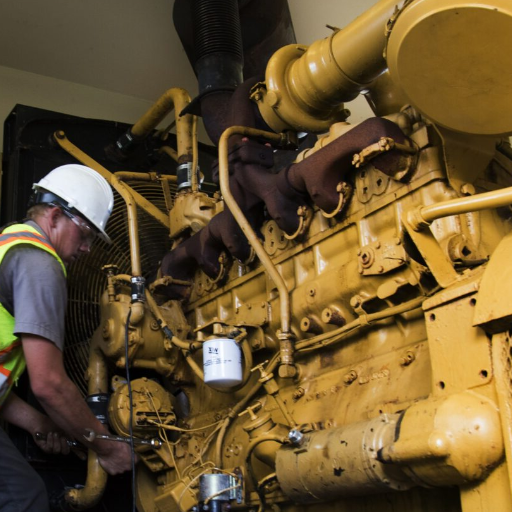
Most overheating faults give warning long before they trip a set. A short routine catches them.
- Weekly: check coolant level cold, look for leaks at the pump weep hole and hose joints, and confirm the gauge reaches the normal band under load.
- Monthly: inspect the radiator fins for blockage and check belt tension and condition.
- Annually: test coolant condition and concentration, clean the radiator core, check the pressure cap, and verify the thermostat opening temperature.
- Under load: prove the cooling system actually works at full load. A set that never carries real load has never had its cooling capacity tested, which is what load bank testing is for.
Frequently Asked Questions
Why is my generator overheating?
A diesel generator overheats when heat production exceeds the cooling circuit’s capacity. The cause is usually cooling-side: low coolant, a stuck thermostat, a failing water pump, or a blocked radiator. Less often it is load-side (overload or phase imbalance), fuel-side (injection timing, a restricted air filter), or environmental (high ambient temperature or altitude).
What temperature is too hot for a generator?
It depends on the controller. On a Kohler Decision-Maker 8000, the high coolant temperature warning is 197.6 °F (92 °C) and the shutdown default is 204.8 °F (96 °C).
Other makers differ: SmartGen defaults to 95 °C warning and 98 °C shutdown, and Cummins gensets shut down between 104 and 108 °C. Normal operating coolant temperature is typically 80 to 95 °C. Your engine manual governs.
What are the most common causes of generator overheating?
In rough order of frequency: a radiator that cannot pass air because the core is blocked or scaled, low coolant from a slow leak, a thermostat stuck closed, a failing water pump or slipping belt, sustained overload, and a restricted air filter. Real overheating is a heat-balance problem, so the cause is usually a loss of cooling capacity rather than a sudden increase in heat.
Can a faulty sensor cause a generator overheating alarm?
Yes, and it is one of the most commonly missed causes. A temperature sender that has drifted reads high and triggers a genuine-looking alarm without the engine being hot. Before replacing cooling components, confirm the reading with a contact thermometer or infrared gun at the thermostat housing.
Can a generator overheat at light load?
Not in the coolant-temperature sense. Light load causes the opposite problem: the engine runs too cold, leading to incomplete combustion and carbon build-up, a condition known as wet stacking. A set that runs cool at light load and overheats at full load points at reduced coolant flow, such as an eroded water pump impeller.
How do I stop generator overheating from coming back?
Fix the cause, not the symptom. Topping up coolant or resetting the alarm without finding out why the temperature rose guarantees a repeat. Work the diagnostic sequence in order, then confirm the repair under real load rather than at idle.
Conclusion
Generator overheating is a heat-balance problem, and the alarm only reports one side of it. Coolant temperature tells you the engine is not rejecting heat. It does not tell you which of the four cause groups is responsible.
Five things are worth carrying into your next fault:
- Know your setpoints. Warning and shutdown values differ by manufacturer. Kohler defaults to 92 °C warning and 96 °C shutdown; others sit higher. Read your controller, not a generic number.
- Check the sensor before the circuit. A drifted sensor imitates an overheating fault convincingly, and it is cheap to rule out.
- Radiators clog far more often than thermostats fail. Elena’s team replaced two thermostats for a blocked core.
- Work the sequence in order. Environment, circuit, load, then fuel and air. Stop at the first confirmed fault.
- Never restart on a damaged engine without checking. A second overheat on already-damaged components costs multiples of the first.
Shandong Huali Electromechanical Co., Ltd. manufactures diesel generator sets from 8 kVA to 4,000 kVA and supplies cooling systems, controllers and commissioning support as an integrated package, with full OEM/ODM customization.
Have our engineers review your overheating fault →
Send us your controller model, the alarm and shutdown values it is configured to, and the load history at the time of the trip. We will work through the likely causes with you and confirm what the readings actually mean.
